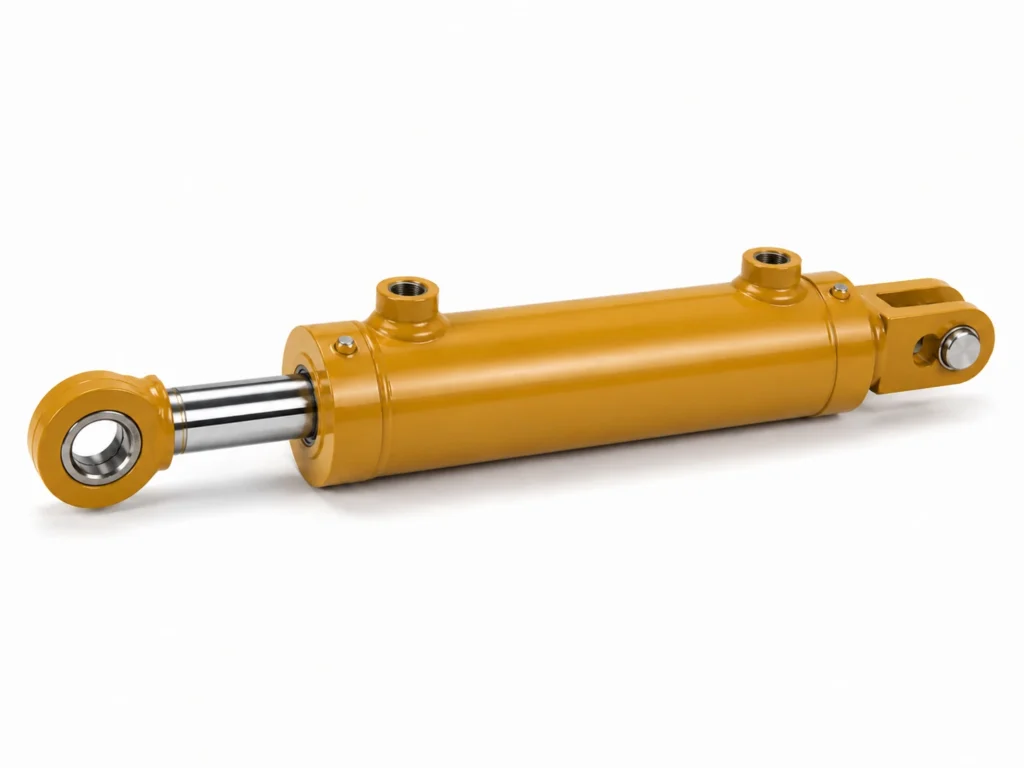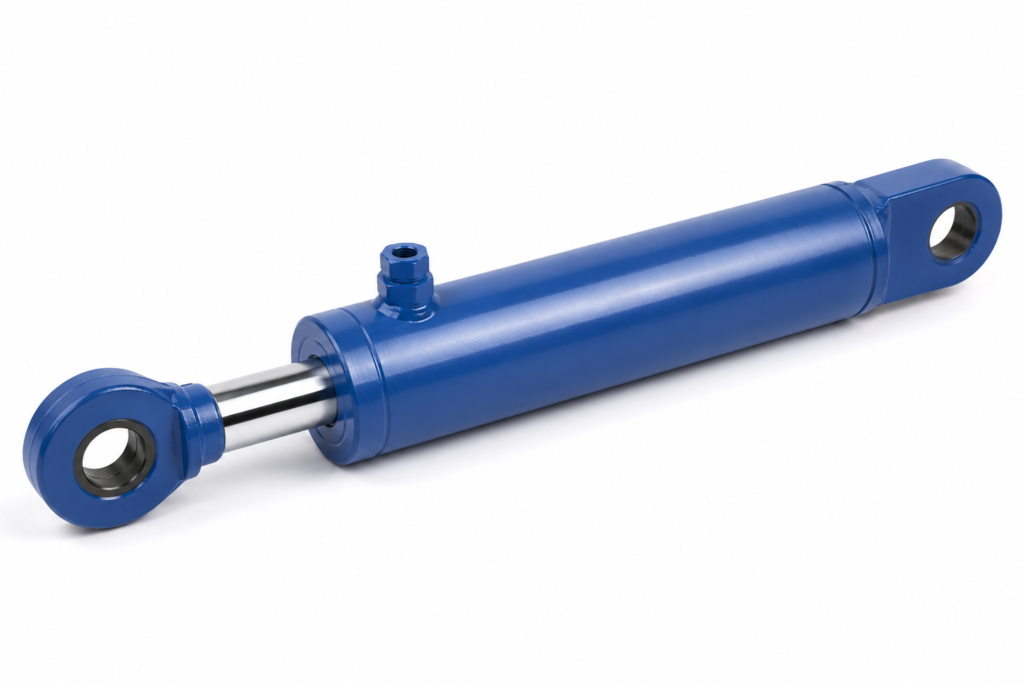
Why should buyers identify the duty before choosing a cylinder type?
The correct cylinder type is chosen after the application duty is known, not before. Bore, stroke, mounting, pressure, side load, speed, temperature, environment, and repair strategy decide whether a design will fit, survive, and be economical over the equipment life.
A common procurement error is asking for “the same size cylinder” from a photo or old invoice. That can work for a slow agricultural implement, but it is risky for an OEM platform, lift mechanism, compactor, dump body, press, or replacement fleet program where mounting geometry and pressure spikes decide service life.
For an OEM engineering buyer, the first decision is usually packaging and load. A compact heavy-duty mobile machine may favor a welded body because it fits tightly into a boom, arm, or frame. A long lifting stroke with a short retracted length may point toward a telescopic design. A factory machine, test fixture, or equipment line where the maintenance team wants to rebuild the unit quickly may favor a tie rod hydraulic cylinder.
The same logic applies to replacement buyers. If the original cylinder failed because the rod bent, the issue may be side loading or incorrect mounting, not simply poor sealing. If the tube cracked near a weld, pressure spikes, fatigue, weld quality, or misalignment may need review before repeating the same specification.
Key Takeaways
- Choose by load, stroke, mounting space, duty cycle, and service plan before choosing the visible cylinder construction.
- Single acting cylinders suit gravity-return or spring-return motion; double acting cylinders suit controlled force in both directions.
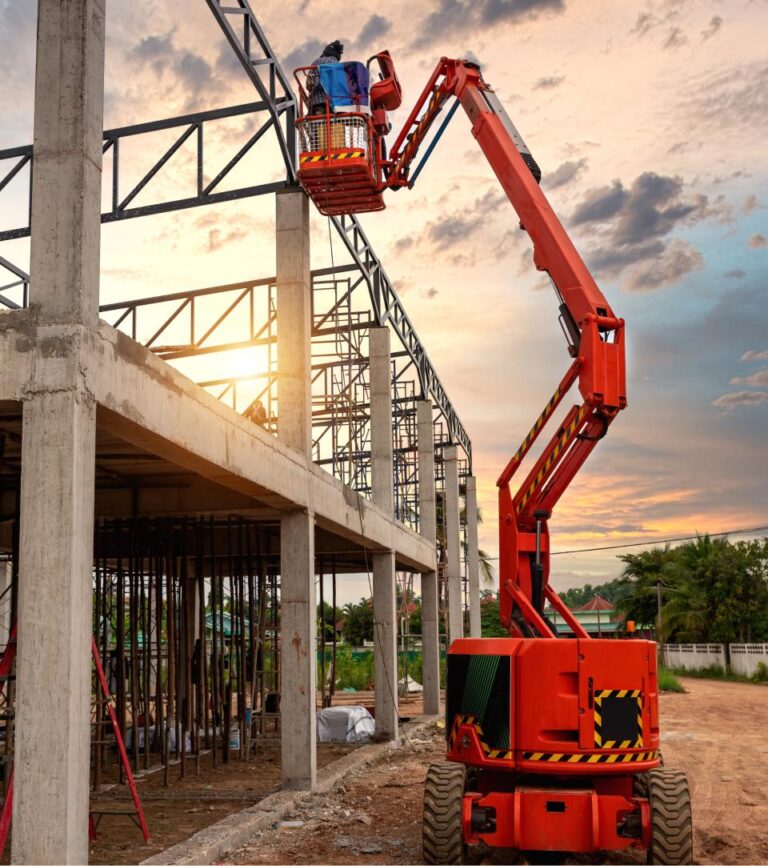
- Welded cylinders are often preferred for compact mobile equipment where strength and packaging matter more than quick disassembly.
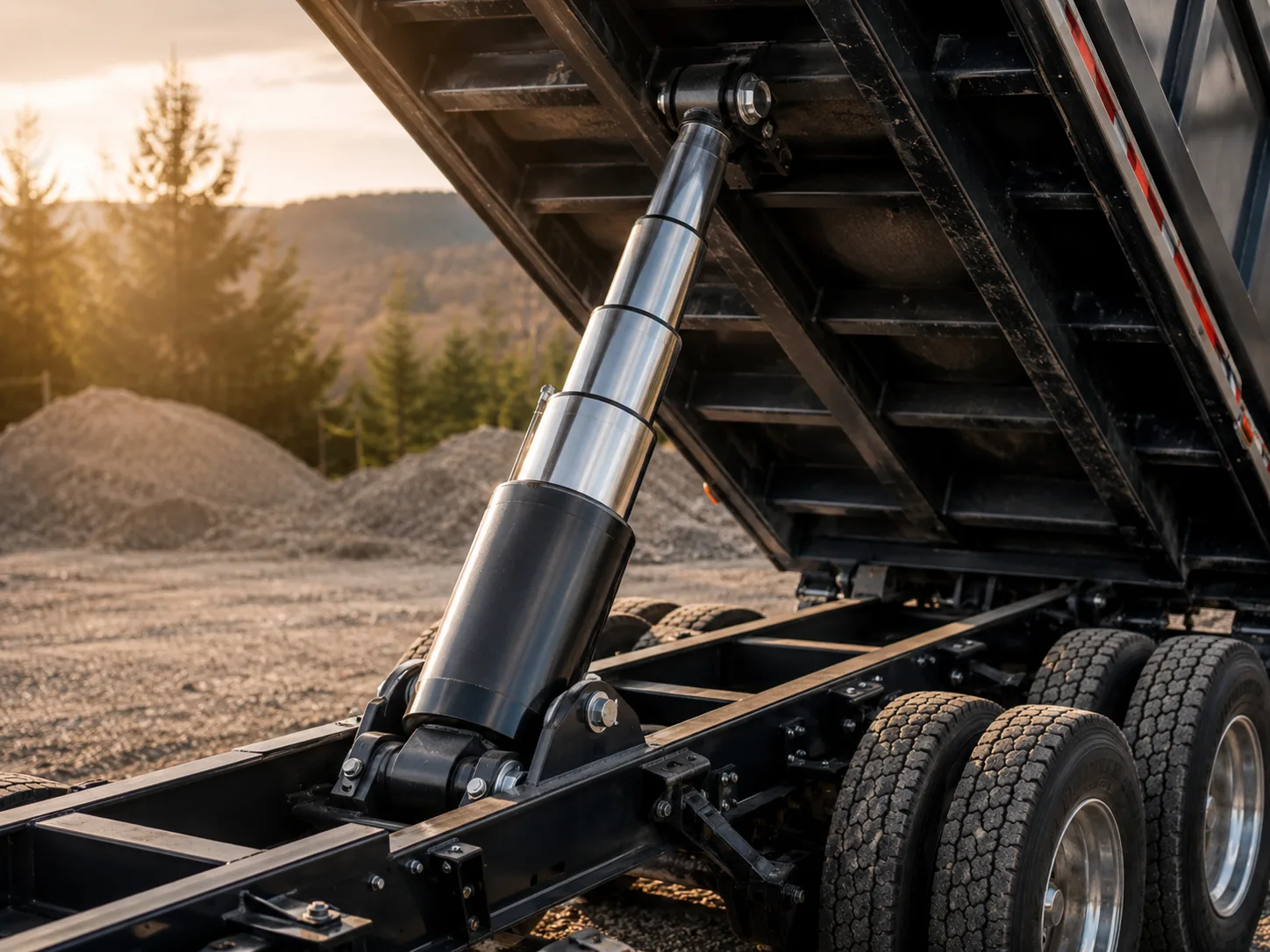
- Telescopic cylinders solve long-stroke lifting where retracted length is limited, such as dump bodies and trailers.
- Tie rod hydraulic cylinder designs are practical when maintenance access, standardization, and rebuildability are procurement priorities.
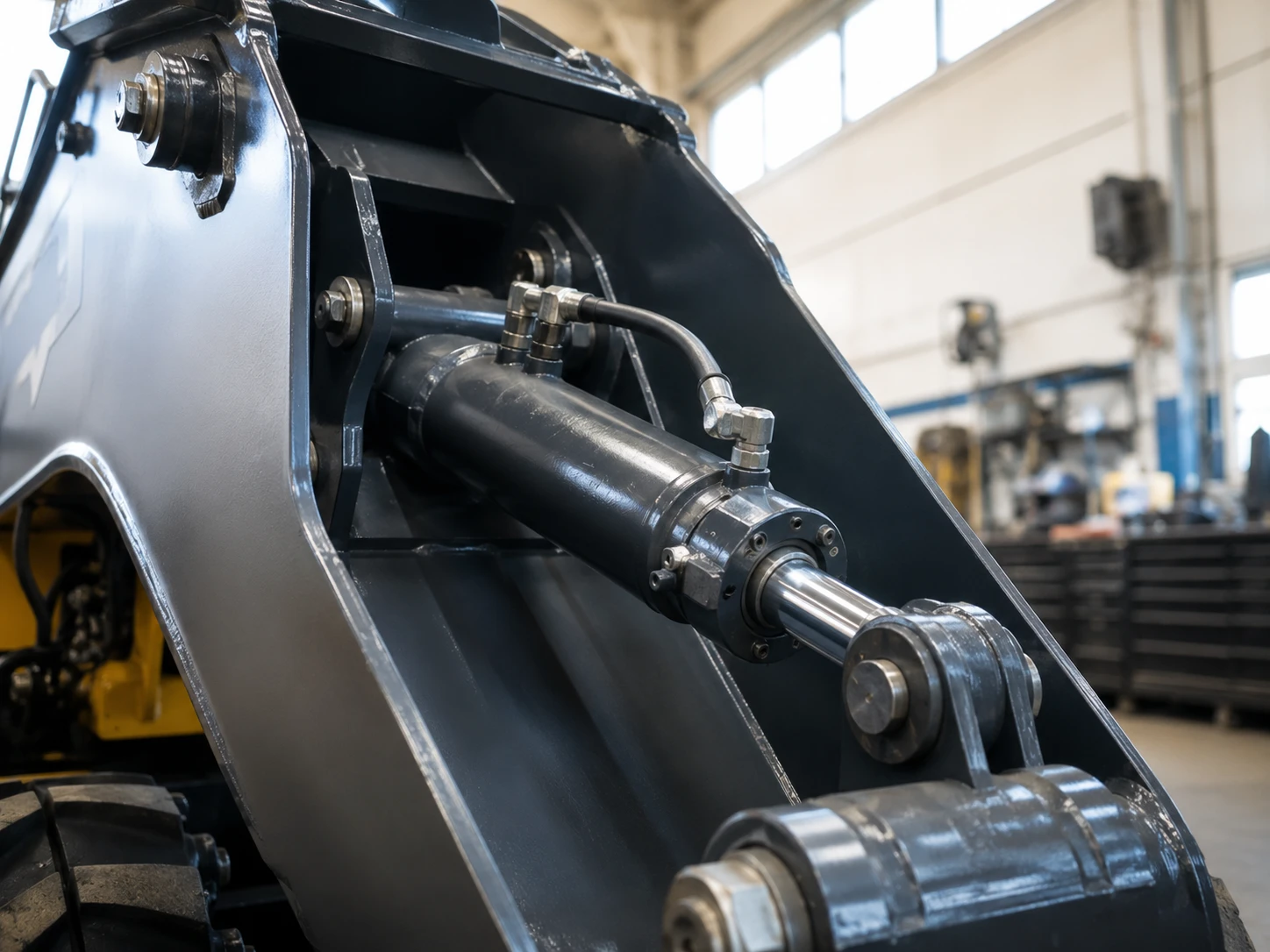
What are the main hydraulic cylinder types buyers should understand?
The practical family tree starts with motion function, then construction style. Motion function separates single acting and double acting units. Construction style separates welded, tie rod, mill-duty, compact, custom, and telescopic arrangements used across mobile, industrial, agricultural, and material-handling equipment.
For search and sourcing, buyers often group products by names rather than engineering hierarchy. That is acceptable at the inquiry stage, but final selection should be tied to operating force, mounting envelope, pressure class, speed, and expected repair method.
- Single acting
- A cylinder powered hydraulically in one direction, with return by gravity, spring, external load, or machine motion. It is common in dump, lift, and simple clamping applications.
- Double acting
- A cylinder powered in both extension and retraction, giving better control where force, position, or speed must be managed both ways.
- Telescopic
- A multi-stage cylinder that provides a long stroke from a compact retracted length, often used where the machine cannot accommodate a full-length single-stage tube.
- Welded
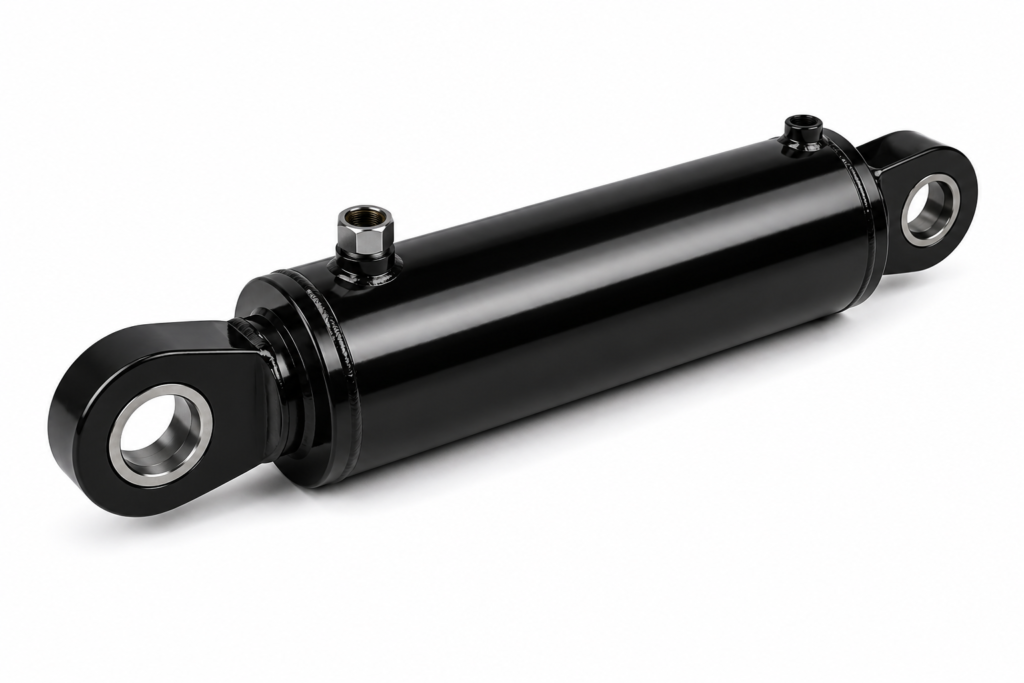
- A compact construction with welded end structures, commonly selected for mobile equipment, rugged packaging, and high-volume OEM assemblies.
- Tie rod hydraulic cylinder
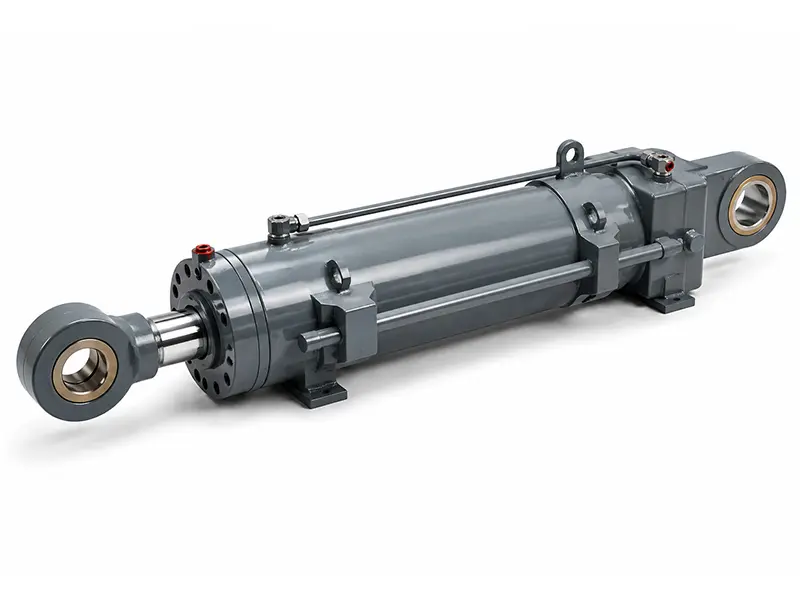
- A cylinder held together by external tie rods, often easier to disassemble and service in industrial machinery, fixtures, presses, and standardized equipment lines.
Best for OEM mapping: use functional terms for circuit design and construction terms for packaging, sourcing, maintenance, and replacement control.
How do single acting and double acting cylinders compare?
Single acting cylinders are best when hydraulic force is only required in one direction and a predictable external force can return the rod. Double acting cylinders are better when the machine needs controlled extension and controlled retraction, especially under load or in changing positions.
In a dump trailer, gravity can return the body after hydraulic lifting, so a single-acting circuit may reduce hose count and valve complexity. In a loader bucket, stabilizer, press axis, or steering-related mechanism, uncontrolled return is unacceptable; double-acting control is normally the safer engineering route.
The difference affects cost, hydraulic plumbing, control valve selection, safety behavior, and troubleshooting. A single-acting unit may be simpler, but if the return load becomes inconsistent because of dirt, cold oil, binding pivots, or uneven loading, cycle time and repeatability suffer. A double-acting unit requires more hydraulic connections, but it gives the operator and control system positive movement in both directions.
Which cylinder construction fits each application?
The most useful comparison is not “strongest versus weakest,” but “which construction matches the equipment layout and maintenance model.” Compact mobile machines usually reward welded or telescopic construction, while repair-focused industrial assets often reward tie rod designs.
| Application situation | Recommended type | Main reason | Watch point before ordering |
|---|---|---|---|
| Compact heavy-duty mobile boom, arm, blade, or attachment | Welded cylinder | Compact body, robust packaging, and good fit inside tight steel structures | Confirm pin-to-pin length, port angle, rod protection, and weld fatigue risk |
| Dump trailer, refuse equipment, platform lift, or long lift stroke | Telescopic cylinder | Long extension from short retracted length | Confirm stage stability, side-load limits, mounting alignment, and lowering control |
| Factory press, test stand, packaging machine, or industrial fixture | Tie rod hydraulic cylinder | Serviceable construction and easier seal replacement in many shop environments | Confirm pressure rating, mounting standard, stroke tolerance, and tie rod clearance |
| One-direction lift with gravity return | Single acting cylinder | Simpler circuit where return force is naturally available | Confirm return load in cold oil, dirty pivots, and partial-load conditions |
| Position control, clamping, steering-related motion, or powered retract | Double acting cylinder | Hydraulic force and speed control in both directions | Confirm valve sizing, cushioning, rod buckling, and flow requirements |
How to use this table: start with the application situation column, then use the watch point column to challenge the first recommendation. If two options look close, prioritize packaging for mobile equipment and serviceability for plant-maintained industrial equipment.
What parameters should OEM and replacement buyers confirm?
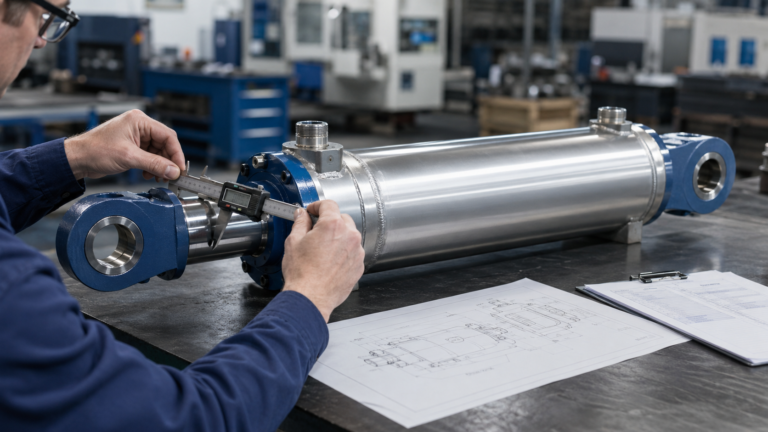
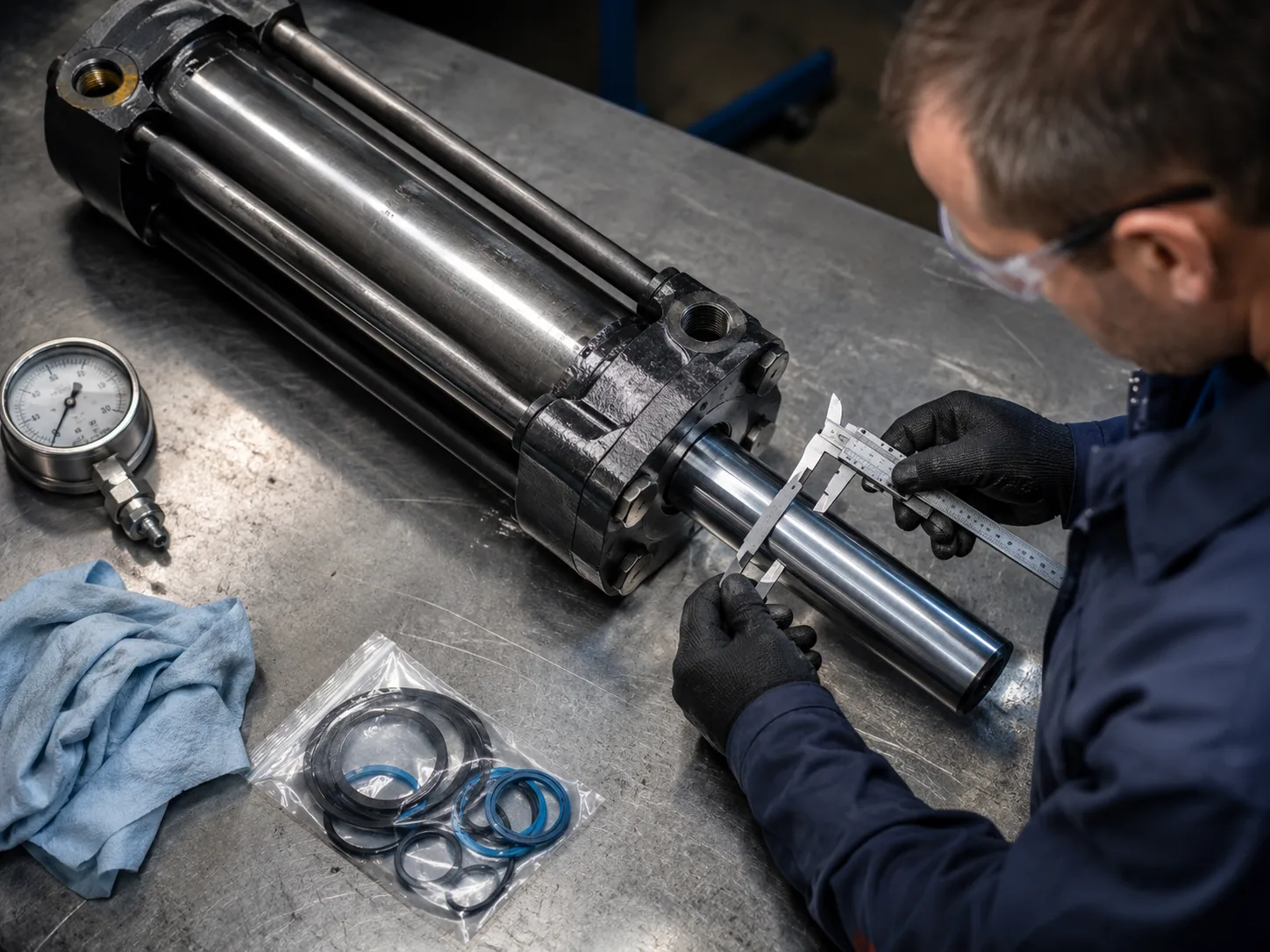
Every cylinder inquiry should translate the machine duty into measurable parameters. The minimum set is bore, rod diameter, stroke, retracted length, extended length, mounting style, port size, working pressure, peak pressure, speed, temperature range, fluid type, surface protection, and expected duty cycle.
Industry standards help buyers speak the same language. ISO 4413 defines general safety requirements for hydraulic fluid power systems. ISO 6020 and ISO 6022 families are commonly used references for hydraulic cylinder mounting dimensions and pressure-class conventions in metric industrial cylinders. ASTM A519 is frequently referenced for seamless mechanical tubing used in cylinder barrels, while ISO 3320 addresses cylinder bores and rod diameters.
For materials, many cylinder rods use hardened or induction-hardened steel with chrome plating or alternative coatings selected by corrosion exposure. Barrel materials and machining tolerances affect seal life and internal leakage. Seal material must match mineral oil, biodegradable fluids, water-glycol fluids, temperature, and contamination level.
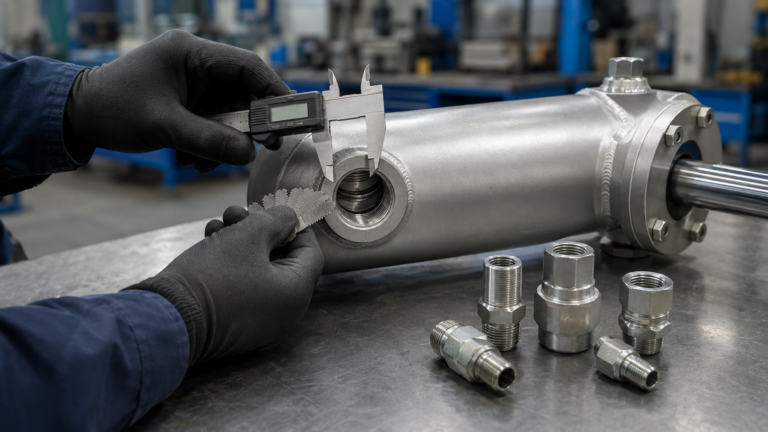
Replacement buyers should not rely only on visible dimensions. Port thread, cushion design, rod end thread, mounting bushing width, clevis geometry, and stroke stop behavior can prevent installation even when bore and stroke appear correct. For an OEM buyer, ZHY typically recommends checking prototype fit before freezing drawing revision, because late mounting changes are costlier than early parameter review.
What performance and sourcing trade-offs matter most?
The strongest purchasing decision balances performance risk with service strategy. A low-cost replacement that installs quickly but fails early can cost more than a correctly specified cylinder, especially when downtime, field labor, oil loss, and customer warranty are included.
| Type | Motion capability | Packaging strength | Serviceability | Typical buying risk |
|---|---|---|---|---|
| Single acting | Power in one direction | Good when circuit is simple | Usually simple, but depends on design | Assuming gravity return will work under all load and temperature conditions |
| Double acting | Power in both directions | Good for controlled axes | Moderate; more ports and sealing areas | Undersizing flow, rod diameter, or cushioning for actual cycle speed |
| Welded | Usually single-stage controlled motion | High value in compact mobile layouts | Lower than many tie rod designs if fully welded construction limits disassembly | Copying dimensions without checking weld orientation, ports, or mounting load path |
| Telescopic | Long multi-stage extension | Excellent retracted-length efficiency | More specialized service process | Ignoring side load, stage stability, and lowering control |
| Tie rod hydraulic cylinder | Controlled industrial motion | Good where external rods have clearance | Often strong for maintenance teams | Selecting it for tight mobile spaces where external tie rods interfere |
How to use this table: read across from the type already suggested by your machine layout, then test the serviceability and buying-risk columns. If two choices are close, choose the one that reduces the most expensive failure mode, not the one with the lowest unit price.
What trends are changing cylinder selection for OEM platforms?
OEM buyers are increasingly treating cylinders as engineered subsystems rather than commodity metal parts. Electrification, telematics, lower-leakage expectations, corrosion resistance, and platform standardization are changing how cylinder specifications are written.
Mobile equipment designers are pushing for compact cylinders that fit tighter frames and reduce exposed hose routing. At the same time, fleet owners want longer seal life and easier identification of replacement parts. This creates a split: one buyer asks for custom packaging, while another asks for standard drawings and repeatable spare availability.
Regulatory and safety expectations also matter. ISO 4413 requires hydraulic systems to be designed with attention to hazards such as unintended movement, pressure retention, leakage, and maintenance safety. In the United States, OSHA lockout/tagout requirements under 29 CFR 1910.147 are relevant when servicing machines where stored hydraulic energy can create hazardous motion.
For sourcing, documentation is becoming a differentiator. Buyers increasingly request material certificates, pressure test reports, dimensional inspection records, coating specifications, weld control, and packaging methods for export. ZHY’s OEM discussions often begin with drawing review and application conditions rather than price alone, because the wrong cylinder family can create installation and warranty problems that a cheaper quote cannot solve.
What mistakes cause fit and durability problems?
The most damaging mistake is selecting a cylinder type before confirming application duty. This leads to wrong retracted length, insufficient rod strength, poor mounting alignment, seal overheating, port interference, and premature leakage.
- Ordering by bore and stroke only, without confirming closed length, open length, rod end, and mounting width.
- Replacing a welded mobile cylinder with a larger external profile that collides with the machine frame.
- Using a long single-stage cylinder where rod buckling should have been checked against load and unsupported length.
- Choosing a telescopic unit without controlling side load during lifting and lowering.
- Ignoring oil cleanliness, operating temperature, and seal compatibility during replacement sourcing.
- Failing to request pressure testing, drawing confirmation, and packaging protection for batch orders.
For replacement programs, the best sequence is to inspect the failed cylinder, record the machine model and duty, measure all interfaces, photograph port orientation, identify the hydraulic fluid, then ask the supplier to confirm whether the original design should be copied or corrected. That approach reduces repeated failures caused by copying the wrong specification.
Practical Asset: OEM and Replacement Cylinder Selection Checklist
Use this checklist before requesting a quotation or approving a replacement drawing. It is designed to prevent the common error of choosing among hydraulic cylinder types before the machine duty is clear.
- Define the motion first: write whether the cylinder lifts, pushes, clamps, tilts, steers, levels, dumps, or holds position under load.
- Measure the geometry in order: retracted length, extended length, stroke, bore if known, rod diameter, pin diameter, mounting width, rod end thread, and port position.
- Ask the equipment team what failed: external leakage, internal drift, rod bending, tube scoring, weld cracking, seal extrusion, corrosion, or mounting wear.
- Confirm the hydraulic conditions: normal working pressure, relief valve setting, expected pressure spikes, pump flow, fluid type, operating temperature, and cleanliness practice.
- Check the installation envelope: nearby frame members, hose bend radius, grease points, guards, tie rod clearance, and access for future removal.
- Choose the likely family: use welded for compact mobile packaging, telescopic for long stroke in short space, tie rod for serviceable industrial layouts, single acting for reliable one-way force, and double acting for controlled two-way motion.
- Request evidence from the supplier: drawing approval, pressure test record, material or coating statement, seal specification, inspection dimensions, and packaging method for the shipment.
- Approve one sample before batch purchase: install it on the machine, check full travel, hose clearance, end-of-stroke behavior, speed, heat, noise, and leakage after cycling.
FAQ
1. What is the most common hydraulic cylinder type for mobile equipment?
Welded cylinders are very common in mobile equipment because they package well inside booms, frames, lift arms, and attachments. They can provide a compact outside profile and robust mounting integration, which matters on construction, agricultural, and material-handling machines. However, “common” does not mean automatically correct. A dump trailer may need a telescopic cylinder, while a service-friendly stationary machine may be better with a tie rod design. Confirm the duty, not just the industry category.
2. When should I choose a single acting cylinder instead of a double acting cylinder?
Choose a single acting cylinder when hydraulic force is needed in one direction and the return movement is reliably provided by gravity, a spring, or an external mechanical load. Dump and simple lift functions are typical examples. Choose a double acting cylinder when the machine must control both extension and retraction, especially under load. If the return path can bind, slow down in cold oil, or create a safety risk, double acting control is the stronger engineering choice.
3. Is a tie rod hydraulic cylinder easier to repair?
In many industrial applications, yes. A tie rod hydraulic cylinder is often easier for maintenance teams to disassemble because the end caps are clamped by external tie rods rather than permanently welded structures. This can simplify seal replacement and inspection when the machine layout leaves enough clearance. The trade-off is packaging: external rods may not fit tight mobile equipment spaces. Buyers should compare service access, pressure rating, mounting standard, and available spare parts before selecting this construction.
4. Why are telescopic cylinders used on dump trucks and trailers?
Telescopic cylinders are used where a machine needs a long stroke but cannot fit a long single-stage cylinder when retracted. A dump body may need a large lifting arc, while the chassis offers limited installation length. Multiple nested stages solve that geometry problem. The buyer must still check side-load control, mounting alignment, stage overlap, lowering control, and contamination protection because telescopic designs are more sensitive to improper loading than many simple single-stage cylinders.
5. What information should I send a supplier for replacement cylinder matching?
Send the machine model, cylinder function, photos from several angles, retracted and extended length, stroke, pin diameters, mounting widths, rod diameter, port size and orientation, rod end details, and any nameplate or drawing data. Also explain how the old cylinder failed. A supplier can copy dimensions, but failure information helps decide whether the specification should be improved. For batch replacement, request a drawing for approval before production and test one sample before ordering the full quantity.
References
- ISO 4413:2010 Hydraulic fluid power — General rules and safety requirements for systems and their components, International Organization for Standardization, 2010.
- ISO 6020-1:2007 Hydraulic fluid power — Mounting dimensions for single rod cylinders, 16 MPa series, International Organization for Standardization, 2007.
- ISO 6022:2018 Hydraulic fluid power — Mounting dimensions for single rod cylinders, 25 MPa series, International Organization for Standardization, 2018.
- ISO 3320:2013 Fluid power systems and components — Cylinder bores and piston rod diameters and area ratios, International Organization for Standardization, 2013.
- ASTM A519 / A519M Standard Specification for Seamless Carbon and Alloy Steel Mechanical Tubing, ASTM International, 2023.
- 29 CFR 1910.147 The control of hazardous energy: lockout/tagout, Occupational Safety and Health Administration, U.S. Department of Labor, 2024.
- Industrial Cylinder Products: Series 2H Heavy Duty Hydraulic Cylinders, Parker Hannifin Cylinder Division, 2023.
- Hydraulics Basic Level: Hydraulic Cylinders and Actuators Training Material, Bosch Rexroth, 2022.
How should buyers turn this overview into the right cylinder decision?
The most reliable way to use this guide is to treat cylinder type as a consequence of machine duty. The buyer should not begin with a catalog category; the buyer should begin with the work the cylinder must do, the space it must occupy, and the failure that would be most expensive. This is why an OEM loader arm, a dump trailer, and a factory press may all use hydraulic force but require different construction choices.
What matters first is load path. If the cylinder is exposed to bending, dirt, shock, and tight mobile packaging, a compact welded design can be the rational choice because the external envelope is clean and the structure can be integrated into the machine. If the motion requires a long lift from a short chassis space, a telescopic design solves geometry that a normal single-stage cylinder cannot solve cleanly. If the buyer maintains equipment in a plant and wants predictable rebuilds, a tie rod construction can reduce maintenance friction.
Why does this matter commercially? Cylinder errors rarely appear only as purchase-order mistakes. They become hose interference, rod scoring, slow return, seal extrusion, field leakage, warranty labor, and customer downtime. Standards such as ISO 4413 emphasize safe hydraulic system design, while OSHA lockout/tagout rules remind maintenance teams that stored hydraulic energy must be controlled during service. Those are not abstract compliance points; they shape how cylinders are mounted, isolated, tested, and repaired.
The practical option is to build a short decision record for every new OEM or replacement order: function, load, stroke, envelope, mounting, fluid, environment, inspection evidence, and service expectation. When these facts are documented, the choice among hydraulic cylinder types becomes clearer and defensible. ZHY recommends this evidence-first approach because it prevents the most common sourcing failure: buying a cylinder that looks similar but does not match the actual duty. The best next step is not to ask for the lowest quote first; it is to confirm the load, stroke, space, and mounting so the quote reflects the correct engineering path.