Replacement Hydraulic Cylinders: How to Choose the Right Fit for Old Equipment
Why does an old machine turn cylinder sourcing into a technical RFQ?
An old machine turns sourcing into a technical RFQ because the missing part number is rarely the real problem; fit, load, mounting geometry, and safety margins are. For a project contractor, repair shop, importer, or fleet maintenance buyer, the fastest purchase is not the cheapest cylinder. The fastest purchase is the one that installs once, reaches pressure safely, and does not force bracket rework.
The common failure pattern is predictable. A buyer measures approximate overall length, finds a low-cost cylinder with a similar stroke, and assumes it will work. During installation, the clevis is too wide, the pin hole is offset, the port interferes with the frame, or the rod is undersized for side load. The machine then stays parked while the team pays for machining, hose rerouting, express freight, or a second order.
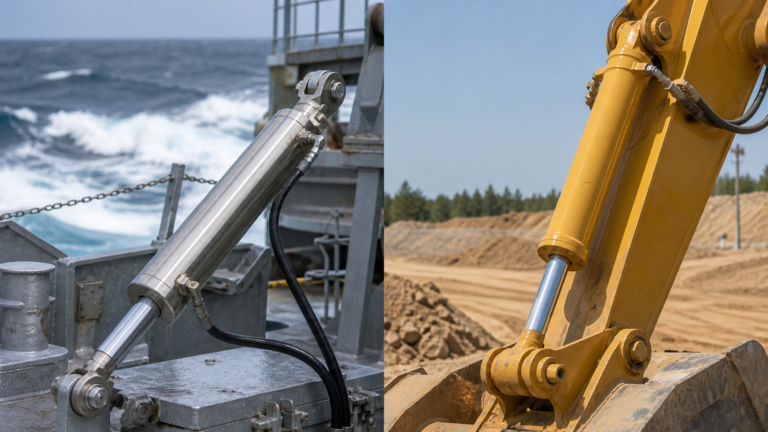
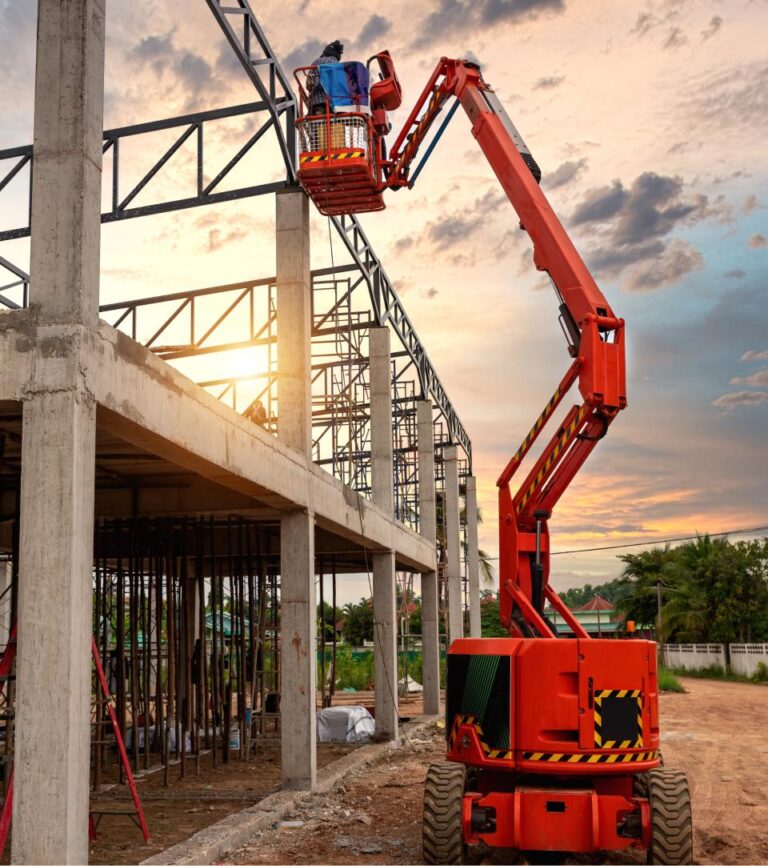
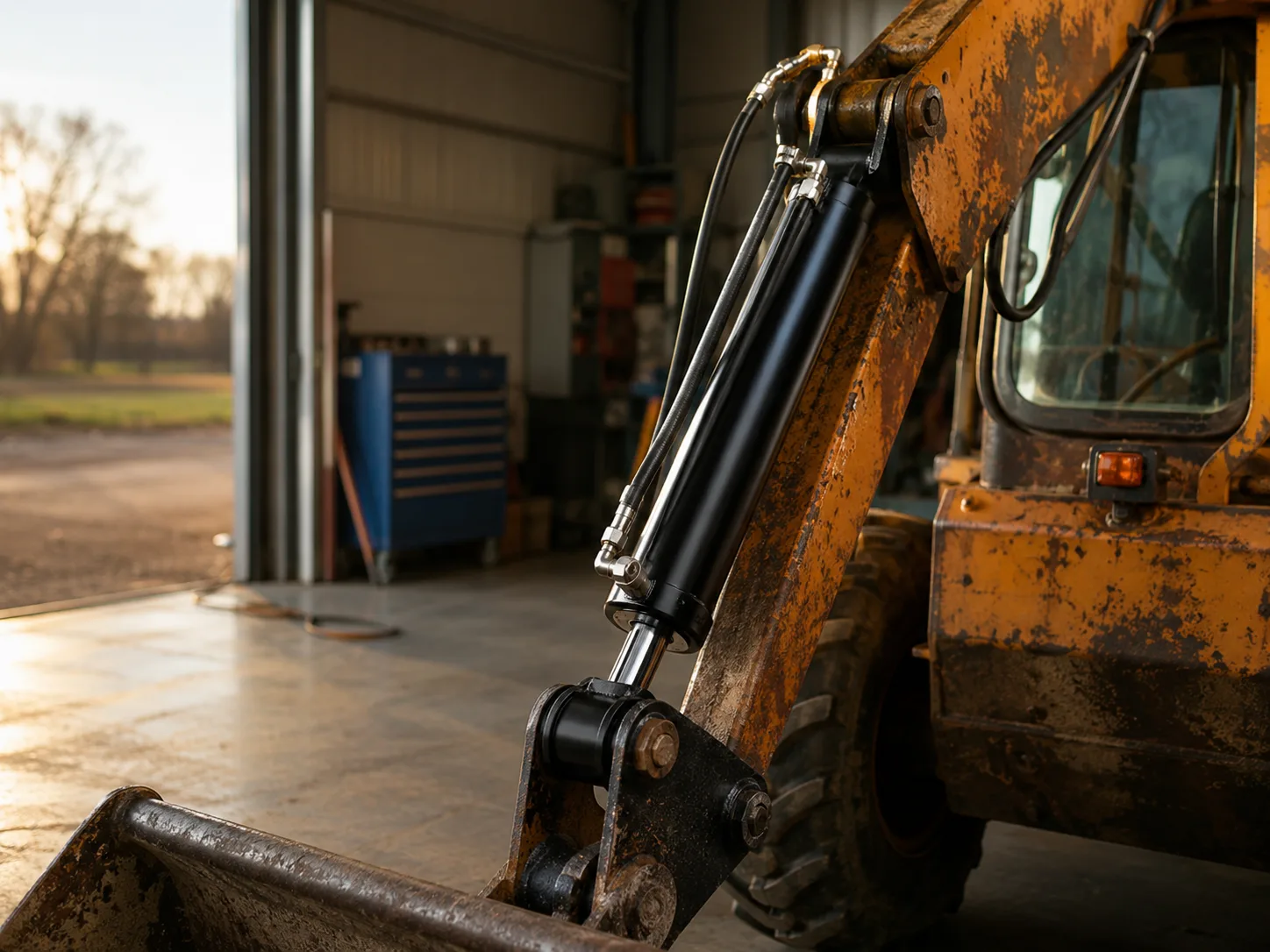
For hydraulic cylinder replacement on discontinued loaders, presses, compactors, forklifts, agricultural implements, and workshop lifting equipment, the decision logic should be strict: if the OEM cylinder is available at a reasonable lead time, use it; if it is unavailable or the original design has repeated failures, specify a measured replacement based on dimensions and working parameters. ZHY typically treats the old cylinder, equipment model, photos, and duty cycle as the minimum evidence needed before quoting.
What information must be measured before ordering a replacement?
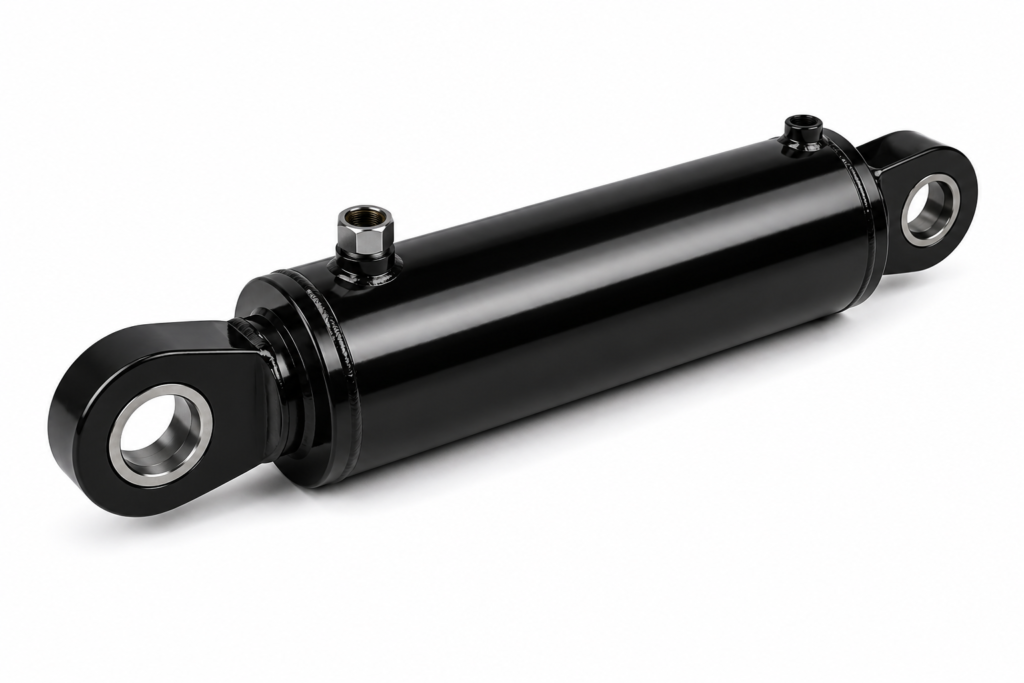
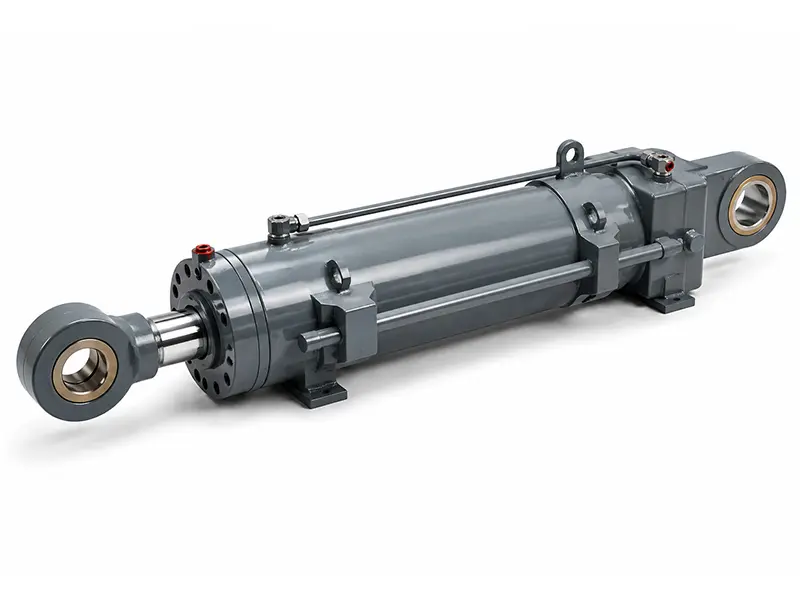
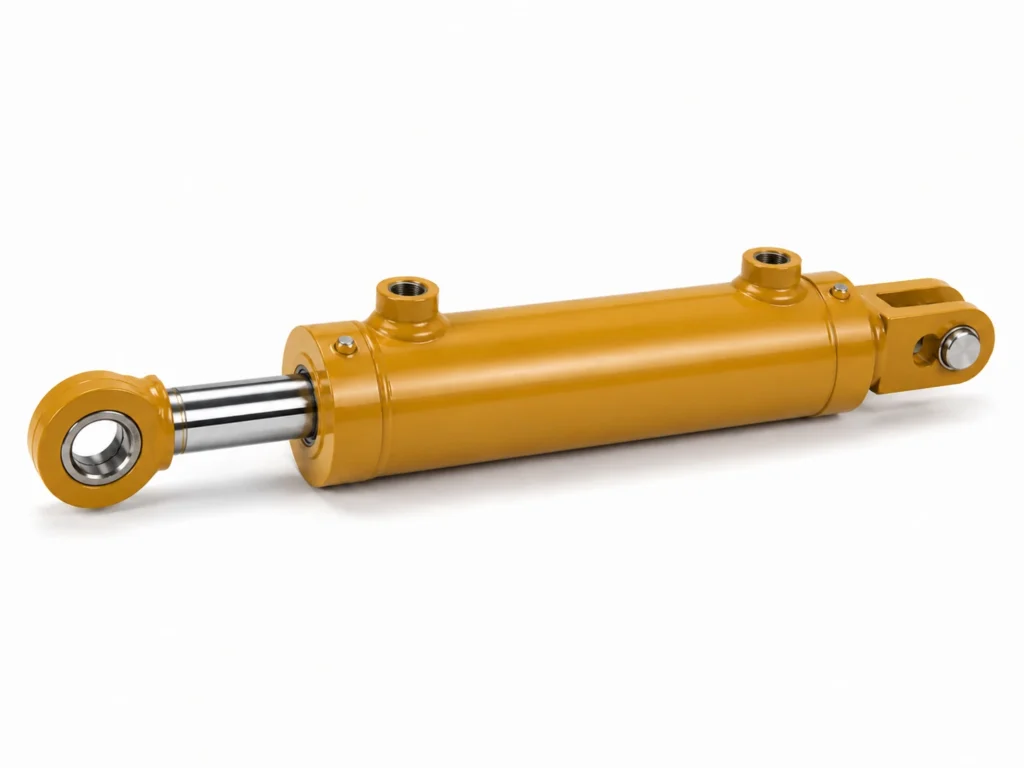
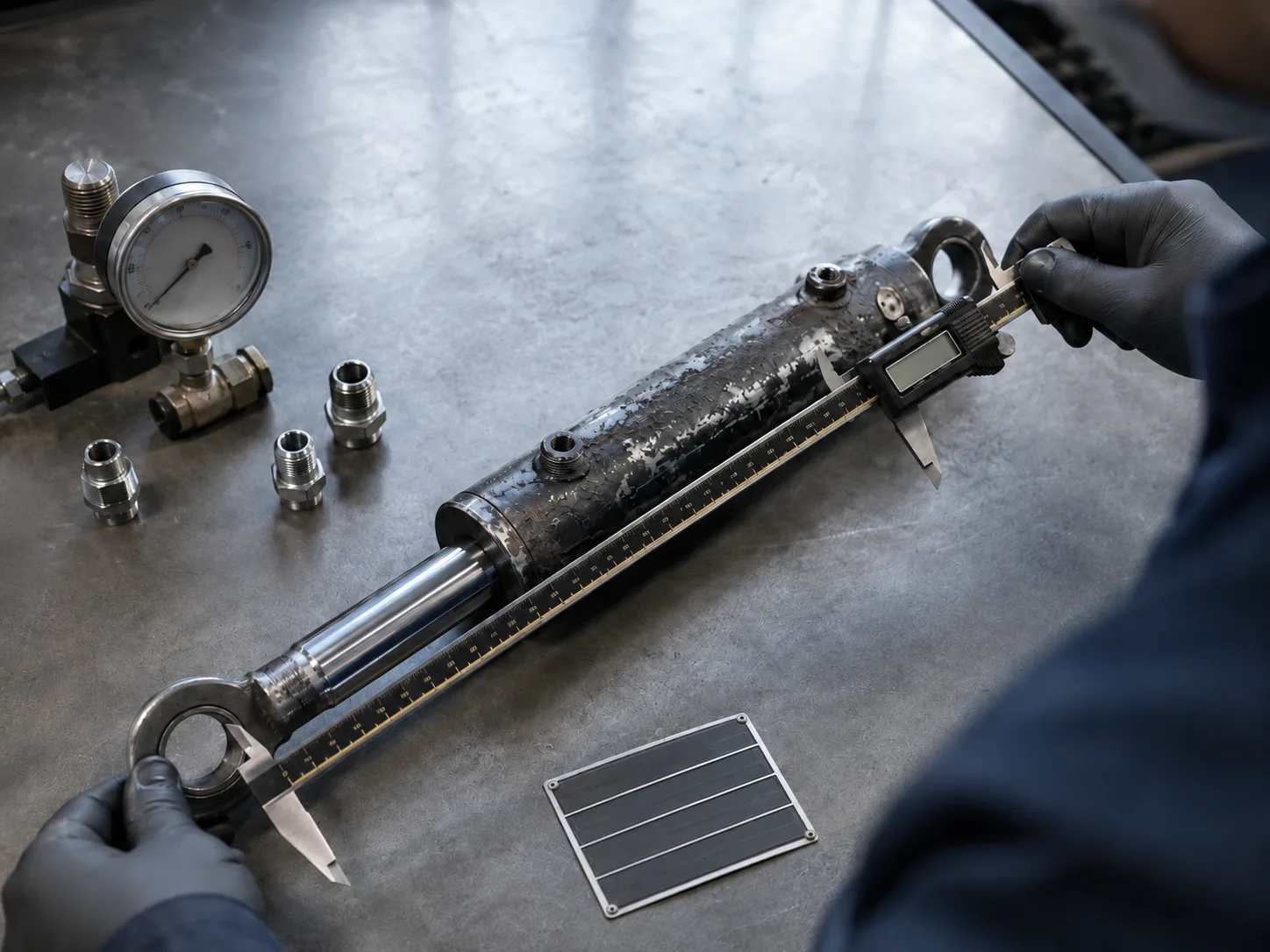
The buyer must measure the cylinder as a system, not as a tube with a rod. Bore, rod diameter, stroke, retracted length, mounting ends, pin sizes, port thread, port orientation, operating pressure, and installation envelope all affect whether the unit can be installed without rework. One incorrect dimension can turn a routine repair into another downtime event.
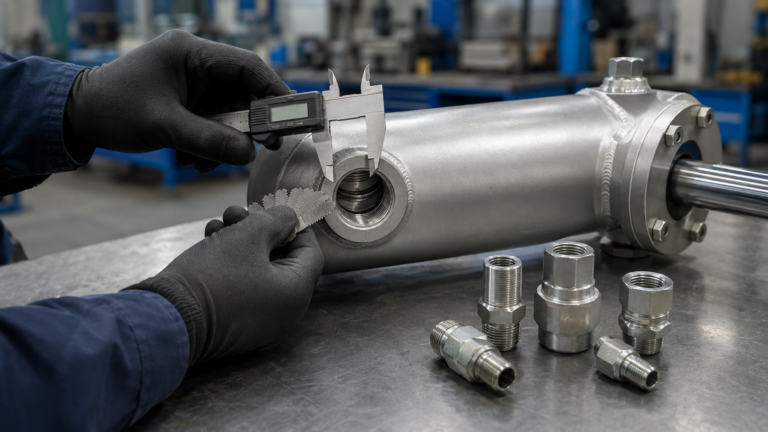
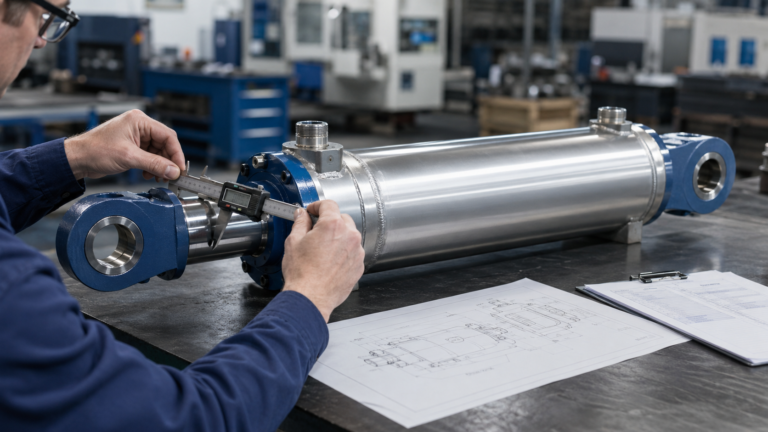
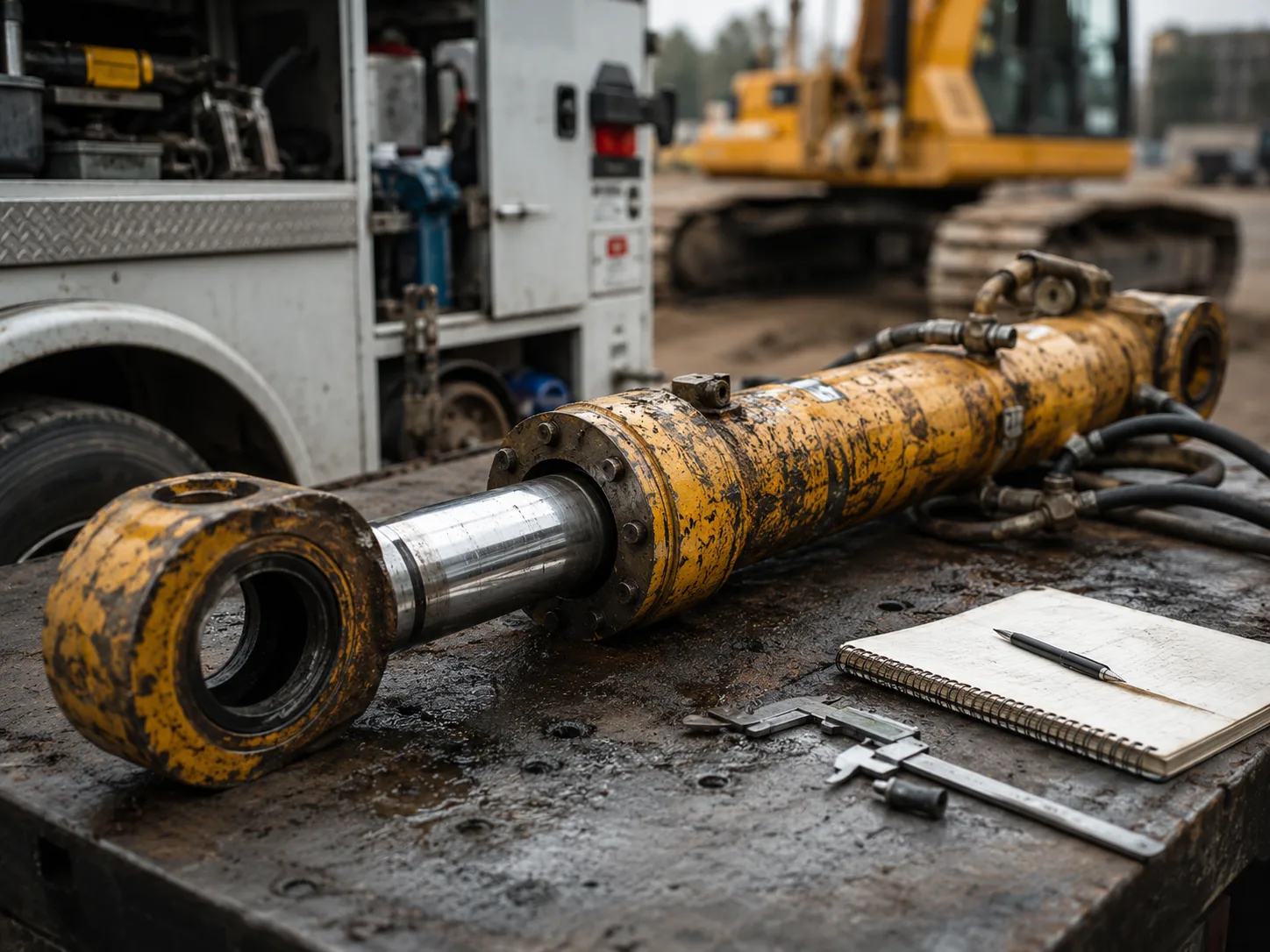
Start with the old cylinder fully cleaned, depressurized, and safely removed. Measure centre-to-centre pin length in both retracted and extended positions when possible. Record the rod diameter with calipers, identify whether the mounting is clevis, cross tube, flange, trunnion, spherical bearing, or threaded end, and photograph every port from two angles. If the piston bore cannot be measured directly, use original documentation, stamped markings, or the barrel outside diameter plus wall assumptions only as supporting evidence, not as the sole basis for production.
Pressure is just as important as geometry. ISO 6020 series cylinders are associated with 16 MPa mounting-dimension families, while ISO 6022 covers 25 MPa single-rod cylinder mounting dimensions. These standards do not make every machine interchangeable, but they show why pressure class and dimensional family must be discussed together.
- Bore
- The internal diameter of the barrel; it controls piston area and force at a given hydraulic pressure.
- Rod Diameter
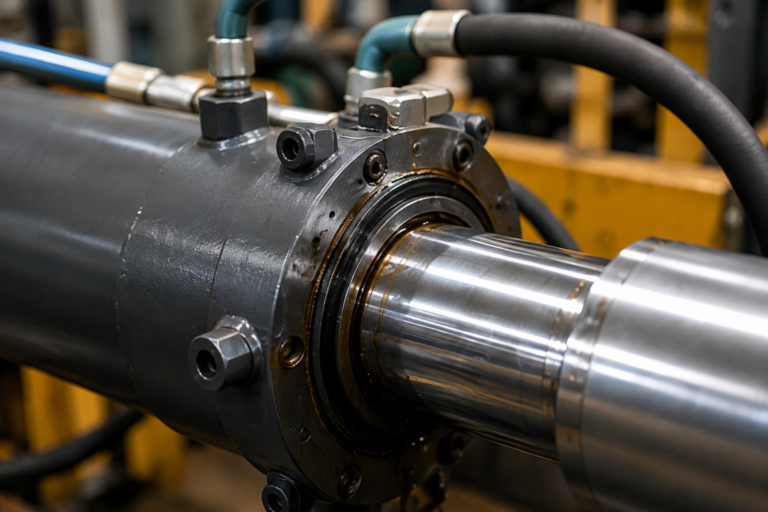
- The chrome-plated shaft diameter; it affects column strength, retract force, seal selection, and resistance to bending.
- Stroke
- The usable travel distance from fully retracted to fully extended position; it must match the machine movement, not only the old label.
- Pin-to-Pin Length
- The centre distance between mounting pin holes; incorrect length changes the machine’s motion range and may overload linkages.
- Port Orientation
- The clock position and thread form of oil ports; a wrong orientation can create hose interference or unsafe bending.
Key Takeaways
- If the OEM part is unavailable, specify the replacement from measured dimensions and working parameters, not from visual similarity.
- Bore, rod diameter, stroke, pin-to-pin length, port orientation, and mounting width should be confirmed before price comparison.
- ISO 4413 requires hydraulic systems to be designed and maintained with safety, pressure control, and component suitability in mind.
- A low-cost cylinder becomes expensive when it causes bracket machining, hose changes, seal failure, or repeat downtime.
- Photos, equipment model, duty cycle, and failure history help the supplier decide whether a standard unit or a custom build is safer.
Should you choose a standard cylinder, repair the old one, or order a custom build?
Choose a standard cylinder only when the mounting geometry, pressure rating, stroke, ports, and installation envelope match closely enough to install without modification. Repair the old cylinder when the barrel, rod, and mounting structure remain sound. Choose a custom replacement cylinder when the OEM part is unavailable, the machine has non-standard brackets, or the original design failed repeatedly under real duty conditions.
This is a commercial investigation decision, not only an engineering preference. Standard cylinders can be fast and cost-efficient, but they often force compromises on old equipment. Repair can be attractive when the failure is limited to seals or light rod damage. However, a bent rod, scored barrel, cracked weld, worn clevis, or obsolete seal profile can make repair unreliable.
| Situation | Recommended route | Reason | Buyer priority |
|---|---|---|---|
| OEM part number is available and lead time is acceptable | Order OEM replacement | Lowest dimensional uncertainty and easiest warranty traceability | Fast confirmation |
| Old cylinder leaks but rod and barrel are undamaged | Repair or reseal | Lower material waste and minimal redesign risk | Cost control |
| OEM part is discontinued and mounting is non-standard | Specify custom replacement | Dimensions, ports, and mounting ends can be matched to the machine | Fit accuracy |
| Cylinder failed repeatedly under heavy loads | Review design and upgrade key parameters | Rod size, seal material, bearing length, or mounting alignment may be inadequate | Reliability |
| Fleet has many identical old machines | Prototype one unit, then batch order | One verified sample reduces repeated measurement and inventory risk | Repeatability |
How to use this table: use the “Situation” column to identify the constraint that creates the biggest downtime risk; when two options look close, choose the route that protects fit accuracy before unit price.
Which performance parameters matter most on old equipment?
The most important parameters are force, pressure rating, rod column strength, seal compatibility, mounting strength, and surface finish. Old machines often have loose pins, worn brackets, and imperfect alignment, so the replacement must tolerate real operating conditions rather than laboratory geometry. A cylinder that looks correct may still fail if the rod is too slender or the seals are wrong for the oil and temperature.
Force comes from piston area multiplied by pressure. Increasing bore can raise force, but it also changes oil volume and speed. Increasing rod diameter improves buckling resistance on push applications, but it changes retract area and may alter cycle timing. For long-stroke push cylinders, rod stability is especially important because side loading and misalignment can damage seals and bearings.
Seals should be selected for hydraulic oil type, temperature, contamination exposure, and duty cycle. NBR is widely used for mineral oil applications, while polyurethane is common for wear resistance in many mobile hydraulic seals. High-temperature or aggressive-fluid applications may need different elastomers. ISO 4413 also emphasizes suitable component selection, pressure control, maintenance access, and safe energy isolation, making the cylinder part of a safety-related system rather than a standalone commodity.
- Confirm maximum working pressure and pressure spikes, not only pump nominal pressure.
- Check whether the cylinder mainly pushes, pulls, holds load, or cycles continuously.
- Inspect old pins and brackets because worn mounting points can damage a new cylinder.
- Match port thread and orientation before welding or machining is considered.
- Review seal material when temperature, outdoor exposure, or contamination is severe.
What mistakes create the highest replacement cost?
The most expensive mistake is choosing by price and approximate size. The invoice may be lower, but the total cost rises when the cylinder cannot be installed, bends under load, leaks early, or forces field modification. For BOFU buyers, the correct question is not “Which cylinder is cheapest?” but “Which specification prevents a second shutdown?”
Port position is a frequent hidden problem. A port clocked 90 degrees away from the original may collide with a frame member or force a hose to bend below its safe radius. Mounting width is another common failure point. If the clevis is too narrow, the bracket will not fit; if it is too wide, washers or spacers may create uneven load paths. Pin diameter also matters because undersized pins can hammer the bracket and oversized pins cannot be installed without machining.
Another risk is ignoring the old failure mode. A leaking seal after many years may simply need replacement, but a rod bent near mid-stroke suggests side load, overload, or misalignment. Repeating the original dimensions without discussing the cause may reproduce the failure. ZHY’s review process normally asks for close-up photos of the rod, gland, welds, mounting ends, and machine linkage so that the RFQ can address both fit and service life.
| Risk item | What to check | Likely consequence if ignored | Recommended evidence |
|---|---|---|---|
| Approximate stroke | Measure full travel and pin-to-pin dimensions | Machine movement too short or mechanical interference | Retracted and extended photos with tape measure |
| Unknown pressure class | Check pump setting, relief valve, or manual | Seal extrusion, barrel stress, or unsafe operation | Equipment manual or hydraulic schematic |
| Wrong mounting width | Measure inside and outside clevis dimensions | Bracket rework and uneven load transfer | Caliper readings and end-view photos |
| Port mismatch | Identify thread type and clock position | Hose rerouting, leakage, or collision with frame | Thread gauge, fitting photos, and orientation sketch |
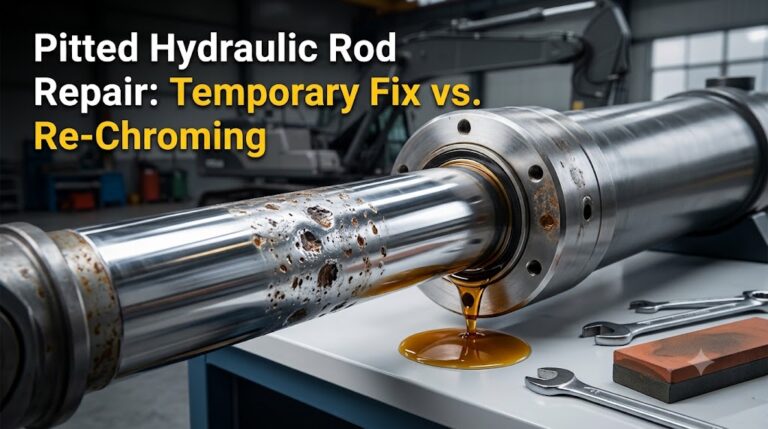
| Unreviewed rod damage | Inspect scoring, pitting, bending, and chrome wear | Early seal failure on the new or repaired unit | Close-up surface photos under side light |
How to use this table: treat the “Likely consequence” column as the downtime cost driver; when time and budget conflict, prioritize checks that prevent machining, leakage, or unsafe pressure operation.
How do standards and compliance affect a replacement cylinder?
Standards do not replace engineering judgment, but they provide a common language for pressure class, mounting dimensions, acceptance testing, and hydraulic safety. For old equipment, they help buyers avoid vague RFQs such as “same as photo” and move toward verifiable requirements. The relevant standard depends on whether the issue is system safety, cylinder testing, or dimensional interchangeability.
ISO 4413 is a key reference for hydraulic fluid power systems because it addresses general rules and safety requirements for systems and components. ISO 10100 covers acceptance tests for hydraulic cylinders, giving buyers a useful framework when asking suppliers about pressure testing and inspection before shipment. ISO 6020 and ISO 6022 families are often referenced for standardized mounting dimensions in 16 MPa and 25 MPa cylinder series respectively, although many mobile machines use proprietary dimensions.
Worksite regulations also matter during removal and installation. In the United States, OSHA lockout/tagout requirements under 29 CFR 1910.147 are relevant when servicing machines with hazardous energy. A buyer should ensure the maintenance team depressurizes the hydraulic circuit, supports raised loads mechanically, and prevents accidental movement before measuring or removing the cylinder.
What market trends are changing replacement sourcing?
Replacement sourcing is becoming more evidence-driven because older equipment is staying in service longer, while OEM parts for discontinued models are not always available on practical lead times. Public market summaries from hydraulic component research firms consistently identify construction, agriculture, mining, material handling, and industrial automation as demand drivers, which explains why repair shops increasingly need measured replacements rather than catalog-only sourcing.
The buyer behaviour is also changing. Instead of sending a single blurry photo and asking for a price, professional buyers now send dimension sheets, operating pressure, application photos, and annual quantity expectations. This shift shortens clarification time and helps suppliers decide whether a standard unit, modified standard unit, or fully engineered replacement is appropriate.
Another trend is batch replacement for fleets. If an importer or rental company has ten older loaders with the same cylinder design, it can be more efficient to verify one sample, record all measurements, test fit the first article, and then produce a small batch. This approach lowers future downtime because the buyer can hold a known-fit spare instead of restarting the identification process after every failure.
Practical Asset: RFQ Checklist for an Old Hydraulic Cylinder
This checklist is designed for buyers who want an RFQ that can be quoted without repeated clarification. Complete the steps in order, because each item reduces a different failure risk: unsafe removal, wrong size, wrong pressure, wrong mounting, wrong port, or poor production repeatability.
- Lock out the machine, support raised structures mechanically, release hydraulic pressure, and confirm the cylinder can be handled safely before removal.
- Record the equipment brand, model, serial number if available, attachment type, and the function of the cylinder, such as boom lift, bucket tilt, clamp, steering, or press ram.
- Photograph the cylinder installed from both sides before removal so the supplier can see port orientation, hose routing, mounting angle, and surrounding clearance.
- Measure retracted pin-to-pin length, extended pin-to-pin length, stroke, rod diameter, barrel outside diameter, mounting width, pin hole diameter, and end style.
- Identify port thread type, port size, and clock position; include photos with the fitting removed if the thread form is uncertain.
- Check the hydraulic system pressure from the manual, pump plate, relief valve setting, or maintenance record; do not guess pressure from machine size alone.
- Describe the failure: seal leakage, rod pitting, rod bending, slow drift, cracked weld, damaged clevis, or repeated hose damage.
- Ask the supplier to confirm material, rod surface treatment, seal type, pressure test method, packaging, expected lead time, and whether one sample can be test-fitted before batch production.
- For a custom replacement cylinder, request a drawing or dimension confirmation sheet before production so both sides approve the same critical measurements.
- After receiving the cylinder, compare all mounting and port dimensions before applying pressure, then test at low speed to confirm movement and hose clearance.
FAQ
1. How do I know if I need a replacement cylinder instead of a repair?
You need a replacement when the old cylinder has structural damage, a bent or deeply pitted rod, a scored barrel, cracked welds, worn mounting ends, or obsolete parts that make resealing unreliable. Repair is reasonable when the main problem is leakage and the rod, bore, and ends remain serviceable. If the same cylinder has failed several times, ask the supplier to review alignment, rod size, bearing support, and operating pressure before repeating the original design.
2. Can I use a standard catalog cylinder on old equipment?
You can use a standard catalog cylinder only if the stroke, retracted length, bore, rod diameter, mounting ends, pin sizes, port thread, port orientation, and pressure rating match the machine closely. A standard cylinder that is “almost the same” can create linkage interference, hose strain, or unsafe loading. For discontinued equipment, a measured drawing is usually safer than relying on catalog appearance, especially when the machine has welded brackets or limited installation space.
3. What measurements should I send for hydraulic cylinder replacement?
Send the equipment model, cylinder function, bore if known, rod diameter, stroke, retracted pin-to-pin length, extended length, mounting style, pin hole diameter, clevis width, port size, port thread, and port clock position. Include photos before removal, after removal, and close-ups of the ends and ports. If pressure information is available from the machine manual or relief valve setting, include it. These details allow a supplier to quote more accurately and reduce back-and-forth.
4. Why is port orientation important when replacing a cylinder?
Port orientation determines whether hoses can connect safely without rubbing, kinking, or colliding with the machine frame. A cylinder with correct stroke and pin dimensions can still fail installation if the ports face the wrong direction. On compact loaders, presses, and agricultural attachments, clearance may be very limited. Photos of the installed cylinder and a simple orientation sketch help the supplier reproduce the port position or recommend a safer hose routing arrangement.
5. What should a supplier confirm before producing a custom replacement cylinder?
A supplier should confirm the critical dimensions, working pressure, mounting style, port specification, rod material and surface treatment, seal material, expected duty cycle, testing method, packaging, and lead time. For a custom replacement cylinder, the buyer should request a drawing or confirmation sheet before production. This step is especially important for old equipment because the original cylinder may have been repaired, modified, or replaced before, making visual matching unreliable.
References
- ISO 4413:2010 Hydraulic fluid power — General rules and safety requirements for systems and their components, International Organization for Standardization, ISO, 2010.
- ISO 10100:2020 Hydraulic fluid power — Cylinders — Acceptance tests, International Organization for Standardization, ISO, 2020.
- ISO 6020-1:2007 Hydraulic fluid power — Mounting dimensions for single rod cylinders, 16 MPa series — Part 1: Medium series, International Organization for Standardization, ISO, 2007.
- ISO 6022:2015 Hydraulic fluid power — Mounting dimensions for single rod cylinders, 25 MPa series, International Organization for Standardization, ISO, 2015.
- 29 CFR 1910.147 The control of hazardous energy lockout/tagout, Occupational Safety and Health Administration, U.S. Department of Labor, 1989.
- Hydraulic Fluid Power — Cylinders — Method for determining the buckling load, National Fluid Power Association, NFPA, 2009.
- Hydraulic Cylinders Market Size, Share & Trends Analysis Report, Grand View Research, Grand View Research, 2024.
- Fluid Power Basics, National Fluid Power Association, NFPA, 2024.
How to turn an old cylinder problem into a reliable replacement decision
The practical answer is to treat cylinder replacement as a controlled engineering purchase, not as a spare-part search. The old equipment may be valuable precisely because it is still productive, but its documentation may be incomplete, its brackets may be worn, and its cylinder may have been modified by previous repair work. That is why the best buying process starts with evidence: machine identification, photos, measurements, pressure information, and failure history.
Why does this matter commercially? Downtime is rarely limited to the part price. A wrong cylinder can require machining, new hoses, extra labour, urgent freight, and another service visit. Standards such as ISO 4413 and ISO 10100 support this evidence-based approach because they frame hydraulic components around safety, suitability, and acceptance testing. ISO 6020 and ISO 6022 also show that pressure class and mounting dimensions are not casual details; they are part of a structured specification language.
What option should a buyer choose? If the OEM part is still available, reasonably priced, and delivered within the maintenance window, it remains the low-risk route. If the old unit only needs seals and the structure is sound, repair may be the most economical choice. If the OEM part is unavailable, the machine uses unusual mounting ends, or the old design failed repeatedly, a measured replacement is the stronger decision. In that case, the buyer should ask for drawing confirmation, pressure test information, and packaging details before approving production.
The broader trend supports this approach. As construction, agricultural, material-handling, and industrial equipment remain in service for longer cycles, buyers increasingly need suppliers that can convert field measurements into repeatable production. A strong RFQ does not need to be complicated, but it must be complete. Send the old cylinder dimensions, equipment model, photos, application description, and pressure data first; then compare suppliers by technical response quality, not by price alone. That is the most reliable path from a damaged actuator to a machine that returns to work without another avoidable shutdown.