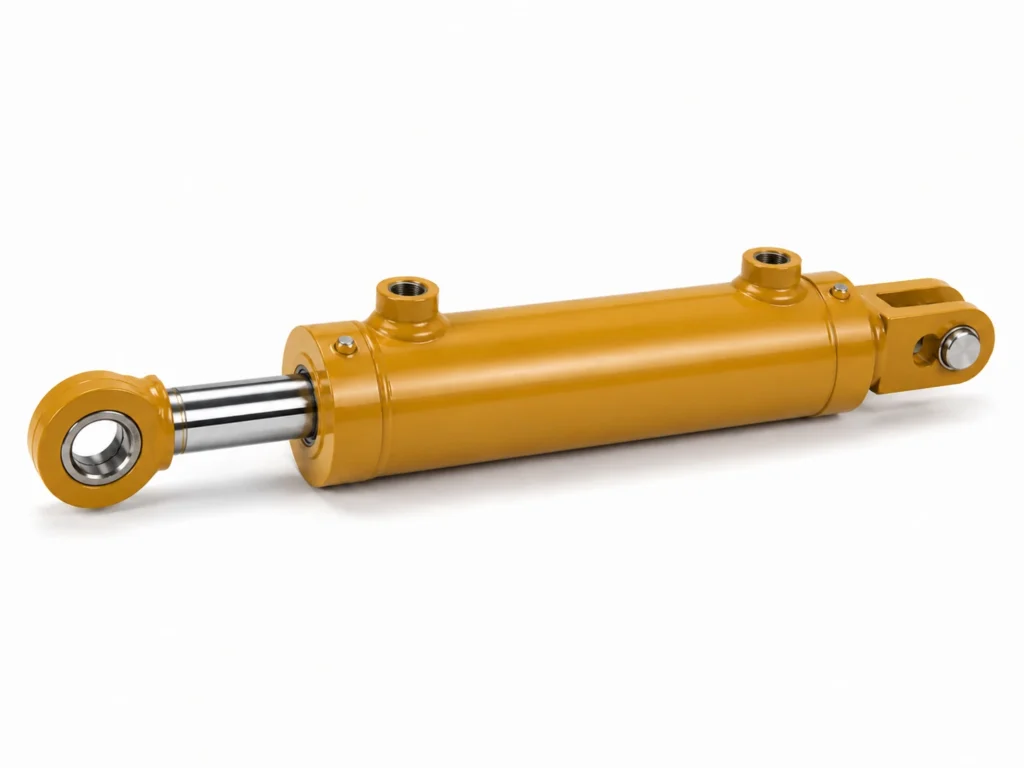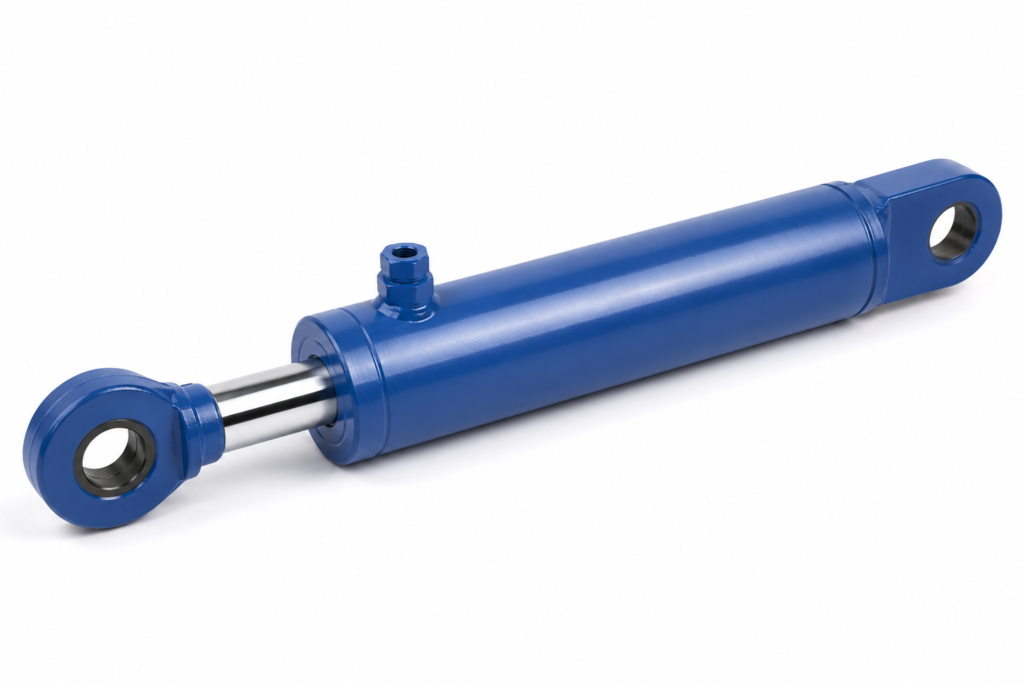
Buying a hydraulic cylinder looks simple until the new cylinder arrives.
The mounting holes do not line up. The stroke is 20 mm short. The ports face the wrong direction. Or the cylinder fits perfectly but starts leaking after several weeks.
Now you have more than a cylinder problem. You also have delayed production, idle equipment, urgent freight charges, and several uncomfortable conversations with your customer.
Most hydraulic cylinder purchasing mistakes do not begin in the workshop. They begin much earlier, usually during specification, quotation, supplier selection, or drawing approval.
This guide explains ten common mistakes and shows you how to avoid them before placing your next order. Understanding these hydraulic cylinder purchasing mistakes helps you reduce sourcing risk before price becomes the only deciding factor.
Quick Answer: What Are the Most Common Hydraulic Cylinder Purchasing Mistakes?
The most common mistake is buying a hydraulic cylinder based on only bore, stroke, and price. A reliable cylinder must also match your load, working pressure, mounting dimensions, rod diameter, port position, duty cycle, hydraulic fluid, operating temperature, and working environment.
You should also confirm the supplier’s manufacturing capability, inspection process, test pressure, delivery schedule, and drawing approval procedure. When these details are ignored, the result may be incorrect installation, insufficient force, rod bending, premature seal wear, oil leakage, unstable movement, or delayed delivery.
Hydraulic Cylinder Purchasing Risk at a Glance
| Purchasing Mistake | Likely Result | What You Should Confirm |
|---|---|---|
| Buying by price alone | Leakage and short service life | Materials, machining, seals and testing |
| Sending incomplete specifications | Incorrect fit or performance | Full technical data and drawings |
| Ignoring application conditions | Corrosion and seal failure | Environment, temperature and duty cycle |
| Choosing the wrong cylinder type | Poor control or wasted space | Motion, load and installation requirements |
| Overlooking mounting geometry | Installation failure and side load | Pin sizes, center distances and alignment |
| Using unsuitable seals | Leakage and internal bypass | Fluid, pressure, speed and temperature |
| Ignoring peak pressure | Tube, rod or weld damage | Rated and maximum system pressure |
| Skipping drawing approval | Incorrect ports or dimensions | Signed production drawing |
| Assuming every supplier is equal | Unstable quality and repeat problems | Manufacturing and inspection capability |
| Planning only for unit price | Higher total ownership cost | Service life, downtime, freight and support |
Mistake 1: Choosing the Lowest Price Without Checking What Is Included
Everyone wants a competitive price. That is normal. The problem begins when you compare two quotations as if they describe exactly the same cylinder.
One supplier may use a seamless honed tube, a hardened chrome-plated rod, application-matched seals, and pressure testing. Another may quote a cylinder with lighter materials, basic seals, limited inspection, and no recorded test. Both quotations may say “hydraulic cylinder.” They are not necessarily the same product.
A lower price may come from efficient manufacturing. It may also come from a thinner tube, softer rod, less precise machining, cheaper seals, weaker packaging, or fewer inspections. You cannot tell from the total price alone.
What You Should Compare Besides Price
- Cylinder tube material and wall thickness
- Piston rod material and surface hardness
- Chrome-plating thickness
- Seal material and seal brand
- Guide ring and wear ring design
- Welding method and inspection
- Dimensional tolerances
- Rated and test pressure
- Surface treatment and paint system
- Packaging and corrosion protection
- Warranty and confirmed production lead time
Think of it like buying a pair of work boots. Two pairs may look similar in a photograph. You only discover the difference after six months in mud, water, and rough ground. Hydraulic cylinders work the same way. The hidden details decide how long the cylinder remains reliable.
How to Avoid This Mistake
Ask every supplier to quote against the same technical specification. Use one comparison sheet and request clear confirmation of materials, seals, testing, surface treatment, packaging, and delivery.
Do not ask only, “What is your best price?” Ask, “What exactly is included in this price, and which specifications are guaranteed?” That small change makes the comparison far more useful. It also prevents hydraulic cylinder purchasing mistakes caused by quotations that look similar but include different materials and testing standards.
If you need a drawing-based solution, review the supplier’s custom hydraulic cylinder manufacturing capabilities before comparing the final quotation.
Mistake 2: Sending Only Bore and Stroke
Bore and stroke are important, but they do not fully define a hydraulic cylinder. A message such as “We need a 100 mm bore cylinder with a 500 mm stroke” is enough to start a conversation. It is not enough to start production.
The supplier still does not know your rod diameter, retracted length, extended length, mounting type, pin dimensions, port thread, working pressure, load direction, operating speed, or application. If the supplier guesses, you carry the risk.
A 100 mm bore cylinder used on a hydraulic press is not designed in the same way as one used on a crane outrigger. The dimensions may look similar, but the load condition, safety requirement, rod design, seals, and mounting structure can be very different.
What Information Should You Provide?
- Cylinder type, bore diameter and rod diameter
- Stroke, closed length and extended length
- Mounting type at both ends
- Pin diameter and mounting width
- Working pressure and maximum pressure
- Required push and pull force
- Port thread, position and orientation
- Operating speed and duty cycle
- Hydraulic fluid and working temperature
- Working environment and quantity
- Drawing, photograph, sample or equipment model
You may not have every answer. That is fine. A capable supplier should identify what is missing and help you complete the specification before production.
How to Avoid This Mistake
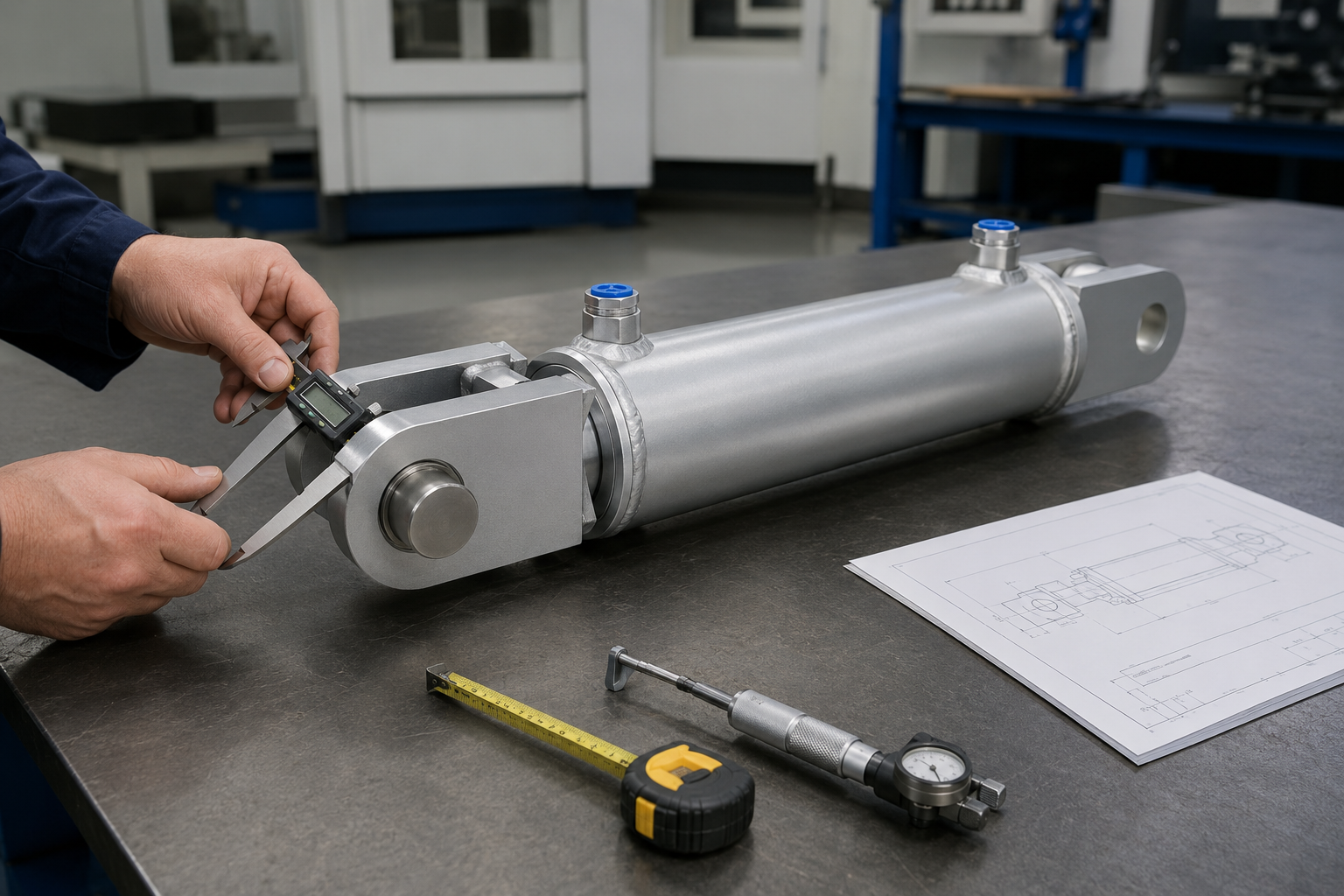
Use a hydraulic cylinder request-for-quotation form. Attach a drawing whenever possible. If you do not have one, send clear photographs with measured dimensions.
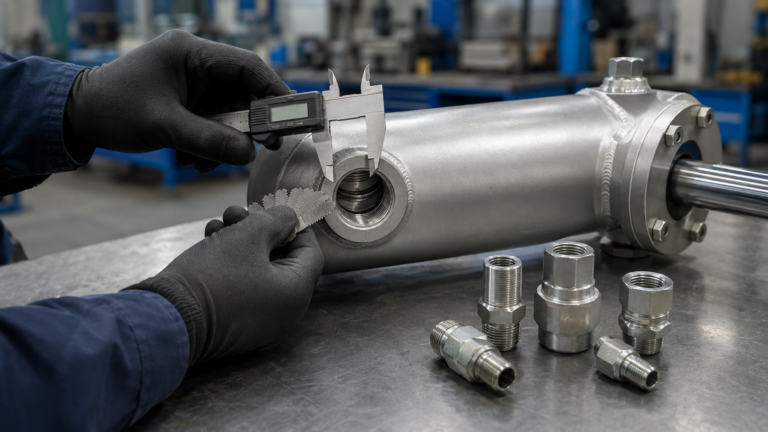
For a replacement cylinder, measure the old cylinder in both retracted and extended positions. Confirm pin-to-pin distance, mounting widths, port orientation, and pin-hole diameter. Photograph each measurement so the engineering team can understand where it was taken. This extra work may require thirty minutes. It can save several weeks of corrections.
Mistake 3: Ignoring the Real Working Environment
A cylinder does not work inside a quotation sheet. It works on your machine. That machine may operate in abrasive dust, saltwater, freezing weather, high heat, mud, chemicals, or continuous rain. It may sit outdoors for months and then suddenly work under full load.
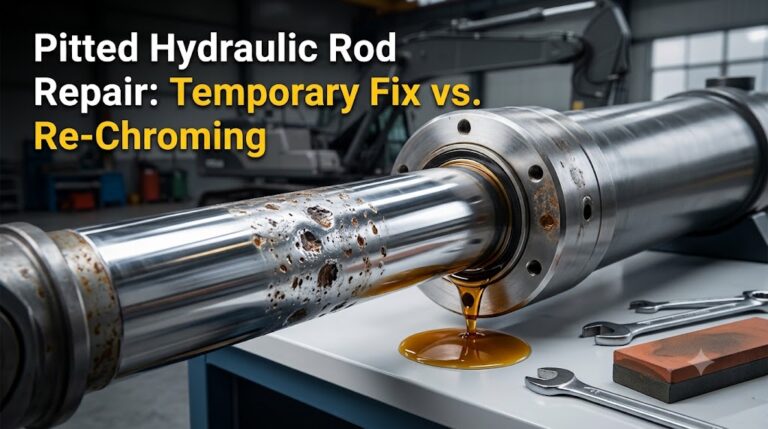
If you do not tell the supplier about these conditions, you may receive a cylinder designed for a much easier life. A standard chrome-plated rod may perform well indoors. The same rod may develop corrosion pits when exposed to salt spray. Once the rod surface is damaged, every stroke pulls contamination across the wiper and rod seal.
Leakage often appears later, but the purchasing mistake happened before production.
Environmental Details That Affect Cylinder Design
- Saltwater or marine atmosphere
- Rain, humidity or outdoor storage
- Abrasive dust, sand, cement or mud
- Chemicals or cleaning agents
- High or low temperatures
- Frequent pressure cycles
- Shock loads, vibration or side loads
- High operating speed
- Long periods without movement
These conditions influence material selection, rod coating, seals, wipers, paint, corrosion protection, and sometimes the entire cylinder structure.
Imagine that you are purchasing a cylinder for a garbage truck. The cylinder may face dirty water, waste liquid, outdoor weather, frequent cycles, shock loading, and washing chemicals. Choosing the same specification as a clean indoor factory cylinder would be a risky shortcut.
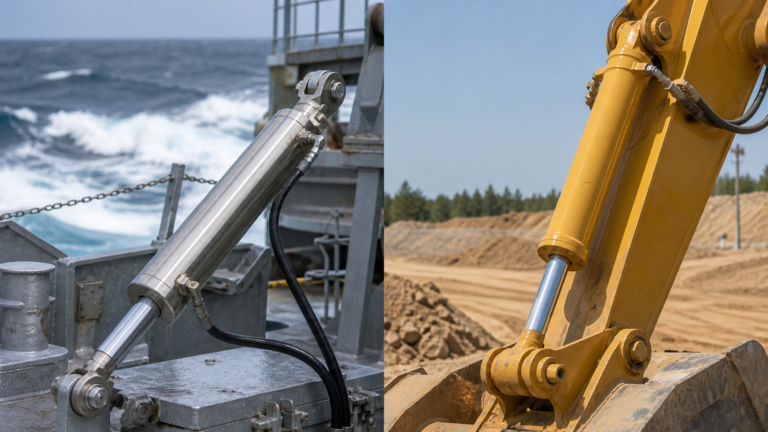
For marine equipment, you may need stainless steel components, nickel-chrome rod treatment, marine-grade paint, and improved corrosion protection. For mining equipment, you may need a stronger rod, reinforced mounting, and a sealing system designed for dust and impact.
How to Avoid This Mistake
Include an “operating environment” section in every RFQ. Do not write only “outdoor use.” Explain what outdoor use means in your application.
For example: “The cylinder operates on a coastal machine, faces salt spray and rain, works 20 cycles per hour, and may remain outdoors for twelve months.” That sentence gives the engineer something useful to work with.
If your equipment works under impact, heavy loads, or harsh jobsite conditions, compare the design requirements with suitable heavy-duty hydraulic cylinder solutions before confirming materials.
Mistake 4: Selecting the Wrong Hydraulic Cylinder Type
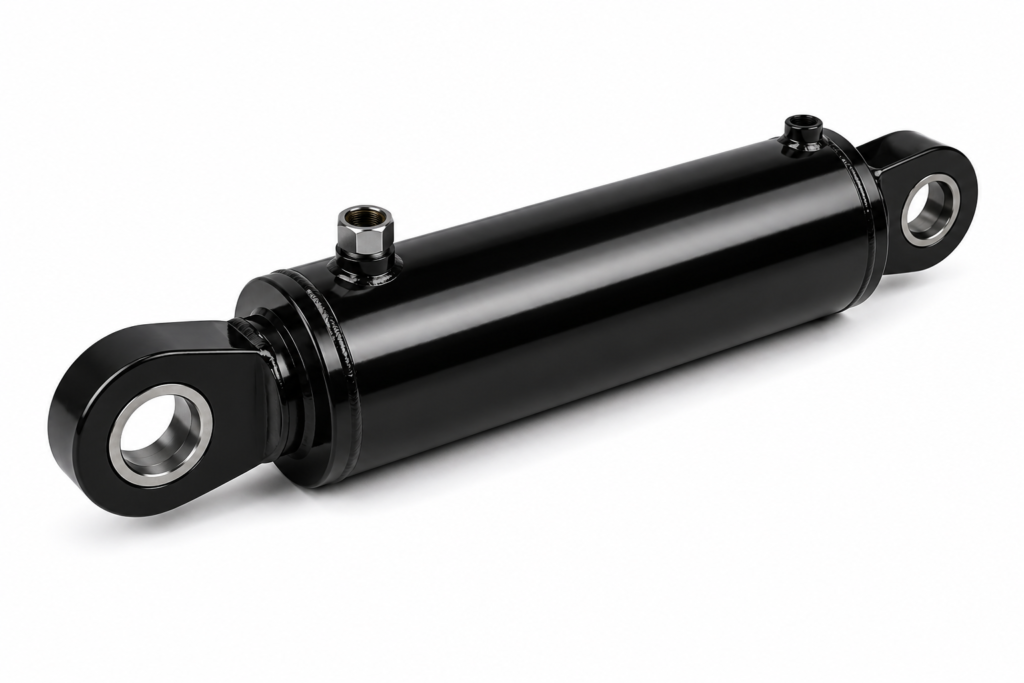
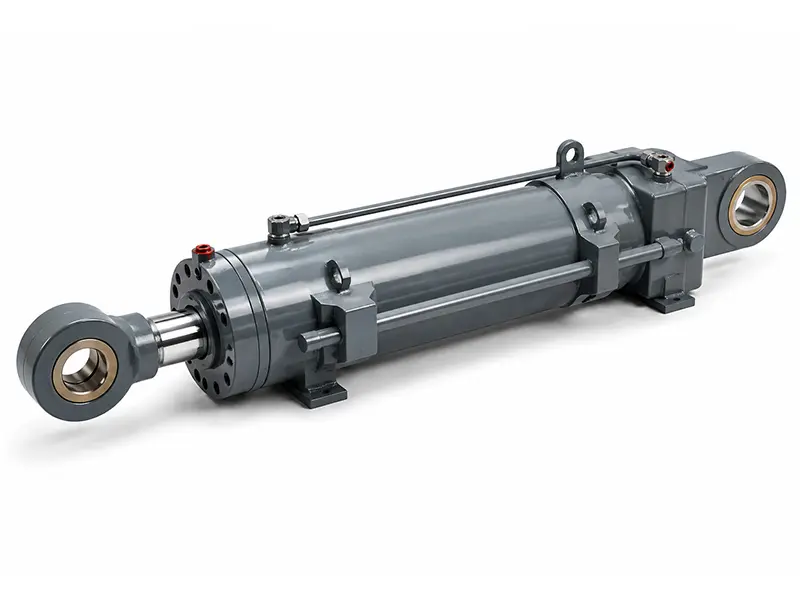
Not every linear movement needs the same cylinder. A single-acting cylinder, double-acting cylinder, welded cylinder, tie-rod cylinder, plunger cylinder, and telescopic cylinder each solves a different engineering problem.
Choosing the wrong type may create poor motion control, unnecessary cost, difficult maintenance, or an installation that simply does not fit.
| Cylinder Type | Best Suited For | Main Selection Consideration |
|---|---|---|
| Single-acting | Lifting with gravity or spring return | Force required in one direction |
| Double-acting | Powered extension and retraction | Controlled movement in both directions |
| Welded | Mobile and heavy equipment | Compact size and structural strength |
| Tie-rod | Industrial machinery | Easier maintenance and standardized mounting |
| Telescopic | Long stroke in limited space | Stage design and closed length |
| Plunger | Pressing, lifting and jacking | High force with simple construction |
| Heavy-duty | Mining, presses and large machinery | High load, shock and pressure resistance |
A double-acting hydraulic cylinder uses hydraulic pressure for both extension and retraction. It is a practical choice when your machine requires powered movement and stable control in both directions.
A single-acting cylinder uses pressure in one direction. Gravity, a spring, or an external load provides the return movement. A telescopic cylinder provides a long stroke from a relatively short closed length and is often used where installation space is limited.
How to Avoid This Mistake
Start with the movement, not the product name. Ask whether the load needs powered movement in one or both directions, how much force is required, how much space is available, whether the cylinder must hold a suspended load, how often it cycles, and whether side load or impact is possible.
Once you answer these questions, the correct cylinder type becomes much easier to identify.
Mistake 5: Overlooking Mounting Dimensions and Machine Geometry
A hydraulic cylinder can have the correct bore, stroke, and pressure rating and still be completely unusable because it does not fit the machine.
A small difference in pin diameter, clevis width, center distance, or port position can stop installation. Even worse, a cylinder may be forced into place despite incorrect alignment. It works for a while, but the mounting geometry creates side load. The rod, piston, bearings, and seals then wear unevenly.
You may blame the seal when the real problem is alignment. Among common hydraulic cylinder purchasing mistakes, incorrect mounting geometry is especially costly because replacing the seal does not remove the side load.
Mounting Details You Must Confirm
- Mounting type at both ends
- Pin-hole diameter and bushing size
- Clevis inner width and lug thickness
- Closed and open pin-to-pin length
- Spherical bearing requirements
- Allowable angular movement
- Port position and hose clearance
- Grease nipple position
- Interference with nearby structures
Do not assume that two machines of the same model always use identical cylinders. Equipment manufacturers sometimes change designs between production years or regional versions.
A damaged cylinder can also mislead you. A bent rod may not retract fully. Worn bushings may change the apparent center position. Previous repairs may have changed the cylinder length.
How to Avoid This Mistake
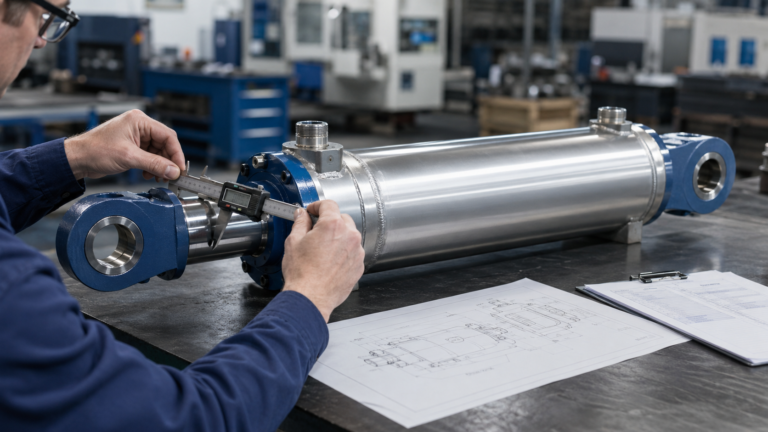
Use a dimensioned drawing and ask the supplier to mark every critical installation dimension. If a formal drawing is unavailable, create a measurement sheet with photographs.
When standardized mounting dimensions apply, you can also consult the ISO catalogue for hydraulic cylinder standards. Check the cylinder throughout the machine’s complete movement. Confirm that hoses will not stretch, twist, or collide with other components. Before approval, ask whether the cylinder will fit through the machine’s complete working range.
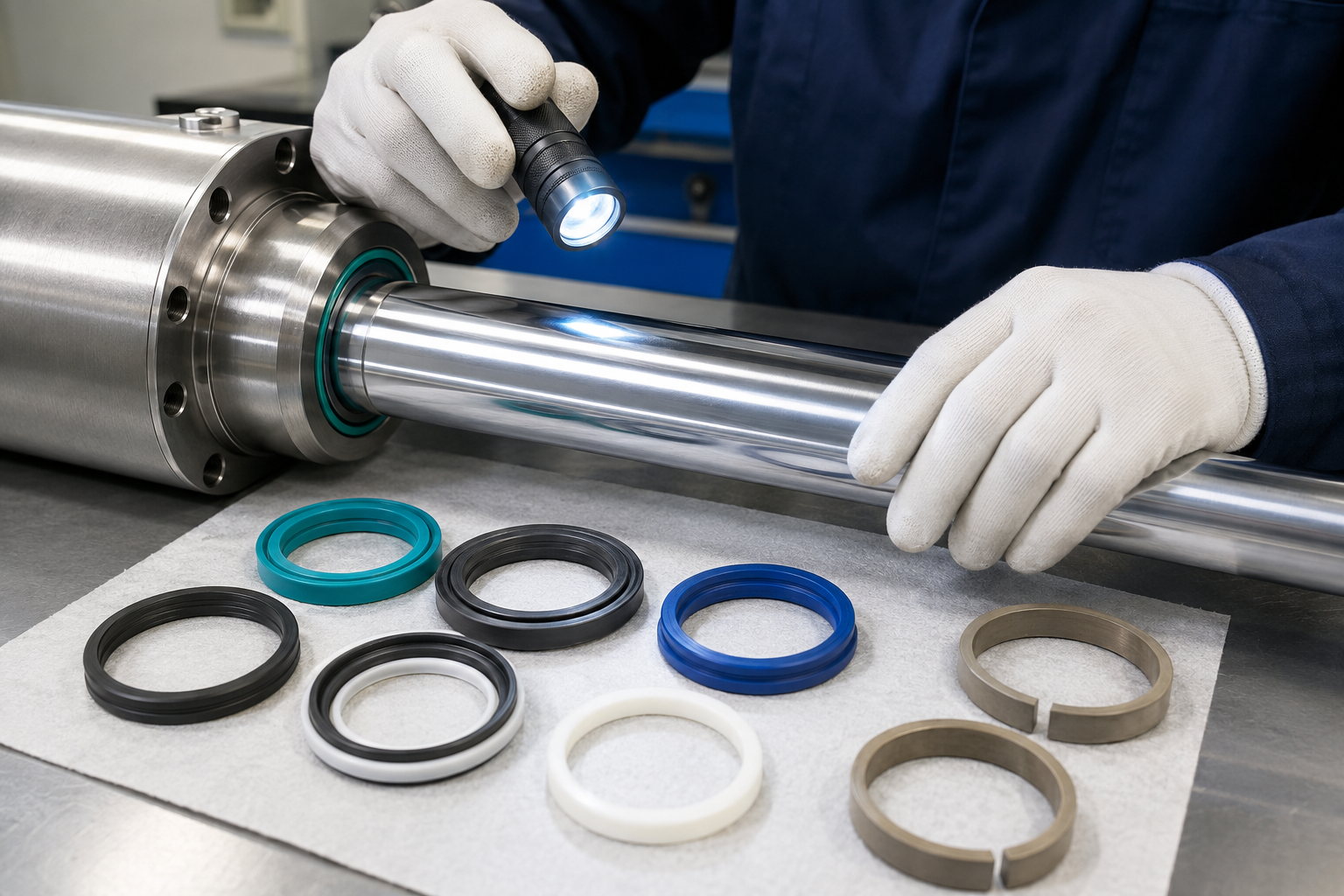
Mistake 6: Treating Seal Selection as a Minor Detail
Seals are small, inexpensive, and easy to overlook. They are also responsible for keeping pressure where it belongs.
When a seal is unsuitable for the fluid, pressure, temperature, surface finish, or speed, leakage is not bad luck. It is a predictable result.
A seal that performs well with mineral hydraulic oil may not suit water-glycol fluid, biodegradable oil, or aggressive chemicals. A material that works at moderate temperatures may harden, soften, or lose strength outside its operating range.
Seal Selection Depends on the Entire System
- Hydraulic fluid type
- Normal and peak pressure
- Oil and ambient temperature
- Rod speed and cycle frequency
- Expected contamination
- Rod and tube surface finish
- Static holding time
- Internal leakage tolerance
Common materials include polyurethane, NBR, FKM, and PTFE-based compounds. Each has different characteristics. You should not select a seal only by material name. Profile, hardness, extrusion gap, pressure direction, groove dimensions, and installation quality are equally important.
External leakage is easy to notice because oil appears around the rod, gland, port, weld, or connection. Internal leakage is less visible. Oil bypasses the piston seal from the high-pressure chamber to the low-pressure chamber. Your cylinder may drift, lose force, move slowly, or generate excess heat without visible oil outside.
How to Avoid This Mistake
Tell the supplier your fluid type and actual temperature range. Ask which seals are proposed and why. For critical applications, request a seal specification on the approved drawing or bill of materials.
Do not accept “high-quality seals” as a technical answer. High quality is not a material, profile, or operating range. A useful answer explains why the proposed system matches your pressure, temperature, fluid, speed, and contamination level.
Mistake 7: Designing Only for Normal Working Pressure
Your hydraulic system may normally operate at 16 MPa. That does not mean the cylinder only experiences 16 MPa.
Pressure spikes can occur when a load stops suddenly, a valve changes direction, equipment hits an obstacle, or an operator creates a shock load. If the cylinder is designed only around normal pressure, these short events can damage seals, deform components, crack welds, or reduce fatigue life.
The pressure gauge may not show the full spike because the event happens too quickly.
Rated Pressure, Peak Pressure and Test Pressure
Rated working pressure is the pressure the cylinder handles during normal operation. Peak pressure is the maximum temporary pressure expected during transient conditions. Test pressure is the controlled pressure applied during inspection.
A high test pressure does not mean the cylinder is suitable for unlimited pressure spikes. Fatigue life depends on how often pressure cycles occur and how the components are designed.
Cylinder force depends on effective piston area and pressure. A larger bore produces more force at the same pressure, but it also requires more oil and may change speed. Increasing pressure to compensate for an undersized cylinder may overload the tube, rod, seals, mounts, pins, and machine structure.
How to Avoid This Mistake
Provide both normal and maximum system pressure. Describe shock loads, pressure spikes, and load-holding requirements. Ask the supplier to confirm rated pressure, peak pressure, test pressure, tube wall thickness, rod stability, mounting strength, and weld suitability.
For long-stroke cylinders under compression, rod buckling can be more important than theoretical push force. If the application involves extreme pressure, long stroke, or suspended loads, request an engineering review before asking for the final price.
Mistake 8: Approving Production Without a Final Drawing
A quotation tells you what you are buying commercially. A production drawing tells you what the factory will manufacture. You need both.
Email discussions can become confusing. One message changes the port thread. Another changes the stroke. A photograph shows a different mounting style. Someone approves the price but forgets to confirm the latest technical revision.
The factory produces exactly what it understood. Unfortunately, that may not be what you expected.
What the Final Drawing Should Show
- Bore, rod diameter and stroke
- Closed and extended length
- Mounting dimensions and tolerances
- Port thread, angle and position
- Rod-end and tube-end mounting
- Material and surface-treatment requirements
- Seal requirements
- Working and test pressure
- Paint color
- Drawing and revision number
- Approval date
For OEM orders, revision control is essential. Many hydraulic cylinder purchasing mistakes happen when production follows an outdated drawing instead of the approved revision. A drawing marked “Rev. C” should not quietly become “Rev. D” without your approval.
An old sample can help, but it may be worn, repaired, bent, corroded, or modified. A responsible supplier should inspect the sample, measure it, create a production drawing, and return that drawing for approval.
How to Avoid This Mistake
Do not approve mass production based only on price, photographs, or chat messages. Confirm the final drawing and save the approved revision with your purchase order.
For new OEM projects, approve a prototype before repeat production when practical. Test it on the actual machine under normal load and complete movement. A prototype may feel like an extra step, but it is economical compared with finding an error in 100 finished cylinders.
Mistake 9: Assuming Every Hydraulic Cylinder Supplier Has the Same Capability
A supplier may be able to sell you a cylinder without being able to control how it is manufactured. That difference matters when a technical problem appears.
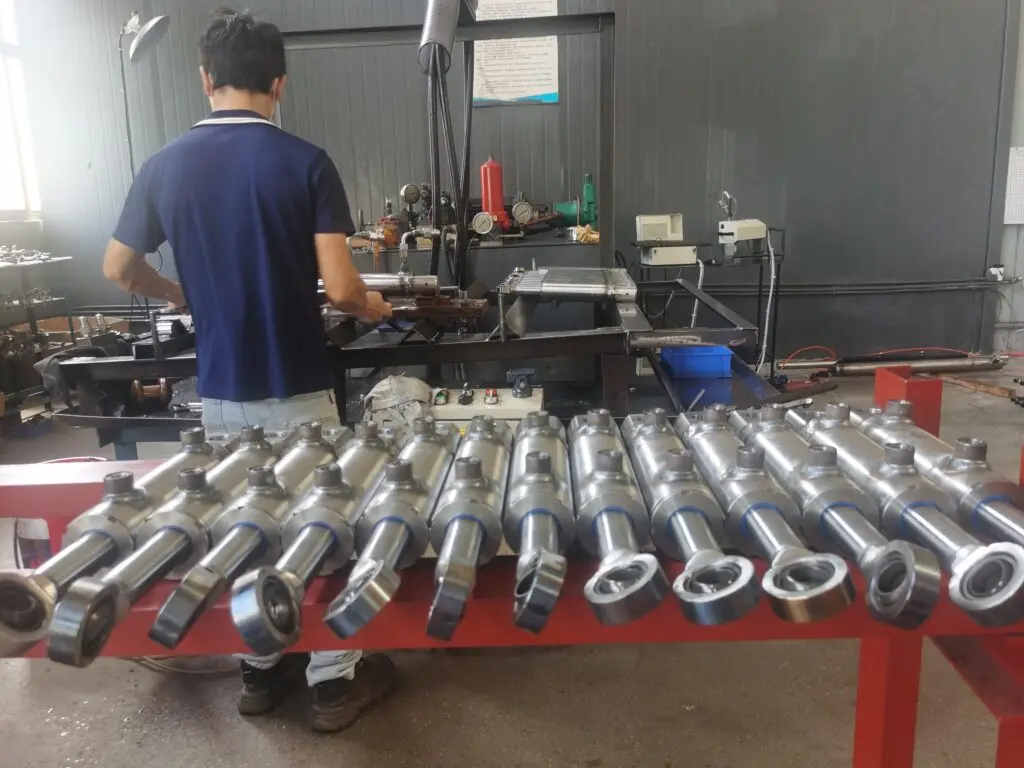
Hydraulic cylinder production involves material control, machining, tube honing, rod processing, welding, cleaning, seal installation, assembly, painting, testing, and inspection. If these operations are poorly controlled, you may see dimensional variation, rough movement, contamination, weld leakage, paint failure, or inconsistent service life between batches.
Questions You Should Ask a Potential Supplier
- Which manufacturing processes are completed in-house?
- How are cylinder tubes inspected after honing?
- How are rod hardness and surface finish controlled?
- What welding process is used?
- How are components cleaned before assembly?
- How are seals protected during installation?
- Is every cylinder pressure tested?
- Is full-stroke movement checked?
- Can dimensional and inspection reports be supplied?
- How are drawing revisions and nonconforming parts controlled?
You do not need a fifty-page factory presentation. You need evidence that the supplier understands and controls the processes related to your risks.
Look for Process Evidence, Not Only Certificates
ISO certification can support a quality-management system, but it does not replace product-specific inspection. A certificate does not tell you whether your port orientation was checked or whether your cylinder passed a leakage test.
Ask for relevant production records, photographs, test procedures, or inspection reports. Match the supplier to the complexity of the project. When you need drawing-based manufacturing, review whether the supplier can support engineering communication, prototypes, revision control, batch consistency, testing, and traceability.
You can begin with a sample or small trial order. Inspect the cylinder and test it under real working conditions before increasing volume.
Mistake 10: Calculating Cost from Unit Price Alone
The purchase price is visible. The total cost is usually hiding behind it.
A cylinder that costs 10% less but fails twice as often is not cheaper. A cylinder that arrives late and stops your production line is definitely not cheaper.
Your real cost may include international freight, import duties, inspection, installation labor, machine downtime, emergency replacement, customer penalties, field service, oil cleanup, returned products, and lost repeat orders.
Lead Time Is Part of the Cost
A supplier may promise a short lead time before receiving your order. After payment, the schedule changes. The delay may come from unavailable raw materials, outsourced machining, unclear drawings, overloaded production, or slow technical confirmation.
Ask the supplier to separate the timeline into technical review, drawing confirmation, material preparation, machining, welding, surface treatment, assembly, testing, packing, and shipment. This makes the schedule easier to manage.
How to Avoid This Mistake
Calculate total cost of ownership rather than unit price alone. Consider expected service life, maintenance interval, failure risk, delivery reliability, spare-parts availability, engineering support, inspection documentation, warranty response, and replacement lead time.
Avoiding hydraulic cylinder purchasing mistakes requires you to compare total ownership cost, not only the amount shown on the quotation.
You do not need the most expensive cylinder. You need the cylinder that gives you a reasonable balance between performance, risk, delivery, and cost.
A Practical Hydraulic Cylinder Purchasing Checklist
Application Information
- What machine uses the cylinder?
- What movement does it control?
- What load must it move or hold?
- Is the load pushing, pulling, or both?
- Are side load, shock, or vibration possible?
- How many cycles occur per hour or day?
Hydraulic System Information
- What are the normal and maximum pressures?
- What hydraulic fluid is used?
- What oil temperature and speed are expected?
- Is a load-holding valve required?
- What internal leakage level is acceptable?
Dimensional and Environmental Information
- What are the bore, rod, stroke, open length and closed length?
- What mounting, pin, bushing, port and hose-clearance details apply?
- Will the cylinder work outdoors?
- Does the environment contain dust, salt, chemicals, moisture or extreme temperatures?
- Are special rod coatings, paint systems or stainless components required?
Supplier and Order Control
- Has the final drawing and revision been approved?
- Are materials, seals, working pressure and test pressure confirmed?
- Is the production lead time confirmed?
- Will every cylinder be tested?
- Are inspection records available?
- Is the packaging suitable for international transport?
- Are warranty responsibilities clear?
How ZHY Hydraulic Helps You Reduce Purchasing Risk
At ZHY Hydraulic, you are not expected to solve every technical detail alone. You can send a drawing, an old cylinder, equipment photographs, key dimensions, or a list of operating requirements. The engineering team can then review the information before production.
This review focuses on the details that often create problems later, including bore size, rod diameter, stroke, mounting dimensions, port orientation, working pressure, seal system, materials, surface treatment, and operating environment.
ZHY manufactures hydraulic cylinders for OEM and replacement applications, including single-acting, double-acting, welded, tie-rod, telescopic, plunger, and heavy-duty designs.
Drawing Review Before Production
Your drawing and technical requirements are reviewed before materials are prepared. If important information is missing, the team can identify it during technical confirmation. This reduces the risk of discovering an incorrect dimension after the cylinder is finished.
For replacement projects, you can provide an old sample, photographs, equipment details, and key measurements. A production drawing can then be prepared for confirmation.
Manufacturing Around Your Application
Your cylinder can be customized according to bore, rod diameter, stroke, closed length, pressure, mounting, ports, materials, seals, rod treatment, paint, identification, and packaging.
A construction cylinder may require impact resistance and dust protection. A marine cylinder may need stronger corrosion protection. An industrial cylinder may require accurate movement and repeatable dimensions. Customization should match the cylinder to the work it must perform.
For compact mobile equipment, ZHY can produce custom welded hydraulic cylinders based on your mounting space, load, stroke, and pressure requirements.
Inspection and Pressure Testing
Manufacturing quality cannot be confirmed by appearance alone. Before shipment, cylinder dimensions, assembly, rod movement, sealing performance, pressure resistance, surface condition, and appearance can be inspected according to the order requirements.
Pressure and leakage testing help identify problems before the cylinder reaches your factory or customer. For repeat OEM orders, approved drawings and technical specifications also provide a reference for batch consistency.
Support for Prototype and Batch Production
If you are developing new equipment, a prototype gives you an opportunity to check installation, motion, pressure, and performance on the actual machine. Once the sample is approved, the confirmed specification can be used for repeat production.
This process takes longer than immediately ordering a full batch. However, it usually takes far less time than repairing an entire batch after delivery.
What Should You Send to Get an Accurate Hydraulic Cylinder Quote?
The fastest quotation is not always the quotation returned in ten minutes. It is the quotation that does not need to be corrected five times later.
For an accurate review, send the cylinder drawing, machine type, cylinder function, bore, rod diameter, stroke, open and closed length, working and peak pressure, mounting dimensions, port specifications, hydraulic fluid, operating temperature, working environment, quantity, and expected delivery date.
If you do not have a drawing, send photographs of the complete cylinder and both mounting ends. Include close-ups of ports, labels, pins, and measured dimensions. A part number can help, but it may not provide enough technical information by itself.
Frequently Asked Questions
What Information Is Most Important When Buying a Hydraulic Cylinder?
You should confirm the cylinder function, bore, rod diameter, stroke, open and closed length, mounting dimensions, working pressure, peak pressure, port details, hydraulic fluid, and operating environment. A drawing is the most reliable way to communicate these requirements.
How Do You Know If a Hydraulic Cylinder Supplier Is Reliable?
Review the supplier’s engineering communication, machining, welding, cleaning, assembly, inspection, pressure testing, drawing control, and response to technical questions. Ask for evidence related to your specific order.
Why Does a New Hydraulic Cylinder Start Leaking?
A new cylinder may leak because of unsuitable seals, damaged sealing surfaces, contamination, incorrect tolerances, excessive pressure, poor alignment, side load, rod damage, or assembly problems.
Should You Choose a Standard or Custom Hydraulic Cylinder?
Choose a standard cylinder when its force, stroke, mounting, dimensions, pressure rating, and environment match your equipment. Choose a custom cylinder when you need special dimensions, materials, ports, seals, surface treatment, or performance.
Can a Hydraulic Cylinder Be Manufactured from an Old Sample?
Yes. A supplier can measure an old cylinder and create a replacement design. The sample should still be inspected for wear, deformation, previous repairs, and missing technical information. Approve a production drawing before manufacturing.
Why Is Hydraulic Cylinder Lead Time Sometimes Delayed?
Delays often result from incomplete specifications, drawing changes, special materials, outsourced processing, seal availability, surface treatment, production capacity, or failed inspection.
Is Pressure Testing Enough to Confirm Cylinder Quality?
No. You should also inspect dimensions, mounting fit, stroke, port position, rod movement, surface condition, materials, welds, paint, and packaging.
How Can You Reduce the Cost of Custom Hydraulic Cylinders?
Provide complete specifications, avoid unnecessary design changes, standardize components where practical, confirm drawings early, and plan repeat orders. A clear request reduces quotation time, rework, delays, and unexpected costs.
Final Thoughts
Most hydraulic cylinder purchasing problems are preventable.
You reduce risk when you define the application, provide complete specifications, approve the final drawing, review supplier capability, and calculate total cost instead of unit price alone.
A careful technical review may take a little longer before production. That is usually much cheaper than receiving a cylinder that leaks, arrives late, or does not fit.
If you need a custom or replacement cylinder, send ZHY Hydraulic your drawing, old sample, photographs, or technical requirements. The team can review your specifications before quotation and help you identify missing details before they become expensive problems.
Ready to reduce purchasing risk? Upload your drawing or request a hydraulic cylinder quote from ZHY Hydraulic.