How Hydraulic Cylinders Work in Aerial Work Platforms
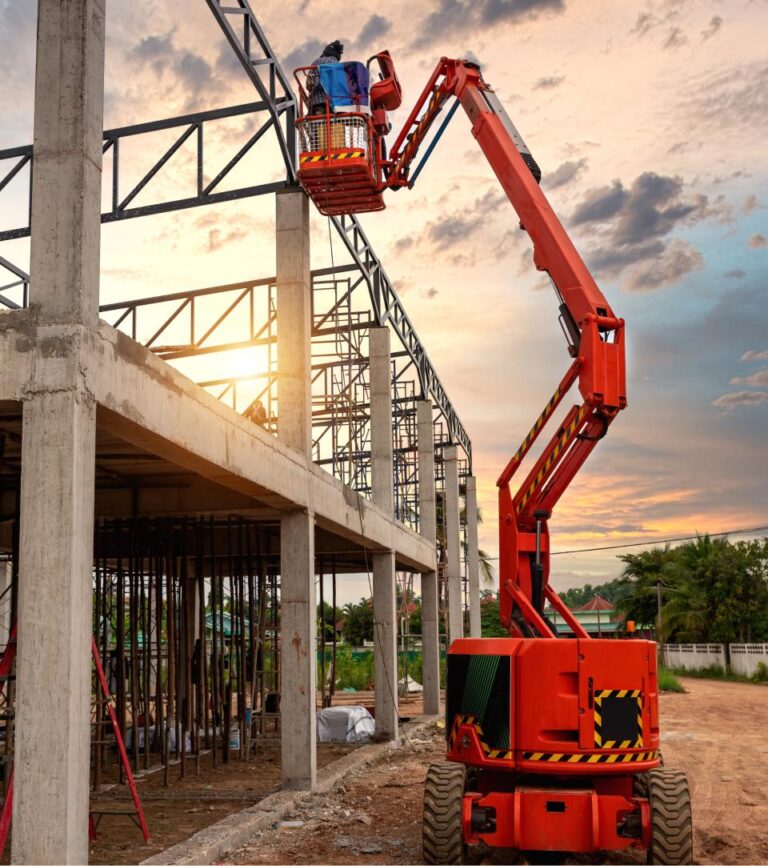
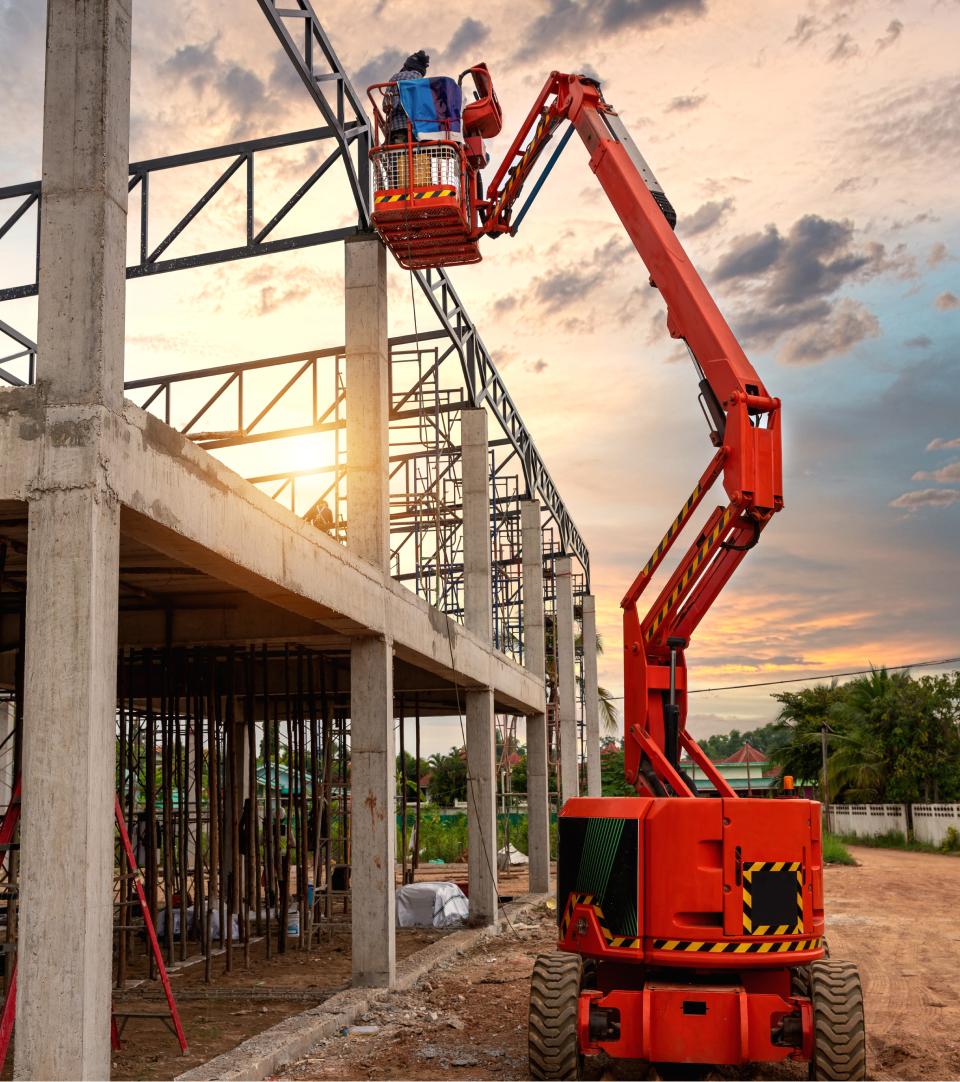
When an aerial work platform carries you several stories above the ground, every movement needs to feel smooth, controlled, and predictable. The machine cannot suddenly drop, drift, or hesitate when the platform is positioned beside a building, power line, warehouse ceiling, or bridge structure.
The engine and hydraulic pump supply energy, but they do not physically lift the boom. The components that convert hydraulic pressure into controlled movement are the hydraulic cylinders. They raise the boom, extend telescopic sections, level the basket, steer the wheels, and deploy stabilizing outriggers.
If you maintain aerial work platforms, manage a rental fleet, design lifting machinery, or source replacement components, understanding how these cylinders work helps you make better decisions. You can identify early warning signs, avoid incorrect replacements, reduce downtime, and select a cylinder that matches the actual load and operating environment instead of choosing one that merely looks similar.
Quick Summary
Hydraulic cylinders power the lifting, extending, leveling, steering, and stabilizing functions of aerial work platforms. Pressurized hydraulic oil moves a piston inside the cylinder, converting fluid pressure into linear force. Reliable operation depends on correct cylinder sizing, clean hydraulic oil, controlled side loading, suitable seals, secure mounting, and proper pressure and leakage testing.
How Does a Hydraulic Cylinder Move an Aerial Work Platform?
A hydraulic cylinder works by directing pressurized oil against a piston. Because hydraulic oil does not compress easily, the pressure acting on the piston creates a strong and measurable pushing or pulling force.
You can compare the principle to a hydraulic vehicle jack. A relatively small input force creates enough hydraulic pressure to lift a much heavier load. In an aerial work platform, the pump replaces the hand-operated jack lever, while control valves determine which cylinder moves and how quickly it moves.
Hydraulic Pump
Control Valve
Hydraulic Cylinder
Boom Movement
Return Oil
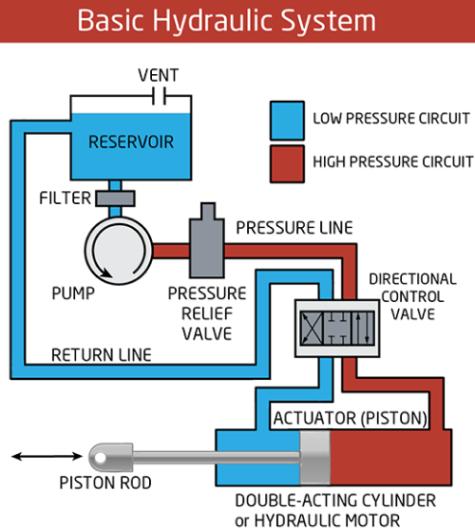
A typical operating sequence looks like this:
- The hydraulic pump draws oil from the reservoir.
- The pump sends pressurized oil toward the control valve.
- Your joystick or control command changes the valve position.
- The valve directs oil into one side of the selected cylinder.
- Pressure pushes the piston through the cylinder barrel.
- The piston rod extends or retracts.
- The rod transfers force to the boom, platform, steering linkage, or outrigger.
- Oil from the opposite side returns to the reservoir.
Most aerial work platforms use double acting hydraulic cylinders. Hydraulic pressure controls both extension and retraction, giving you more precise movement than a single-acting design that relies on gravity or an external load for the return stroke.
The theoretical cylinder force can be estimated by multiplying hydraulic pressure by the effective piston area. Real machines produce slightly less usable force because friction, pressure losses, seal resistance, linkage geometry, and system efficiency all affect the result.
Practical decision rule:
If the platform must raise and lower under positive hydraulic control, choose a double-acting design. If the movement can safely return under gravity and the equipment design specifically allows it, a single-acting cylinder may be considered. For most boom lift functions, controlled movement in both directions is the safer and more practical choice.
What Happens Inside the Cylinder?
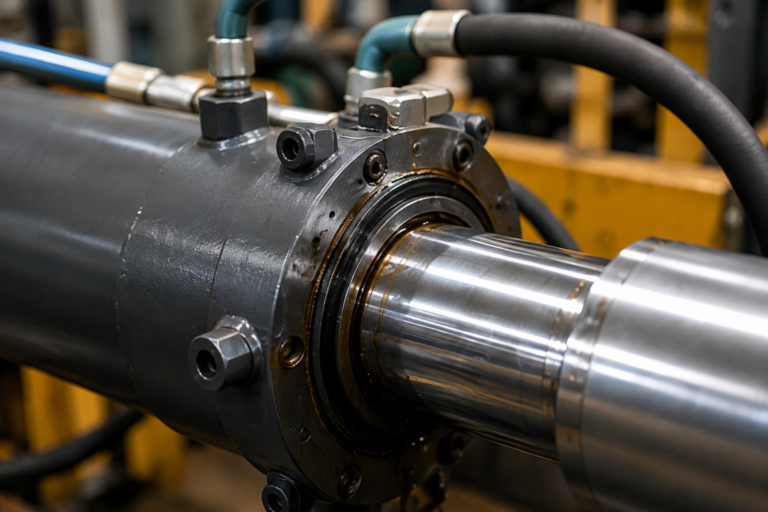
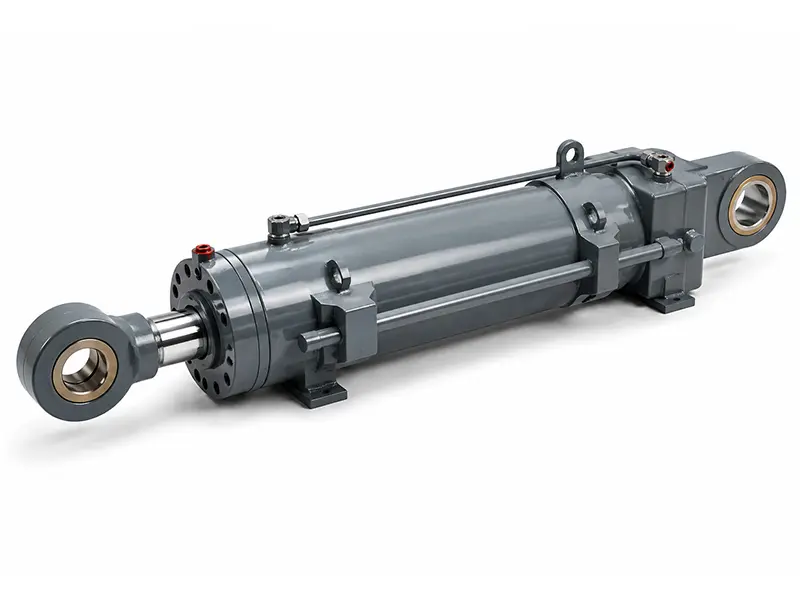
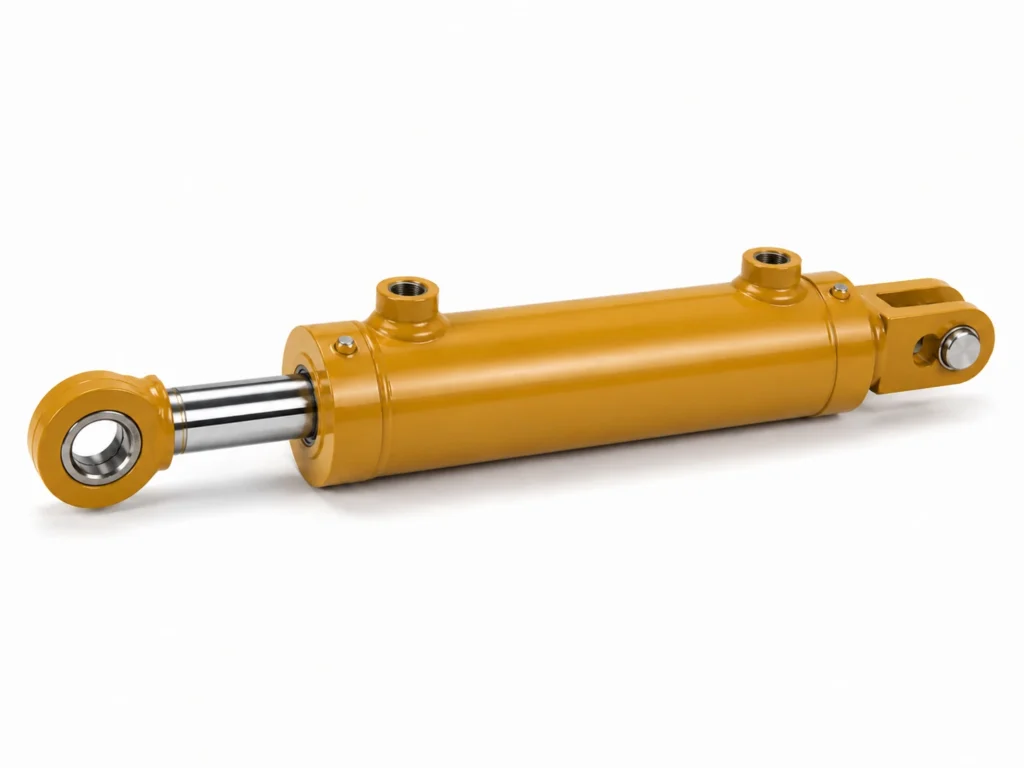
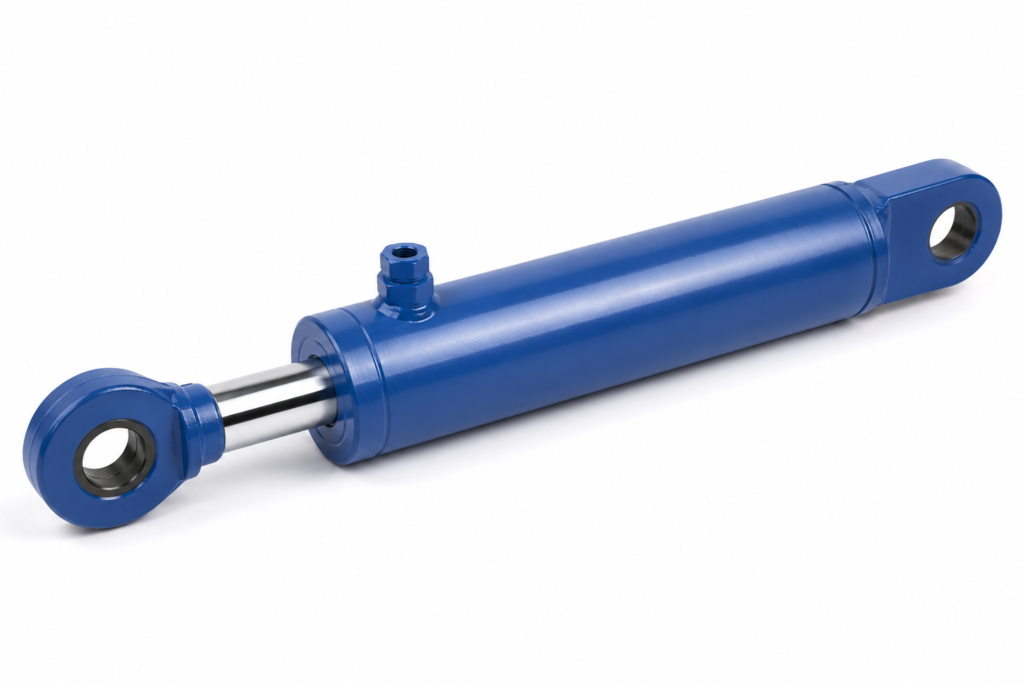
A hydraulic cylinder may look like a painted steel tube from the outside, but reliable performance depends on several precision components working together. A poor surface finish, misaligned rod, incorrectly selected seal, or weak welded joint can shorten service life even when the cylinder dimensions appear correct.
Cylinder Barrel
The barrel contains the working pressure and guides the piston. Its inner surface is normally honed to provide a smooth, controlled finish. If the bore is rough, tapered, contaminated, or damaged, the piston seals wear faster and internal leakage increases.
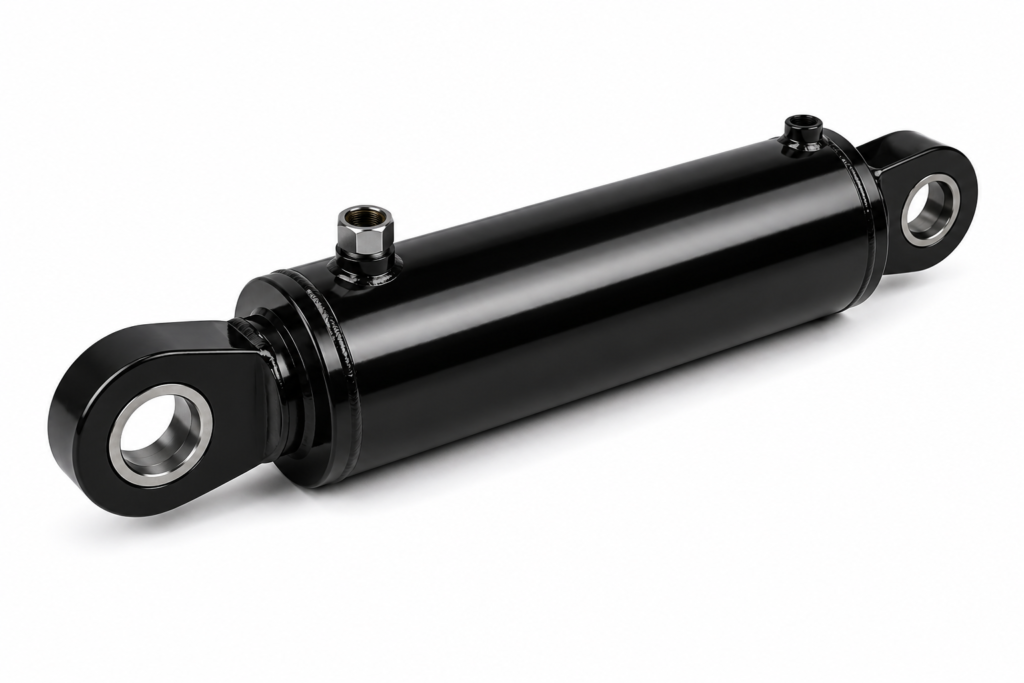
Many mobile lifting machines use welded hydraulic cylinders because their compact construction fits restricted installation spaces and handles demanding mobile-equipment loads without the external tie rods used in industrial cylinders.
Piston
The piston divides the cylinder into two pressure chambers. Oil entering one chamber moves the piston while oil leaves the other. The piston diameter determines the effective area on which hydraulic pressure acts, so it has a direct relationship with cylinder force.
Piston Rod
The piston rod transfers force from inside the cylinder to the boom mechanism. It must resist tension, compression, bending, corrosion, impact, and repeated cycling.
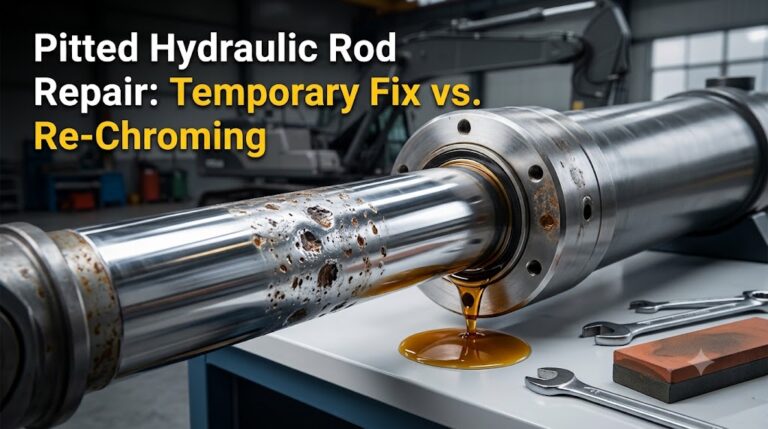
Rod diameter matters particularly when the cylinder pushes a long distance under compression. A rod that is too small may bend or buckle even when the hydraulic system pressure appears acceptable. Chrome condition also matters. Pitting, rust, welding spatter, concrete residue, or deep scratches can quickly damage the rod seal.
Seals and Wipers
The piston seal limits internal bypass between chambers. The rod seal keeps hydraulic oil inside the cylinder, while the wiper removes dust and debris as the rod retracts.
Seal selection should reflect pressure, temperature, oil type, operating speed, contamination, and outdoor exposure. Choosing a seal only because it is inexpensive is a classic false economy. A low-cost seal can turn into a leaking cylinder, contaminated hydraulic circuit, damaged rod, and an idle machine.
Head, Gland, Bearings, and Wear Rings
These components guide the rod and piston while limiting metal-to-metal contact. When side loading is excessive or mounting points become misaligned, bearings and wear rings carry loads they were not designed to handle. The first visible symptom may be uneven seal wear, but the underlying problem is often mechanical alignment rather than seal quality.
Mountings and Pins
Mountings transfer cylinder force into the machine structure. Common arrangements include clevis, pin-eye, trunnion, flange, and spherical bearing mounts.
A replacement cylinder can have the correct bore and stroke and still be wrong if the mounting width, pin diameter, centerline, angular movement, or bearing type does not match. A few millimeters of mounting error can create persistent side load through the entire stroke.
Which Hydraulic Cylinders Are Used in Aerial Work Platforms?
An aerial work platform normally uses several cylinders rather than one large actuator. Each cylinder performs a specific function, and the hydraulic circuit coordinates those functions so the machine remains stable.
| Cylinder Function | What It Does | Main Design Concern | What Happens If It Is Wrong |
|---|---|---|---|
| Main lift cylinder | Raises or lowers the primary boom or lifting structure | Force, buckling resistance, mounting geometry, load holding | Insufficient lifting force, unstable movement, rod damage |
| Articulation cylinder | Changes the angle between boom sections | Stroke accuracy, joint geometry, controlled speed | Incorrect platform reach or interference between components |
| Telescopic cylinder | Extends and retracts telescoping boom sections | Long stroke, compact closed length, stage synchronization | Uneven extension, restricted reach, damaged stages |
| Platform leveling cylinder | Keeps the basket approximately level as the boom moves | Accurate response, low leakage, synchronization | Platform tilt, poor operator confidence, safety risk |
| Steering cylinder | Changes wheel direction | Fast response, compact dimensions, joint durability | Poor steering accuracy or uneven tire movement |
| Outrigger cylinder | Deploys stabilizers and transfers load to the ground | Load holding, corrosion protection, mounting strength | Reduced machine stability or inability to level the chassis |
Main Lift Cylinders
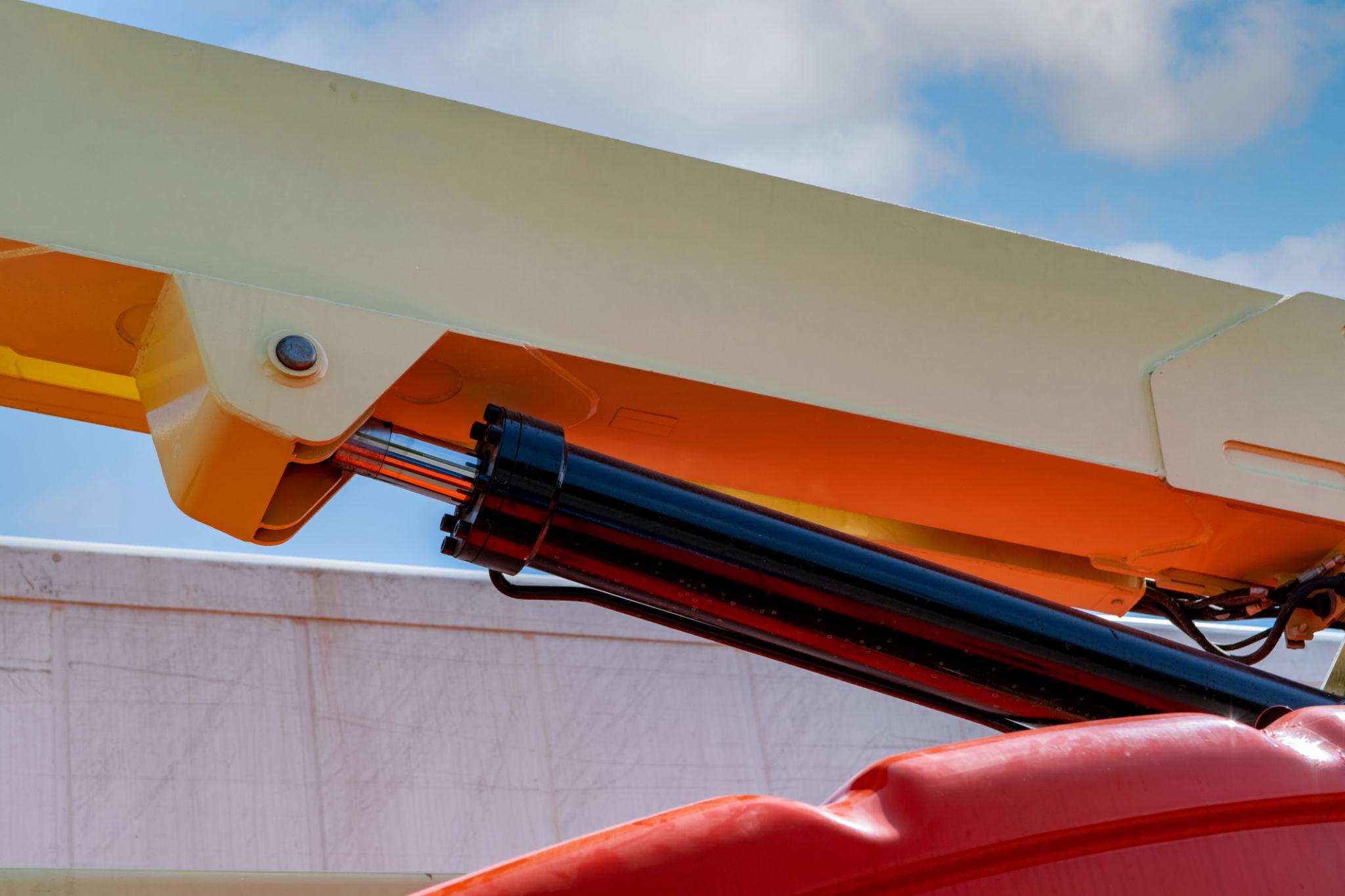
The main lift hydraulic cylinder provides the force needed to raise the boom or lifting structure. It often works through a linkage, so cylinder force is not equal to the platform load. The boom angle, pivot position, cylinder mounting point, and changing mechanical leverage must all be considered.
The most demanding point may occur near the beginning of the lift, when the boom is close to horizontal and the cylinder has poor mechanical leverage. Selecting the cylinder based only on maximum platform load can therefore produce a design that looks adequate on paper but stalls at the worst boom angle.
Telescopic Cylinders
Straight boom lifts and truck-mounted platforms often need long extension while maintaining a manageable retracted length. A telescopic hydraulic cylinder solves this problem by using multiple nested stages.
The stages extend in sequence, creating a stroke much longer than a conventional single-stage cylinder with the same closed length. This helps the machine reach farther without requiring an impractically long cylinder body.
Telescopic designs need careful attention to stage sequence, bearing support, seal condition, tube straightness, internal clearances, and retraction behavior. Dirt on an exposed stage or damage to one tube can affect the movement of the entire assembly.
Platform Leveling Cylinders
As the boom changes angle, the work platform must remain reasonably level. Depending on the machine design, leveling may be controlled mechanically, hydraulically, electronically, or through a combination of systems.
Internal leakage in a leveling cylinder can allow the basket to drift gradually. Replacing only the external rod seal will not correct an internal piston bypass. You need to identify whether the problem comes from the cylinder, holding valve, control valve, sensor, linkage, or another part of the leveling circuit.
Steering and Outrigger Cylinders
Steering cylinders need accurate, repeatable movement in a compact space. Outrigger cylinders need dependable load-holding performance because they support and level the machine before elevated operation begins.
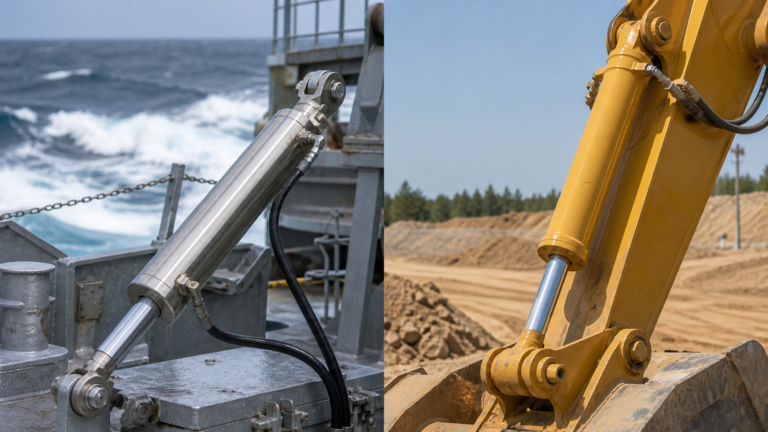
Corrosion resistance becomes especially important for outriggers because their rods may operate close to wet ground, mud, road salt, dust, and construction debris.
How Multiple Cylinders Work Together
When you move a joystick, the machine does more than send oil to a cylinder. The hydraulic and electronic control systems may regulate flow, limit pressure, prevent conflicting movements, control acceleration, and stop operation when a safety condition is not satisfied.
A typical truck-mounted cherry picker sequence may include:
- Parking the vehicle and engaging the required safety controls.
- Extending the outriggers until the chassis is stable and level.
- Raising the lower boom with the primary lift cylinder.
- Adjusting the upper boom or jib with an articulation cylinder.
- Extending the telescopic boom to reach the work position.
- Continuously correcting platform level as boom geometry changes.
- Holding the boom securely when the operator releases the controls.
- Reversing the sequence in a controlled manner for retraction and transport.
The cylinders used in this type of machine must work as part of a complete system, not as isolated components. You can review application-specific considerations for cherry picker hydraulic cylinders when evaluating cylinders for boom lifting, extension, leveling, steering, or outrigger functions.
Why Load-Holding Control Matters
A cylinder connected to a suspended load should not rely only on a directional control valve to hold position. Mobile lifting systems may use counterbalance valves, pilot-operated check valves, hose-failure protection, or other load-holding devices.
These controls help prevent uncontrolled movement if pressure changes, a hose fails, or the directional valve leaks internally. The exact circuit depends on the equipment design, so replacement components must match the original functional requirements.
Important:
Do not adjust relief valves, counterbalance valves, or load-holding settings simply to make a slow or weak boom move faster. The cylinder may not be the original cause. Increasing pressure without identifying the fault can overload the cylinder, mountings, hoses, pins, or boom structure.
Why Hydraulic Cylinders Are Preferred for Heavy Aerial Equipment
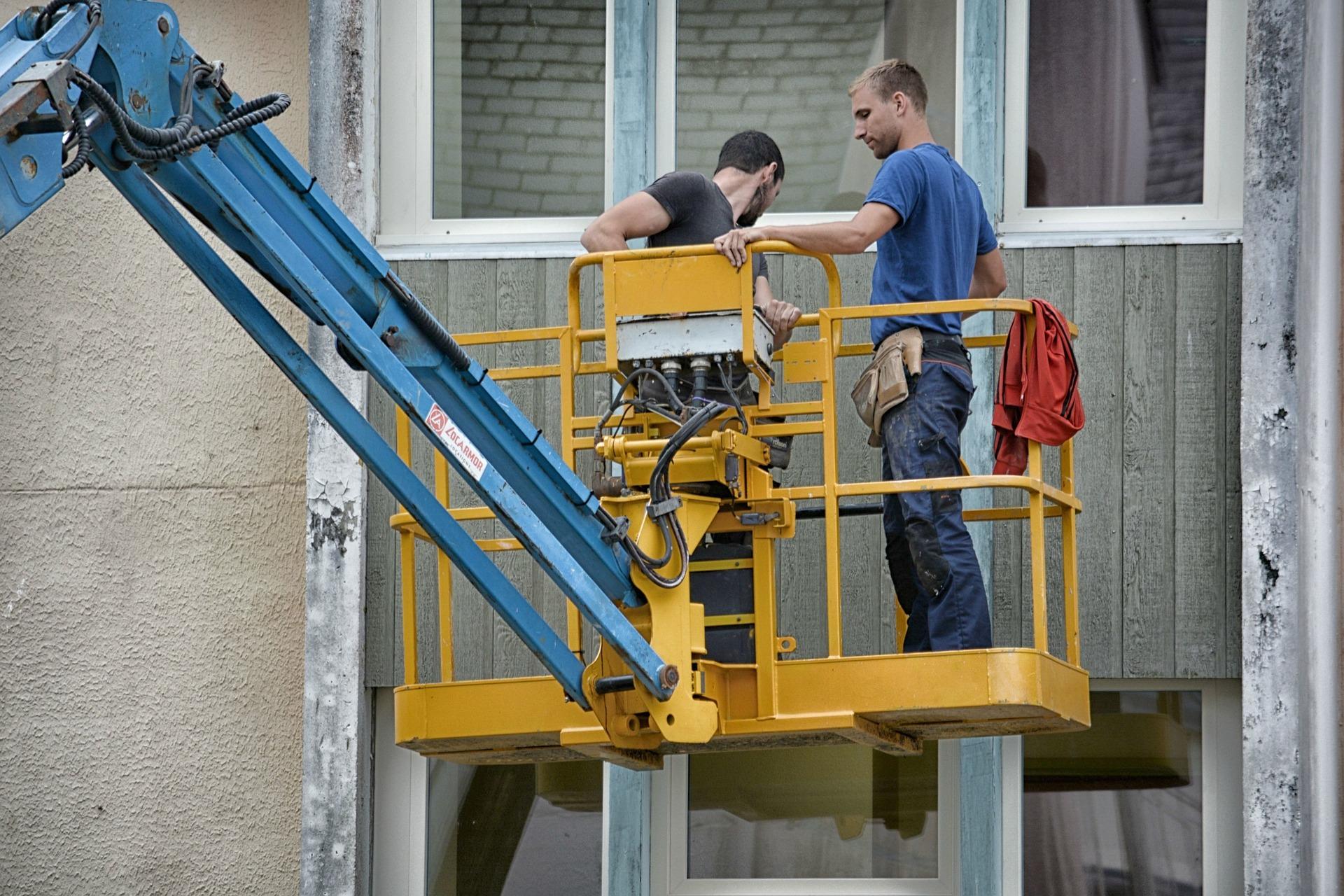
Electric actuators continue to improve, but hydraulic cylinders remain widely used where you need high force, compact packaging, shock-load tolerance, and reliable control in outdoor conditions.
Hydraulic cylinders offer several practical advantages:
- High force relative to actuator size
- Smooth speed control across the working stroke
- Good resistance to temporary overload and shock
- Flexible installation through hoses and remotely positioned valves
- Proven operation in construction and mobile equipment
- Ability to integrate load-holding and pressure-control functions
That does not mean hydraulics are automatically the best choice for every movement. Electric actuators may be suitable for lighter loads, short strokes, indoor equipment, or applications where hydraulic oil is undesirable.
Choose according to the application:
If you need high lifting force, repeated outdoor operation, compact installation, and controlled movement under changing loads, a hydraulic cylinder is usually the stronger option. If the load is light, movement is limited, and precise electronic positioning is the main priority, an electric actuator may deserve consideration.
Common Hydraulic Cylinder Failure Modes
Most cylinder failures do not appear without warning. Small symptoms usually develop first: a light oil film, slower movement, unusual noise, minor platform drift, or uneven rod wear.
The expensive mistake is treating every symptom as “just a bad seal.” Seal damage is often the result of another problem rather than the original cause.
External Leakage
Oil around the rod may indicate a worn rod seal, damaged rod surface, contaminated oil, excessive pressure, incorrect seal material, or misalignment. Replacing the seal without correcting rod damage or side loading usually produces another leak.
Internal Leakage
Internal leakage occurs when oil bypasses the piston seal from one chamber to the other. You may notice weak lifting, gradual boom drift, reduced holding ability, or excessive heat.
However, similar symptoms can also come from a leaking control valve or load-holding valve. Test the circuit before condemning the cylinder.
Rod Buckling
A rod under compression can bend when its diameter, unsupported length, mounting geometry, or material strength is inadequate. Buckling risk increases with long strokes and poor alignment.
Once a rod bends, it loads the gland and seals unevenly. Installing another rod with the same inadequate specification does not solve the design problem.
Side Loading
Hydraulic cylinders are designed primarily for force along their centerline. Worn boom pins, distorted brackets, incorrect mounting widths, seized spherical bearings, or poor installation can force the rod sideways.
Side loading causes uneven bearing wear, seal damage, rod scoring, and barrel contact. It is one of the most overlooked reasons why replacement cylinders fail earlier than the original component.
Pressure Spikes
Sudden load changes, abrupt valve operation, external impact, or incorrect valve settings can create pressure spikes above normal working pressure. Repeated spikes may damage seals, fittings, welded joints, or the cylinder tube.
Contaminated Hydraulic Oil
Dirt, metal particles, degraded oil, and water can damage the piston seal, rod seal, valves, pump, and honed barrel surface. A new cylinder installed into a contaminated hydraulic circuit can fail surprisingly quickly.
Corrosion and Rod Surface Damage
Rust pits and scratches act like small cutting edges as the rod passes through the seal. Equipment operating outdoors, near the coast, around fertilizers, in winter road salt, or in humid storage needs suitable rod protection and maintenance.
Damaged Mountings or Pins
Loose pins, worn bushings, cracked brackets, and incorrect retainers change cylinder alignment. A leaking cylinder may be the visible victim of a worn mechanical joint elsewhere on the boom.
Mistakes to Avoid When Ordering a Replacement Cylinder
Ordering by appearance is risky. Two cylinders can share the same color and approximate length while having different internal dimensions, pressure ratings, mounts, port locations, seals, cushioning, or load-holding arrangements.
1. Measuring Only the Overall Length
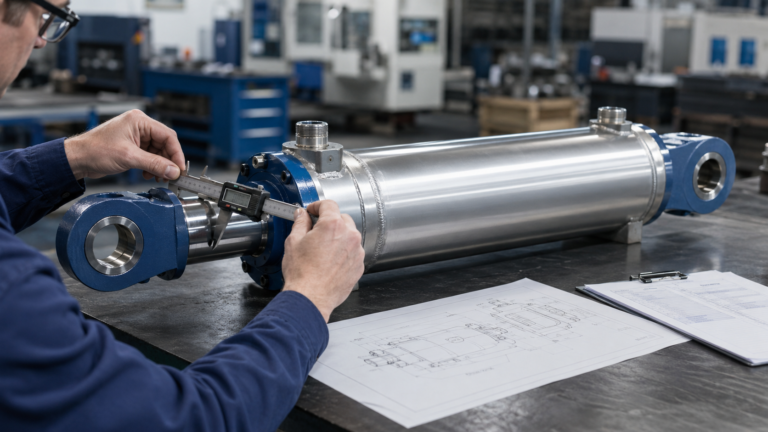
You need both closed length and stroke, measured from the correct mounting reference points. Overall tube length alone does not tell you where the cylinder will stop or whether the boom can complete its designed movement.
2. Ignoring Bore and Rod Diameter
Bore affects force. Rod diameter affects retraction force, stiffness, and buckling resistance. A dimensional match with a smaller rod may create a serious structural weakness.
3. Matching Ports but Not Pressure Requirements
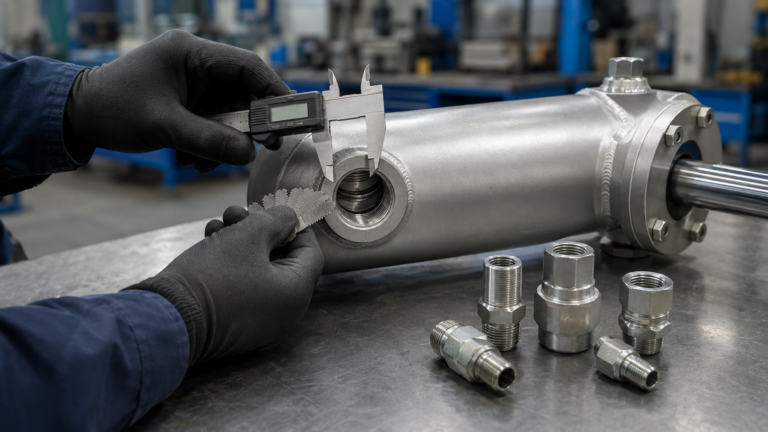
Correct thread size does not prove that the cylinder is suitable for the system pressure. You must confirm normal working pressure, peak pressure, test pressure, port type, port orientation, and valve arrangement.
4. Reusing the Wrong Seal Material
Seal material must suit the hydraulic fluid, operating temperature, pressure, speed, and environment. A seal that works indoors may not perform equally well on outdoor rental equipment exposed to low temperatures and contamination.
5. Assuming Every Drift Problem Is Caused by the Cylinder
Boom drift may come from piston bypass, control-valve leakage, counterbalance-valve leakage, hose expansion, trapped air, or mechanical movement. Isolate and test the circuit before ordering parts.
6. Installing a New Cylinder into a Dirty System
When an old cylinder fails internally, debris may remain in hoses, valves, filters, and the reservoir. Replacing the cylinder without cleaning the circuit can damage the new seals and bore.
7. Copying a Previous Design Without Reviewing the Application
A direct copy may be appropriate for a proven machine, but changing the boom length, platform capacity, operating pressure, mounting location, or duty cycle can alter the cylinder requirements. In those cases, custom hydraulic cylinders should be specified around the updated load case rather than copied blindly.
How to Specify the Right Cylinder
A useful cylinder specification combines dimensional information with operating conditions. A drawing is valuable, but a drawing without load, pressure, environment, and duty-cycle information may not reveal the real design risk.
| Specification | What You Should Confirm | Why It Matters |
|---|---|---|
| Bore diameter | Internal cylinder diameter | Determines available extension force |
| Rod diameter | Diameter, material, surface treatment | Affects retraction force, stiffness, wear, and buckling resistance |
| Stroke | Required piston travel | Controls boom or platform movement range |
| Closed length | Pin-center or mounting-face dimension | Determines whether the cylinder fits when retracted |
| Working pressure | Normal, peak, and test pressure | Controls force and structural requirements |
| Mounting type | Pin size, width, bearing type, angular movement | Controls alignment and load transfer |
| Port details | Thread, position, orientation, valve blocks | Prevents installation and hose-routing problems |
| Seal system | Fluid, pressure, speed, temperature, contamination | Affects leakage resistance and service life |
| Cushioning | Required at extension, retraction, or both | Reduces end-of-stroke impact where applicable |
| Environment | Outdoor exposure, salt, dust, moisture, chemicals | Guides rod coating, paint, materials, and wiper selection |
| Duty cycle | Cycles per hour, daily operation, holding duration | Influences heat, wear, and fatigue requirements |
Selection Recommendation
If you are replacing a cylinder on an unchanged machine, begin with the original drawing, nameplate, machine model, and measured mounting dimensions.
If the machine has been modified, the original cylinder failed repeatedly, or you are increasing platform capacity or working height, do not order a simple dimensional copy. Recalculate the load, boom geometry, rod buckling risk, pressure requirement, mounting reaction, and duty cycle.
If complete drawings are unavailable, provide clear photographs, pin-center dimensions, stroke, bore, rod diameter, port details, working pressure, machine model, and a description of the cylinder function. The more accurately you describe the application, the less room there is for an expensive guessing game.
How Hydraulic Cylinders Should Be Tested
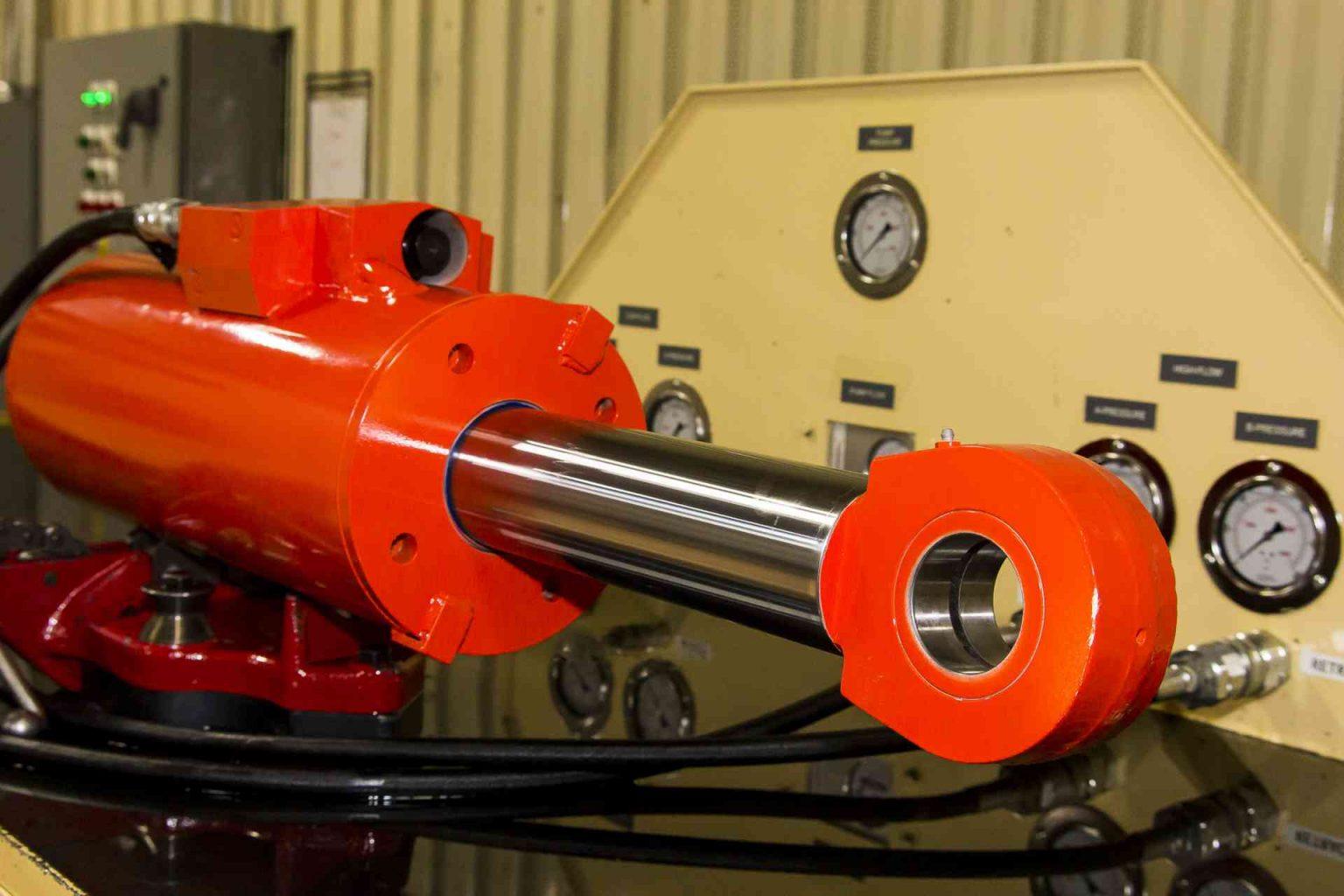
A cylinder used in aerial equipment should not go directly from assembly to shipment without inspection. Testing helps identify leakage, dimensional errors, incorrect stroke, weak joints, or assembly problems before installation.
Depending on the application and agreed inspection plan, quality control may include:
- Raw-material and component verification
- Bore, rod, stroke, and mounting dimension inspection
- Rod surface and coating inspection
- Weld appearance and weld-quality checks
- Port and thread inspection
- Full-stroke extension and retraction testing
- External leakage testing
- Internal leakage or pressure-holding testing
- Proof-pressure testing at the agreed test condition
- Cushion and valve-function testing where applicable
- Final cleaning, protection, marking, and packaging inspection
A pressure test confirms that the cylinder can hold the specified test pressure without visible leakage or structural failure. It does not automatically prove long fatigue life, correct machine geometry, or suitable resistance to side loading. Those factors must be addressed through design review, material selection, manufacturing control, and application testing.
For cylinders used in demanding mobile machinery, the testing plan should reflect the actual risk. A steering cylinder, leveling cylinder, main boom cylinder, and outrigger cylinder do not all carry the same consequences if performance changes.
How to Extend Cylinder Service Life
Maintenance does not need to be complicated, but it does need to be consistent. Most expensive cylinder failures start with small problems that were visible earlier.
Inspect the Rod Before Operation
Look for oil, corrosion, scratches, dents, contamination, paint overspray, or concrete residue. Fully exposed rods deserve particular attention after transport or outdoor storage.
Check Pins, Bushings, and Mountings
A perfect cylinder will not survive long in a misaligned mechanism. Check for worn pins, loose retainers, damaged spherical bearings, cracked brackets, and excessive joint clearance.
Keep Hydraulic Oil Clean
Use the oil grade specified by the equipment manufacturer, replace filters according to the maintenance schedule, and keep filling equipment clean. When a major component fails internally, inspect the circuit for debris before installing the replacement.
Protect Rods During Transport
Retract cylinders where the machine design allows it. Do not place chains, hooks, or steel edges against chrome-plated rods. A scratch caused during a ten-minute transport operation can create months of recurring seal trouble.
Investigate Unusual Movement Early
Jerky motion, delayed response, drift, noise, overheating, or uneven extension deserves investigation. Continuing to operate until the cylinder stops moving may turn a manageable repair into damage across the hydraulic system.
Follow the Machine Manufacturer’s Safety Procedures
Before inspecting, disconnecting, or removing a cylinder, lower and mechanically support the load according to the equipment manufacturer’s procedure. Hydraulic pressure can remain trapped even after the pump stops. Never rely on the cylinder alone to support an elevated boom during service.
When Should You Repair or Replace the Cylinder?
A cylinder does not always need complete replacement. Seal replacement, rod refinishing, bearing replacement, tube repair, or remanufacturing may be practical when the main components remain within acceptable limits.
| Condition | Likely Direction | Reason |
|---|---|---|
| Minor seal leakage with a smooth, straight rod | Inspect and consider resealing | The main structural components may still be serviceable |
| Deep rod scoring or widespread corrosion | Repair or replace the rod; evaluate replacement cost | New seals will be damaged by the existing surface |
| Bent rod | Replace the rod and investigate alignment or overload | Straightening alone may not restore reliability |
| Scored or distorted barrel | Evaluate tube replacement or full cylinder replacement | Internal leakage may continue after resealing |
| Cracked mount or failed pressure-containing weld | Engineering review and controlled repair or replacement | Structural integrity is directly affected |
| Repeated failure after previous repair | Investigate the application before another repair | The root cause may be pressure, alignment, contamination, or undersizing |
| Obsolete cylinder with unavailable parts | Consider a properly engineered replacement | A new design may reduce future maintenance risk |
The cheapest immediate repair is not always the lowest-cost decision. If the machine repeatedly returns to service with the same leak, you are paying for labor, transport, downtime, lost rental revenue, and potential secondary damage—not just seals.
How These Principles Apply to Other Mobile Equipment
The same engineering principles appear in other equipment that lifts, positions, stabilizes, or carries loads. Construction hydraulic cylinders also need to withstand shock, dirt, changing load geometry, vibration, and outdoor exposure.
Similarly, material handling hydraulic cylinders depend on controlled lifting, accurate positioning, reliable load holding, and resistance to repeated cycling.
The application changes, but the selection logic remains consistent: understand the load, pressure, geometry, environment, movement, duty cycle, and consequences of failure before finalizing the cylinder.
Frequently Asked Questions
1. What type of hydraulic cylinder is normally used in a boom lift?
Boom lifts commonly use double-acting welded cylinders for main lifting, articulation, leveling, steering, and outrigger functions. Telescopic boom lifts may also use multi-stage telescopic cylinders or single-stage cylinders combined with chains, cables, or other extension mechanisms. The correct design depends on boom geometry, required stroke, available installation space, pressure, and load-holding requirements.
2. Why does an aerial work platform slowly drift after the controls are released?
Drift may result from internal piston-seal leakage, a leaking directional valve, a counterbalance or pilot-operated check valve problem, hose expansion, trapped air, or mechanical movement in the boom structure. Test and isolate the circuit before replacing the cylinder. Otherwise, you may install a new cylinder and discover that the drift remains.
3. Can you replace a boom lift cylinder using only the machine model?
The machine model is useful, but it may not be enough. Manufacturers sometimes use different cylinders across production years, regional versions, boom configurations, or component revisions. Confirm the cylinder part number, bore, rod diameter, stroke, closed length, mounting dimensions, ports, pressure requirements, and valve arrangement before ordering.
4. What causes a new replacement cylinder to leak quickly?
Early leakage often points to contaminated oil, a scratched rod, incorrect seal material, side loading, mounting misalignment, pressure spikes, damaged bearings, poor surface finish, or debris left in the hydraulic circuit after the previous failure. Replacing the seal again without left in the hydraulic circuit after the previous failure. Replacing the seal again without removing the root cause usually leads to another short service interval.
5. How do you know whether a hydraulic cylinder is strong enough?
You need to evaluate more than maximum hydraulic force. Check bore area, system pressure, rod buckling, mounting strength, boom leverage, load direction, side loading, peak pressure, safety factors, and the weakest boom position. The cylinder must also fit the available space and complete the required stroke without mechanical interference.
6. Should a leaking hydraulic cylinder always be replaced?
No. A cylinder with worn seals but a straight rod, serviceable barrel, sound mounts, and undamaged pressure-containing parts may be repairable. Replacement becomes more attractive when the rod or barrel is severely damaged, structural welds are compromised, parts are obsolete, or repeated repairs have failed to deliver reliable service.
7. Why is rod diameter important on an aerial work platform cylinder?
Rod diameter affects stiffness, retraction force, bearing load, and resistance to buckling. Long-stroke cylinders pushing heavy loads under compression are especially sensitive to rod size and mounting geometry. A smaller rod may fit inside the cylinder but still be structurally unsuitable for the application.
8. What information should you send when requesting a custom cylinder?
Provide the cylinder drawing or sample details, bore, rod diameter, stroke, closed length, mounting dimensions, pin sizes, port threads, port positions, working and peak pressure, hydraulic fluid, operating temperature, duty cycle, surface treatment, paint requirements, cylinder function, machine model, and estimated order quantity. Photographs of the installation are also useful when drawings are incomplete.
What Should You Take Away from This Guide?
How do hydraulic cylinders create aerial platform movement?
They convert pressurized hydraulic oil into linear force. The piston moves through the barrel, and the piston rod transfers that movement to the boom, platform, steering system, or outriggers.
Why do cylinder problems become safety and downtime problems?
The cylinder is part of the machine’s load path. Leakage, drift, bent rods, damaged mounts, contamination, or incorrect sizing can affect movement control and equipment availability. Small symptoms deserve attention before they develop into wider system damage.
What option should you choose?
Choose a standard replacement when the original design is proven, the machine has not been modified, and all specifications can be matched. Choose a custom-engineered replacement when installation space, stroke, load, pressure, mounting, environment, or duty cycle differs from available standard products.
What should you consider before purchasing?
Do not stop at price and overall length. Compare bore, rod diameter, stroke, closed length, pressure, mounting geometry, ports, seals, rod treatment, testing requirements, valve configuration, and the consequences of failure. The cylinder that costs less on the quotation may cost more after installation if it creates rework, leakage, downtime, or repeated repairs.
Discuss Your Aerial Work Platform Cylinder Requirements
When you request a replacement or custom cylinder, share the original drawing, machine model, cylinder function, bore, rod diameter, stroke, mounting dimensions, ports, working pressure, operating environment, and required quantity.
ZHY can review your dimensional and application requirements for boom lifts, cherry pickers, telescopic platforms, steering systems, leveling mechanisms, and outriggers. A clear specification at the beginning is the simplest way to avoid an expensive mismatch later.
Start by reviewing the relevant cherry picker cylinder solutions or submit your technical requirements for an application-specific evaluation.