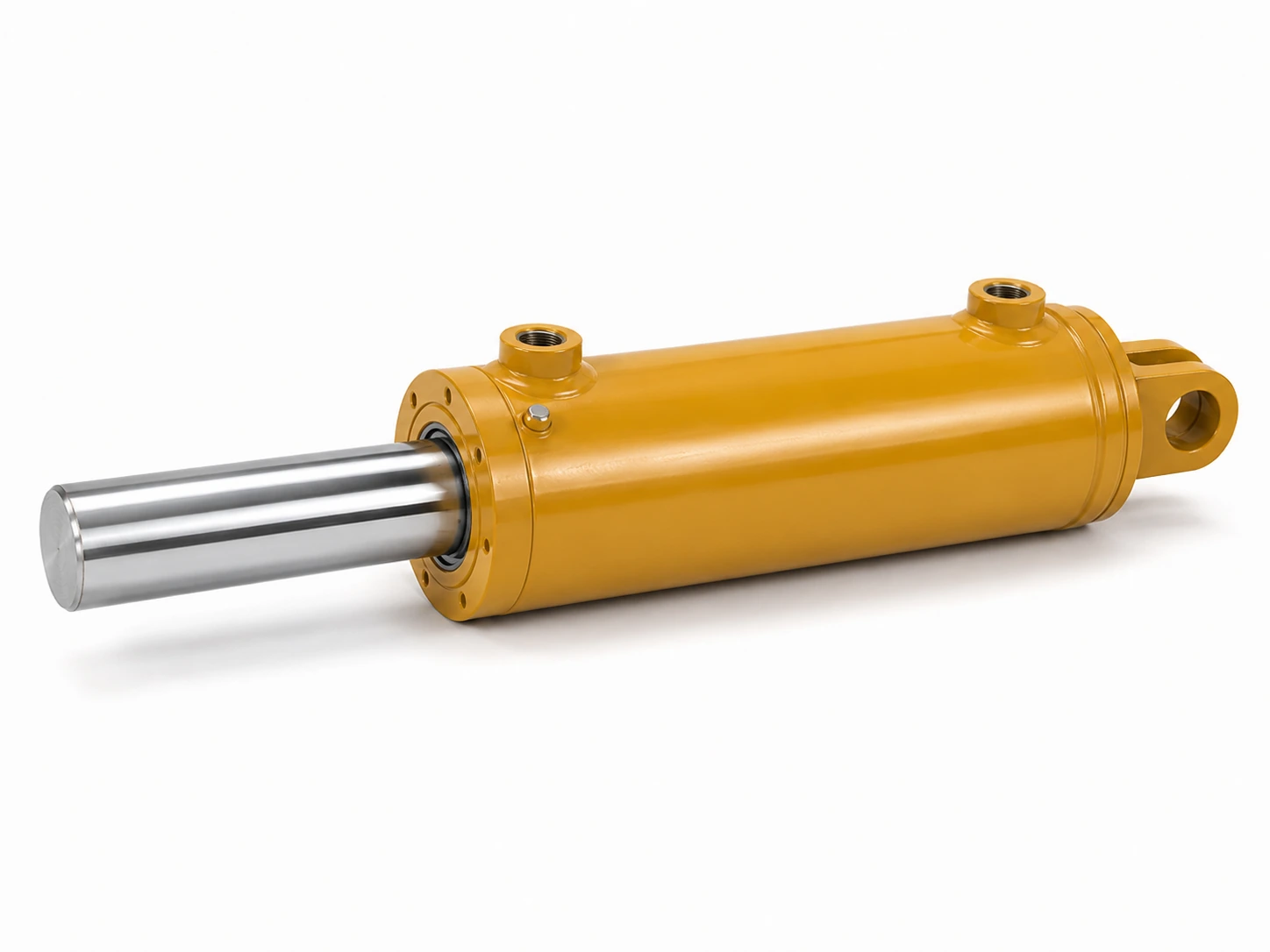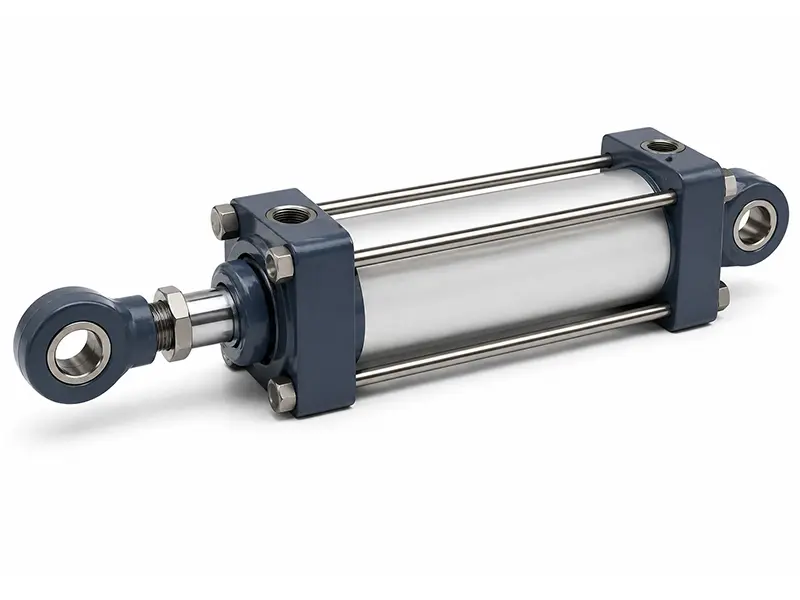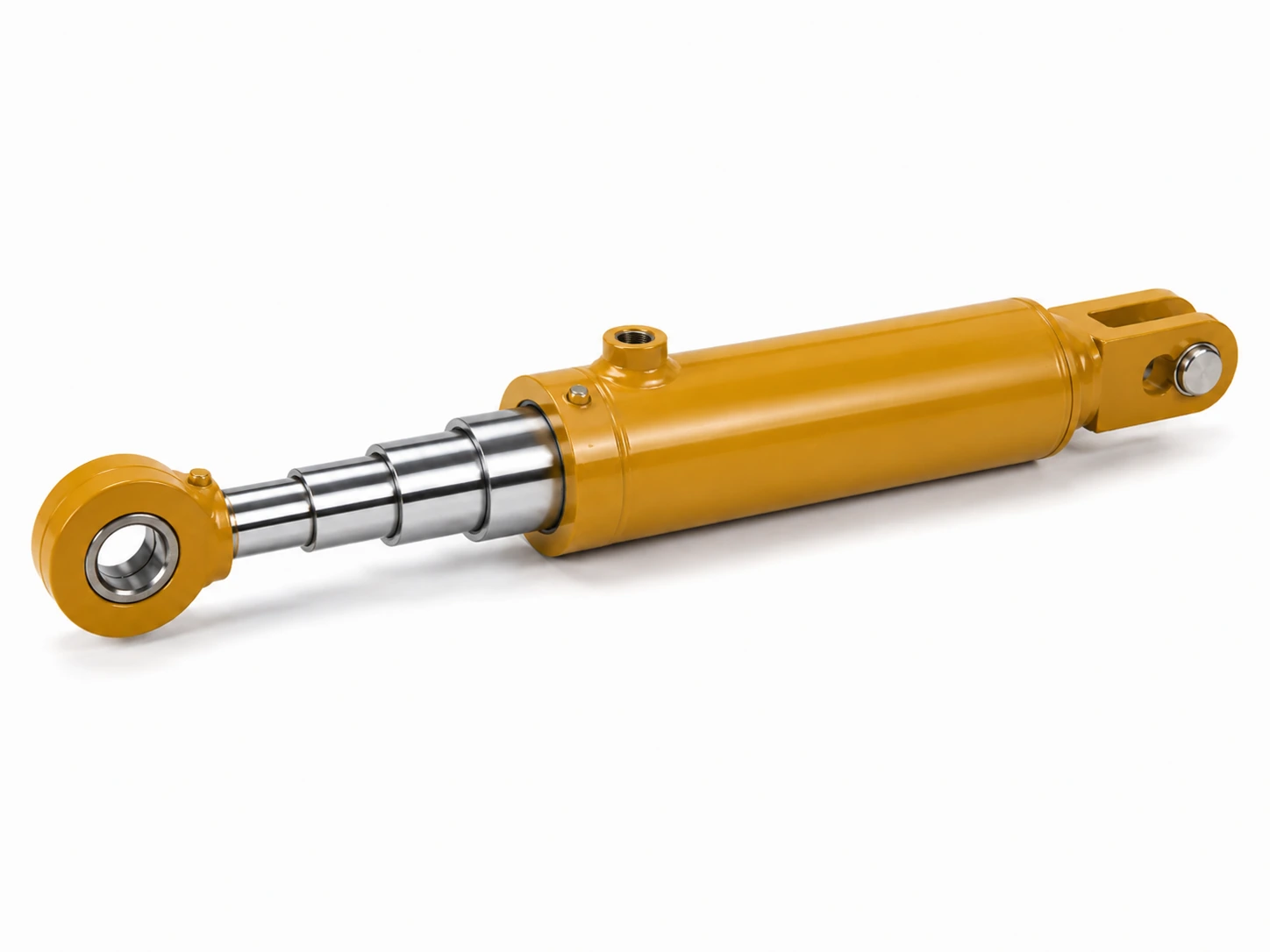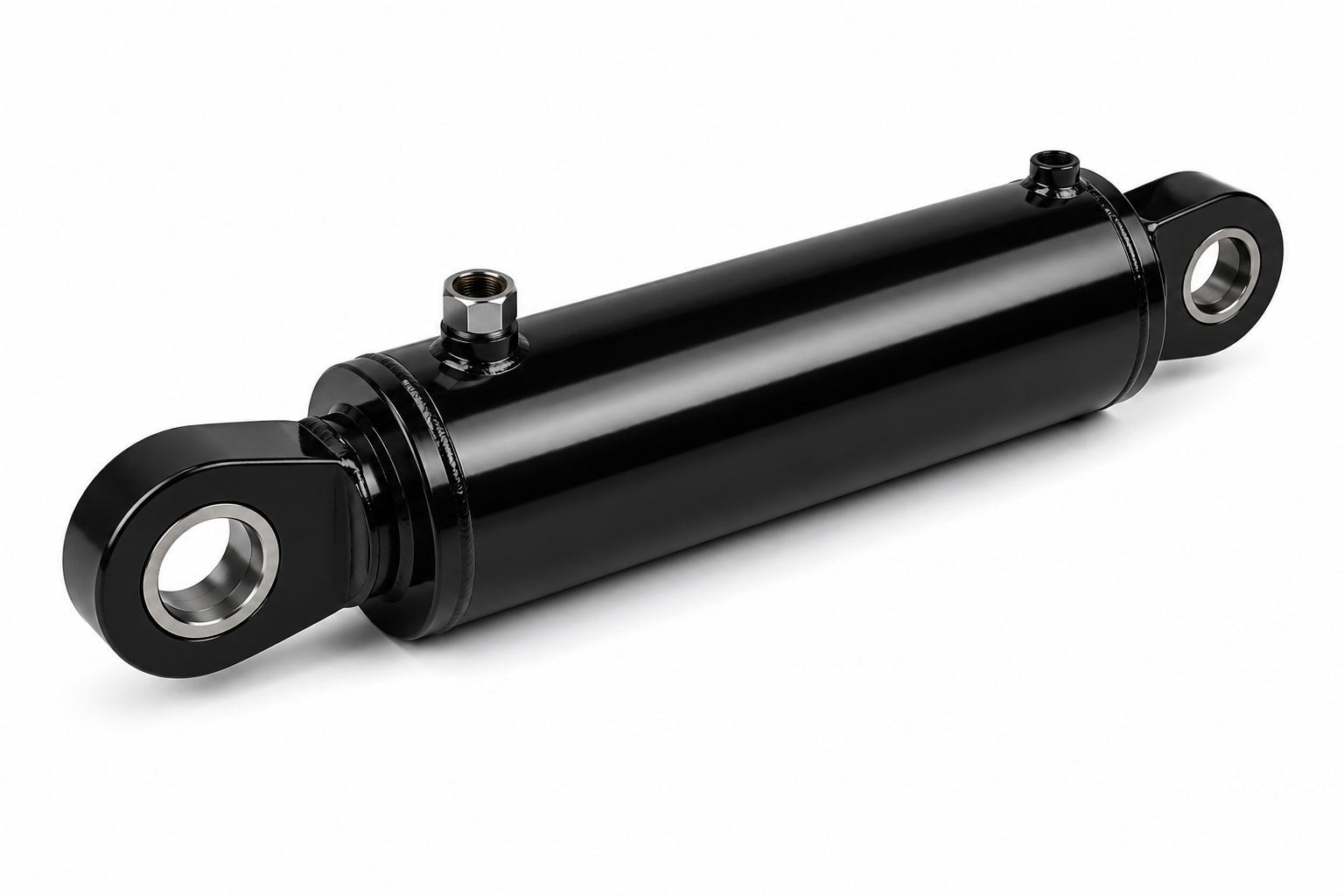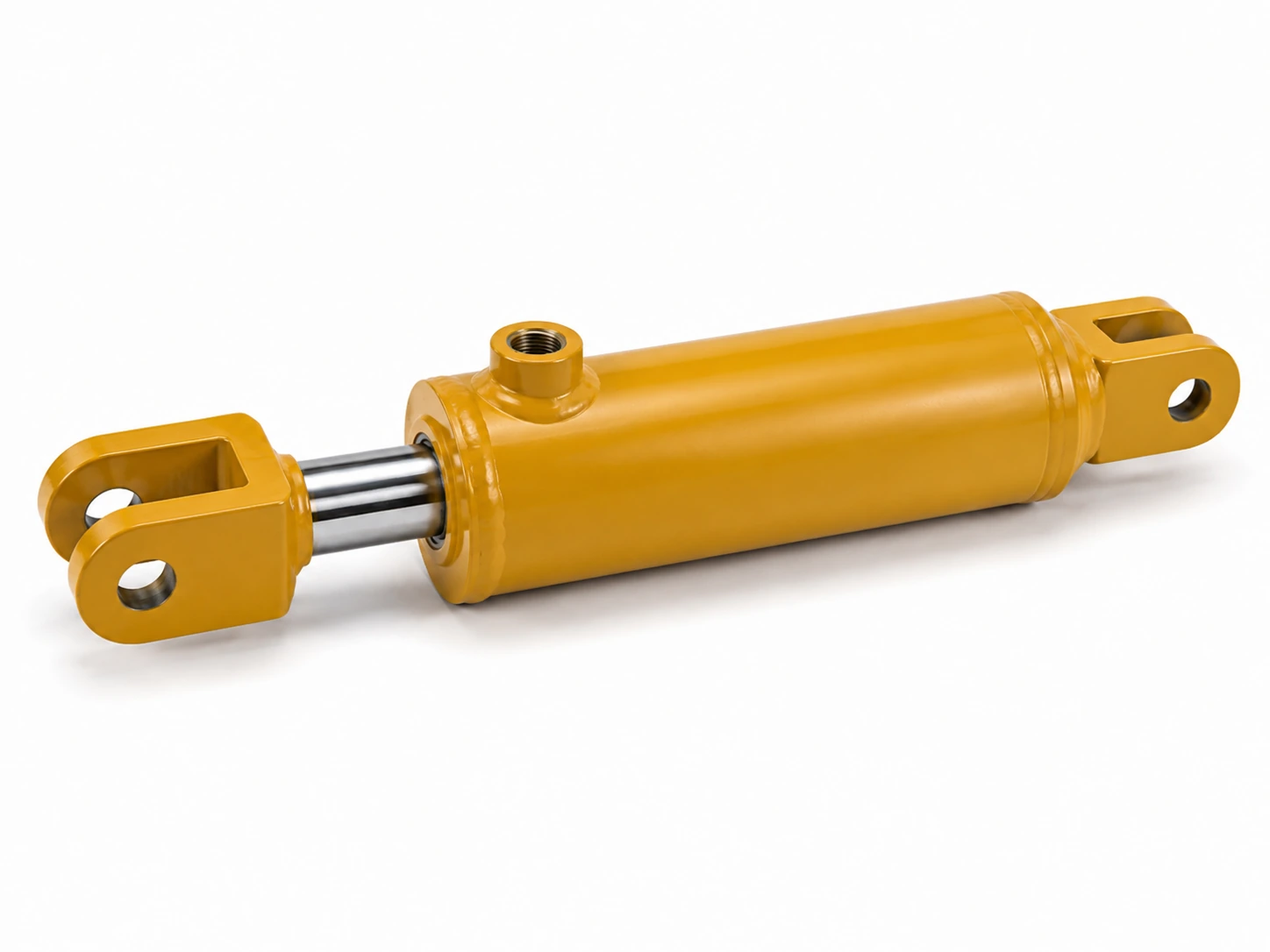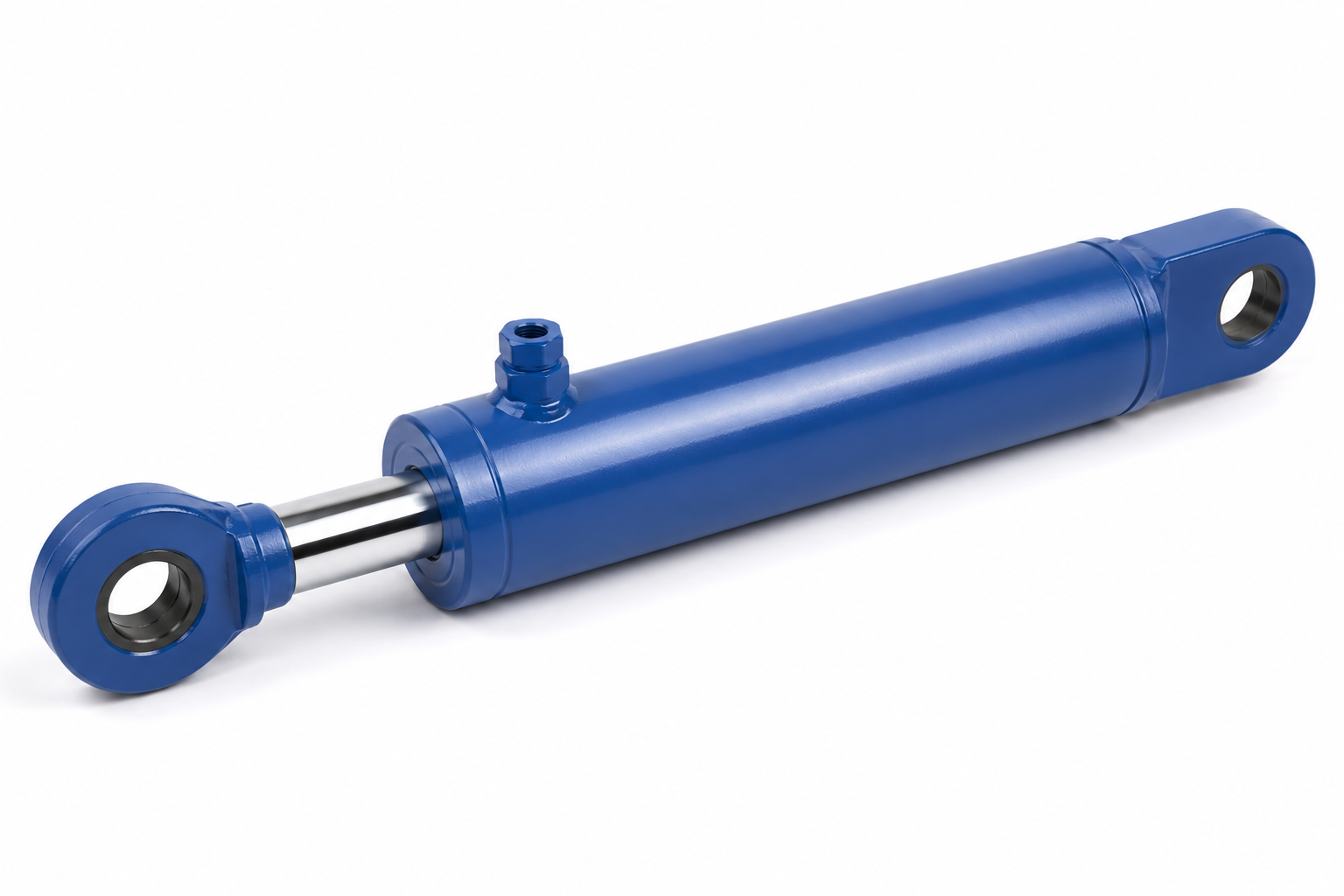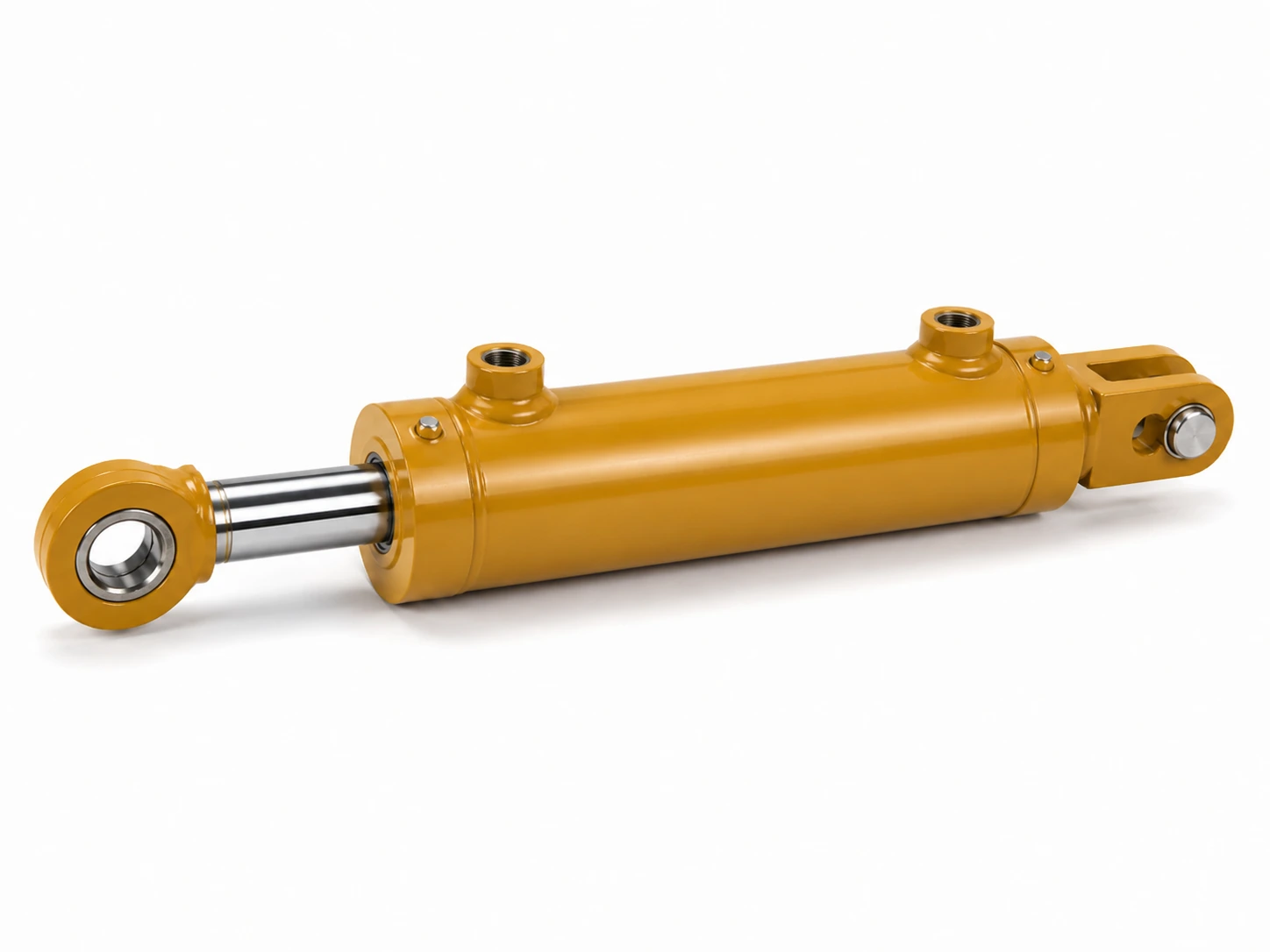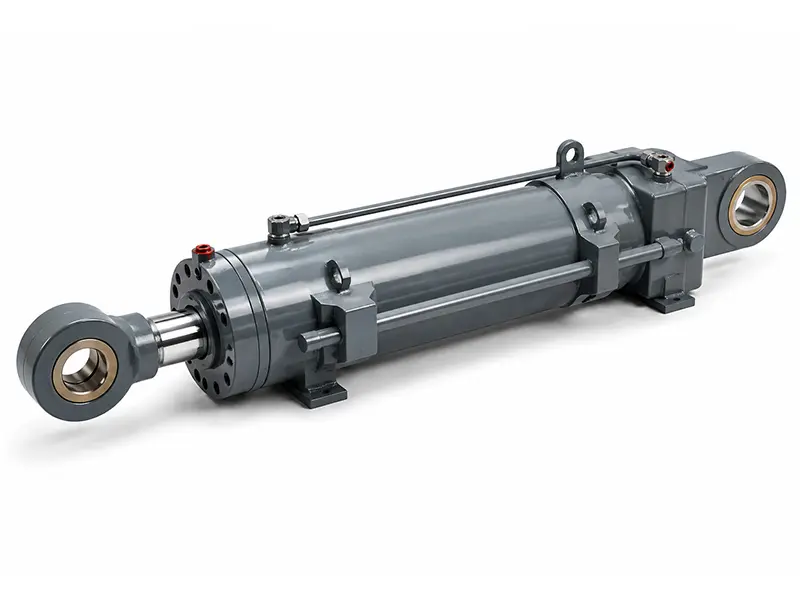
Tie Rod Hydraulic Cylinder
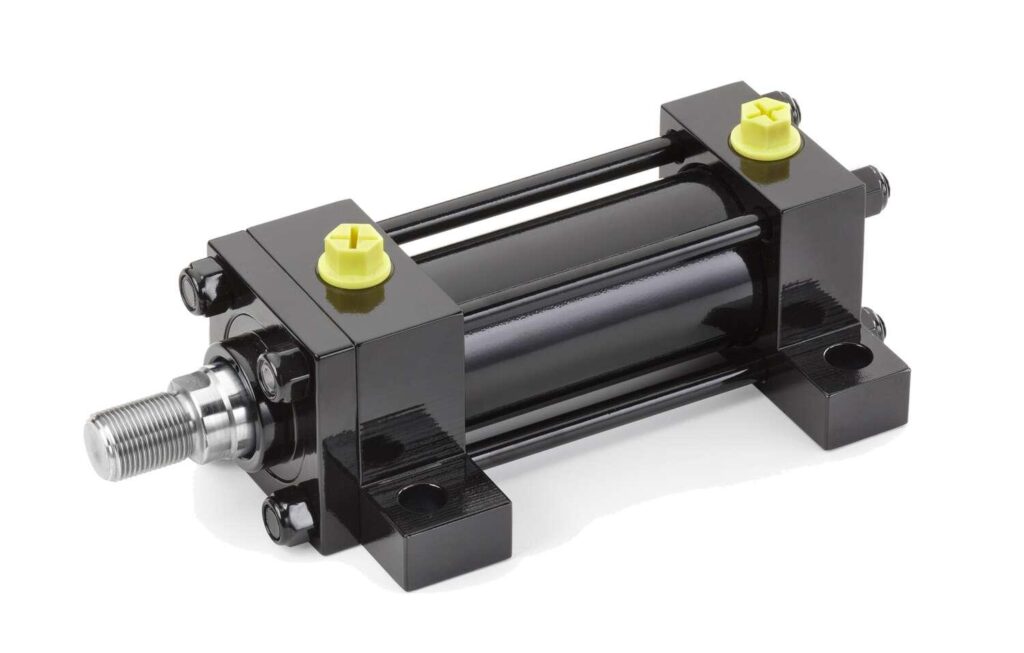
Tie rod hydraulic cylinders are a practical choice when buyers need a serviceable industrial cylinder with removable end caps, planned seal replacement and repeatable mounting dimensions.
They are commonly specified for machine tools, presses, material handling equipment, agricultural machinery and OEM hydraulic systems with controlled loads and accessible maintenance space.
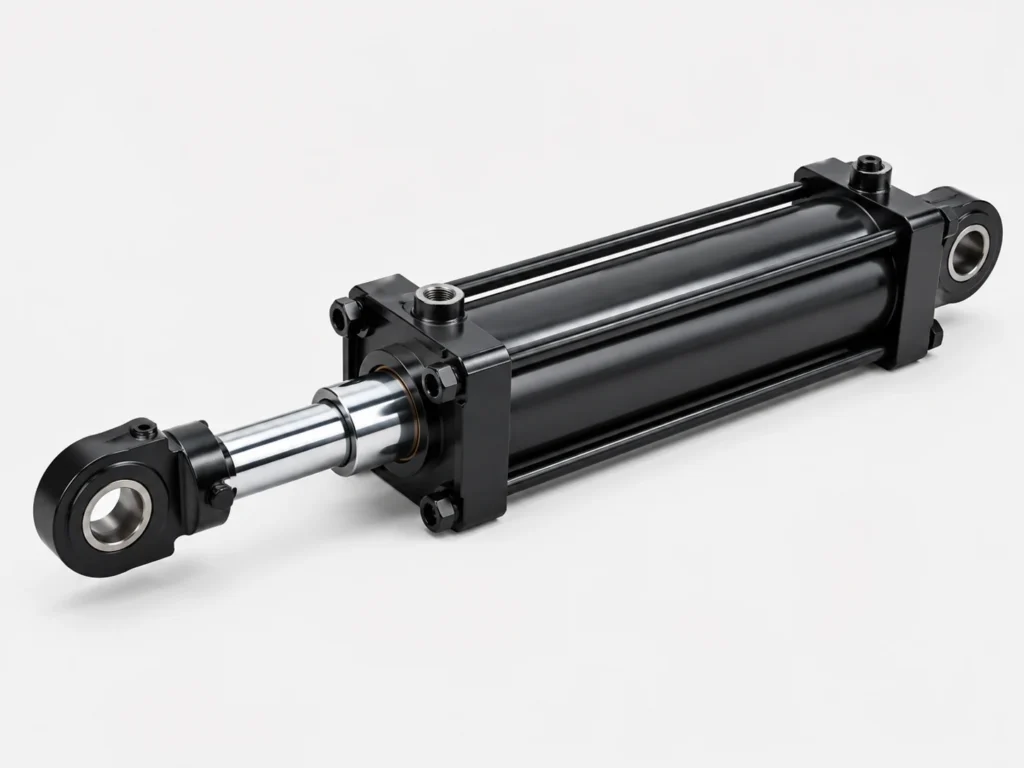
Tie Rod Hydraulic Cylinder Manufacturer & Supplier in China
As tie Rod hydraulic cylinder manufacturer & supplier, we manufacture standard and custom tie rod cylinders with bore sizes up to 600 mm and working pressures up to 35 MPa. Every cylinder is pressure tested before delivery to ensure long service life and dependable performance.
We supply double acting tie rod hydraulic cylinders, high-pressure industrial tie rod cylinders, stainless steel options, replacement cylinders, NFPA-style square-head cylinders, metric industrial cylinders, and wholesale OEM production.
Serviceable Design
End caps and barrel can be disassembled
Standard or Custom
NFPA-style, metric, inch, or OEM drawing
Multiple Mountings
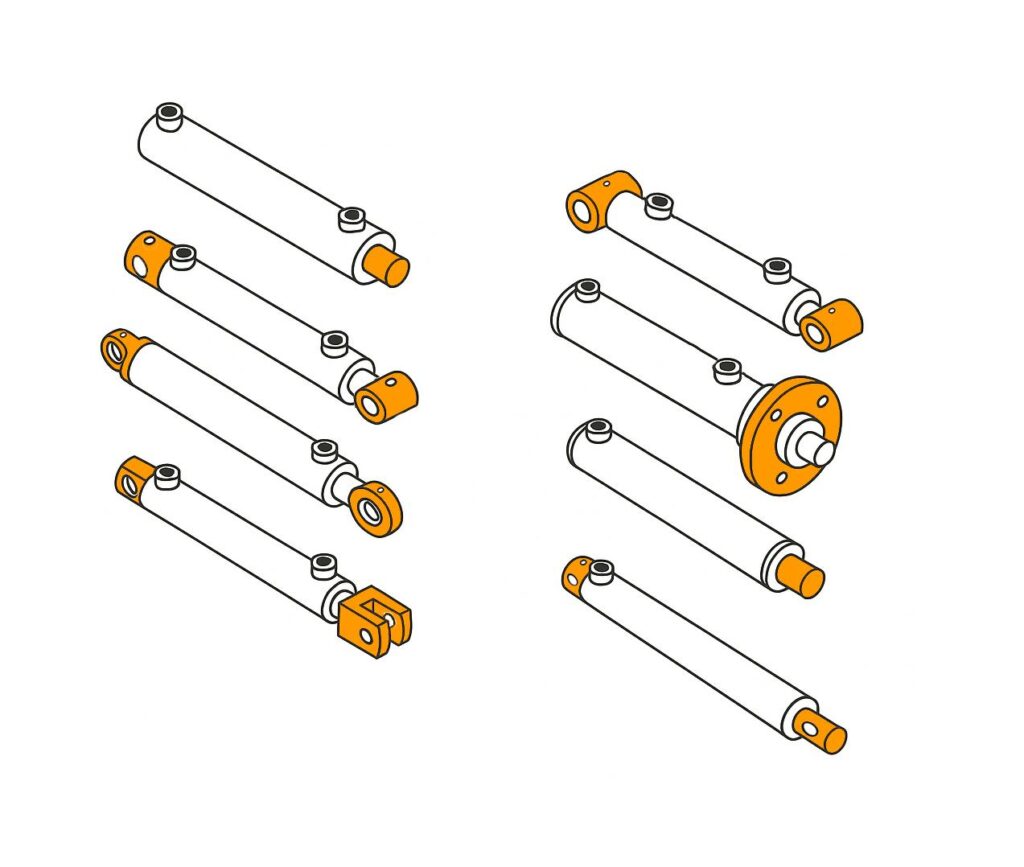
Flange, foot, trunnion, clevis, eye
Seal Kit Planning
Maintenance and replacement support
100% Tested
Pressure, leakage, stroke and dimensions
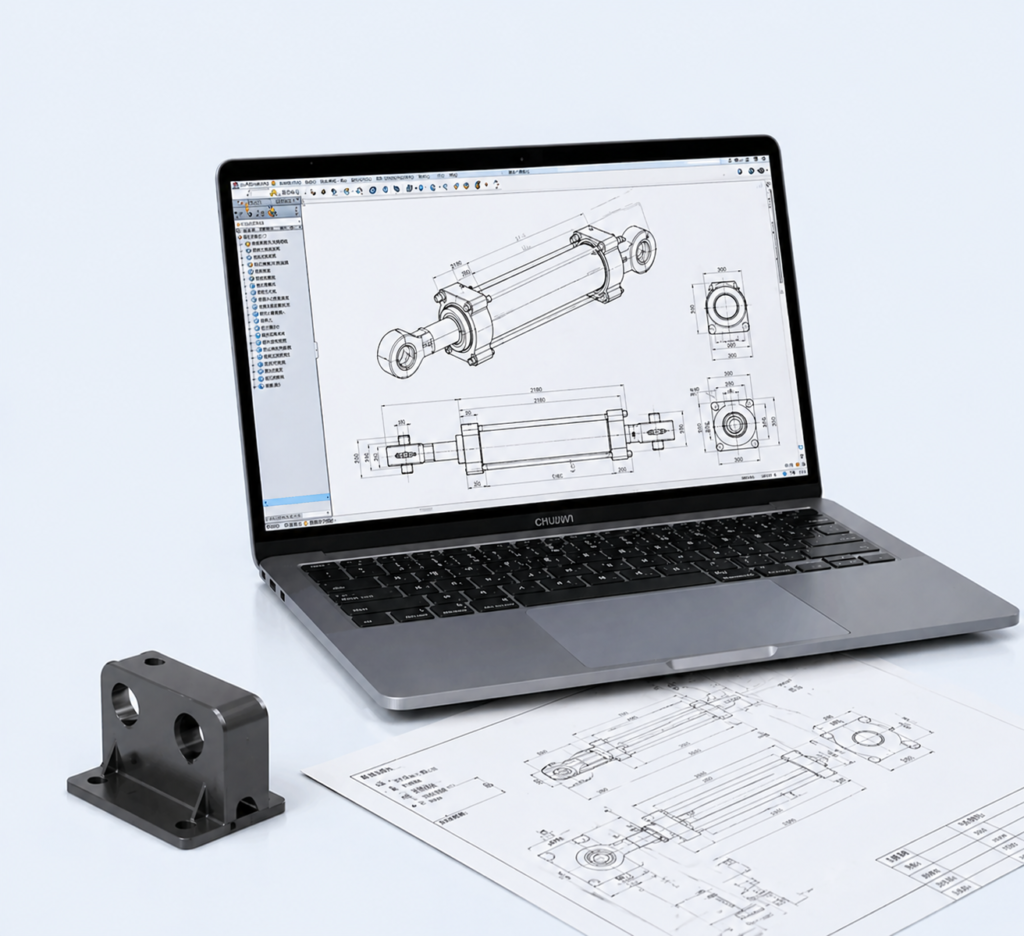
Custom Tie Rod Hydraulic Cylinders to Your Specifications
We manufacture tie rod hydraulic cylinders according to customer drawings, samples, or technical requirements.
Customization Options
✓ Custom bore, rod, stroke, closed length, and pressure
✓ Custom bore, rod, stroke, closed length, and pressure
✓ Drawing-based and sample-based replacement manufacturing
✓ Double acting and project-specific single acting options
✓ Custom cushions, ports, sensors, seals, coatings, and paint
✓ Prototype, repeat OEM, distributor, and wholesale supply
Tie Rod Hydraulic Cylinder Technical Specifications
Final feasibility must be confirmed according to pressure class, cylinder standard, external tie rod clearance, load direction, mounting, rod stability, speed, environment, and service requirements.
| Item | Range | Notes |
|---|---|---|
| Action | Double Acting / Single Acting | Custom on request |
| Bore Diameter | 22mm – 600mm | Custom bores available on request |
| Stroke Length | Up to 6000mm | Telescopic designs, 2–6 stages |
| Working Pressure | Up to 35Mpa | Rated per application, tested at 1.5× |
| Rod Diameter | 20mm–300 mm | Custom rod sizes available on request |
| Chrome plating thickness | 30–50 µm | Salt-spray tested 500+ hrs |
| Mounting Type | Clevis, Trunnion, Flange, Foot, Eye | Custom available on request |
| Tube & Rod Material | 20# Steel,45# Steel,27SiMn、42CrMo,Carbon Steel, Alloy Steel, Stainless Steel | Custom available on request |
| Seal Brand | Hallite, NOK, SKF, Parker,TYS Seals | Custom available on request |
| Temperature Range | -20°C to +120°C | Custom available on request |
| OEM Service | Yes |
ZHY currently publishes an overall hydraulic cylinder manufacturing reference of 22–600 mm bore, stroke up to 6000 mm, and pressure up to 100 MPa. These are factory-wide capabilities, not automatic tie rod cylinder ratings; each tie rod design must be validated against its standard, tie rod structure, end caps, seals, and application.
Types of Tie Rod Hydraulic Cylinders
The product structure should be selected according to pressure, environment, mounting, service frequency, dimensional standard, and replacement strategy.
Double Acting Tie Rod Cylinder
Single Acting Tie Rod Cylinder
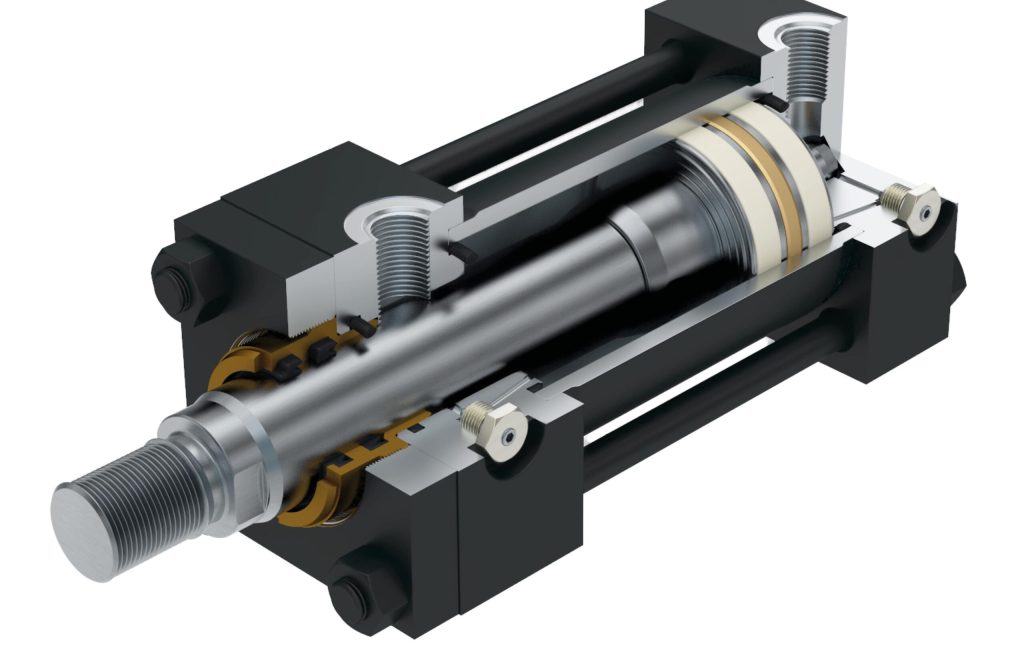
Cushioned Tie Rod Cylinder
NFPA Standard Tie Rod Cylinder
Stainless Steel Tie Rod Cylinder
Custom Tie Rod Hydraulic Cylinder
Applications of Tie Rod Hydraulic Cylinder
Tie rod construction creates the most value where loads are predictable, the environment is controlled, maintenance access is available, and replacement dimensions can be standardized.
Industrial Machinery
Material Handling
Hydraulic Presses
Agricultural Machinery
Machine Tools & Tooling
OEM Hydraulic Systems
Why Choose Tie Rod Hydraulic Cylinders from ZHY?
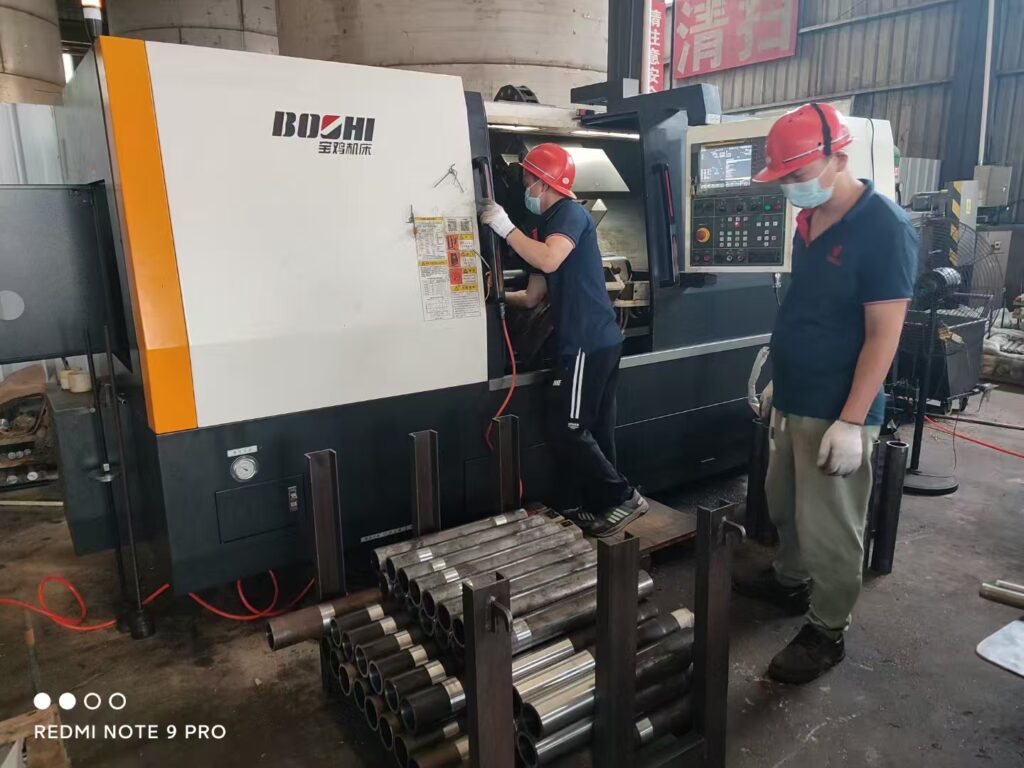
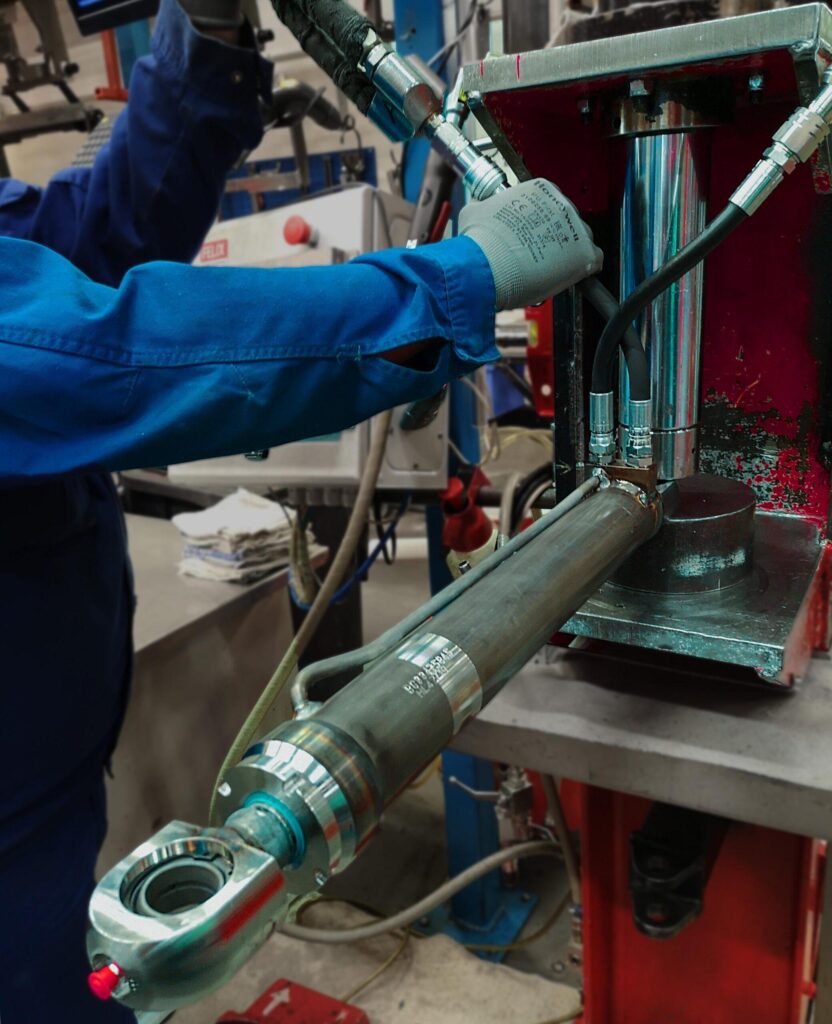
At ZHY Hydraulic, we combine precision manufacturing, strict quality control, and responsive OEM services to deliver reliable tie rod hydraulic cylinders for customers worldwide. From raw material selection to final pressure testing, every cylinder is manufactured to meet demanding industrial standards and provide long-term performance in real-world applications.
| ✓ ISO 9001 Certified | ✓ OEM & Custom Manufacturing |
|---|---|
| ✓ CNC Precision Machining | ✓ 100% Pressure Tested |
| ✓ Fast Sample Production | ✓ Strict Quality Control |
| ✓ Factory-Direct Pricing | ✓ Global Export Experience |
Need a Custom Tie Rod Hydraulic Cylinder?
Send your drawing or the existing cylinder’s bore, rod diameter, stroke, closed length, mounting dimensions, port thread and position, working pressure, speed, load direction, duty cycle and environment. For a replacement, include end-cap and tie-rod clearance photos. ZHY will review interchangeability and return a technically matched quotation instead of pricing from bore and stroke alone.
Features of Our Tie Rod Hydraulic Cylinders
Tie rods do more than hold the cylinder together. Correct end-cap flatness, static seals, barrel condition, rod alignment, tie rod material, thread quality, nut preload, and torque sequence determine whether the joint remains stable during pressure cycles.
Easy Maintenance
Tie rod construction allows quick disassembly for seal replacement and maintenance.
High Pressure Performance
Designed for working pressures up to 35 MPa with reliable sealing performance.
Precision Machining
CNC machined components ensure excellent concentricity and long seal life.
Long Service Life
Chrome plated rods and premium seals minimize wear and leakage.
Available Mounting Options
Various mounting styles are available to match your equipment design and installation requirements.
Front Flange Mount
Provides a rigid front-end connection for high-force linear applications.
Rear Flange Mount
Offers strong rear support for stationary industrial equipment.
Clevis Mount
Allows pivoting movement to accommodate changing load angles.
Trunnion Mount
Enables smooth oscillation for heavy-duty industrial machinery.
Foot Mount
Secures the cylinder directly to the machine base for stable operation.
Eye End Mount
Provides flexible pin-mounted installation for mobile equipment.
Tie Rod Hydraulic Cylinder Selection Logic
Choose the cylinder construction from the machine environment and maintenance plan, not from price alone.
If the machine works indoors with predictable loads
Choose a tie rod hydraulic cylinder. Service access and repeatable industrial dimensions can reduce maintenance downtime.
If the cylinder receives repeated impact, vibration, or mud
Review a welded hydraulic cylinder first. External tie rods and clamped end caps may not be the best structure for mobile shock duty.
If maintenance teams reseal cylinders on site
Choose a serviceable tie rod design with a documented seal kit. Confirm gland access and tie rod torque procedure.
If replacement interchangeability is important
Choose a recognized dimensional series or freeze a controlled OEM drawing. Bore and stroke alone do not ensure interchangeability.
If the machine has a narrow guarded pocket
Check the external tie rod and nut envelope. A welded cylinder may fit more easily where clearance is limited.
If pressure, load holding, or fast cycling is demanding
Confirm pressure class, rod ratio, cushions, seals, and test records. Do not select only by catalog size.
Choose Serviceability or Compact Shock Resistance According to the Machine
Neither construction is universally better. The correct choice is the one that reduces the most expensive future failure in your equipment.
| Selection Factor | Tie Rod Hydraulic Cylinder | Welded Hydraulic Cylinder | Recommendation |
|---|---|---|---|
| Best Environment | Stable industrial machines, factory automation, presses, clamps, conveyors | Mobile equipment, compact linkages, outdoor machinery and vibration-heavy functions | If the machine is controlled and maintained indoors → choose a tie rod hydraulic cylinder. |
| Service Access | Usually easier to disassemble, inspect, reseal and rebuild | Service method depends on the gland and welded body construction | If rapid resealing and planned maintenance matter → tie rod normally has the advantage. |
| Installation Envelope | External tie rods and nuts require additional installation clearance | More compact body without exposed structural tie rods | If installation space is narrow → a welded hydraulic cylinder usually fits better. |
| Shock and Vibration | Best for stable load paths; repeated shock may loosen clamped joints | Often preferred for correctly engineered mobile and shock-load applications | If shock and vibration are part of normal operation → review welded construction first. |
| Standardization | Often easier to align with NFPA-style, ISO-series or plant replacement dimensions | Frequently customized around OEM mobile-machine geometry | If interchangeability or distributor stocking matters → choose a tie rod hydraulic cylinder. |
| Main Risk | Uneven tie rod torque, fastener loosening, end-cap leakage and exposed tie rod corrosion | Weld quality, coating condition, service access and dependence on custom replacement dimensions | Choose the construction that controls the most likely failure in the real operating environment. |
Problems You Should Eliminate Before Ordering Tie Rod Cylinders
A serviceable cylinder still creates downtime when the application, dimensional standard, preload, seals, or maintenance documentation are wrong.
Using Tie Rod Construction in Repeated Shock Duty
Risk: Vibration and impact work against the clamped joint and external fasteners.
Consequence:Torque loss, end-cap seepage, seal wear, and repeated service calls.
Buying by Bore and Stroke Only
Risk:Mounts, closed length, ports, rod diameter, cushions, and external envelope do not match.
Consequence: Installation failure, machine modification, and delayed commissioning.
Ignoring Tie Rod Torque Procedure
Risk: Ignoring Tie Rod Torque Procedure
Consequence: Static seal leakage, distortion, uneven wear, and short service life.
Assuming All NFPA or ISO Cylinders Interchange
Risk: The pressure class, mount variation, rod option, port, and closed length differ.
Consequence: A “standard” replacement still does not fit or perform correctly.
Ignoring External Tie Rod Clearance
Risk: Nuts or rods interfere with guards, brackets, hoses, or adjacent machine parts.
Consequence: Assembly conflict, inaccessible service points, and redesign work.
No Seal Kit or Revision Control
Risk: Maintenance receives the wrong seals or later batches change undocumented details.
Consequence: Longer downtime, repeat leakage, and inconsistent replacement stock.
Tie Rod Hydraulic Cylinder FAQs
1. What is a tie rod hydraulic cylinder?
A tie rod hydraulic cylinder uses external threaded rods and nuts to clamp the front head, barrel, and rear end cap into one assembly. This construction is widely used in controlled industrial equipment because you can disassemble the cylinder, replace seals, inspect the tube, and service the end components without cutting a welded body.
2. When should you choose a tie rod hydraulic cylinder instead of a welded cylinder?
Choose a tie rod hydraulic cylinder when your machine operates in a stable industrial environment and maintenance access, seal replacement, standardized mounting dimensions, and replacement interchangeability are important. Choose welded construction first when compact packaging, repeated shock, vibration, mud, and outdoor mobile duty are the dominant risks.
3. What is the difference between a tie rod cylinder and a welded cylinder?
Tie rod cylinders are easier to disassemble and maintain, while welded cylinders offer a more compact design and are typically used in mobile equipment exposed to heavy shock and harsh environments.
4. What information should you provide for a tie rod cylinder quotation?
You should provide bore diameter, rod diameter, stroke, closed and extended length, working and peak pressure, acting type, mounting style, port type and orientation, cushion requirements, operating speed, duty cycle, oil, temperature, environment, quantity, standard reference, drawing, sample, or replacement model data.
5. Are tie rod hydraulic cylinders easy to repair?
Tie rod cylinders are generally service-friendly because the external tie rods can be removed so the end caps, barrel, piston, gland, and seals can be accessed. Repair quality still depends on correct tie rod torque, clean assembly, undamaged sealing surfaces, compatible seal kits, and accurate reassembly.
6. Can tie rod cylinders be used for hydraulic presses and factory automation?
Yes. Tie rod hydraulic cylinders are commonly selected for factory presses, clamps, conveyor lifts, positioning tables, packaging machinery, material handling systems, machine tools, and automation axes where loads are predictable and planned maintenance is available.
7. What causes end-cap leakage on a tie rod hydraulic cylinder?
Possible causes include uneven tie rod torque, fastener loosening, damaged static seals, barrel or cap surface damage, pressure spikes, side load, incorrect assembly, contamination, and use in a high-vibration application. You should inspect the complete clamped joint rather than replacing only the visible seal.
8. Can you order custom and wholesale tie rod hydraulic cylinders from ZHY?
Yes. ZHY supports prototype, small-batch, replacement, OEM, repeat-order, and wholesale tie rod hydraulic cylinder manufacturing. You can customize bore, rod, stroke, mounts, ports, cushions, seals, materials, coatings, paint, nameplates, packaging, inspection documents, and seal kits.