What is the practical difference between single and double acting cylinder designs?
The practical difference is motion control: a single acting cylinder uses hydraulic pressure in one direction, while a double acting cylinder uses hydraulic pressure to move both out and back. For buyers, that difference affects port count, valve choice, safety behavior, installation space, cycle speed, and redesign risk.
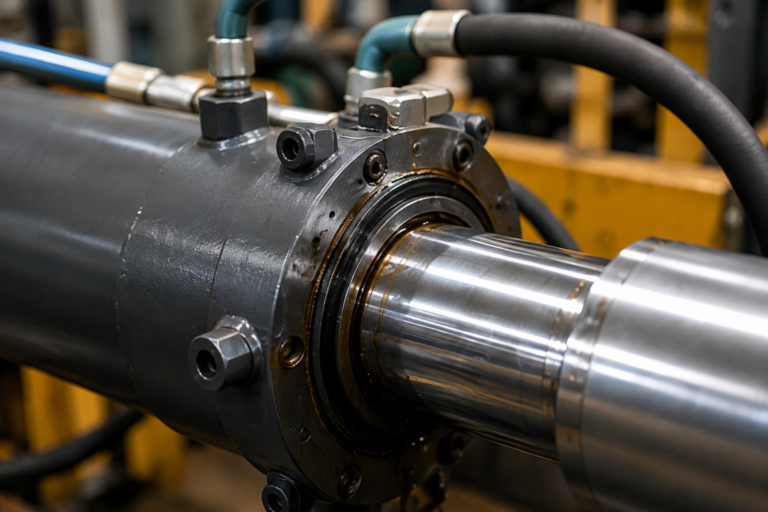
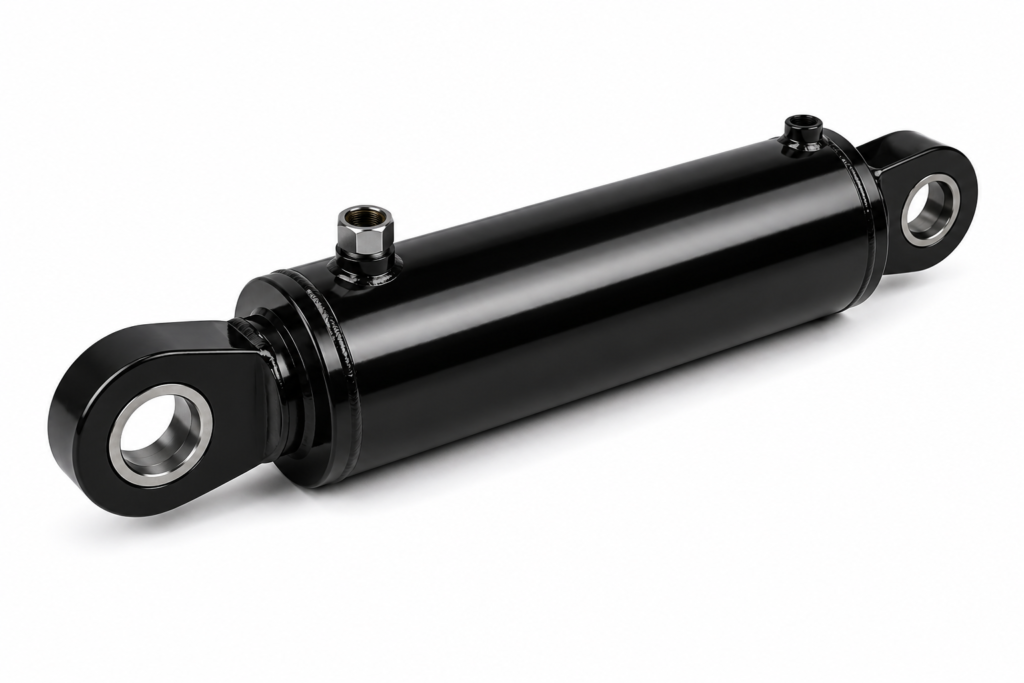
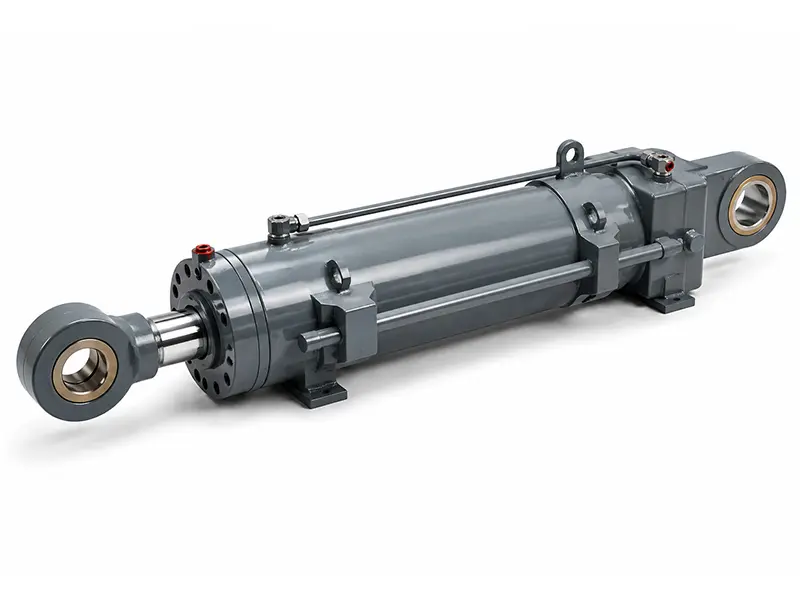
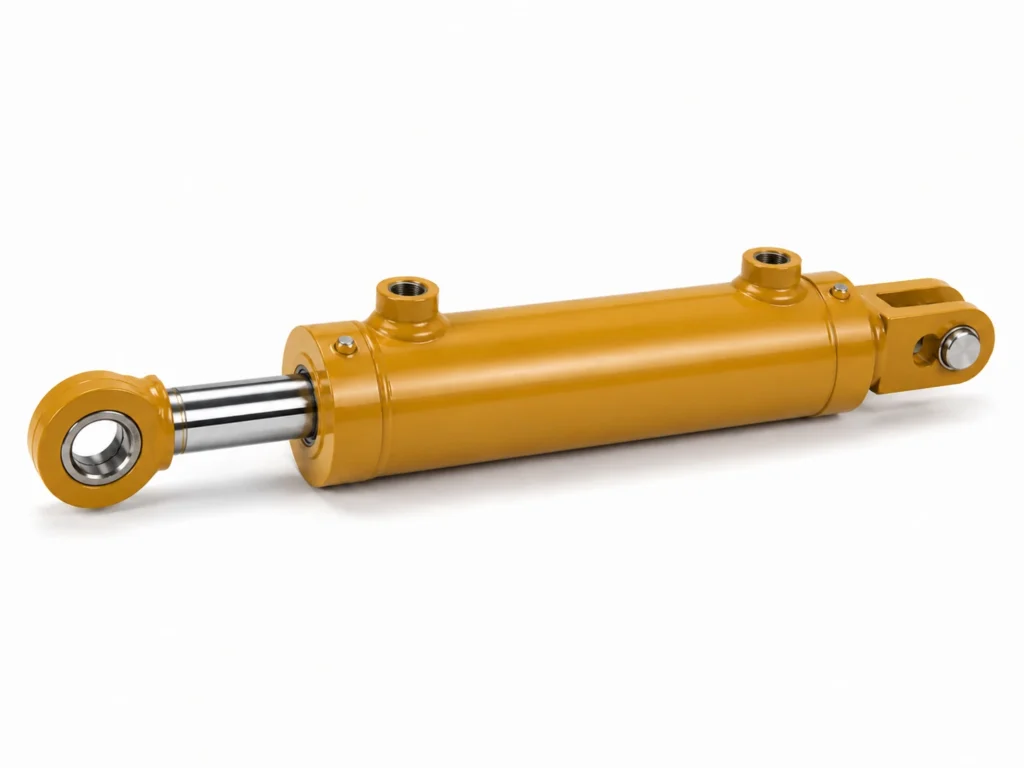
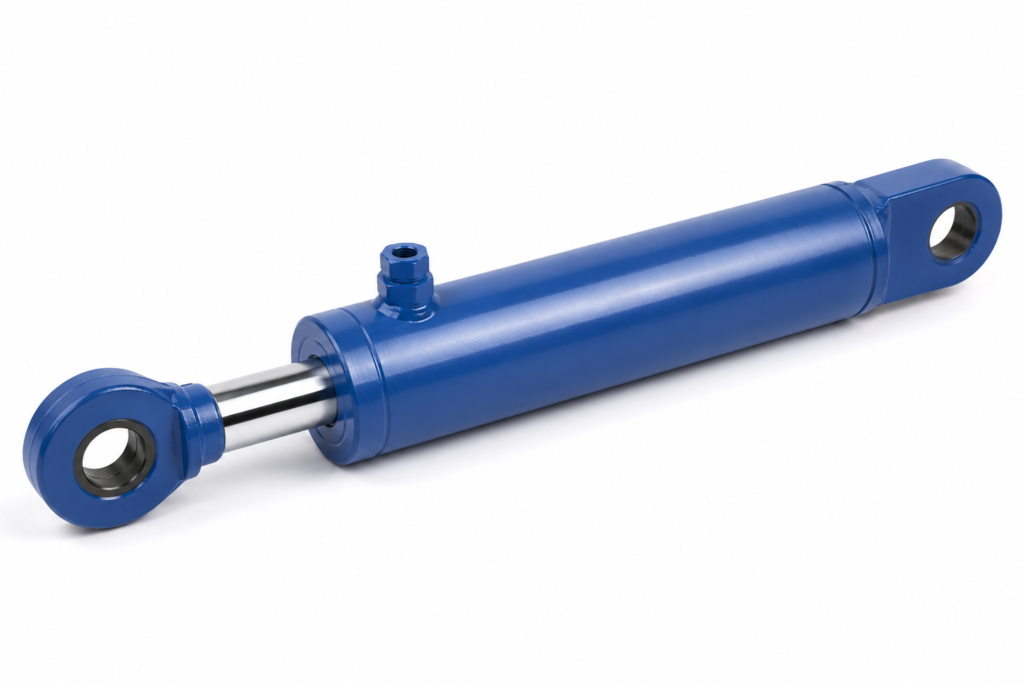
A single acting hydraulic cylinder normally has one pressure port. Fluid extends or retracts the rod, and an external force such as gravity, machine weight, spring force, or a counter-load returns it. A double acting hydraulic cylinder normally has two ports, so oil pressure can actively drive the piston in both directions.
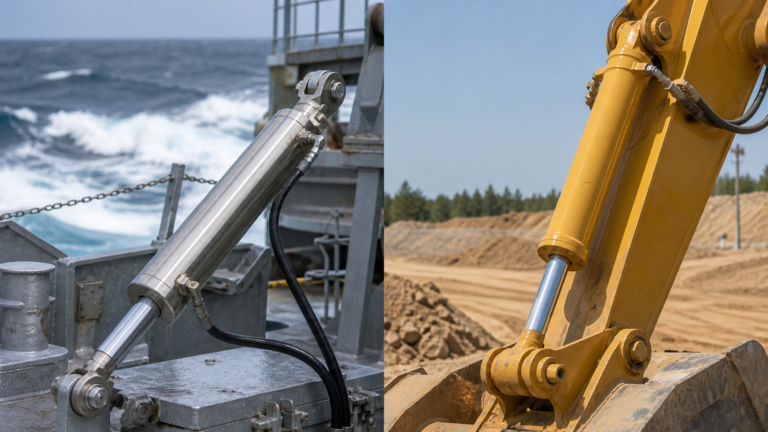
This definition sounds simple, but it changes the machine design. A dump trailer hoist, bottle jack, or lift table often works well with a single acting cylinder because the load can descend under controlled gravity. A clamping fixture, steering mechanism, press feed, loader bucket, or automated gate usually needs a double acting cylinder because return motion cannot be left to gravity.
- Single acting cylinder
- A hydraulic actuator with pressure applied to one side of the piston only; the opposite movement is created by gravity, load force, spring return, or another external force.
- Double acting cylinder
- A hydraulic actuator with pressure applied alternately to both piston sides; it provides powered extension and powered retraction.
- Bore, rod, and stroke
- Bore determines piston area and push force, rod diameter affects retract force and buckling resistance, and stroke defines travel distance.
- Control valve
- The valve directs hydraulic oil to the cylinder ports; single acting circuits often need simpler valve functions, while double acting circuits require flow control to both sides.
For commercial investigation, the key question is not which cylinder is cheaper on the quotation sheet. The real question is whether the machine must actively control both directions under load, vibration, operator input, or emergency stop conditions.
Key Takeaways
- Choose a double acting cylinder when return movement must be powered, timed, or position-controlled.
- Choose a single acting cylinder when the load naturally returns by gravity and the return path is safe and predictable.
- Price-only selection can create redesign cost if the circuit later needs an extra port, valve, hose, or safety function.
- ISO 4413 emphasizes safe hydraulic system design, including control of hazardous movement and energy release.
- For uncertain applications, request quotations for both options with the same bore, stroke, mounting, pressure, and duty cycle assumptions.
When should you choose a single acting hydraulic cylinder?
Choose a single acting cylinder when the work stroke is the only powered movement and return can happen safely through gravity, spring force, or machine load. It is usually the cleaner choice for simple lifting, tipping, pushing, and reset motions where powered retraction adds cost without adding useful control.
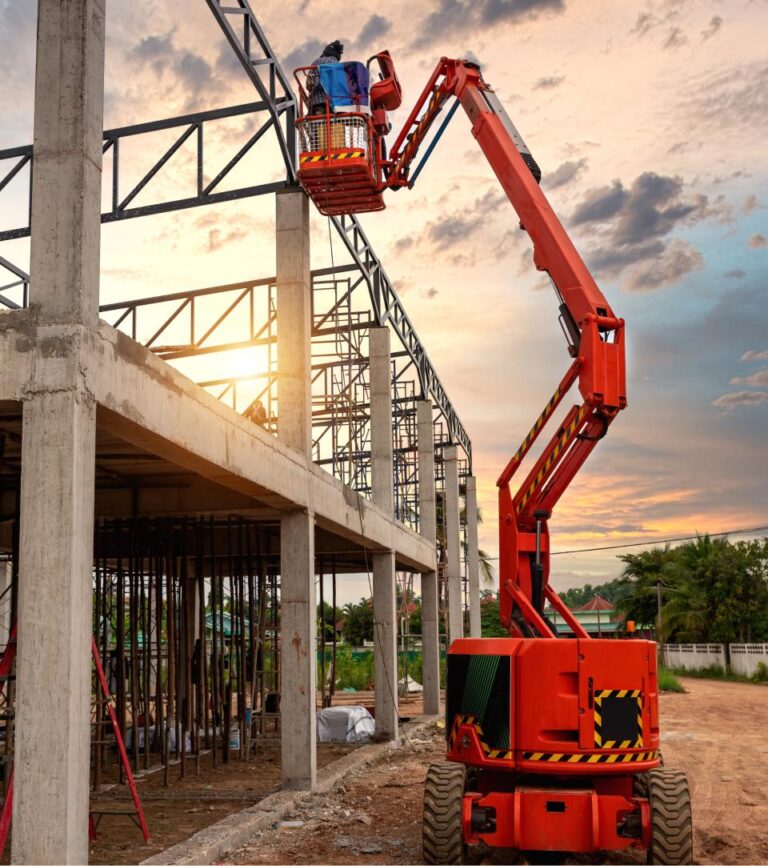
The best examples are lift tables, dump bodies, hydraulic jacks, agricultural hoists, and some vertical pressing or support applications. In these systems, the cylinder often pushes upward or outward, then the load’s own weight brings the rod back when the valve allows controlled flow to tank.
The purchasing advantage is simplicity. A single acting system may need fewer hoses, fewer fittings, a simpler valve arrangement, and less installation time. For equipment builders producing repeated units, that reduction can matter more than the cylinder price alone because assembly labor, hose routing, leak points, and field service all contribute to lifetime cost.
However, single acting cylinders are not automatically safer. If the load return depends on gravity, the circuit must manage descent speed and prevent uncontrolled lowering. Load-holding valves, flow controls, mechanical locks, or counterbalance arrangements may still be required depending on the machine risk assessment.
When should you choose a double acting hydraulic cylinder?
Choose a double acting cylinder when both extension and retraction must be driven by hydraulic pressure. This is the correct choice for positioning, clamping, pulling, pushing under changing angles, horizontal movement, mobile equipment attachments, and automated cycles where the return stroke must not depend on gravity.
Double acting cylinders are common on excavator attachments, loader buckets, industrial presses, material handling arms, agricultural steering systems, machine fixtures, and production automation. In these cases, the cylinder may need to hold position, retract against resistance, pull a linkage back, or follow a controlled sequence.
The technical benefit is controllability. By sending oil to either side of the piston, the system can control direction, speed, and force more consistently. Retraction force is usually lower than extension force because the rod occupies part of the annular area, but the return movement is still powered and predictable.
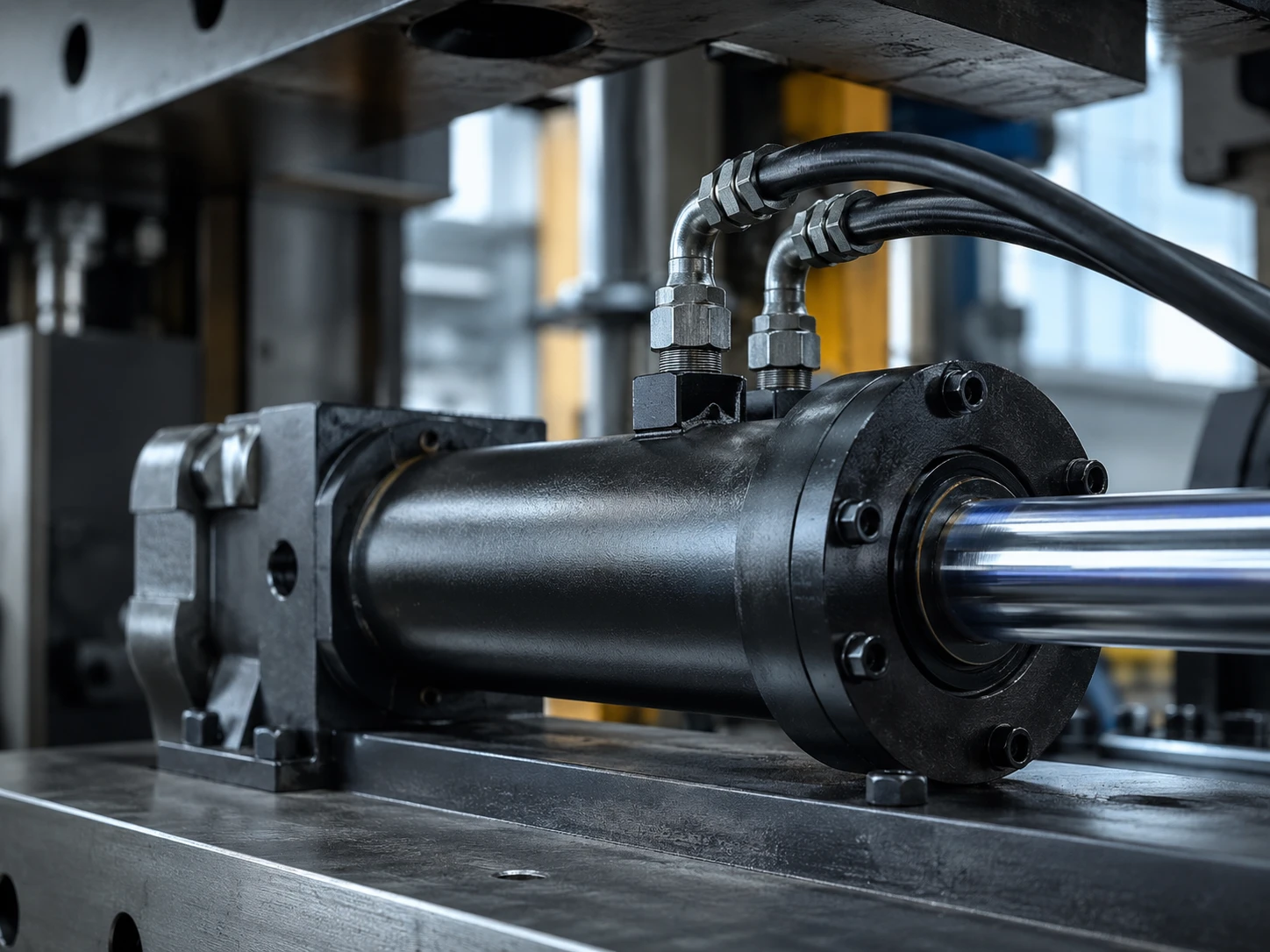
The trade-off is system complexity. Double acting cylinders usually require two hydraulic lines, a directional control valve capable of feeding both ports, more fittings, more installation space, and more attention to pressure intensification or trapped pressure. For procurement managers, that means the quotation should include not only the cylinder but also the valve, hose, fitting, testing, and assembly implications.
How do buyers compare performance, cost, and risk before ordering?
The fastest way to compare options is to map the motion requirement before comparing prices. In single acting vs double acting hydraulic cylinder sourcing, the lower-cost item can become the more expensive decision if it forces a different valve block, unsafe descent behavior, or a late-stage redesign.
| Situation | Recommended choice | Why it fits | Procurement risk if chosen wrong |
|---|---|---|---|
| Vertical lift with gravity return | Single acting | The load can return the rod when oil is released through a controlled path. | Using double acting may add unnecessary hose, valve, and assembly cost. |
| Horizontal pushing and pulling | Double acting | There is no reliable gravity return, so hydraulic power must act both ways. | Single acting may fail to retract or require a separate mechanical return system. |
| Clamping fixture in production | Double acting | Retraction speed and repeatability affect cycle time and part handling. | Slow or inconsistent release can reduce throughput and create operator risk. |
| Dump body, jack, or tipping frame | Single acting | The load naturally lowers the mechanism if descent is controlled. | Poor flow control can create sudden lowering or unstable movement. |
| Mobile attachment with changing angle | Double acting | The cylinder may need to pull against load, inertia, or external resistance. | Price-only selection can cause poor control and field retrofit cost. |
| Uncertain prototype or new OEM design | Quote both options | The final decision depends on confirmed load path, valve design, and duty cycle. | Ordering one option too early may lock the project into the wrong circuit. |
How to use this table: Start with the “Situation” column, then choose the cylinder type that matches the return-motion requirement; when two rows seem close, prioritize the row with the higher safety and control consequence.
From a cost-risk view, the cylinder is only one line item. A double acting cylinder may cost more as a component and circuit, but it can prevent field complaints where the operator needs powered return. A single acting cylinder can be ideal in simple lift equipment, but only if the descent path is engineered rather than assumed.
Which product parameters should appear on the RFQ?
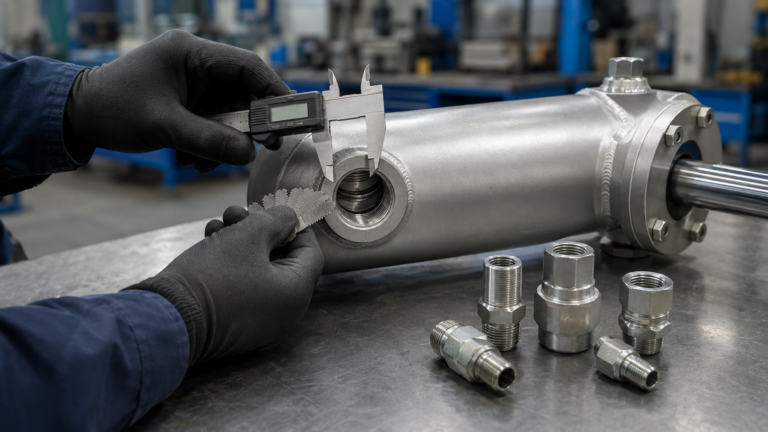
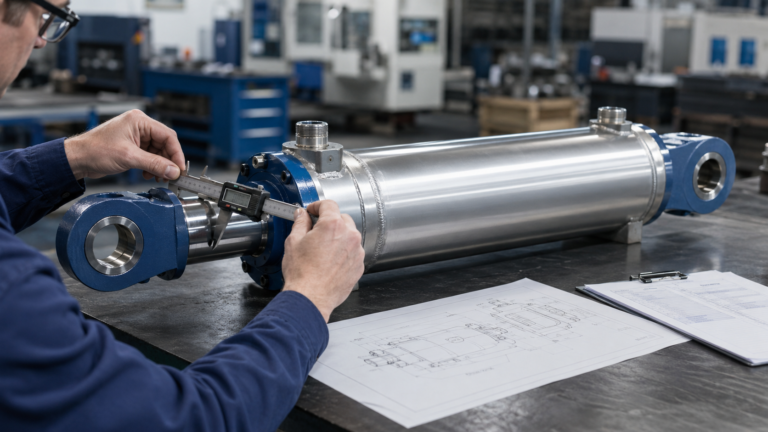
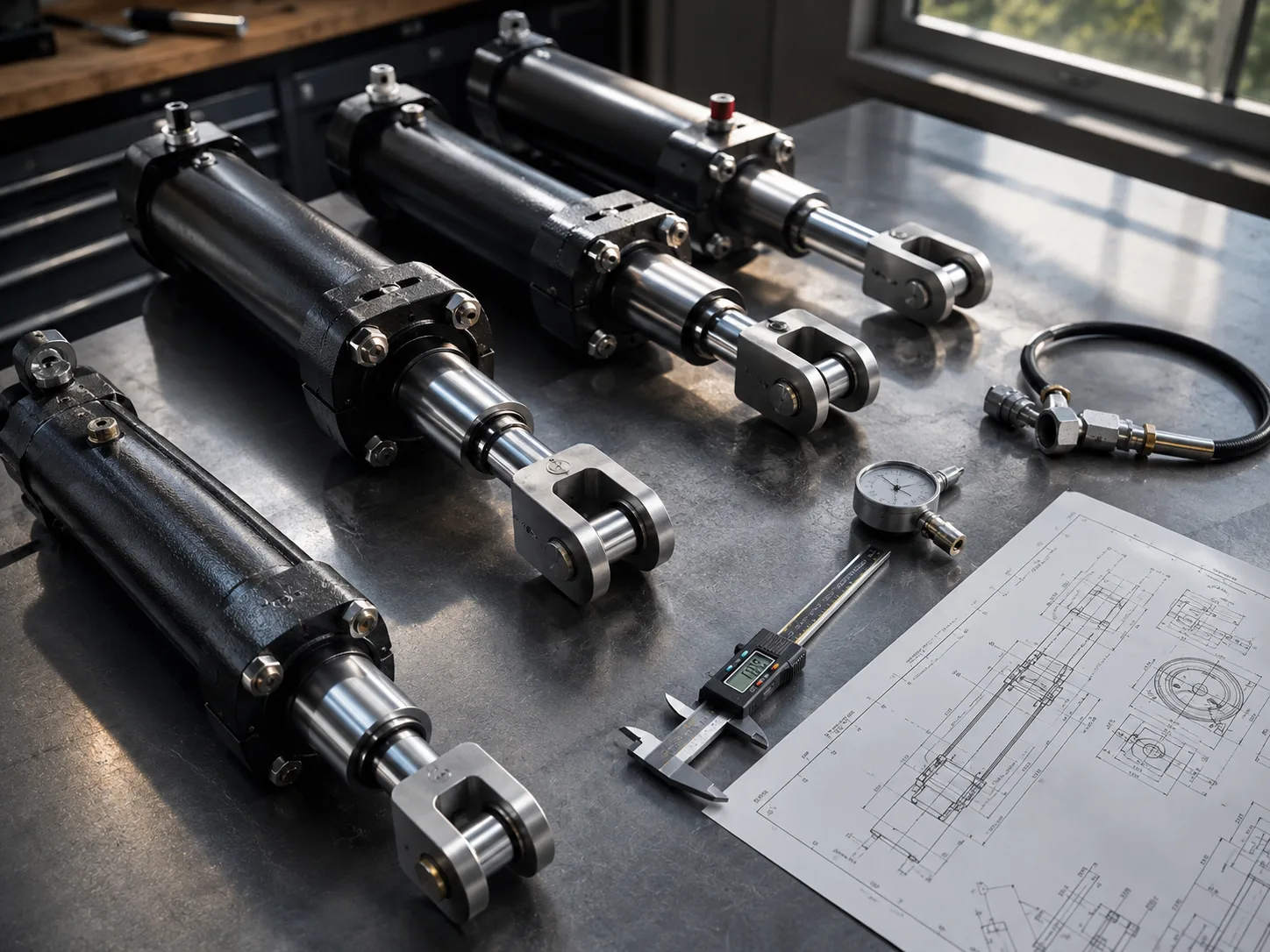
A serious RFQ should specify bore, rod diameter, stroke, working pressure, mounting style, port type, seal material, speed, load direction, and duty cycle. Without these parameters, suppliers may quote visually similar cylinders that behave differently in force, stability, leakage resistance, and service life.
Force is the first calculation. Cylinder push force equals pressure multiplied by piston area. For example, an 80 mm bore at 10 MPa produces about 50.3 kN extension force before efficiency losses. If the rod is 45 mm, the retracting annular area is smaller, so retraction force is about 34.4 kN at the same pressure.
| Parameter | Why it matters | Typical buyer instruction |
|---|---|---|
| Bore diameter | Sets piston area and available push force. | State required force and system pressure, not only the bore. |
| Rod diameter | Affects retract force, column strength, and side-load tolerance. | Ask the supplier to check buckling for long strokes. |
| Stroke length | Determines travel and influences stability. | Confirm fully retracted and extended dimensions. |
| Working pressure | Controls force output and affects tube, seal, and port design. | Separate normal working pressure from maximum pressure. |
| Mounting style | Controls load alignment and installation compatibility. | Provide drawings for clevis, flange, trunnion, or custom mounts. |
| Seal material | Influences temperature, fluid compatibility, and leakage behavior. | State oil type, temperature range, and environmental exposure. |
How to use this table: Treat the left column as the RFQ checklist, the middle column as the technical reason for asking, and the right column as wording you can copy into a supplier inquiry.
International cylinder dimension standards help buyers compare offers more cleanly. ISO 6020-1 covers 160 bar compact hydraulic cylinders, while ISO 6022 covers 250 bar hydraulic cylinders for heavier-duty applications. These standards do not replace engineering verification, but they give procurement teams a common language for envelope dimensions and mounting interfaces.
What safety standards and compliance points affect cylinder selection?
Hydraulic cylinder selection must account for safe movement, stored energy, leakage, hose failure, and maintenance isolation. ISO 4413 is the central international reference for hydraulic fluid power system safety, and OSHA lockout/tagout rules are relevant for workplaces where unexpected energization can injure maintenance personnel.
ISO 4413:2010 focuses on general rules and safety requirements for hydraulic systems and components. For buyers, the important message is that cylinder motion must be controlled under foreseeable conditions, including load holding, pressure release, maintenance, and failure modes. A single acting lift cylinder may still need a load-holding device if unintended lowering could create a hazard.
In the United States, OSHA 29 CFR 1910.147 addresses control of hazardous energy during servicing and maintenance. It is not a cylinder design standard, but it matters to equipment owners because hydraulic pressure can remain trapped after shutdown. A well-specified cylinder package should support safe isolation, pressure relief, and service access.
European machinery projects often consider ISO 12100 for risk assessment and EN ISO 13849-1 when safety-related control functions are involved. These standards push the buyer to consider what happens if a valve sticks, a hose bursts, a load descends, or a cylinder retracts unexpectedly.
For commercial buyers, compliance should be translated into RFQ language. Ask whether the supplier can provide pressure test records, material traceability where required, seal specifications, port details, coating specifications, and dimensional inspection reports. ZHY can quote both single acting and double acting configurations when the buyer provides the load case, environment, and expected cycle duty.
What industry trends are changing the selection logic?
The selection logic is moving from component price toward total system behavior. OEM buyers, rental equipment brands, and maintenance teams increasingly evaluate hydraulic cylinders by controllability, leakage reduction, energy efficiency, documentation quality, and repeatable delivery rather than by nominal bore and stroke alone.
Electro-hydraulic controls are one reason. When machines use sensors, proportional valves, and automated sequences, uncontrolled return becomes less acceptable. A double acting cylinder with controlled flow on both ports often fits these systems better, especially where position, repeatability, or cycle time must be monitored.
Another trend is documentation. Importers and engineering buyers now ask for drawings, test pressure records, coating details, seal brand or material, and packaging methods before issuing bulk orders. This reduces the risk of receiving cylinders that fit the drawing but fail in the field because of poor surface finish, weak weld quality, unsuitable seals, or inconsistent port machining.
There is also a maintenance trend toward fewer leak points and clearer service procedures. A single acting system may have fewer hydraulic connections, which is valuable for simple lifting equipment. A double acting system has more lines but can reduce mechanical return devices, springs, or operator intervention. The better choice is the one that lowers the whole machine’s failure risk, not just the cylinder’s purchase price.
For buyers comparing the difference between single and double acting cylinder designs, this means asking for application logic from suppliers, not just a catalog match. A supplier that asks about return force, mounting angle, pressure, speed, and safety behavior is usually safer than one that quotes immediately from bore and stroke alone.
What real-world buying scenarios show the risk of choosing by price only?
Price-only selection usually fails when the return stroke is more important than expected. A cheaper cylinder can be the right decision in simple lifting equipment, but it becomes expensive when the machine later needs powered retraction, controlled release, or a different valve circuit.
Scenario 1: Compact lift table for warehouse maintenance
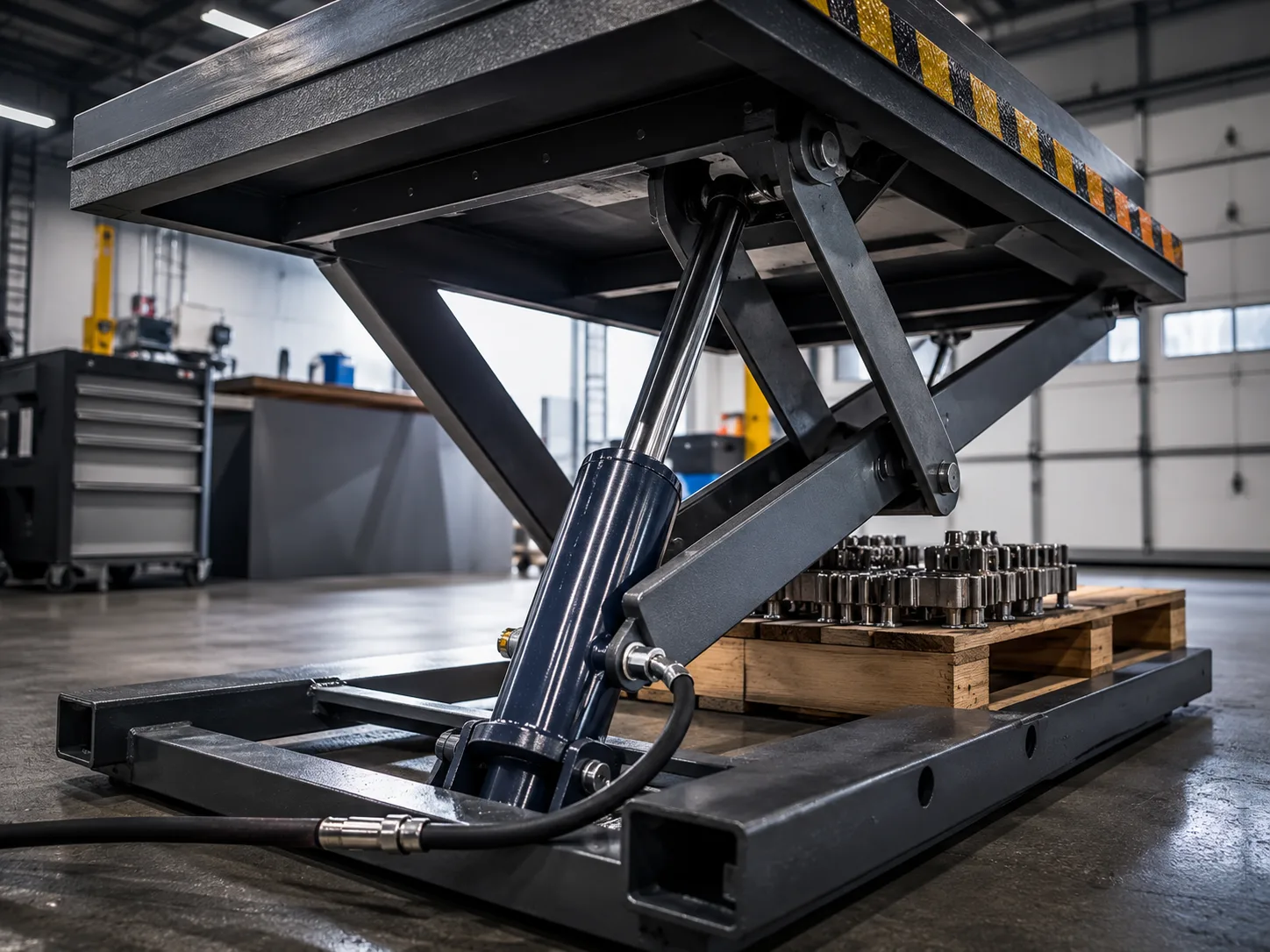
A maintenance-equipment importer needs a cylinder for a vertical scissor lift table. The platform rises under hydraulic pressure and descends under its own weight. In this case, a single acting cylinder is usually appropriate, provided the circuit includes controlled lowering and the platform has suitable mechanical or hydraulic protection against sudden descent.
The buying focus should be stroke length, collapsed height, load rating, seal compatibility, and descent control. Paying more for a double acting cylinder may not improve the lift table if the machine does not need powered lowering or pulling.
Scenario 2: Horizontal clamping fixture in a production line
An OEM buyer specifies a cylinder to clamp and release parts in a machining cell. The motion is horizontal, and parts must release quickly so the next cycle can start. A single acting cylinder would need a spring or mechanical return, which may weaken over time or slow down the sequence.
A double acting cylinder is the stronger choice because release speed, repeatability, and retraction force directly affect productivity. In this scenario, the extra port and valve complexity are justified by lower downtime risk.
Scenario 3: Agricultural attachment with changing load angles
A farm-equipment distributor sources cylinders for an attachment that tilts through different angles. Gravity assists the movement in some positions but resists it in others. This mixed load path makes single acting selection risky because return force is not consistent throughout the full stroke.
The safer recommendation is a double acting cylinder with suitable mounts and rod strength verification. The buyer should ask the supplier to review the full linkage geometry, not only the maximum load.
Practical Asset: copy-and-use RFQ checklist for cylinder selection
Use this sequence before sending drawings to a supplier. It prevents the common mistake of comparing a single acting quote with a double acting quote that does not include the same force, pressure, mounting, and duty assumptions.
- Describe the movement first: state whether the cylinder pushes, pulls, lifts, tips, clamps, steers, or positions the mechanism.
- Define return motion: ask, “Must the return stroke be powered, timed, or controlled, or can gravity or a spring return it safely?”
- Provide load data: send maximum working load, direction of load, mounting angle, side-load risk, and whether the load changes during travel.
- State pressure conditions: list normal working pressure, maximum pressure, test pressure expectation, and hydraulic fluid type.
- Confirm dimensions: request bore, rod diameter, stroke, closed length, open length, port size, and mounting dimensions on a drawing.
- Ask for safety assumptions: require the supplier to identify whether load holding, controlled descent, pressure relief, or mechanical locking is needed.
- Request inspection evidence: ask for dimensional inspection, pressure test record, weld visual inspection, coating specification, and packaging method.
- Quote both options when unsure: ask ZHY or another qualified supplier to price single acting and double acting versions using the same duty cycle and dimensional constraints.
FAQ
1. Is a double acting hydraulic cylinder always better than a single acting cylinder?
No. A double acting cylinder is better when both directions require powered movement, but it is not always the better purchase. In a simple vertical lift, jack, or dump mechanism, a single acting cylinder may give lower complexity, fewer hydraulic connections, and easier maintenance. The better choice is based on return-motion control. If gravity return is safe and predictable, single acting is often more efficient. If return motion affects safety, timing, or positioning, double acting is the correct choice.
2. What is the main difference between single and double acting cylinder circuits?
The main circuit difference is the number of powered oil paths. A single acting cylinder normally uses one pressure port, so hydraulic oil drives one stroke and an external force returns the piston. A double acting cylinder uses two ports, allowing the valve to direct oil to either side of the piston. That means powered extension and powered retraction. This difference between single and double acting cylinder circuits affects valve choice, hose routing, control accuracy, and safety behavior.
3. Can a single acting cylinder be used horizontally?
It can be used horizontally only if another reliable force returns the rod, such as a spring, mechanical linkage, counterweight, or external load. In many horizontal machines, gravity cannot provide return motion, so a single acting cylinder may extend but fail to retract consistently. That creates cycle delays, operator intervention, or redesign cost. For horizontal pushing and pulling, a double acting cylinder is usually the safer and more practical choice because both movements are hydraulically powered.
4. Which standards should buyers mention when sourcing hydraulic cylinders?
Buyers commonly reference ISO 4413 for hydraulic system safety requirements, ISO 6020-1 for 160 bar compact hydraulic cylinders, and ISO 6022 for 250 bar hydraulic cylinders where those dimensional categories fit the project. OSHA 29 CFR 1910.147 is also relevant in U.S. workplaces because maintenance personnel must control hazardous energy during servicing. These references do not replace engineering design, but they help buyers request safer documentation, testing, and inspection evidence from suppliers.
5. What should I ask a supplier if I am unsure which type to choose?
Ask the supplier to quote both single acting and double acting versions using the same bore, stroke, pressure, mounting style, load, and duty cycle. Then ask them to explain how the rod returns, what valve arrangement is needed, whether load holding is required, and what happens if pressure is lost. This approach reveals whether the lower price is truly lower cost or whether it shifts cost into hoses, valves, field service, or redesign.
References
- Hydraulic fluid power — General rules and safety requirements for systems and their components, International Organization for Standardization, ISO 4413:2010, 2010.
- Hydraulic fluid power — Mounting dimensions for single rod cylinders, 16 MPa series — Part 1: Medium series, International Organization for Standardization, ISO 6020-1, 2007.
- Hydraulic fluid power — Mounting dimensions for single rod cylinders, 25 MPa series, International Organization for Standardization, ISO 6022, 2015.
- Safety of machinery — General principles for design — Risk assessment and risk reduction, International Organization for Standardization, ISO 12100:2010, 2010.
- Safety of machinery — Safety-related parts of control systems — Part 1: General principles for design, International Organization for Standardization, ISO 13849-1:2023, 2023.
- The control of hazardous energy, 29 CFR 1910.147, Occupational Safety and Health Administration, U.S. Department of Labor, current regulation.
- Fluid Power Basics, National Fluid Power Association, NFPA, educational resource, accessed 2026.
- Hydraulic Cylinder Calculations, Bosch Rexroth, engineering reference material, accessed 2026.
How should buyers make the final decision?
The final decision should start with the motion path, not the catalog category. If the machine needs only a powered lift, push, or tip and the load can return safely through gravity or another reliable force, a single-acting hydraulic cylinder is usually the most economical and serviceable solution. If the return motion must be powered, timed, held, reversed under load, or integrated into an automated cycle, a double-acting hydraulic cylinder is the correct technical choice.
This decision matters because hydraulic cylinders sit at the point where force, safety, and machine behavior meet. ISO 4413 frames hydraulic systems around safe design and control of hazardous movement, which means the buyer should verify what happens during normal operation, power loss, maintenance, hose failure, and pressure release. OSHA 29 CFR 1910.147 adds a workplace maintenance perspective: stored hydraulic energy must be controlled before service work begins. These are practical buying concerns, not only compliance language.
For commercial investigation, the most useful option is often to request both designs when the application is not yet fully confirmed. Ask suppliers to quote the same bore, stroke, rod diameter, mounting, pressure, coating, seal material, and test requirement, then compare the total package. A single-acting quote may look cheaper until the project adds descent control, mechanical return components, or special safety hardware. A double-acting quote may look higher until it eliminates unpredictable return motion and supports faster production cycles.
The strongest buying position is a documented one. Provide the supplier with load direction, duty cycle, mounting angle, return-force expectation, oil type, temperature range, and inspection requirements. Then ask for a clear recommendation and the reason behind it. In the single-acting vs double-acting hydraulic cylinder decision, the correct answer is firm: use double-acting when return motion must be powered; use single-acting when simple lift or push motion can return safely by gravity, spring, or load force.