How to Identify a Hydraulic Cylinder When the Nameplate or Drawing Is Missing
What should you do first when the cylinder has no nameplate?
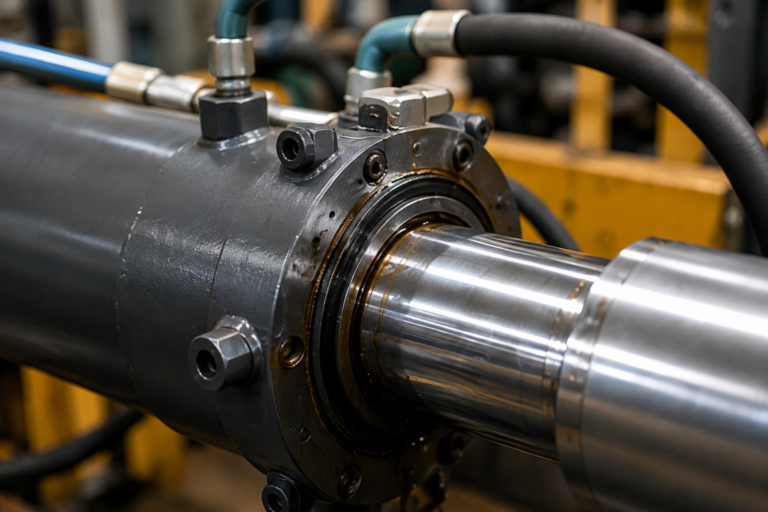
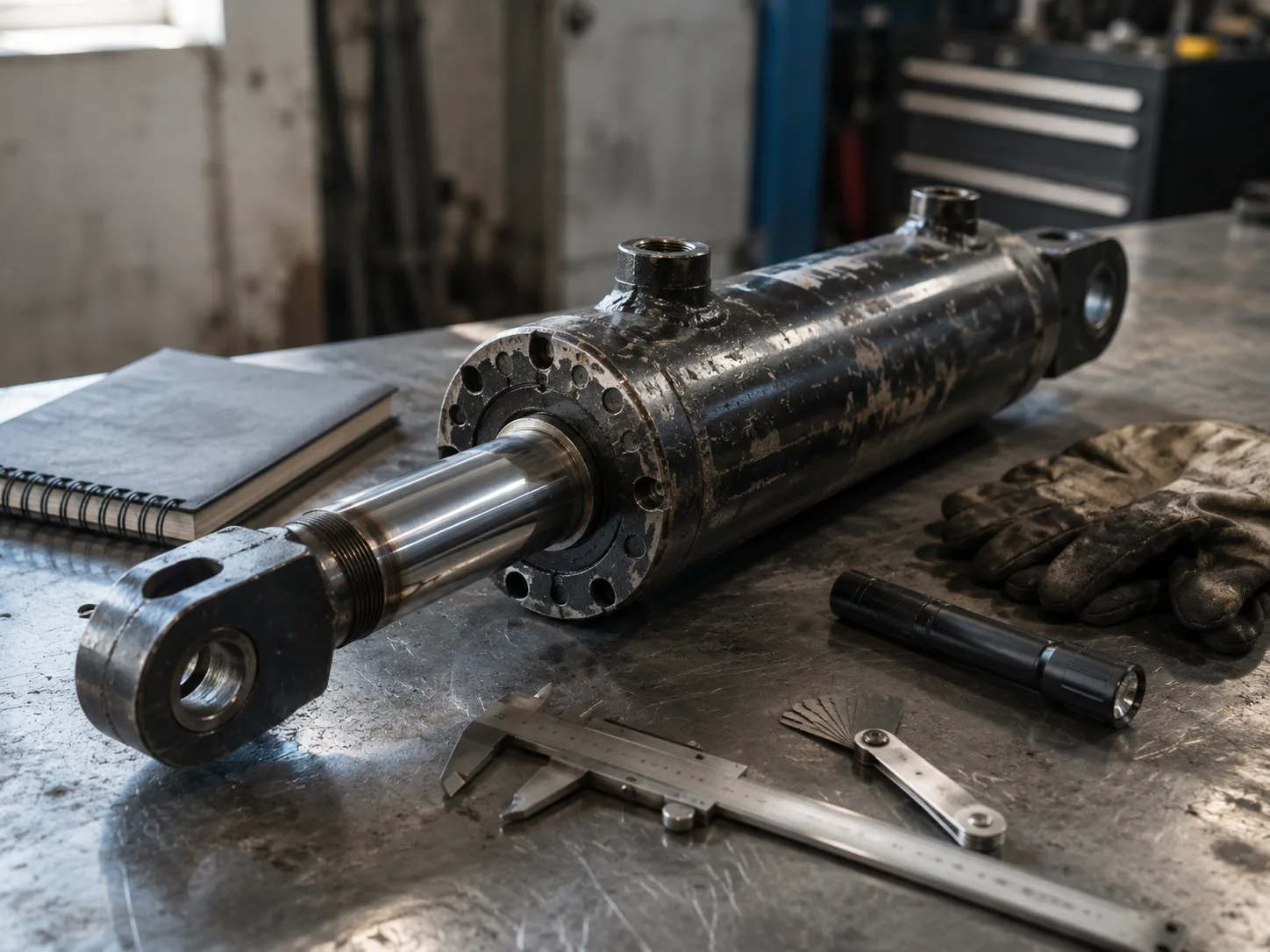
The first step is to stop treating the cylinder as a mystery part and start treating it as a measurable assembly. A missing tag is inconvenient, but the cylinder still carries evidence: extended length, retracted length, rod diameter, port position, mounting geometry, paint wear, hose routing, and the machine function it performs.
For a procurement manager, equipment rebuilder, or maintenance buyer, the fastest safe path is not guessing the brand from color. Paint may be repainted, shared by multiple OEMs, or changed during previous repairs. The correct process is to record physical dimensions, photograph the cylinder from multiple angles, compare mount and port standards, and then reverse-confirm the application load and movement.
This article focuses on the practical MOFU decision point: you already know the cylinder must be replaced or quoted, but the drawing, serial tag, or OEM part number is missing. The goal is to help you identify hydraulic cylinder details well enough to request a credible replacement review from ZHY or another hydraulic cylinder supplier.
Which measurements prove the cylinder identity?
The core identity of a hydraulic cylinder comes from five measurable items: bore, rod diameter, stroke, closed length, and mounting dimensions. If these are accurate, the replacement discussion moves from “find something similar” to “verify whether this design can safely fit the equipment.”
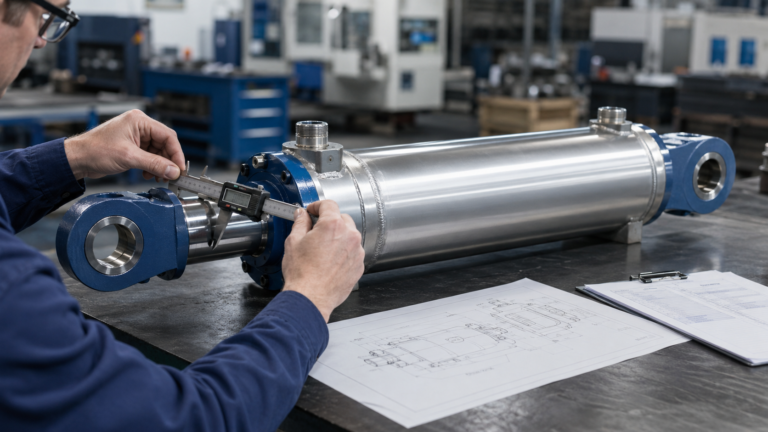
Measure the rod diameter with a caliper on an unworn area of the chrome surface. Measure stroke by comparing full retraction and full extension, or by measuring exposed rod travel when the machine can be operated safely. Bore is harder because it is inside the barrel; if disassembly is not possible, infer it from barrel outside diameter, wall thickness expectations, OEM application, and port size, then confirm during inspection.
Closed length is usually measured from pin center to pin center, flange face to rod-end center, or trunnion center to rod-end center, depending on the mount. Always state the reference points in words and photos, because “overall length” can mean different things to different suppliers. ISO 3320:2013 provides metric bore and piston rod diameter series, while ISO 6020-2 and ISO 6022 define mounting dimensions for certain industrial cylinder families at 16 MPa and 25 MPa classes.
- Bore
- The inside diameter of the cylinder barrel; it strongly affects force output at a given hydraulic pressure.
- Rod diameter
- The chrome-plated shaft diameter; it affects column strength, retract-side area, seal size, and buckling resistance.
- Stroke
- The linear travel distance from fully retracted to fully extended position; it must match the machine movement envelope.
- Mounting center distance
- The distance between mounting reference centers, usually pin center to pin center on clevis or eye-mounted cylinders.
- Port specification
- The thread type, size, location, and orientation of the oil connection; wrong ports can cause hose interference or pressure loss.
Key Takeaways
- A missing nameplate does not prevent identification if dimensions, mounts, ports, seals, and application photos are documented together.
- Paint color is a weak clue because cylinders are often repainted, repaired, or sourced from different OEM suppliers.
- Pin-center closed length, stroke, rod diameter, and mount style are usually more useful than an assumed manufacturer name.
- Port thread type and orientation must be confirmed before quoting because hose routing can make a dimensionally correct cylinder unusable.
- ISO 3320, ISO 6020-2, ISO 6022, and ISO 4413 provide useful reference language for cylinder dimensions and hydraulic safety.
How do mounts, ports, and seals narrow the replacement options?
Mounts, ports, and seals separate a merely similar cylinder from a cylinder that can actually work on the machine. Two cylinders can share bore and stroke yet fail the replacement check because the clevis width, pin diameter, trunnion location, port angle, or seal system is different.
Mounts: identify the mechanical interface before the brand
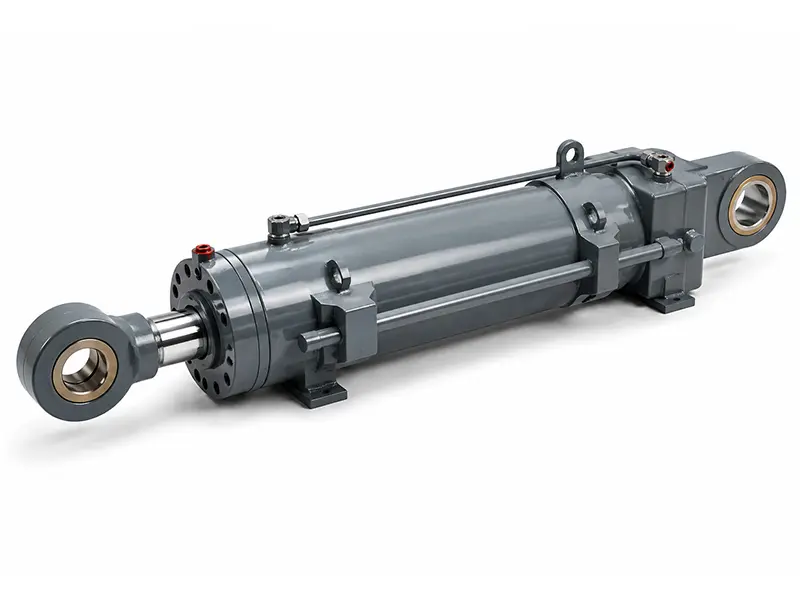
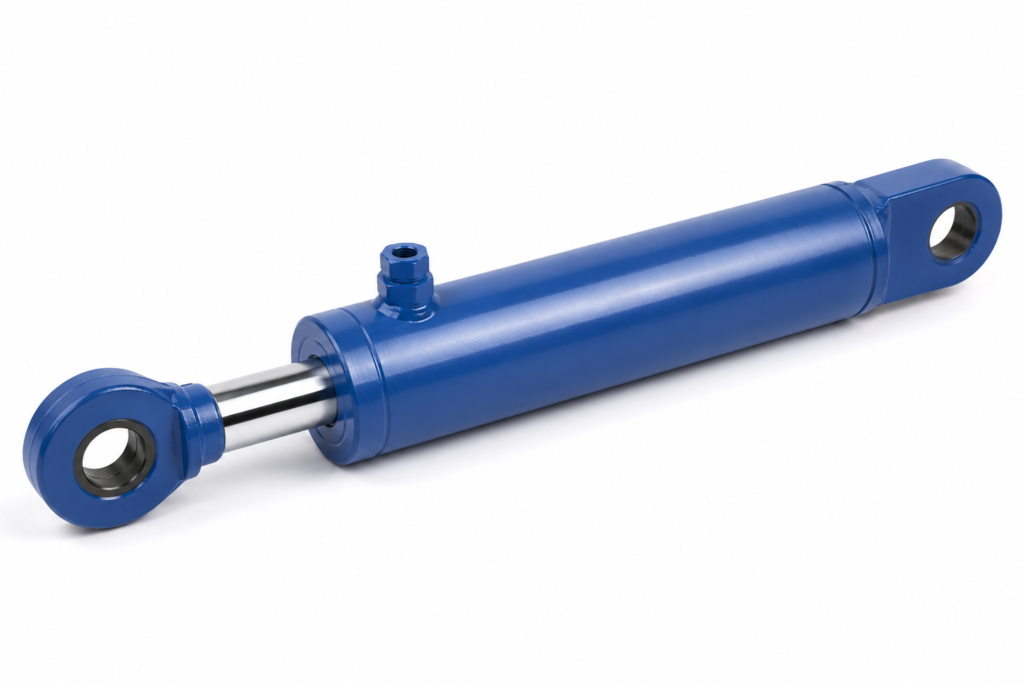
Common hydraulic cylinder mounts include clevis, cross-tube, spherical bearing eye, flange, trunnion, and threaded rod-end styles. A cylinder on a loader arm may need high articulation at both ends, while a press cylinder may use a rigid flange. Record pin diameter, boss width, eye inside diameter, lug spacing, and whether spherical bearings or plain bushings are used.
Best for: mount-first identification. This is the correct approach when the cylinder remains installed and cannot be disassembled, because the equipment linkage reveals the required geometry even when the bore is still unknown.
Ports: confirm thread type, location, and clearance
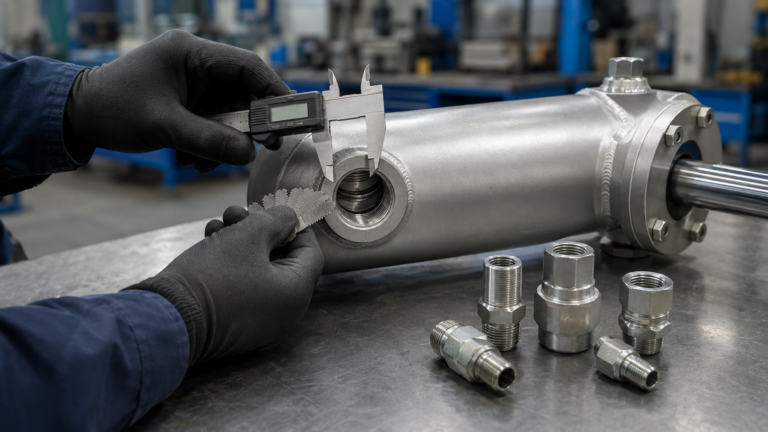
Port identification requires more than measuring the hole. Check whether the port is BSPP, NPT, SAE O-ring boss, metric, or flange connection, and document its clocking angle relative to the mount. A replacement with the right stroke but ports facing the frame may require new hoses, adapters, or a redesign.
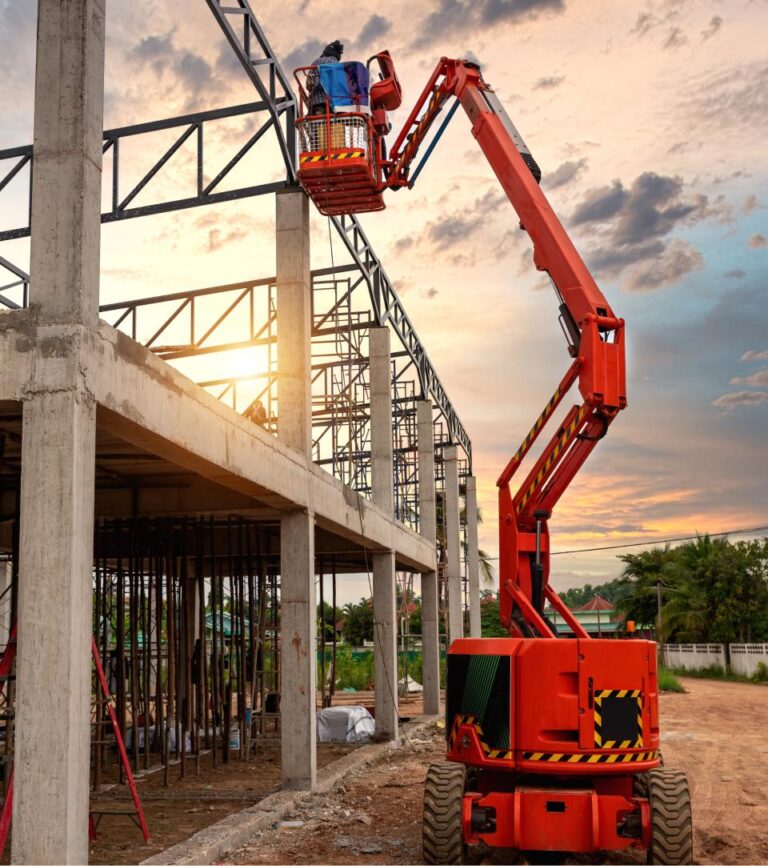
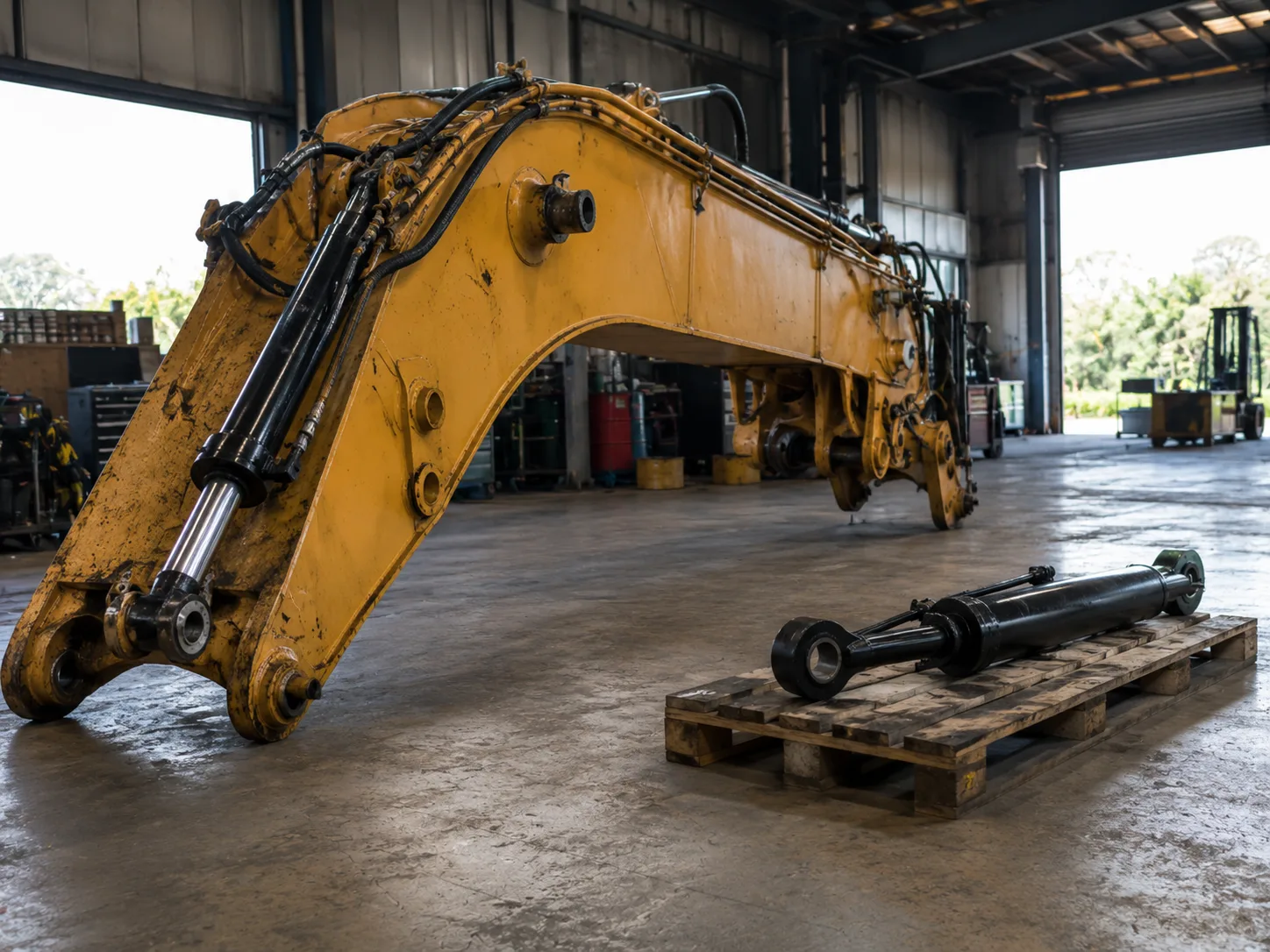
For heavy mobile equipment, photograph hose routing with the cylinder installed. Include at least one wide image showing the boom, bucket, blade, clamp, press, or lift table so the supplier can see potential interference points.
Seals: match the working environment, not just the dimensions
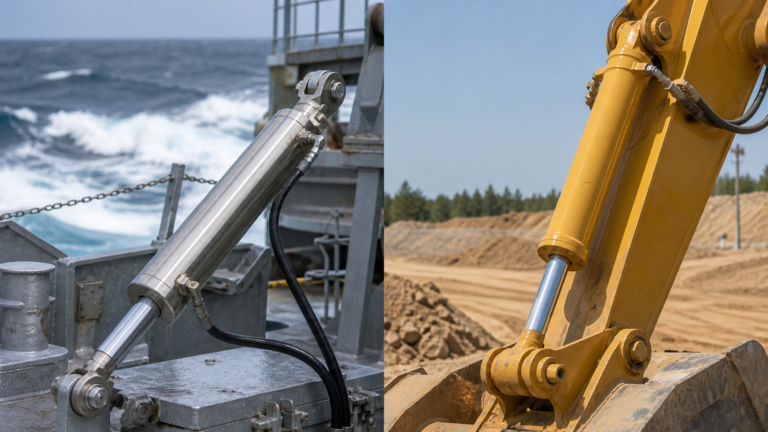
Seal identification starts with the application. Dusty construction equipment, hot industrial presses, marine corrosion exposure, and food-related machinery create different seal risks. If the cylinder leaks, preserve removed seal samples and note whether the failure is at the rod seal, piston seal, wiper, static O-ring, or gland.
ISO 5598:2020 standardizes fluid power vocabulary, which helps buyers and suppliers use consistent language when describing seal locations and cylinder components. That consistency matters when a procurement team is sending photos across time zones or asking several factories to quote the same unknown part.
Why is guessing the manufacturer from paint color a bad shortcut?
Guessing the manufacturer from paint color is one of the highest-risk shortcuts in unknown hydraulic cylinder replacement. Color may suggest the equipment brand, but it does not prove bore, stroke, mounting standard, pressure rating, rod material, seal package, or port thread.
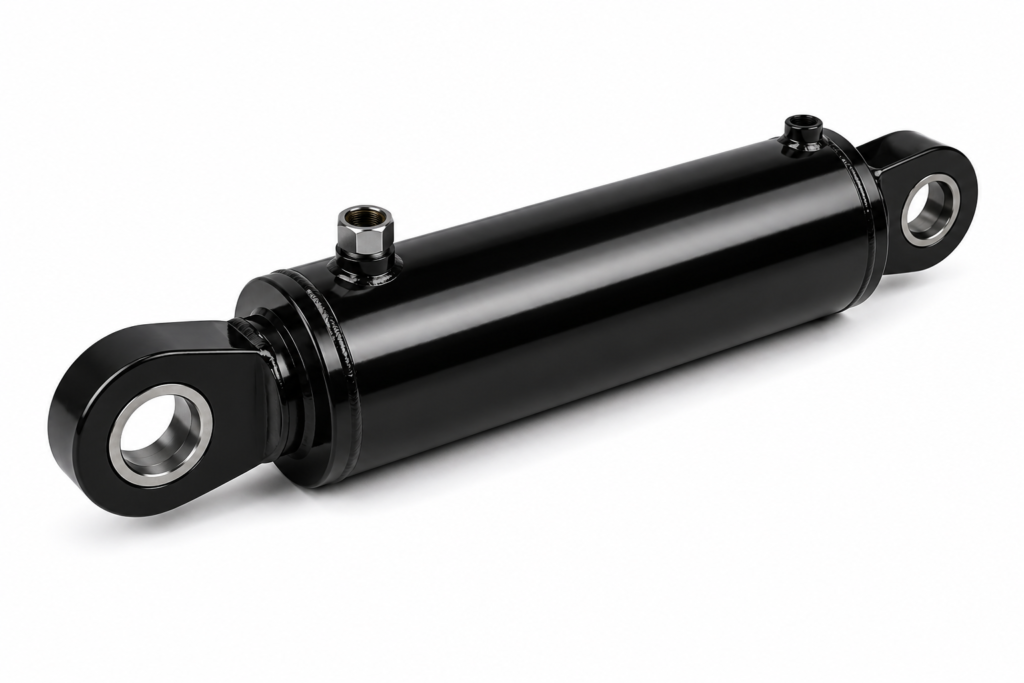
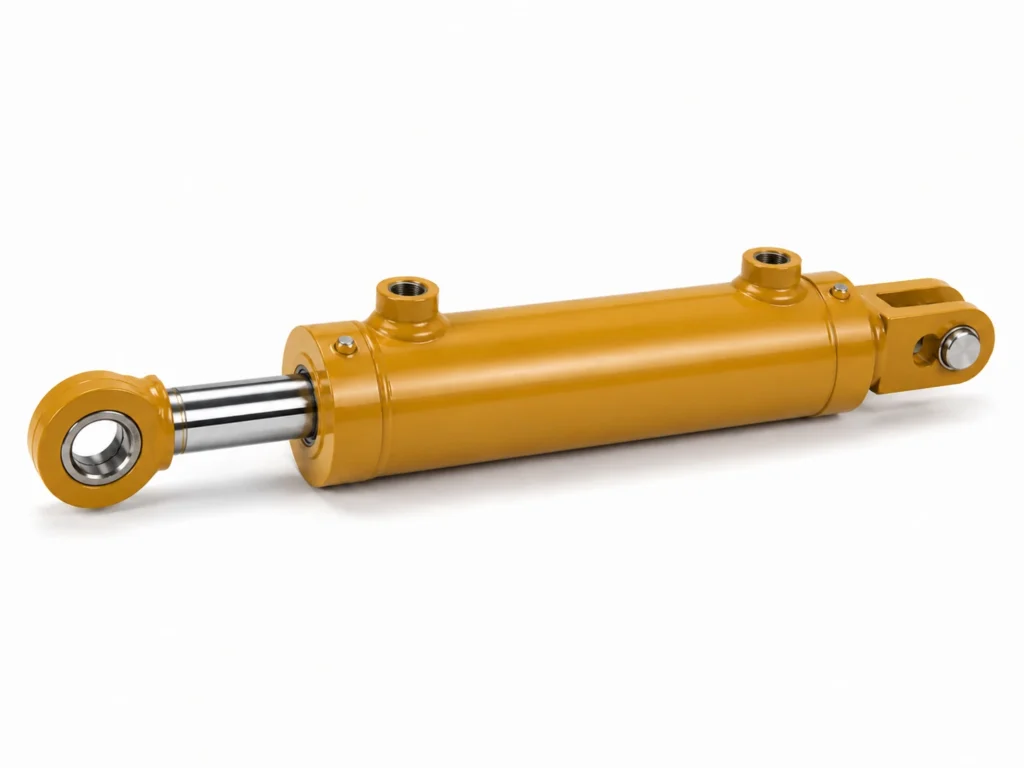
A yellow-painted cylinder on construction machinery might be original, aftermarket, rebuilt, or repainted during fleet maintenance. A black industrial cylinder may follow ISO dimensions, an OEM proprietary pattern, or a local fabricator’s design. If the buyer orders based on color and a rough length, the result can be wrong pin fit, insufficient stroke, hose collision, or unsafe rod buckling under load.
Which identification route should a buyer choose?
The right route depends on how much access you have to the cylinder, not on how urgently the part is needed. If the cylinder can be removed, direct measurement is strongest. If it is still installed, photos plus linkage measurements are the fastest starting point. If the machine is safety-critical, reverse engineering must include pressure, load, and standard checks.
| Situation | Recommended identification route | What to collect first | Main risk if skipped |
|---|---|---|---|
| Cylinder removed from equipment | Direct measurement and component inspection | Closed length, extended length, rod diameter, mount dimensions, port thread, seal samples | Wrong bore inference or incompatible mount geometry |
| Cylinder still installed | Photo-based pre-identification plus accessible pin and port measurements | Wide equipment photo, both end mounts, hose routing, pin diameter, exposed rod length | Port interference or wrong stroke envelope |
| Old cylinder badly damaged | Application reverse-confirmation against machine movement and load | Machine model, function, linkage travel, pressure setting, failed parts, surrounding brackets | Copying a deformed part into a new wrong design |
| Repeated seal failure | Seal system and surface condition review before replacement | Rod scratches, gland condition, contamination, oil temperature clues, seal cross-sections | New cylinder fails for the same root cause |
How to use this table: read the first column as your access condition, then prioritize the third column before asking for a quotation; when two routes seem close, choose the one that provides clearer mount and port evidence because those errors are harder to correct after fabrication.
Industry practice is moving toward faster remote pre-checks because many buyers need downtime decisions before the old cylinder reaches a workshop. A useful request package now includes caliper photos, port close-ups, installed-position images, and application notes. ZHY can review these inputs before confirming whether the job is a standard replacement, a custom build, or a repair-first case.
What standards and safety rules matter during identification?
Standards do not magically identify every cylinder, but they give buyers and suppliers a shared technical language. ISO 3320:2013 covers metric bore and piston rod diameter series, ISO 6020-2 covers certain 16 MPa industrial cylinder mounting dimensions, and ISO 6022 covers certain 25 MPa heavy-duty mounting dimensions.
ISO 4413:2010 is especially important because it addresses general rules and safety requirements for hydraulic fluid power systems and components. Identification work should never require unsafe movement, uncontrolled lowering, or opening a pressurized circuit. In the United States, OSHA’s lockout/tagout rule, 29 CFR 1910.147, is the relevant hazardous-energy framework when maintenance exposes workers to unexpected machine movement.
For buyers, the practical compliance point is simple: do not ask a technician to measure a live cylinder under load unless the machine has been isolated and supported by approved procedures. Safe identification may take longer, but it prevents the worst replacement error of all: turning a parts problem into an injury risk.
What information should be sent for supplier confirmation?
A strong supplier request package answers four questions: what does the cylinder look like, where does it mount, how does oil enter and leave, and what work does it perform? This is the practical answer to how to identify hydraulic cylinder details when the nameplate and drawing are missing.
- Send front, side, rear, rod-end, cap-end, and port close-up photos.
- Measure pin center to pin center at retracted length, plus maximum extended length if safely available.
- Record rod diameter, visible barrel outside diameter, pin diameter, clevis width, eye width, and lug spacing.
- Identify port thread with gauges where possible, and photograph fittings before removal.
- Describe the machine, cylinder function, working environment, and failure reason.
- Keep old seals, bushings, pins, and fittings until the replacement design is confirmed.
If two suppliers give different interpretations, ask each one to state which dimensions are confirmed and which remain assumed. The better supplier will not hide uncertainty; they will mark the unknowns and tell you what photo or measurement is needed next.
Practical Asset: copy-ready identification checklist before requesting a quote
Use this sequence before sending a request for an unknown hydraulic cylinder replacement. It is written for maintenance buyers and procurement teams who need a repeatable process, not a vague parts description.
- Lock out, depressurize, support, and secure the equipment before measuring; confirm the technician follows site safety rules and hazardous-energy procedures.
- Take one wide photo of the complete machine showing where the cylinder works, then take close photos of the rod end, cap end, mounts, ports, fittings, rod surface, and any damaged area.
- Measure closed length using clear reference points, such as pin center to pin center; write the reference points directly in the request notes.
- Measure rod diameter on a clean unworn section and record whether the rod has chrome damage, corrosion, bending, or scoring.
- Measure pin diameter, eye width, clevis inside width, lug thickness, bushing size, and any retaining groove or snap-ring detail.
- Identify port thread type with gauges if available; if not, photograph the removed fitting beside a ruler and note whether the sealing method uses taper thread, O-ring, bonded washer, or flange.
- Record the machine brand, model, working function, oil type if known, operating environment, and whether the cylinder failed by leakage, bending, slow movement, seal extrusion, or impact damage.
- Ask the supplier to confirm which details are verified, which are assumed, and whether a drawing will be issued for approval before production.
FAQ
1. Can I identify a hydraulic cylinder without removing it from the machine?
Yes, you can often start identification while the cylinder is still installed, but the result is usually a pre-check rather than a final manufacturing file. Photograph the complete machine, both mounts, hose routing, ports, exposed rod, and surrounding brackets. Measure accessible pin diameter, visible rod diameter, and approximate stroke travel if the machine can be moved safely. Final confirmation may still require removal to verify bore, seal condition, closed length, and hidden mounting details.
2. Is paint color useful for identifying the original cylinder manufacturer?
Paint color can provide context, but it should not be used as proof of manufacturer or specification. Cylinders are frequently repainted during machine refurbishment, replaced by aftermarket units, or supplied by different factories under the same equipment color. A color-based guess can lead to the wrong mount, port, stroke, or pressure class. Use paint only as a secondary clue after documenting dimensions, application, and fittings.
3. What measurements are most important for an unknown hydraulic cylinder replacement?
The most important measurements are stroke, closed length, rod diameter, mounting center distance, pin diameter, mount width, and port specification. Bore is also critical because it affects force, but it may require disassembly or supplier inference from barrel dimensions and application pressure. If you can only collect a limited set, prioritize pin-center length, rod diameter, mount geometry, and port orientation because these determine whether the cylinder can physically install.
4. Which standards help when comparing hydraulic cylinder dimensions?
ISO 3320:2013 helps with metric bore and piston rod diameter series, while ISO 6020-2 and ISO 6022 provide mounting-dimension references for certain industrial single-rod cylinder types. ISO 4413:2010 is relevant for hydraulic system safety requirements. These standards do not cover every OEM or mobile-equipment cylinder, but they provide useful terminology and dimensional reference points when a supplier is checking whether a cylinder is standard, modified, or fully custom.
5. What photos should I send to ZHY for cylinder identification?
Send a wide photo of the machine, a full-length cylinder photo, close-ups of both end mounts, port close-ups, rod surface details, fittings before removal, and any damaged or leaking area. Include a ruler, caliper, or thread gauge in close-up images when possible. Photos from multiple angles help ZHY confirm whether the cylinder can be identified from measurements, requires disassembly, or should be treated as a custom reverse-engineering project.
References
- ISO 4413:2010 Hydraulic fluid power — General rules and safety requirements for systems and their components, ISO Technical Committee ISO/TC 131, International Organization for Standardization, 2010.
- ISO 3320:2013 Fluid power systems and components — Cylinder bores and piston rod diameters and area ratios — Metric series, ISO Technical Committee ISO/TC 131, International Organization for Standardization, 2013.
- ISO 6020-2:2015 Hydraulic fluid power — Mounting dimensions for single rod cylinders, 16 MPa series — Part 2: Compact series, ISO Technical Committee ISO/TC 131, International Organization for Standardization, 2015.
- ISO 6022:2018 Hydraulic fluid power — Mounting dimensions for single rod cylinders, 25 MPa series, ISO Technical Committee ISO/TC 131, International Organization for Standardization, 2018.
- ISO 5598:2020 Fluid power systems and components — Vocabulary, ISO Technical Committee ISO/TC 131, International Organization for Standardization, 2020.
- 29 CFR 1910.147 The control of hazardous energy lockout/tagout, Occupational Safety and Health Administration, U.S. Department of Labor, 2024.
- NFPA/T3.6.7 R2-2009 Hydraulic fluid power — Square head industrial cylinders — Mounting dimensions, National Fluid Power Association, 2009.
- Hydraulic Fluid Power — Cylinders — Method for Determining Buckling Load, ISO Technical Committee ISO/TC 131, International Organization for Standardization, 2014.
How this identification method reduces replacement risk
A reliable cylinder identification process works because it separates visible clues from verified facts. The visible clues are paint, age, machine brand, and previous repair marks. Verified facts are dimensions, port thread, mount geometry, rod condition, stroke travel, application duty, and safety context. A buyer who sends only a color photo asks the supplier to guess. A buyer who sends measurements, multi-angle photos, and application notes gives the supplier enough evidence to challenge wrong assumptions before metal is cut.
The most important “how” is sequence: secure the machine first, photograph the installed context second, measure accessible geometry third, and only then discuss replacement design. The “why” is that hydraulic cylinders are not isolated parts. They work inside a linkage, against a load, through hoses, within a pressure system, and under a maintenance routine. A cylinder that matches length but places ports against a frame is not a correct replacement. A rod that fits the clevis but lacks sufficient column strength is not a safe replacement.
The strongest option for a removed cylinder is dimensional reverse-confirmation against bore, rod, stroke, mounts, ports, and seals. The strongest option for an installed cylinder is photo-led pre-identification followed by targeted measurements. The strongest option for a damaged or modified cylinder is application-based reconstruction, because copying a bent rod or distorted mount can reproduce the failure. ISO 4413:2010 supports the safety mindset by treating hydraulic components as part of a controlled system, while ISO 3320:2013, ISO 6020-2, and ISO 6022 provide reference language for dimensions where applicable.
For procurement teams, the commercial value is direct: better identification reduces quotation ambiguity, avoids wrong-fit fabrication, and shortens approval cycles. It also gives both buyer and supplier a fair basis for deciding whether the job is a standard cylinder match, a custom replacement, or a repair with new seals and surface restoration. When the nameplate is gone, disciplined documentation becomes the new drawing.