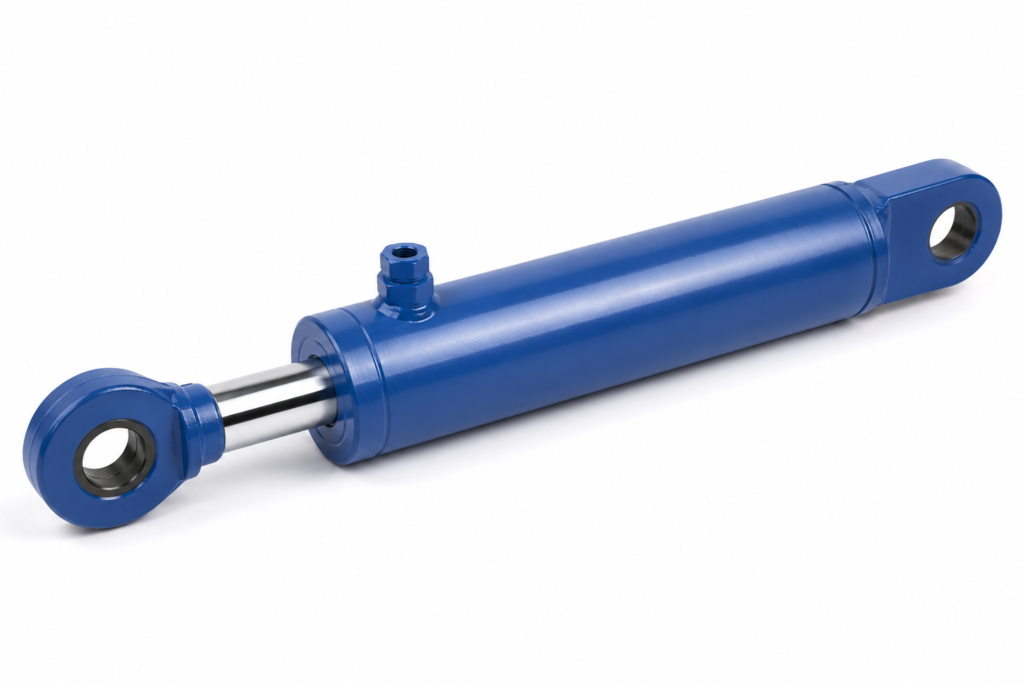
Why does the wrong cylinder choice become expensive before installation?
The wrong cylinder choice becomes expensive because mismatch appears late: during frame assembly, hose routing, commissioning, or field repair. A standard hydraulic cylinder can save time when the machine was designed around catalog dimensions, but forcing it into special equipment often creates bracket rework, seal failure risk, or downtime.
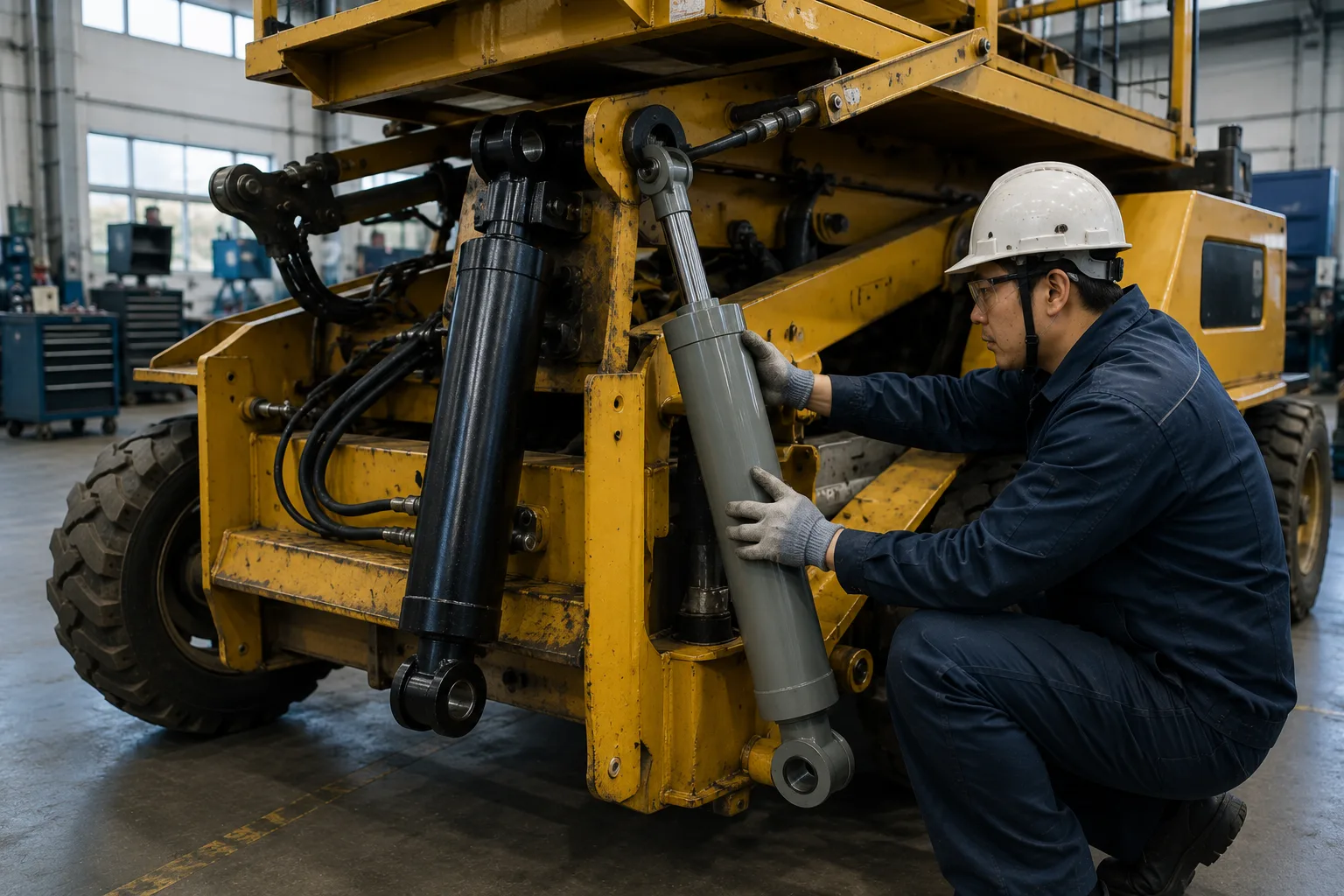
Many purchasing teams discover the problem only after a “near-fit” unit arrives. The bore looks acceptable, the pressure rating seems close, and the price is attractive, but the clevis width is off by a few millimeters or the port angle interferes with a guard plate. That small difference can stop a loader arm, press fixture, agricultural attachment, or compact lifting platform from moving through its full stroke.
For BOFU buyers, the practical question is not whether custom is always better. It is whether catalog conformity protects the project or whether a special design prevents a more expensive mismatch. If dimensions, mounting, stroke, ports, or pressure are outside the catalog envelope, custom confirmation should happen before the purchase order, not after the machine is painted.
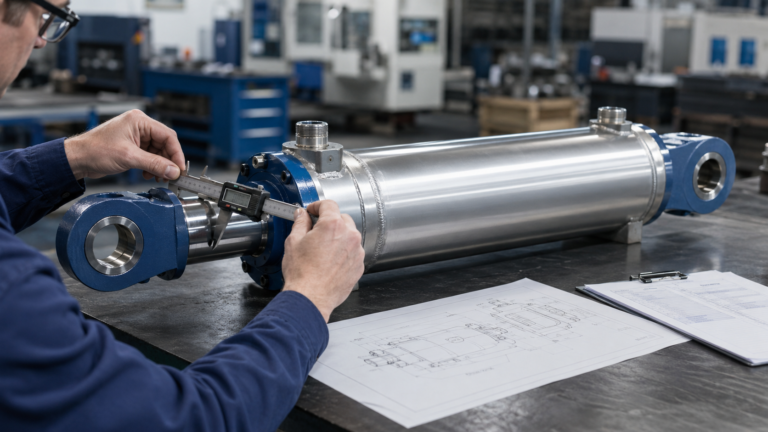
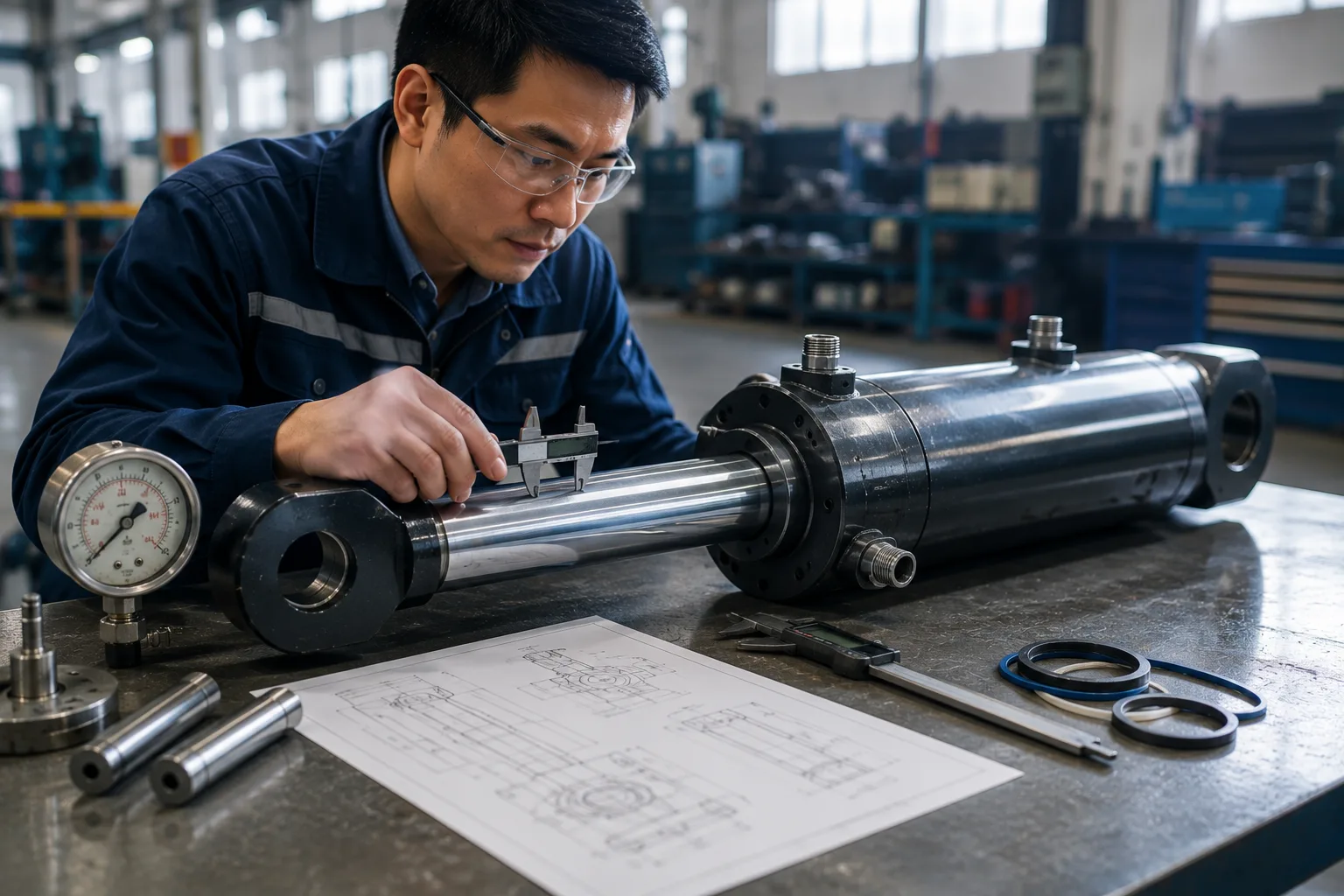
ZHY normally treats this as an engineering verification problem rather than a sales preference. A drawing, failed sample, installation photo, duty cycle, and working pressure tell more than a short product name. When those details are clear, the choice between standard supply and custom design becomes much less subjective.
When should you choose a standard hydraulic cylinder?
Choose a standard cylinder when the equipment layout already follows recognized mounting patterns, the required stroke is available without modification, the working pressure is within the cylinder series, and replacement speed matters more than design uniqueness. This is strongest for maintenance, repeat machinery, and non-critical replacement stock.
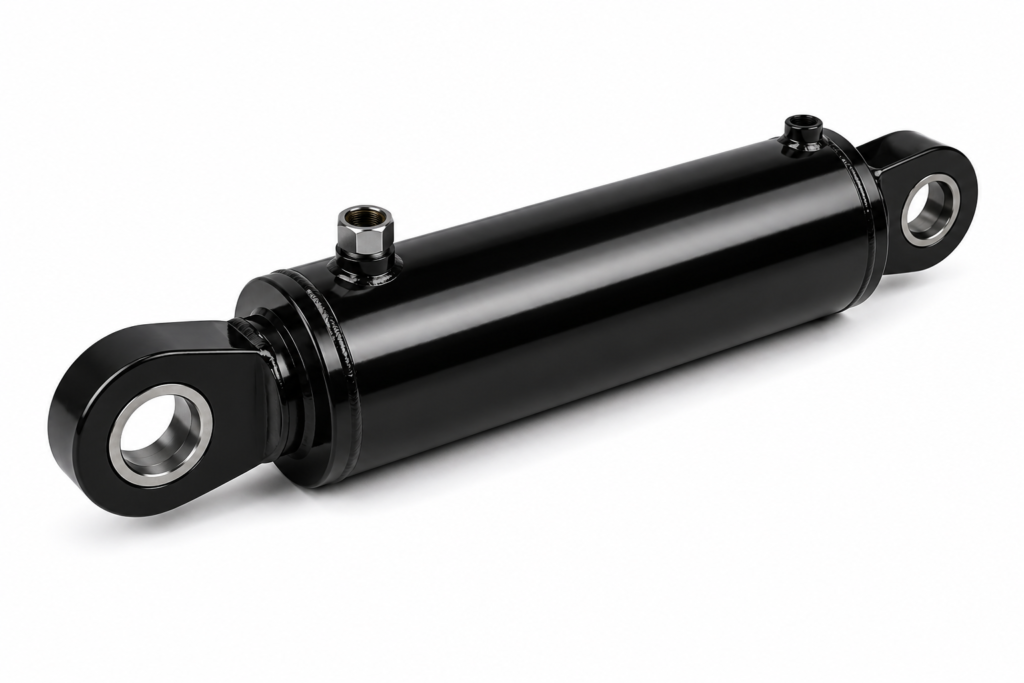
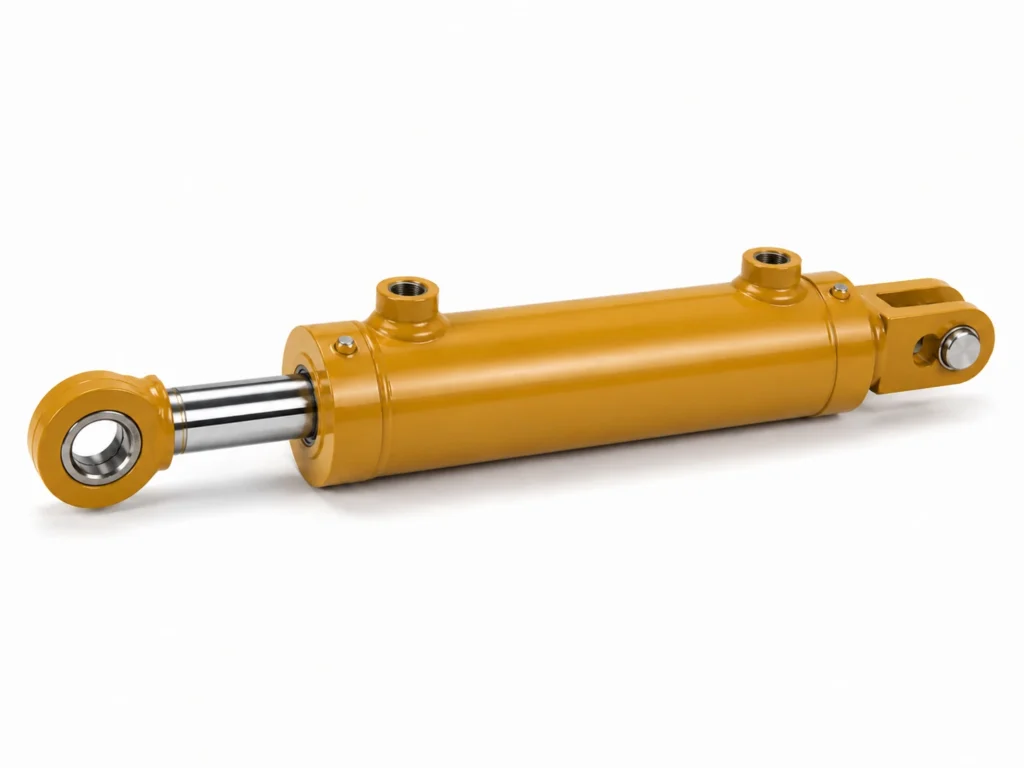
Standard cylinders work well where the machine frame, pin centers, rod end, port position, and overall closed length were originally designed around catalog components. They are common in workshop presses, basic lifting tables, simple industrial fixtures, dump mechanisms, and spare-part programs for fleets that use the same machine model repeatedly.
The technical advantage is predictability. Metric cylinder standards such as ISO 6020-2 for 16 MPa compact series and ISO 6022 for 25 MPa series give manufacturers and buyers a shared dimensional language. A procurement manager can compare bore, rod, mounting, and pressure class without redesigning the equipment from zero.
However, standard does not mean universal. Even if the nominal bore and stroke are correct, a catalog unit can still fail the application if side load, shock load, corrosion exposure, seal material, mounting offset, or port accessibility are wrong. Standard cylinders are best for equipment that already has clearance, alignment, and load path under control.
Key Takeaways
- Catalog cylinders are the safer choice only when mounting, stroke, closed length, rod end, and ports match without frame rework.
- A custom cylinder is justified when a non-standard envelope prevents hose interference, side loading, or installation downtime.
- ISO 6020-2 and ISO 6022 are useful reference points for 16 MPa and 25 MPa metric cylinder series, but they do not replace application checks.
- Before ordering, buyers should verify pressure, duty cycle, seal environment, corrosion exposure, and end cushioning instead of comparing price alone.
- The most useful sourcing evidence is a drawing, failed sample, installation photo, and measurable operating conditions.
When does a custom cylinder prevent a costly mismatch?
A custom cylinder prevents mismatch when the equipment has non-standard geometry, restricted installation space, special force requirements, unusual port routing, high duty cycles, or environmental exposure that a catalog unit was not designed to handle. In those cases, custom design protects uptime more than it increases cost.
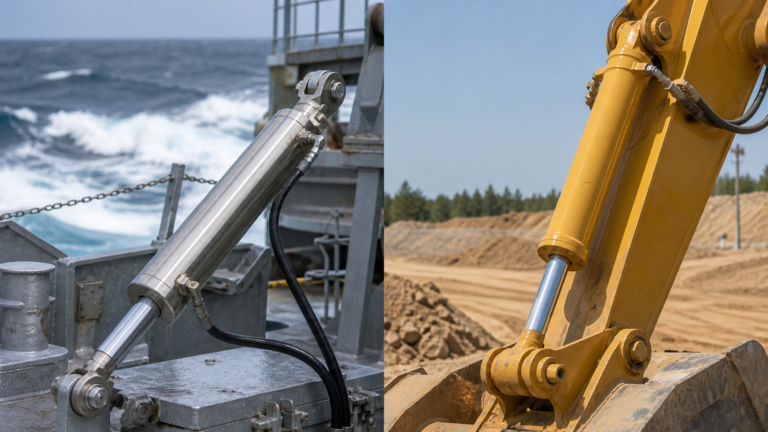
This is common in OEM machinery, retrofits, compact mobile equipment, automated fixtures, mining attachments, marine handling devices, and agricultural implements where the cylinder is part of the machine’s motion geometry. A few millimeters of extra closed length can reduce travel. A rod end that does not match the linkage can introduce side load. A port that faces the wrong side can force the hose into a bend radius that shortens hose life.
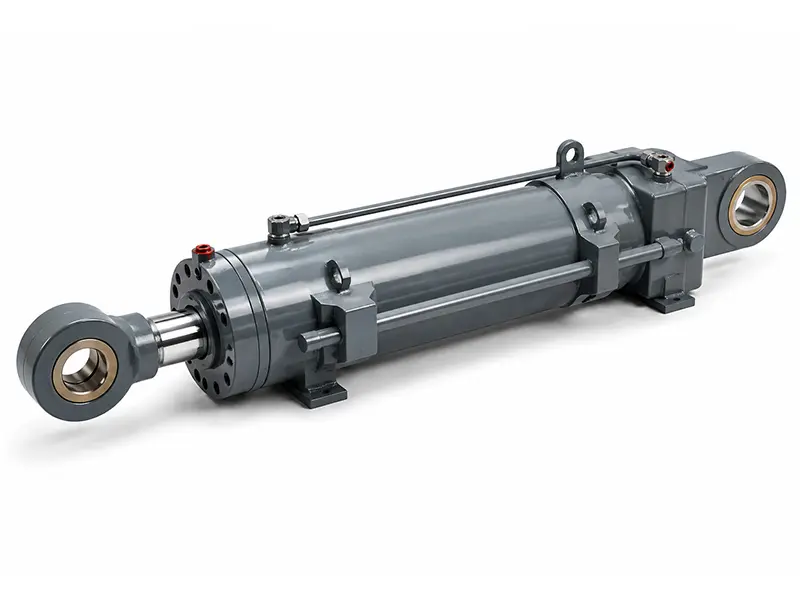
A custom cylinder is also rational when the buyer needs a consistent repeatable unit across a machine series. For example, an OEM may require a welded body, a specific rod coating, integrated counterbalance valve interface, special clevis, non-standard stroke, or compact port block. These are not cosmetic differences; they change installation, safety, serviceability, and warranty exposure.
In procurement terms, custom is not a luxury option. It is a way to convert uncertain field adjustment into controlled engineering. ZHY usually asks buyers to confirm bore, rod diameter, stroke, retracted length, mounting type, pin diameter, port thread, operating pressure, peak pressure, oil temperature, cycle frequency, and environment before quoting a modified design.
Which specifications decide the custom versus standard choice?
The deciding specifications are mounting interface, stroke, retracted length, bore, rod diameter, pressure rating, port type, seal package, and operating environment. If those specifications align with a catalog unit, standard supply is efficient; if several are constrained or unique, custom engineering is the safer procurement path.
- Bore
- The internal cylinder diameter that largely determines force at a given hydraulic pressure.
- Stroke
- The usable linear travel of the rod; incorrect stroke can stop a mechanism short or overextend a linkage.
- Mounting
- The interface that connects the cylinder to the machine, such as clevis, flange, trunnion, lug, or spherical bearing.
- Port orientation
- The direction and thread form of hydraulic connections; wrong orientation can create hose interference or unsafe routing.
- Duty cycle
- The frequency and severity of extension and retraction; high-cycle applications may need different seals, guidance, and surface treatment.
The most overlooked parameter is retracted length. Buyers often specify bore and stroke first, then discover that the closed length is too long for a compact machine. Rod buckling is another risk: longer strokes and compression loads require adequate rod diameter, guidance, and alignment rather than a simple price comparison.
Pressure must be reviewed as working pressure and peak pressure. ISO 6020-2 is associated with 16 MPa, equal to 160 bar, while ISO 6022 covers 25 MPa, equal to 250 bar. These reference classes are useful, but shock loads, pressure spikes, and cushioning conditions still require application review.
Situation-to-recommendation table for commercial buyers
The fastest ordering decision is to map the machine condition to the procurement route. If the application has standard geometry and urgent replacement pressure, select catalog supply. If the machine has interface uncertainty or performance risk, confirm a custom drawing before the order.
| Situation | Recommended route | Why this route protects the buyer | Evidence to request before PO |
|---|---|---|---|
| Same machine model, same failed cylinder, no frame modification | Standard replacement | Catalog dimensions can reduce lead time and simplify spare inventory. | Old cylinder part number, pin-to-pin length, bore, rod, stroke, and port thread. |
| Non-standard stroke or retracted length | Custom confirmation | Incorrect travel can stop the linkage short or force mechanical overtravel. | Machine drawing, required open and closed length, and motion limit photos. |
| Port interferes with frame, guard, tire, or hose bend radius | Custom port orientation | Proper routing reduces installation rework and hydraulic hose stress. | Port location sketch, hose route photo, thread requirement, and clearance data. |
| High shock load or frequent cycling | Application-engineered cylinder | Guidance, cushioning, seal selection, and rod sizing may need upgrade. | Pressure range, peak pressure, cycle rate, load direction, and oil temperature. |
| Equipment is going into marine, outdoor, fertilizer, or washdown exposure | Custom materials or coating review | Corrosion resistance and seal compatibility affect service life more than catalog fit. | Environment description, corrosion requirement, fluid type, and expected maintenance interval. |
How to use this table: prioritize the “Situation” column first, then use the “Evidence” column as your RFQ checklist; if two routes look equally possible, choose custom confirmation when installation space, pressure spikes, or warranty exposure could create downtime.
What standards and compliance checks should buyers know?
Buyers should use standards as verification tools, not as substitutes for application engineering. ISO 4413:2010 provides general rules and safety requirements for hydraulic fluid power systems, while ISO cylinder dimensional standards help align common mounting and pressure series.
For dimensional reference, ISO 3320 defines metric cylinder bores and piston rod diameters, ISO 6020-2 covers 16 MPa compact single-rod cylinder mounting dimensions, and ISO 6022 covers 25 MPa single-rod cylinder mounting dimensions. These documents help procurement teams compare quotations on a common technical basis instead of relying on informal descriptions.
Material and testing references also matter. ASTM A519 is widely used for seamless carbon and alloy steel mechanical tubing, often relevant when cylinder tube material is specified. ISO 9227 and ASTM B117 describe salt spray test methods; they do not guarantee real-world corrosion life, but they provide a repeatable way to compare coating systems.
For machine safety, the cylinder is only one component in a larger system. European machinery buyers should track the transition from Machinery Directive 2006/42/EC to Regulation (EU) 2023/1230, which applies from January 2027. U.S. maintenance environments also need safe energy isolation procedures under OSHA 29 CFR 1910.147 when servicing hydraulic equipment.
How do price, lead time, and downtime change the final decision?
Price alone favors standard cylinders, but total cost often favors custom when a mismatch would stop assembly or field operation. For a purchasing manager, the correct comparison is not unit price versus unit price; it is delivered fit, installation labor, testing time, and downtime risk.
A standard product may be available from stock or short production runs, which is valuable for emergency maintenance. It can also simplify inventory because the same part may serve multiple machines. The trade-off is that the buyer accepts the catalog geometry, port position, seal package, and mounting design.
A custom unit usually requires drawing review, sample confirmation, production planning, and sometimes prototype testing. That extends the front-end process, but it can reduce after-delivery modification. For OEM buyers, the benefit compounds when the same confirmed design is ordered repeatedly across a machine series.
The highest-risk mistake is approving a cheaper catalog cylinder because the bore and stroke look close while ignoring closed length, rod end, port clearance, and duty cycle. A short purchasing delay for design confirmation is usually easier to absorb than cutting brackets off finished equipment or waiting for replacement cylinders after commissioning fails.
Real-world ordering scenarios: what changes the recommendation?
Real ordering decisions become clearer when viewed through equipment scenarios. The same cylinder specification can be acceptable in a workshop press and unacceptable in a compact mobile machine because the installation envelope, load direction, and service consequences are different.
Scenario 1: replacement cylinder for a warehouse lifting table
A facility manager replacing a failed lift-table cylinder can often use a standard unit if the original cylinder follows catalog dimensions. The buyer should measure pin centers at full retraction, stroke, bore, rod diameter, port thread, and mounting width. If those values match a catalog unit and the table duty is moderate, the standard route is fast and economical.
The caution is safety. The replacement must support the rated load, controlled descent, and maintenance lock procedures. If the original cylinder failed from scoring, side load, or repeated seal extrusion, replacing it with the same catalog form may repeat the failure.
Scenario 2: compact agricultural attachment with restricted hose routing
An agricultural attachment builder may find that a catalog cylinder hits a frame plate when the arm folds. The nominal stroke is correct, but the port points into a bracket and the rod-end clevis is too wide. In this case, custom port placement and mounting dimensions prevent welding rework and hose abrasion.
This is where an OEM hydraulic cylinder approach is useful. The supplier can lock the geometry for repeat production, making the cylinder part of the machine design rather than a replaceable approximation.
Scenario 3: industrial fixture with high cycle frequency
A clamping fixture used in production may cycle thousands of times during a working period. A basic catalog cylinder could fit physically, but seal wear, rod guidance, cushioning, and heat generation may become the real limits. The buyer should provide cycle rate, pressure profile, oil temperature, and load direction before approving the design.
For this scenario, a custom design can include better guidance, suitable seals, controlled cushioning, and port locations that simplify maintenance access. The measurable result is less unplanned adjustment and fewer line stoppages.
What should your RFQ include before asking for a quote?
A strong RFQ should include both dimensional data and operating conditions. A weak RFQ says “send price for cylinder 80 by 50 by 500”; a useful RFQ shows how the cylinder fits, moves, seals, and survives in the machine.
- Bore, rod diameter, stroke, retracted length, and extended length.
- Mounting type, pin diameter, mounting width, bearing type, and rod-end connection.
- Port thread, port position, hose routing restrictions, and valve interface requirements.
- Working pressure, peak pressure, oil type, oil temperature, and cycle frequency.
- Load direction, side-load risk, speed requirement, cushioning requirement, and environment.
- Required standards, inspection documents, packaging method, and annual forecast volume.
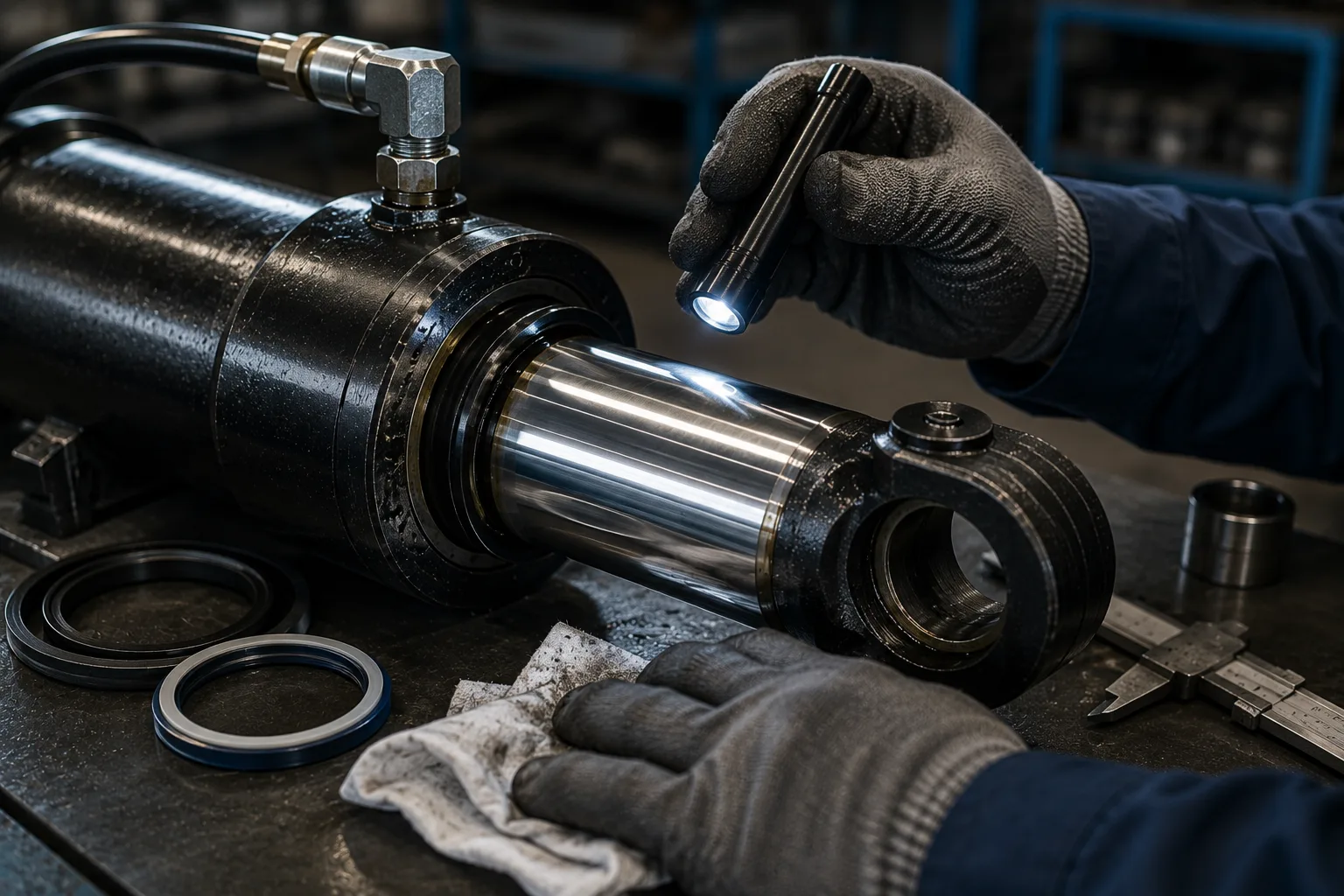
When drawings are unavailable, send a sample cylinder and installation photos. Mark the critical surfaces, damaged areas, and clearance conflicts. ZHY can usually provide a more reliable recommendation when the buyer explains why the existing cylinder is being replaced or why the new equipment cannot accept a catalog design.
Practical asset: copy-ready cylinder ordering checklist
Use this checklist before you compare a custom hydraulic cylinder vs standard offer. It is designed for procurement managers, OEM buyers, and engineering buyers who must reduce back-and-forth before issuing a purchase order.
- Ask the end user or engineer what problem the cylinder must solve: replacement, new machine, longer stroke, higher force, better corrosion resistance, or changed mounting.
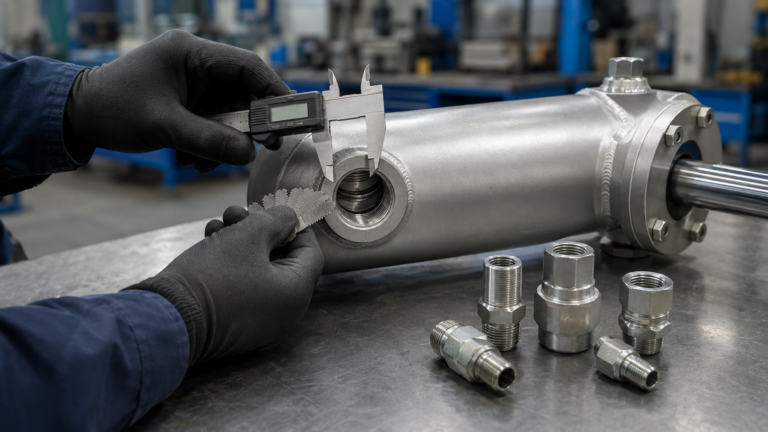
- Check the existing cylinder first: measure bore, rod, stroke, closed length, extended length, pin diameter, mounting width, port thread, and port orientation.
- Request the machine-side constraints: maximum available closed length, required travel, clearance around ports, hose bend path, and interference points during full motion.
- Ask for the hydraulic conditions in this order: working pressure, peak pressure, flow rate, oil type, oil temperature, cycle frequency, and whether load holding is required.
- Ask what caused previous failure: seal leakage, rod bending, tube scoring, mount cracking, corrosion, side loading, overheating, or impact shock.
- Confirm compliance expectations: ISO dimensional references, safety rules under ISO 4413, material certificates, pressure test report, coating test method, and inspection record.
- Request a drawing approval step for any custom item, including revision number, tolerance-sensitive dimensions, port clocking, and packaging requirements.
- For repeat OEM orders, ask the supplier to freeze the approved design code so future batches do not drift in mounting, seal choice, or port position.
FAQ
1. Is a custom hydraulic cylinder always better than a standard one?
No. A custom cylinder is better only when the machine has non-standard dimensions, mounting, stroke, ports, pressure, environment, or duty cycle. A standard unit is the smarter choice for true fit-for-fit replacement because it can reduce lead time and simplify spare inventory. The buyer should choose custom when a catalog unit would require bracket changes, hose rerouting, or acceptance of performance risk.
2. What measurements are most important before ordering a replacement cylinder?
The most important measurements are bore, rod diameter, stroke, retracted length, extended length, mounting type, pin diameter, mounting width, and port thread. Buyers should also record port orientation and clearance around the cylinder during full machine movement. If the cylinder failed, photos of the damaged rod, seals, tube, or mounts help the supplier identify whether the replacement should remain standard or be redesigned.
3. Which standards are useful when comparing hydraulic cylinder quotations?
Useful references include ISO 4413:2010 for hydraulic system safety, ISO 3320 for metric bores and piston rod diameters, ISO 6020-2 for 16 MPa compact series mounting dimensions, and ISO 6022 for 25 MPa series mounting dimensions. These standards help buyers compare technical offers consistently, but they do not replace application checks for load direction, side load, environment, and duty cycle.
4. Why can a standard cylinder with the right bore and stroke still fail?
Bore and stroke do not confirm full compatibility. A cylinder can still fail if the retracted length is wrong, the rod is undersized for compression load, the mounting creates side load, the ports interfere with the frame, or the seal package is not suitable for temperature and fluid conditions. The buyer should verify the complete interface and operating conditions before accepting a low-price catalog substitute.
5. What should I send to ZHY for custom cylinder confirmation?
Send a drawing if available, or send a sample cylinder with clear photos of the installation. Include bore, rod diameter, stroke, closed and open length, mounting details, pin size, port thread, pressure range, oil temperature, cycle frequency, load direction, environment, and the reason for replacement. This information allows ZHY to confirm whether a standard option is enough or a custom design is required.
References
- Hydraulic fluid power — General rules and safety requirements for systems and their components, International Organization for Standardization, ISO, 2010.
- Fluid power systems and components — Cylinder bores and piston rod diameters and area ratios — Metric series, International Organization for Standardization, ISO, 2013.
- Hydraulic fluid power — Mounting dimensions for single rod cylinders, 16 MPa compact series, International Organization for Standardization, ISO, 2015.
- Hydraulic fluid power — Mounting dimensions for single rod cylinders, 25 MPa series, International Organization for Standardization, ISO, 2018.
- Standard Specification for Seamless Carbon and Alloy Steel Mechanical Tubing, ASTM International, ASTM A519/A519M, 2023.
- Corrosion tests in artificial atmospheres — Salt spray tests, International Organization for Standardization, ISO, 2022.
- Standard Practice for Operating Salt Spray Apparatus, ASTM International, ASTM B117, 2019.
- Regulation (EU) 2023/1230 of the European Parliament and of the Council on machinery, European Parliament and Council of the European Union, 2023.
- Control of Hazardous Energy, 29 CFR 1910.147, Occupational Safety and Health Administration, U.S. Department of Labor, current regulation.
Semantic Close: How to make the decision confidently before ordering
The practical way to decide is to treat the cylinder as a machine interface, not a commodity part. A standard cylinder is a procurement shortcut only when the machine already accepts standard geometry. A custom cylinder is the correct option when the application has a special envelope, special motion path, special load case, or special environment that would turn a catalog item into a fabrication problem.
The “why” is mechanical. Hydraulic force is only one part of the decision. The cylinder must also align with pins, survive side-load tendencies, leave room for hoses, resist corrosion, seal under real oil temperature, and stop safely at the required travel. ISO 4413:2010 gives a safety framework for hydraulic systems, while ISO 6020-2 and ISO 6022 provide dimensional references for 16 MPa and 25 MPa cylinder series. Those references make quotations more comparable, but they do not prove that a cylinder fits a compact linkage or harsh outdoor installation.
The best option for a facility manager replacing a known cylinder is usually standard supply after careful measurement. The best option for an OEM buyer building repeat equipment is often custom confirmation, because one approved drawing can stabilize mounting, porting, seals, packaging, and future batches. The best option for a contractor repairing special machinery is to send the failed sample and installation photos before buying, because visible wear often reveals side load, contamination, corrosion, or wrong seal selection.
Market demand is also pushing buyers toward earlier technical confirmation. Machinery is becoming more compact, hose routing is tighter, and customers expect less downtime after installation. That makes the old purchasing habit of matching only bore and stroke increasingly risky. A buyer who verifies dimensions, pressure, environment, compliance expectations, and failure cause before issuing the PO will usually spend less time on rework and more time operating the equipment.
For ZHY, the useful next step is simple: send a drawing, sample, or photo set with the checklist above. If a catalog option is safe, it should be used. If it is not, the custom design should be confirmed before ordering, because the costliest cylinder is the one that arrives quickly but cannot work in the machine.