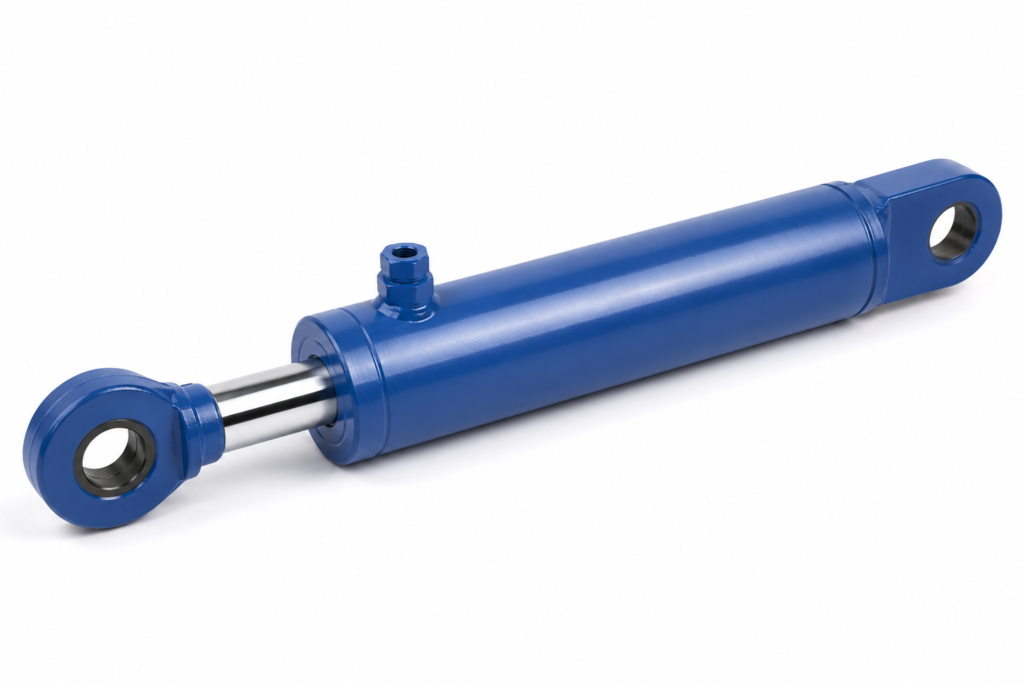
Why does the same part get called a hydraulic ram in one workshop and a cylinder by another supplier?
The practical answer is simple: many buyers use hydraulic ram as a shop-floor name for a hydraulic cylinder, especially when the unit mainly pushes or lifts. Suppliers, however, quote from measurable specifications, not local naming habits, so terminology alone is not enough for safe replacement.
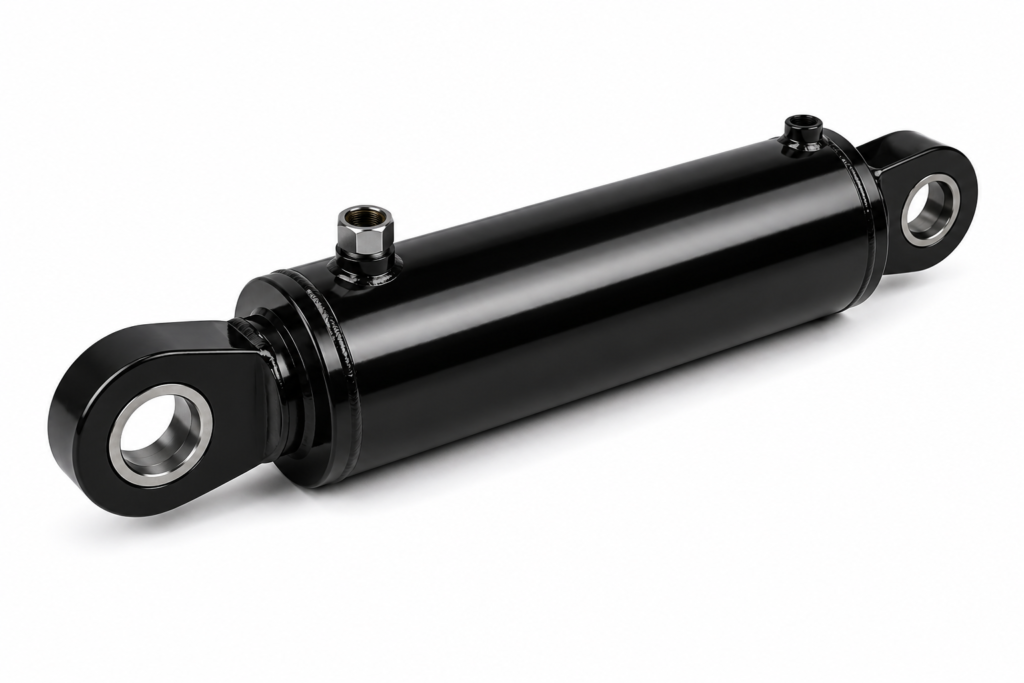
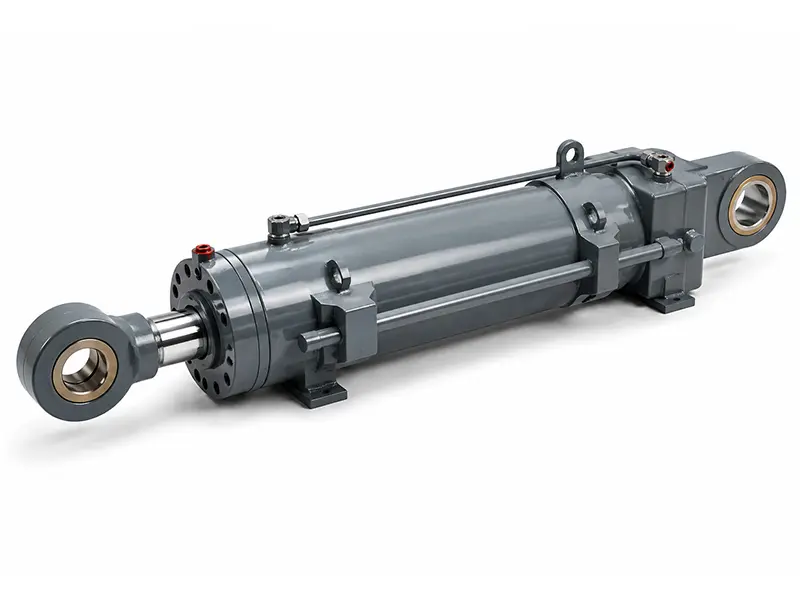
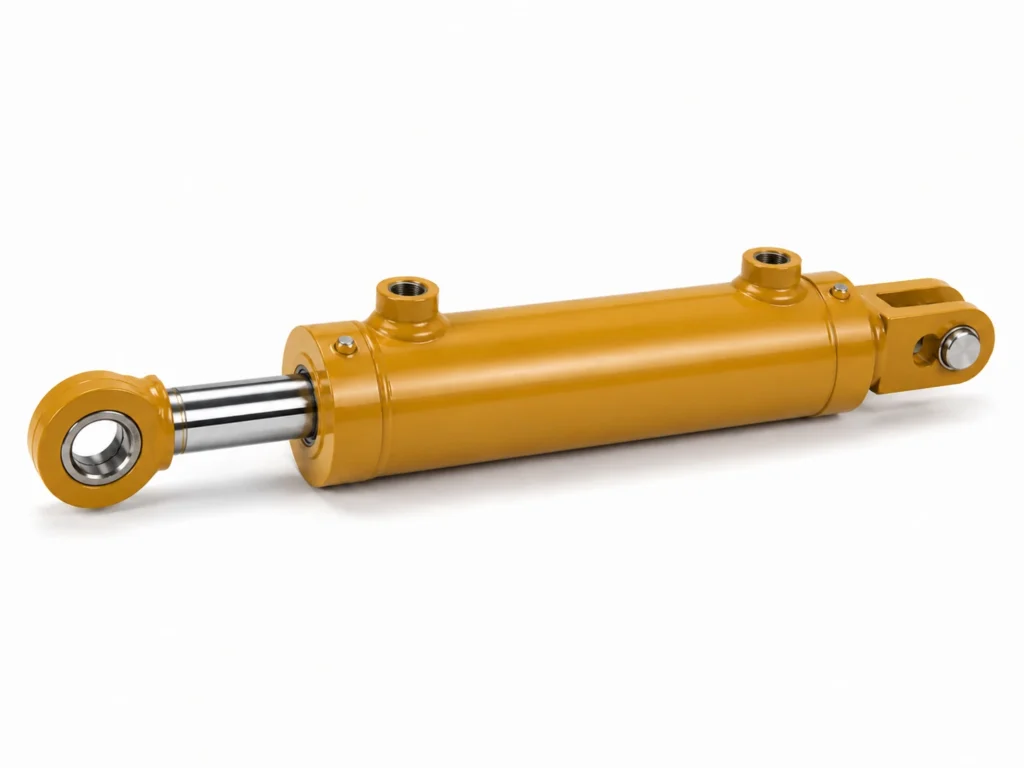
A procurement manager replacing a worn lift actuator on a trailer, press, dock leveler, compactor, or agricultural attachment may hear three names for the same component: cylinder, ram, or ram cylinder. In many English-speaking markets, “ram” often describes a single-acting pushing cylinder, a plunger-style actuator, or a heavy-duty lifting unit. In catalog and engineering language, “hydraulic cylinder” is the broader and more controlled term.
This distinction becomes costly when an old part has no readable brand label. If the buyer says only “quote a 3-ton hydraulic ram,” one supplier may assume a bottle-jack style ram, another may quote a welded mobile cylinder, and a third may ask for ISO mounting dimensions. The correct path is not to debate vocabulary; it is to identify the actuator by dimensions, pressure, working direction, and mounting interface.
For TOFU buyers, the best mental model is this: “ram” is often the name used in the field, while “cylinder” is the name used in drawings, standards, inspection records, and supplier quotations. During cylinder replacement, keep the local name in the request, but attach photos, nameplate data, and measurements so the supplier can translate the shop term into a manufacturable specification.
What is the safest definition to use when requesting a replacement quote?
Use “hydraulic cylinder” as the formal purchasing term, then mention that the old unit is called a ram locally. This keeps the request understandable to engineers while preserving the field context that may reveal whether the part is single-acting, plunger type, or a compact lifting actuator.
In fluid-power vocabulary, a cylinder is an actuator that produces linear motion through hydraulic pressure. ISO 5598 covers fluid power vocabulary, while ISO 4413 sets general safety requirements for hydraulic systems and components. Those standards support a more precise buying conversation than a regional nickname can provide.
A replacement request should therefore begin with a short definition-style sentence: “We need to replace a hydraulic cylinder, locally called a hydraulic ram, used to lift a dump body; please confirm suitability from the attached photos and measurements.” That sentence prevents overengineering while also preventing the supplier from quoting the wrong family of product.
- Hydraulic cylinder
- The formal engineering and purchasing term for a hydraulic actuator that converts pressurized fluid into controlled linear movement.
- Hydraulic ram
- A common field term, often used for a pushing, lifting, single-acting, or plunger-style cylinder, but not precise enough by itself for quotation.
- Ram cylinder
- A mixed commercial term buyers may use for a cylinder that performs ram-like pushing or lifting; suppliers still need bore, rod, stroke, pressure, and mount data.
- Cylinder replacement
- The process of matching an existing hydraulic actuator by dimensions, force, pressure, porting, seals, mounting style, environment, and installation envelope.
Key Takeaways
- “Hydraulic ram” is often a field name, while “hydraulic cylinder” is the safer purchasing and engineering term.
- The old part name should never replace bore, rod diameter, stroke, pressure rating, port type, and mount dimensions.
- ISO 6020 references 16 MPa mounting-dimension cylinder series, while ISO 6022 covers 25 MPa single-rod cylinder mounting dimensions.
- If the old unit is called a ram, confirm whether it is single-acting, double-acting, or plunger-style before approving a quote.
- Photos of the nameplate, ports, rod end, base mount, and installed position reduce the risk of a wrong supplier assumption.
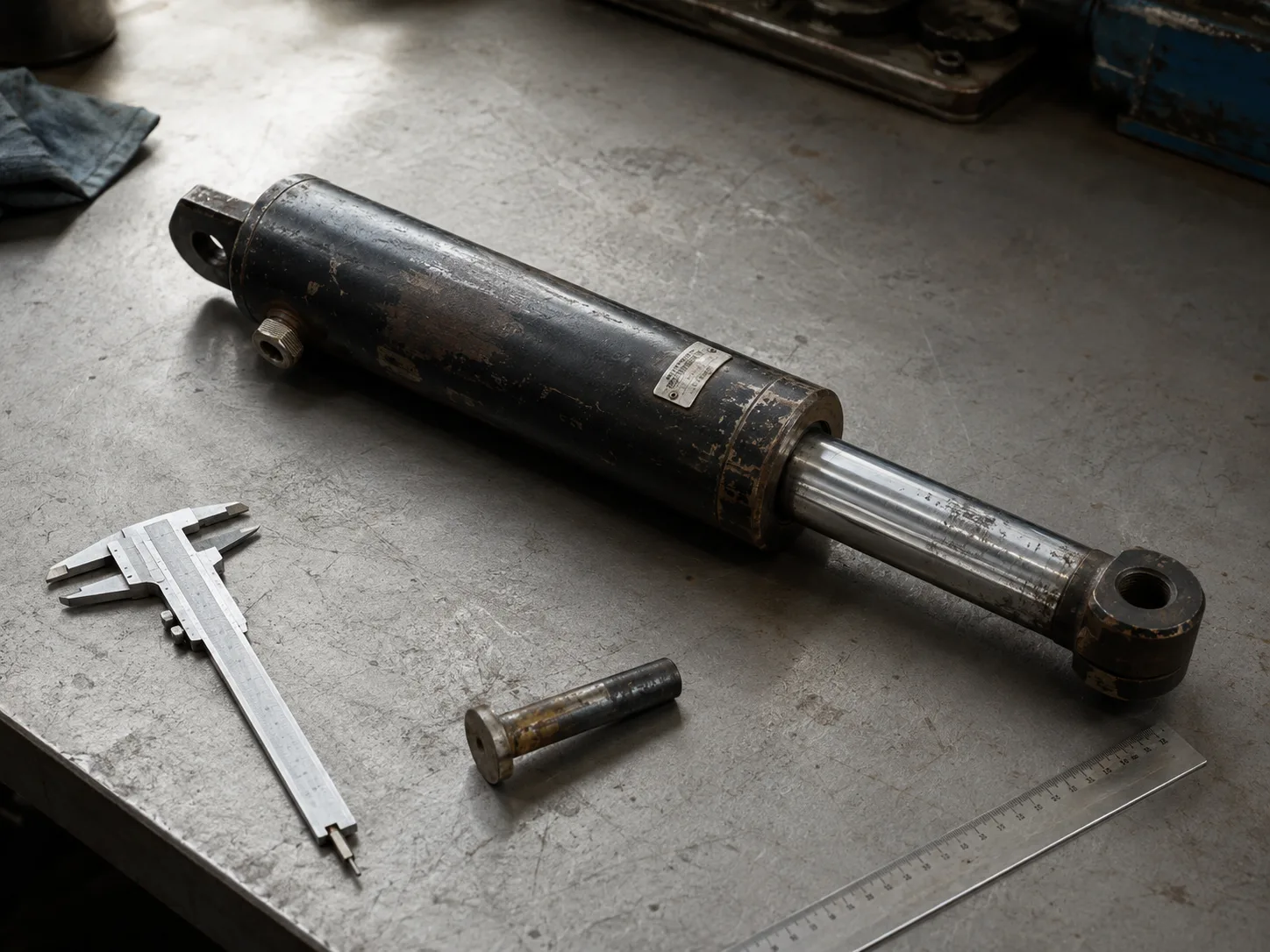
Which details matter more than the name during cylinder replacement?
The replacement must match the machine interface first: bore, rod diameter, stroke, closed length, extended length, pin centers, mounting style, port thread, working pressure, and action type. If those details are wrong, the new unit may fit the quote but fail the machine.
The most common buying error is using local naming only. A contractor may send a message saying, “Need one hydraulic ram for lift gate,” without showing whether the rod end is clevis, eye, flange, trunnion, or threaded. That leaves the supplier guessing the part family and may lead to a wrong quote, delayed repair, or field modification.
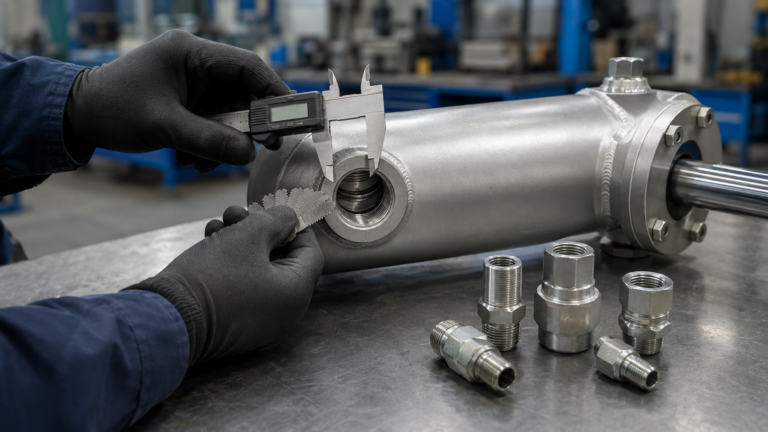
For replacement, the bore controls available push force at a given pressure, while the rod diameter affects buckling resistance, retract force, and durability. Stroke controls travel, but closed length and pin-to-pin dimensions decide whether the actuator physically fits the machine. Port size and thread type decide whether existing hoses can be reused safely.
Pressure rating is also not a decorative catalog number. ISO 6020-1 is associated with 16 MPa single-rod cylinder mounting dimensions, and ISO 6022 is associated with 25 MPa single-rod cylinder mounting dimensions. These standards do not mean every cylinder on the market belongs to those exact series, but they show why pressure and mounting family must be specified instead of assumed.
| Situation | Likely interpretation | What to verify before quote | Recommended buyer action |
|---|---|---|---|
| Old part is called a hydraulic ram by the maintenance team | May be a normal cylinder, single-acting cylinder, or plunger ram | Bore, rod or plunger diameter, stroke, port count, return method | Send installed photos and ask the supplier to confirm action type |
| Nameplate is missing or unreadable | Supplier cannot rely on model number | Pin centers, mount width, pin diameter, port thread, retracted length | Measure the old unit before removal if possible |
| Machine has limited installation space | Closed length and mount geometry are critical | Full retracted length, barrel diameter, rod-end clearance | Request a dimensional drawing before ordering |
| Application involves lifting people or safety-critical loads | Higher duty of care and system-level safety review are required | Load-holding valves, hose burst protection, pressure limits, standards compliance | Do not substitute by appearance only; involve a qualified hydraulic engineer |
How to use this table: start with the “Situation” column that matches your old part, then prioritize the verification column before asking for price; when two options look close, choose the path that requires a drawing and supplier confirmation rather than a quick visual match.
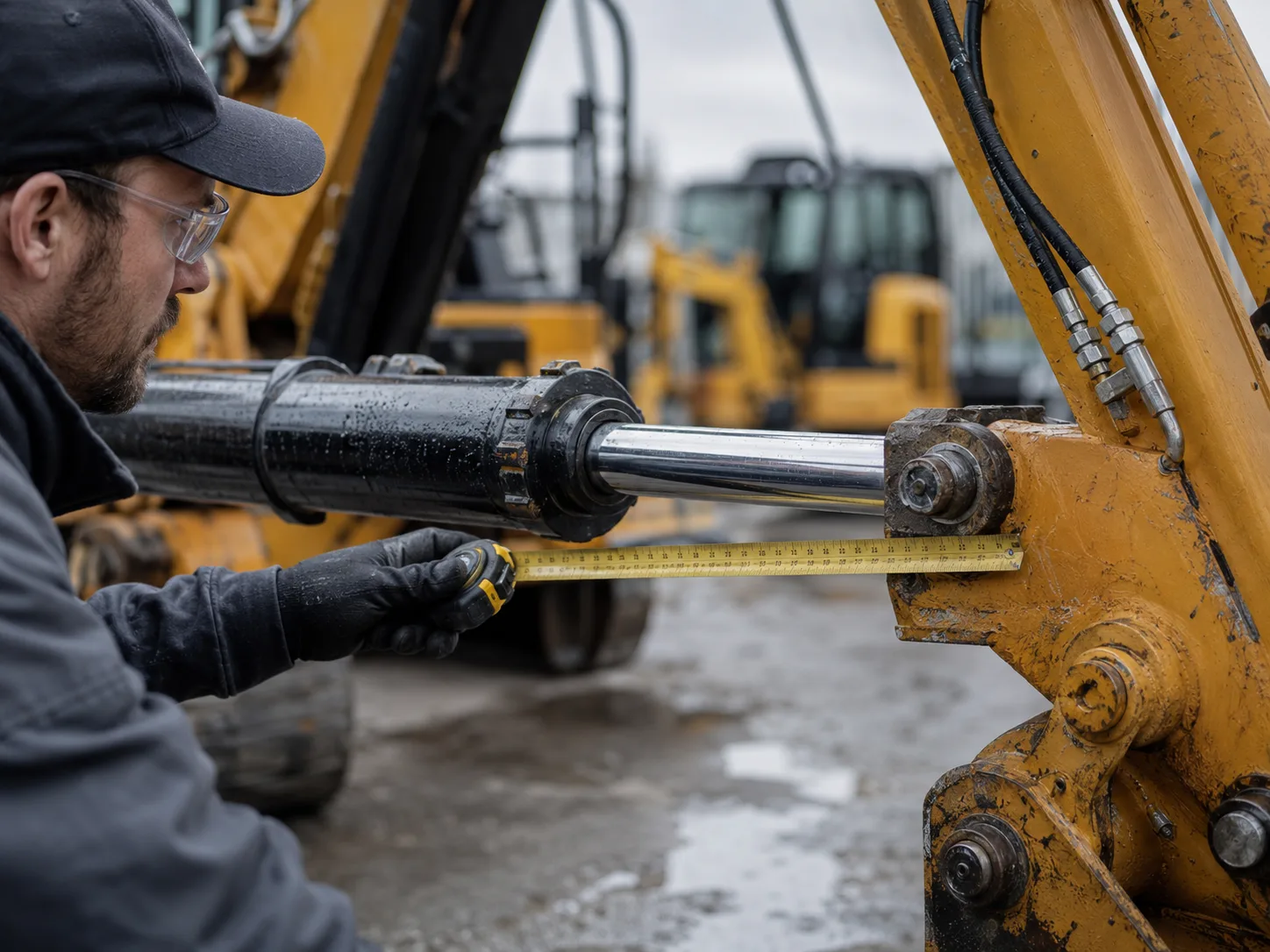
When should a buyer choose a standard cylinder, and when should they ask for a custom ram cylinder?
Choose a standard cylinder when the machine can accept a catalog mounting style, pressure class, stroke, and port arrangement without modification. Ask for a custom ram cylinder when the old actuator has nonstandard pin centers, unusual closed length, special seals, integrated valves, or a machine-specific mounting envelope.
Standard cylinders are usually faster to quote because the supplier can compare your request against existing drawings and manufacturing routines. This works well for general industrial presses, simple lifting tables, agricultural implements, and equipment where there is enough clearance to accept common mount dimensions. The buyer still needs to verify stroke, pressure, and mounting geometry.
Custom replacement becomes more reasonable when downtime cost is high and field modification is risky. For example, a municipal maintenance workshop replacing a corroded snowplow lift actuator may need the same hose orientation and pin spacing so mechanics can install the part in winter conditions. A cheaper cylinder with the wrong port direction can create hose rubbing and early failure.
Material and seal choices also influence the decision. Rods are commonly chrome-plated steel, but corrosive environments may require upgraded rod protection. Seal materials must match hydraulic oil, temperature, duty cycle, and contamination level. ISO 4413 emphasizes safe hydraulic system design and component selection, which means replacement is not only a dimensional exercise.
| Parameter | Why it matters | Typical evidence to send | Source basis where applicable |
|---|---|---|---|
| Working pressure | Determines force capacity, tube selection, sealing load, and safety margin | Nameplate, machine manual, hydraulic circuit pressure setting | ISO 4413 for hydraulic system safety requirements |
| Mounting series | Controls interchangeability of pin, flange, foot, or trunnion geometry | Drawing, pin-center measurements, mount photos | ISO 6020-1 for 16 MPa series; ISO 6022 for 25 MPa series |
| Stroke length | Controls travel and final machine position | Measured rod travel or extended and retracted pin-center dimensions | Supplier drawing verification |
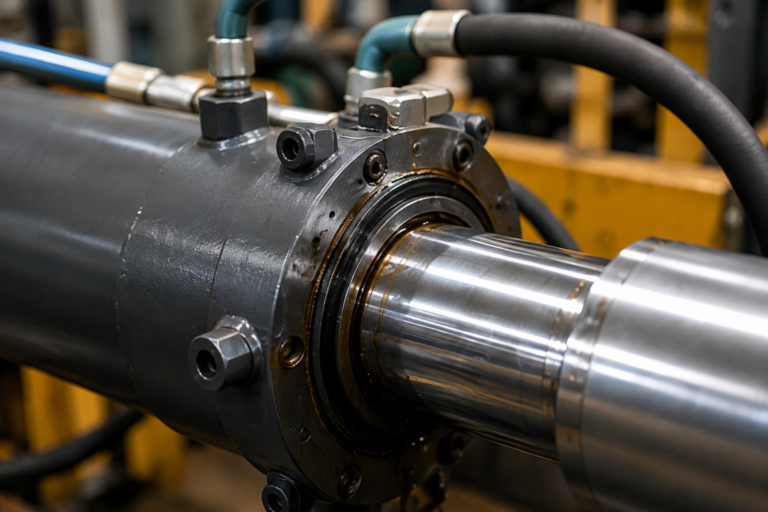
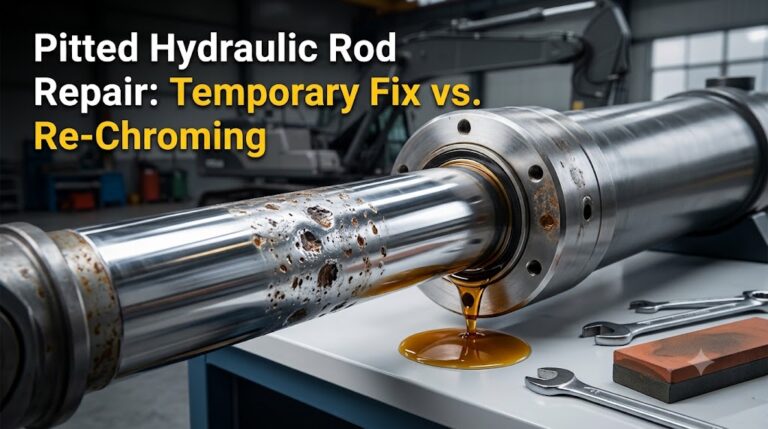
| Rod surface condition | Affects seal life, leakage risk, and corrosion resistance | Close-up rod photos under clean light | Inspection practice and supplier quality control |
How to use this table: treat the parameter column as the quote approval checklist; when cost and speed conflict, give priority to pressure, mount, and stroke because these three create the largest installation and safety consequences.
What real-world replacement scenarios create the highest risk of wrong quotes?
The highest risk appears when the buyer has an old cylinder in hand but no machine drawing, no nameplate, and only a local description. In those cases, the supplier may quote a visually similar actuator that misses a hidden functional requirement.
Trailer tipping units and small lifting equipment
In tipping trailers, scissor lifts, and small lift platforms, the term “ram” is widely used because the actuator mainly pushes upward. Many of these units are single-acting and rely on gravity or load weight to retract. If a supplier assumes a double-acting cylinder, the quoted product may have different porting, installation length, and plumbing requirements.
For this scenario, buyers should confirm port count, base mount, top mount, fully closed length, fully extended length, and whether the cylinder retracts under load or under pressure. A photo of the part installed before removal is often more useful than a polished photo after cleaning because it shows hose routing and clearance.
Best for: Standard replacement is best when the trailer has common pin mounts and generous clearance; custom matching is best when the cylinder nests inside a scissor frame or has a special base trunnion.
Mobile machinery and attachments
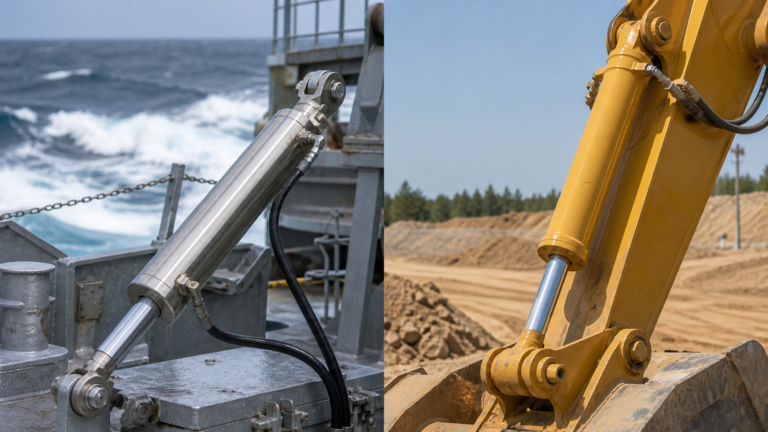
Excavator attachments, compact loaders, refuse equipment, and agricultural machinery often use welded cylinders with robust mounts and application-specific lengths. The part may be called a hydraulic ram by operators, but the buyer must treat it as a controlled mobile hydraulic component with load, shock, and contamination exposure.
Wrong rod diameter is a serious concern in these applications because side loading and buckling risk increase when the machine pushes against uneven ground or heavy material. A supplier such as ZHY will normally ask for rod diameter, bore, stroke, pin diameter, and mount width before giving a responsible replacement recommendation.
Best for: Engineered replacement is best for mobile attachments because pin geometry, rod strength, and port orientation have direct effects on service life.
Industrial presses, clamps, and maintenance jigs
In shop equipment, “ram” may refer to the moving pressing member rather than the hydraulic actuator itself. This creates a communication trap: the buyer may request a ram when they actually need the cylinder that drives the ram. A supplier then needs photos showing the actuator, press frame, connection point, and hydraulic power unit.
For press and clamp replacement, force calculation matters. Bore area and pressure determine push force, while rod-side area affects retract force in double-acting designs. If the new actuator has a smaller bore, the machine may move but fail to reach required pressing force.
Best for: Specification-led buying is best for presses and clamps because visual matching cannot prove force capacity.
How are standards and market trends changing replacement conversations?
Replacement buying is becoming more documentation-driven. Buyers still use practical names such as hydraulic ram, but suppliers increasingly need drawings, pressure data, installation photos, and compliance awareness before confirming a safe substitute.
ISO 4413 is important because it frames hydraulic components as part of a safety-related system, not isolated pieces of metal. A cylinder that fits mechanically can still be unsuitable if the system requires load-holding, pressure limitation, controlled lowering, or protection against hose failure. For lifting applications, buyers should avoid replacing by appearance only.
ISO 6020 and ISO 6022 also show why mounting dimensions matter. A cylinder described as 16 MPa or 25 MPa in a standard series is not interchangeable solely because pressure sounds close; mounting style, bore, stroke, and rod end must still match. Procurement teams should ask suppliers whether the proposed unit follows a recognized mounting pattern or is made to sample.
The market trend is toward faster remote identification. Instead of waiting for the old part to arrive at a factory, buyers now send photos, videos, nameplates, and annotated measurements. This reduces quoting time and avoids premature disassembly. It also helps suppliers identify whether a part is a standard cylinder, a modified cylinder, or a custom ram cylinder that needs reverse engineering.
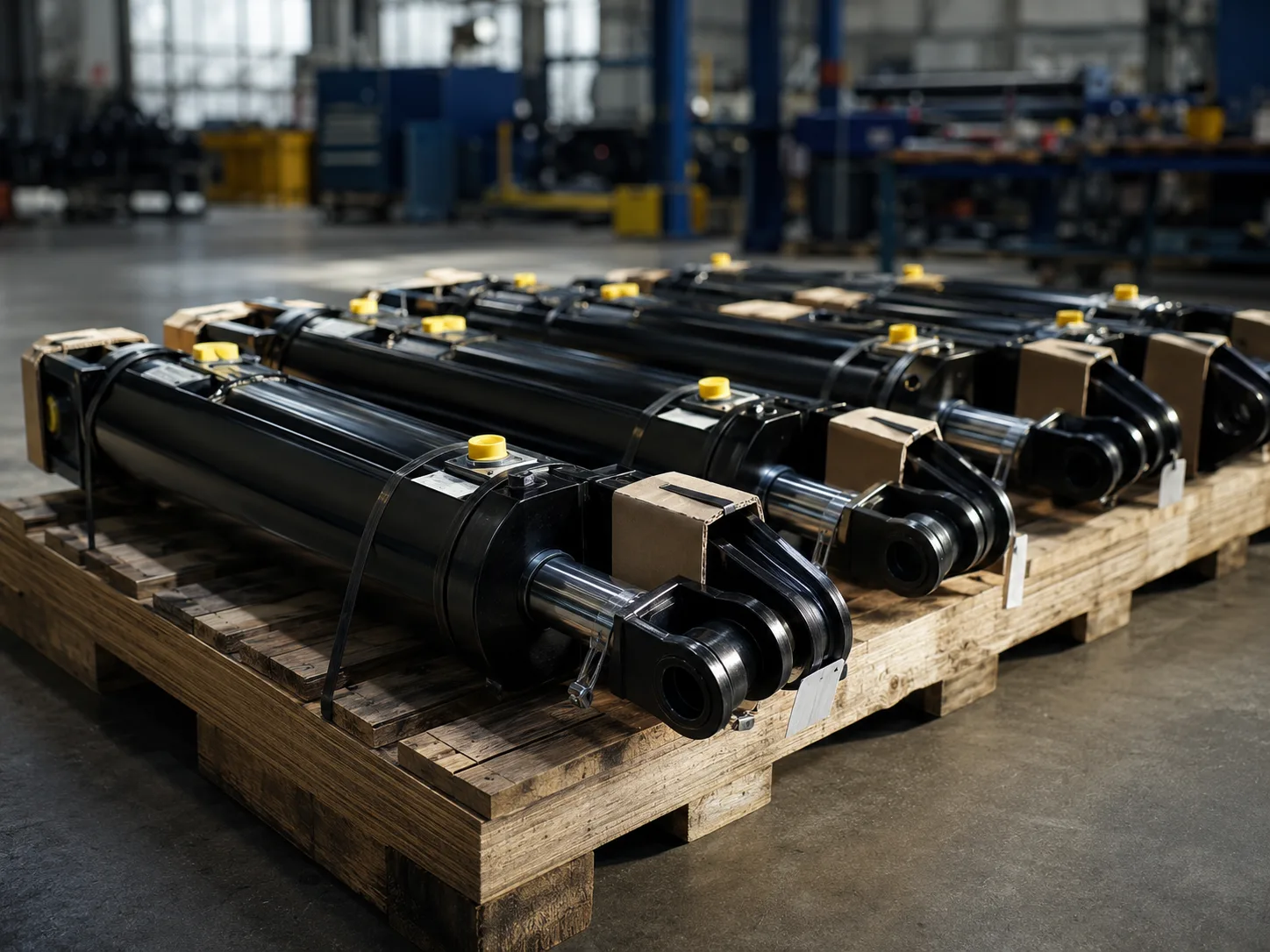
Practical asset: a replacement request checklist buyers can send to suppliers
Use this checklist before asking ZHY or any qualified supplier for a quotation. It is designed to prevent the exact mistake behind many wrong quotes: relying on the name “ram” while missing the measurable cylinder data.
- Photograph the old actuator in its installed position before removal, including both mounts, hose routing, port side, rod end, base end, and any guards or frame clearance.
- Take a close photo of the nameplate, stamped model, casting mark, or old purchase tag; if it is unreadable, photograph it under side light before cleaning aggressively.
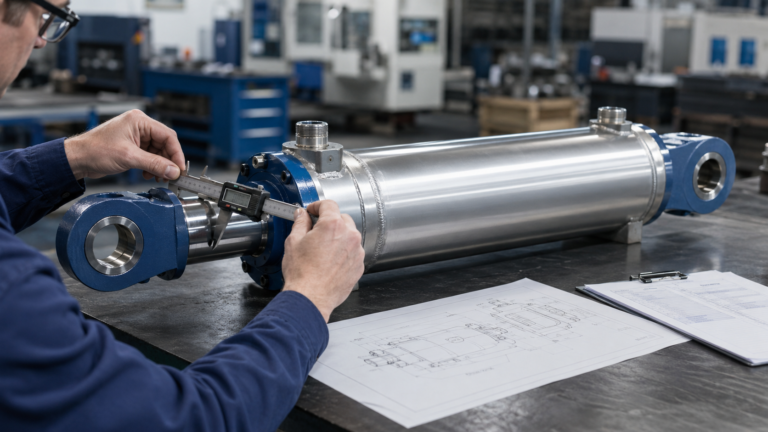
- Measure retracted pin-center length, extended pin-center length, stroke length, pin diameter, mount width, rod diameter, and outside barrel diameter.
- Count the ports and identify whether the unit is single-acting or double-acting; if unsure, send photos of all hose connections and describe how the machine retracts.
- Record port thread type if known; if not known, send a close photo with a ruler beside the port and keep old fittings for comparison.
- Confirm the machine function: lifting, pushing, steering, clamping, pressing, tilting, dumping, leveling, or holding load in position.
- Ask the supplier to state the proposed bore, rod, stroke, pressure rating, mount type, seal suitability, paint or corrosion protection, and whether a drawing will be approved before production.
- For safety-critical lifting or suspended-load applications, ask whether additional valves, mechanical locks, or system-level review are required under applicable safety practice.
FAQ
1. Is a hydraulic ram the same as a hydraulic cylinder?
In many workshops, yes, the words are used for the same general kind of linear hydraulic actuator. In stricter engineering language, hydraulic cylinder is the broader and more formal term, while hydraulic ram may refer to a pushing, lifting, single-acting, or plunger-style unit. For purchasing, do not rely on either word alone. Confirm bore, rod or plunger size, stroke, pressure, porting, and mounting dimensions before accepting a replacement quote.
2. What should I measure before ordering a cylinder replacement?
Measure the stroke, retracted length, extended length, rod diameter, barrel outside diameter, pin diameter, mount width, and port position. If possible, identify the bore from markings or drawings rather than guessing from outside diameter. Also photograph the old unit while it is still installed, because hose routing and frame clearance can be lost after removal. These details help the supplier distinguish a standard cylinder from a custom ram cylinder.
3. Can I replace a single-acting hydraulic ram with a double-acting cylinder?
Sometimes it is technically possible, but it should not be treated as a direct swap. A single-acting unit usually uses pressure in one direction and retracts by gravity, spring force, or load weight. A double-acting cylinder needs pressure connections for both extension and retraction, and the hydraulic circuit must support that function. Before converting, confirm pump capacity, valve type, hose routing, load behavior, and safety requirements under the machine’s working conditions.
4. Why does a supplier ask for photos when I already gave the model name?
Photos help confirm whether the old model has been modified, repaired, or installed in a nonstandard way. Nameplates can identify a family of parts, but they may not show port orientation, welded mount changes, rod-end accessories, frame clearance, or previous field repairs. A responsible supplier asks for photos to reduce ambiguity, especially when the part is described as a hydraulic ram in local terminology but must be manufactured as a precise hydraulic cylinder.
5. Which standards matter when replacing a hydraulic cylinder?
ISO 4413 is a key reference for safety requirements in hydraulic fluid power systems and components. ISO 5598 covers fluid power vocabulary, while ISO 6020 and ISO 6022 address mounting dimensions for certain single-rod hydraulic cylinder series. These standards do not replace machine-specific engineering checks, but they give buyers and suppliers a common language for pressure class, mounting geometry, and safe system integration.
References
- Hydraulic fluid power — General rules and safety requirements for systems and their components, International Organization for Standardization, ISO, 2010.
- Fluid power systems and components — Vocabulary, International Organization for Standardization, ISO, 2020.
- Hydraulic fluid power — Mounting dimensions for single rod cylinders, 16 MPa series — Part 1: Medium series, International Organization for Standardization, ISO, 2007.
- Hydraulic fluid power — Mounting dimensions for single rod cylinders, 25 MPa series, International Organization for Standardization, ISO, 2015.
- Hydraulic fluid power — Cylinders — Method for determining the buckling load, International Organization for Standardization, ISO, 2009.
- Hydraulic Cylinders Catalog HY08-1130, Parker Hannifin Corporation, Parker Hannifin, 2023.
- Industrial Hydraulics Manual, Eaton Hydraulics Training Services, Eaton, 2011.
- Hydraulic Cylinder CDT3/CGT3 Product Documentation, Bosch Rexroth AG, Bosch Rexroth, 2022.
How to make the right replacement decision without overcomplicating terminology
The best way to read the hydraulic cylinder vs hydraulic ram question is not as a vocabulary argument, but as a buying-risk filter. If the old part is called a ram, accept that term as useful field information, then immediately translate it into specifications that a supplier can verify. This approach respects how mechanics speak while still protecting the buyer from a wrong design.
Why does this matter? Hydraulic actuators are not interchangeable just because they share a similar body shape. ISO 4413 treats hydraulic components as part of a safety-related system, which means replacement decisions should account for pressure, load control, installation, and safe operation. ISO 6020 and ISO 6022 show that mounting dimensions and pressure classes can be standardized, but only within defined cylinder families. A buyer should therefore ask, “Does this proposed unit match our machine interface and duty?” rather than, “Is this called a ram or a cylinder?”
What should buyers do first? Collect old cylinder photos, nameplate data, installed-position images, and measurements in a fixed order before requesting a quotation. For a simple trailer or agricultural lift, that may be enough for a standard replacement. For mobile machinery, presses, suspended loads, or equipment with limited clearance, request a drawing and confirm the action type, rod diameter, mounting geometry, and port orientation before payment.
The practical option is clear: use “hydraulic cylinder” in formal RFQs, add “locally called hydraulic ram” for context, and require the supplier to confirm the measured specification. This prevents overengineering because the buyer is not commissioning a new hydraulic system from scratch. It also prevents under-specification because the supplier is not left guessing from a nickname. For procurement teams, importers, contractors, and maintenance buyers, that balanced method is the fastest path to a replacement that fits, works, and can be defended in a purchasing record.