Why does pressure grade become a buying risk before a cylinder ever fails?
Pressure grade becomes a buying risk because a cylinder may look interchangeable on the drawing while behaving very differently under peak load, shock load, and continuous cycling. For procurement managers and engineering buyers, the right question is not only bore and stroke, but whether the design margin matches real system pressure.
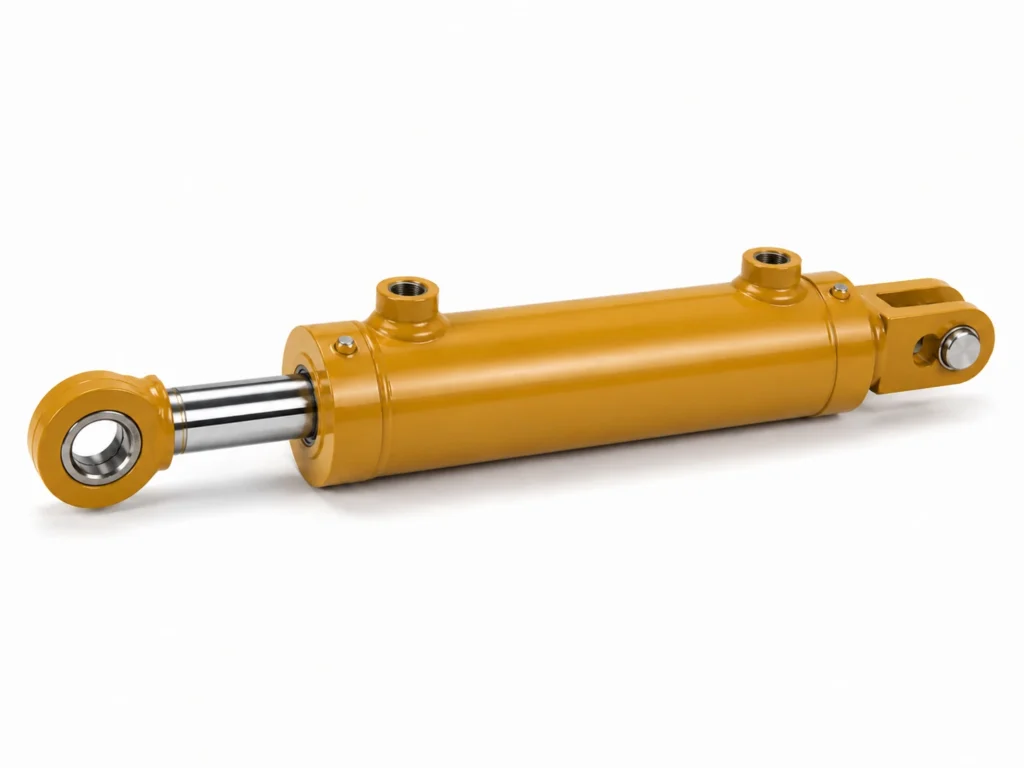
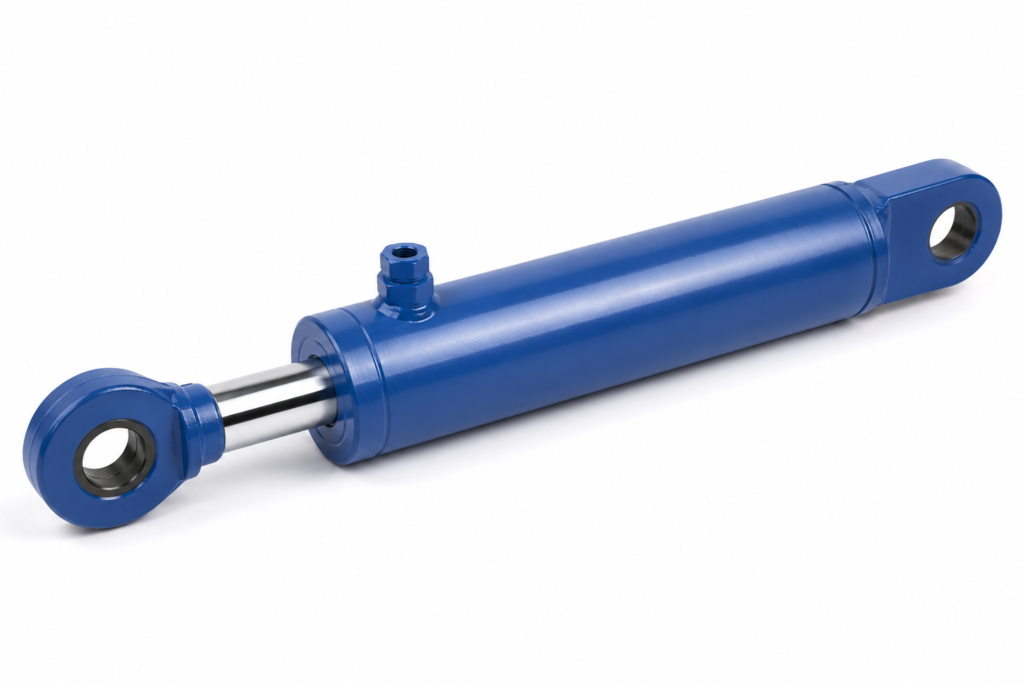
A standard hydraulic cylinder can perform well in stable industrial automation, clamping, positioning, and moderate-load equipment. The problem appears when a machine builder uses the same cylinder family in compact machinery where pressure spikes, side load, temperature, and cycle frequency are higher than expected. In that case, seal extrusion, barrel expansion, gland leakage, rod bending, or tube fatigue can appear before the machine reaches its planned service life.
Standards help define the discussion. ISO 6020-2 covers compact metric cylinders for 16 MPa service, while ISO 6022 covers 25 MPa metric cylinders. These are not marketing labels; they guide mounting dimensions and pressure class assumptions. In purchasing language, 16 MPa is about 160 bar, and 25 MPa is about 250 bar. Equipment designed around 3,000 psi, 5,000 psi, or 10,000 psi hydraulic circuits needs a more careful review than a simple catalog match.
For ZHY buyers, the practical decision logic is direct: if pressure is stable, cycles are light, and installation space is forgiving, a standard cylinder may be economical. If pressure spikes are frequent, the machine stops are abrupt, or downtime is expensive, a heavy duty hydraulic cylinder with verified pressure testing is the safer commercial choice.
What is the real difference between high pressure and standard hydraulic cylinders?
The real difference is the safety margin built into the pressure boundary and load path. High-pressure designs use stronger tubes, more robust end connections, stronger rods, pressure-resistant sealing systems, and stricter acceptance testing, while standard designs prioritize cost, availability, and adequate performance in predictable circuits.
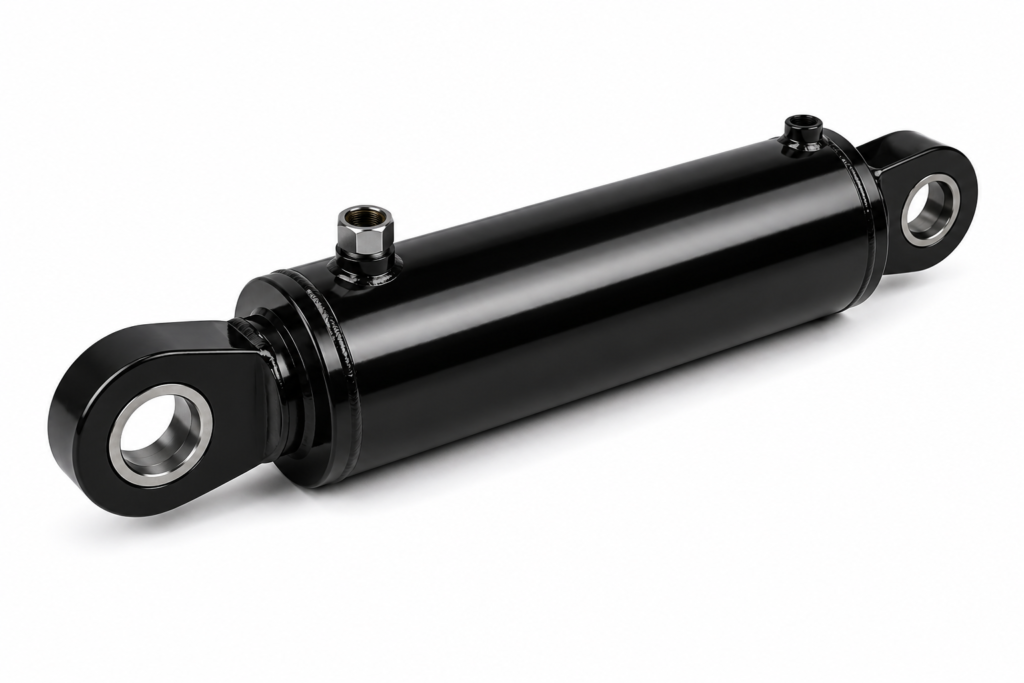
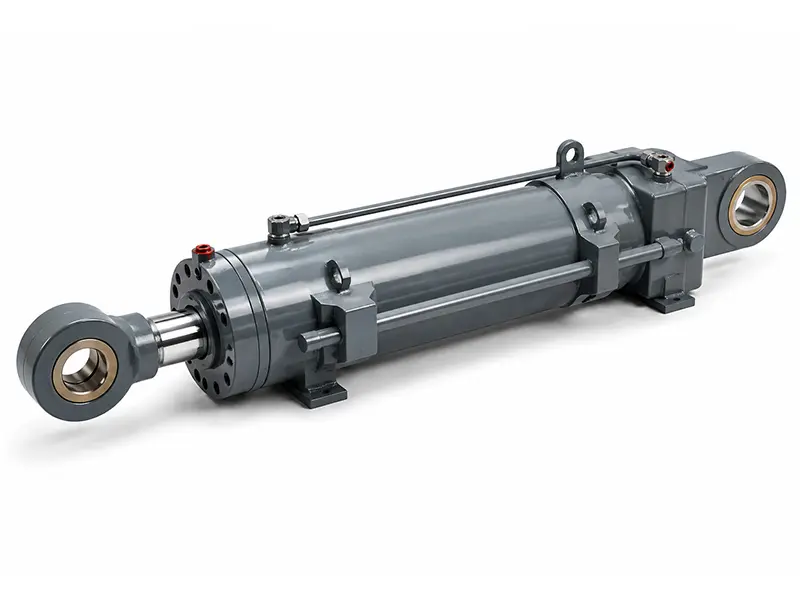
A standard cylinder is not automatically weak. In many factory machines, it is the correct component because pressure is controlled and the cylinder does not see severe impact. A high pressure hydraulic cylinder, however, is built for conditions where hydraulic force is dense, space is limited, and the cylinder must survive both rated pressure and transient events.
The following terminology matters during RFQ review because different suppliers may use similar words for different design levels.
- Rated pressure
- The pressure level the cylinder is designed to carry in normal service, commonly aligned with a standard series, catalog rating, or project specification.
- Peak pressure
- A short-duration pressure spike caused by impact, rapid valve closure, load reversal, or machine stops; it can be more damaging than the nominal setting.
- Proof test
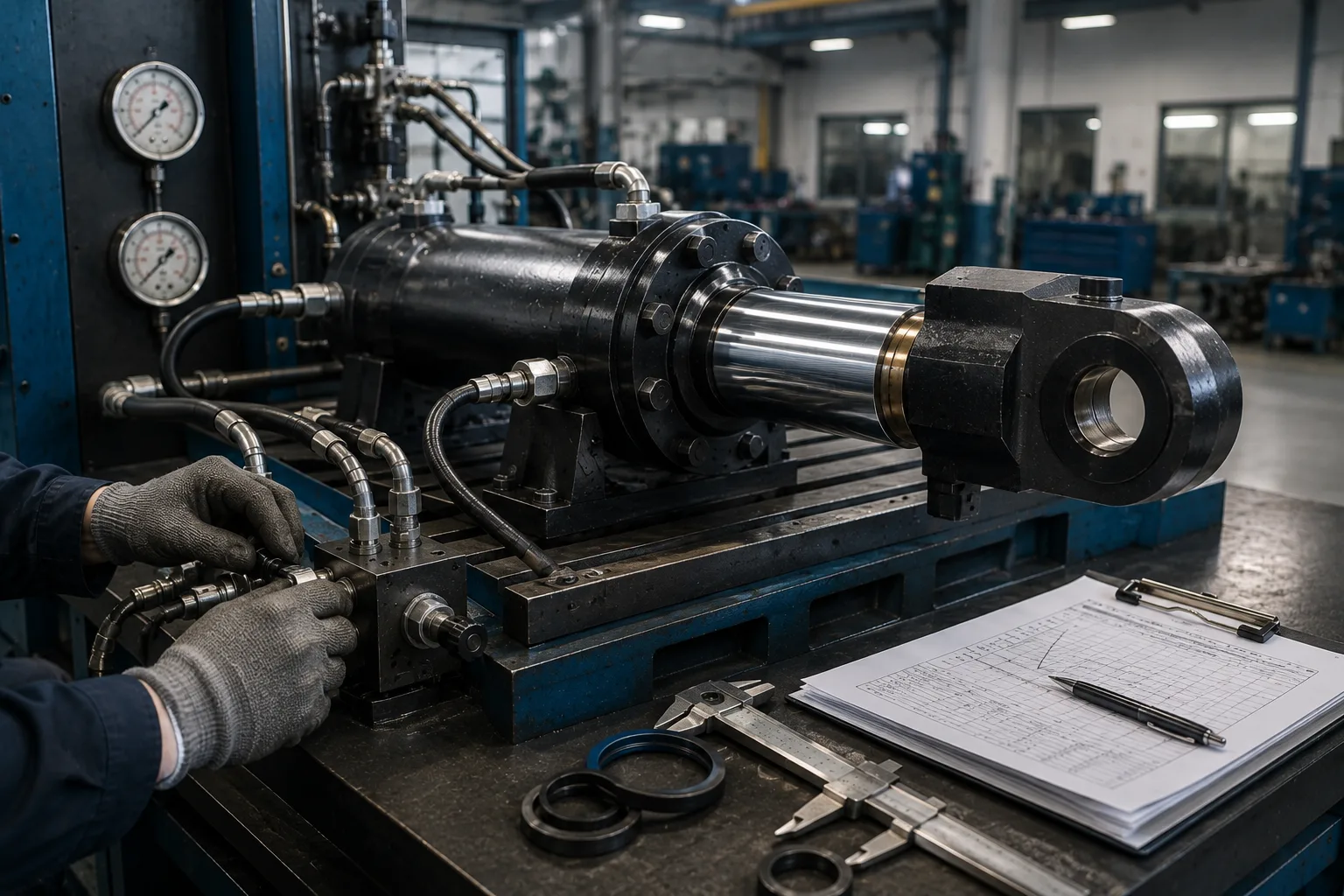
- A controlled pressure test performed above rated operating pressure to verify structural integrity and leakage behavior before shipment or installation.
- Duty cycle
- The frequency, speed, load level, and operating time pattern that determines heat, wear, fatigue, and seal life in real use.
In commercial investigation, these terms protect the buyer from under-specification. A quotation that lists only bore, stroke, and mounting style is incomplete for high-load equipment. It should also state rated pressure, test pressure, seal material, rod diameter, tube material, surface finish, and acceptance criteria.
Key Takeaways
- Standard cylinders are suitable when pressure, side load, and cycle frequency stay within controlled design limits.
- High-pressure cylinders need stronger barrels, rods, end caps, seals, and documented testing because peak pressure can exceed normal system settings.
- ISO 6020-2 is associated with 16 MPa compact metric cylinders, while ISO 6022 addresses 25 MPa metric cylinder series.
- The most common procurement mistake is selecting by bore and stroke without confirming peak pressure and duty cycle.
- When pressure class and shock load are uncertain, request proof-test records and design calculations before approving bulk production.
How should buyers compare pressure rating, wall thickness, seals, rod strength, and testing?
Buyers should compare the complete pressure system, not a single rating. A cylinder is only as reliable as its weakest pressure boundary: tube wall, welded joint, gland thread, piston seal, rod seal, end cap, port, and rod column strength must all match the same application risk.
The table below is a commercial investigation tool for procurement teams reviewing supplier proposals. It does not replace engineering calculation, but it shows what should be clarified before issuing a purchase order.
| Evaluation item | Standard cylinder expectation | Heavy-duty / high-pressure expectation | Buyer verification point |
|---|---|---|---|
| Pressure class | Often selected for moderate industrial circuits and stable operating pressure. | Selected for higher rated pressure, frequent peak pressure, and compact force-dense systems. | Ask for rated pressure, peak pressure allowance, and proof-test method. |
| Reference pressure series | ISO 6020-2 compact metric cylinders are associated with 16 MPa series dimensions. | ISO 6022 metric cylinders are associated with 25 MPa series dimensions. | Confirm whether the supplier is quoting to a recognized standard or a custom design. |
| Tube and wall design | Optimized for cost and normal fatigue life in stable circuits. | Requires higher wall strength, controlled tube quality, and stronger end closure design. | Request tube material, heat treatment if applicable, and wall calculation basis. |
| Seals and extrusion control | Standard seals are acceptable when temperature, pressure, and contamination are controlled. | May require anti-extrusion rings, higher-grade polyurethane, PTFE composite seals, or application-specific elastomers. | Check seal brand, material code, temperature range, and backup-ring arrangement. |
| Rod strength | Rod diameter may be sufficient for axial load with limited side force. | Rod size, chrome layer, surface finish, and buckling resistance become critical. | Ask for rod diameter calculation under extension length and load direction. |
| Factory testing | Functional and leakage checks may be enough for low-risk applications. | Proof pressure, holding time, drift check, and inspection records should be documented. | Require a test report linked to serial number or batch number. |
How to use this table: prioritize the verification column when two offers look similar on price; if both suppliers meet bore and stroke requirements, choose the one that documents pressure class, seal design, and testing more clearly.
When should a procurement team specify a heavy-duty cylinder instead of a standard one?
A procurement team should specify a heavy-duty cylinder when the machine combines high pressure, high load, shock, limited space, or expensive downtime. The higher upfront cost is justified when failure would stop production, damage equipment, or create a safety risk.
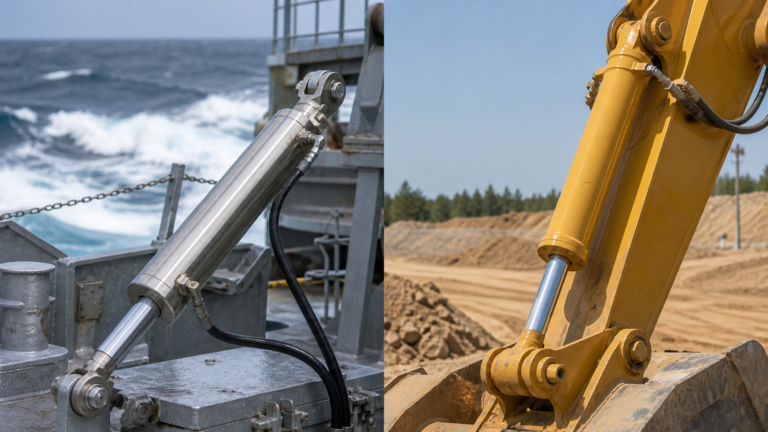
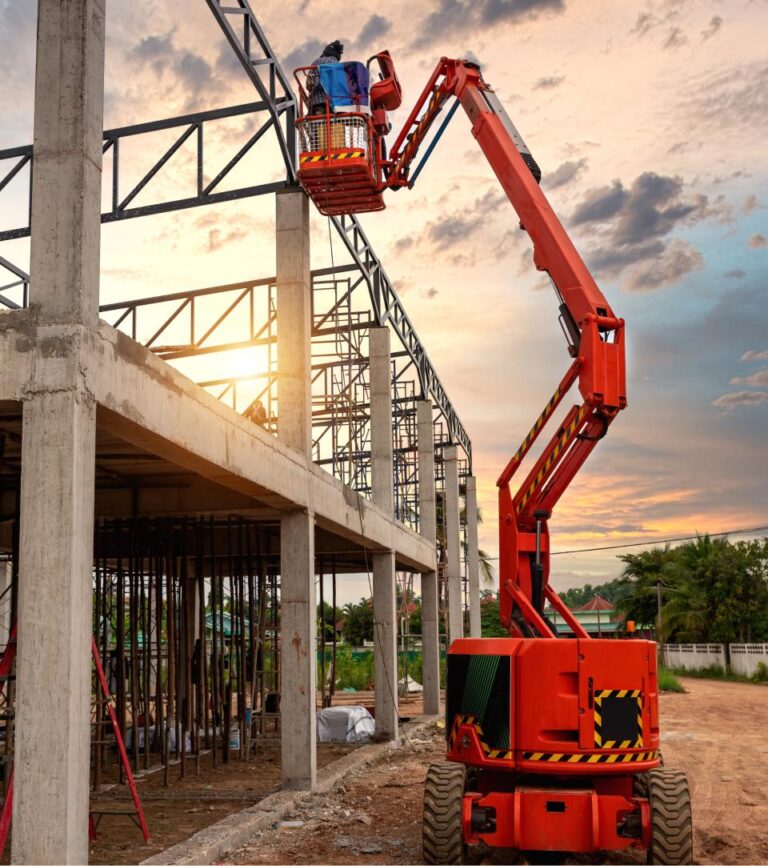
Typical applications include metal forming presses, mobile lifting equipment, mining attachments, compact construction machinery, hydraulic test rigs, industrial compactors, and equipment with rapid load reversal. These machines are not gentle on sealing systems. They often generate pressure spikes that do not appear in a basic hydraulic schematic.
The working pressure of hydraulic cylinder circuits should be separated into three numbers: normal working pressure, relief valve setting, and observed peak pressure. A data logger is ideal for field machines because the highest damaging events may last only a fraction of a second. If no measurement exists, the buyer should treat repeated impact, cylinder end-stop hitting, and sudden load drop as warning signs.
ZHY typically asks buyers to provide system pressure, peak pressure estimate, stroke, mounting style, load direction, speed, operating temperature, and cycle frequency. These details allow an engineer to avoid a false economy: saving money on a standard cylinder while accepting higher warranty, downtime, and replacement risk.
| Situation | Recommended choice | Reason | What to ask the supplier |
|---|---|---|---|
| Stable factory automation with moderate pressure and clean oil | Standard cylinder | The load path is predictable and the commercial priority is cost-effective repeatability. | Ask for dimensional standard, seal material, leakage test, and delivery consistency. |
| Pressing, compacting, lifting, or clamping near relief pressure | Heavy-duty cylinder | The cylinder may spend meaningful time near its structural and sealing limits. | Ask for rated pressure, proof pressure, tube material, rod calculation, and seal backup design. |
| Mobile machinery with impact, vibration, or load reversal | Heavy-duty cylinder with application review | Shock pressure and side force can damage rods, bushings, glands, and seals. | Ask for peak pressure assumptions, mounting pin tolerance, rod coating, and fatigue considerations. |
| Replacement cylinder for unknown field equipment | Do not copy dimensions only | The failed cylinder may already be underspecified for the real duty cycle. | Ask for failure photos, oil condition, pressure setting, cycle count, and installation angle. |
How to use this table: match the first column to the actual machine behavior, not the catalog name; if an application fits two rows, follow the higher-risk recommendation and request pressure-test documentation.
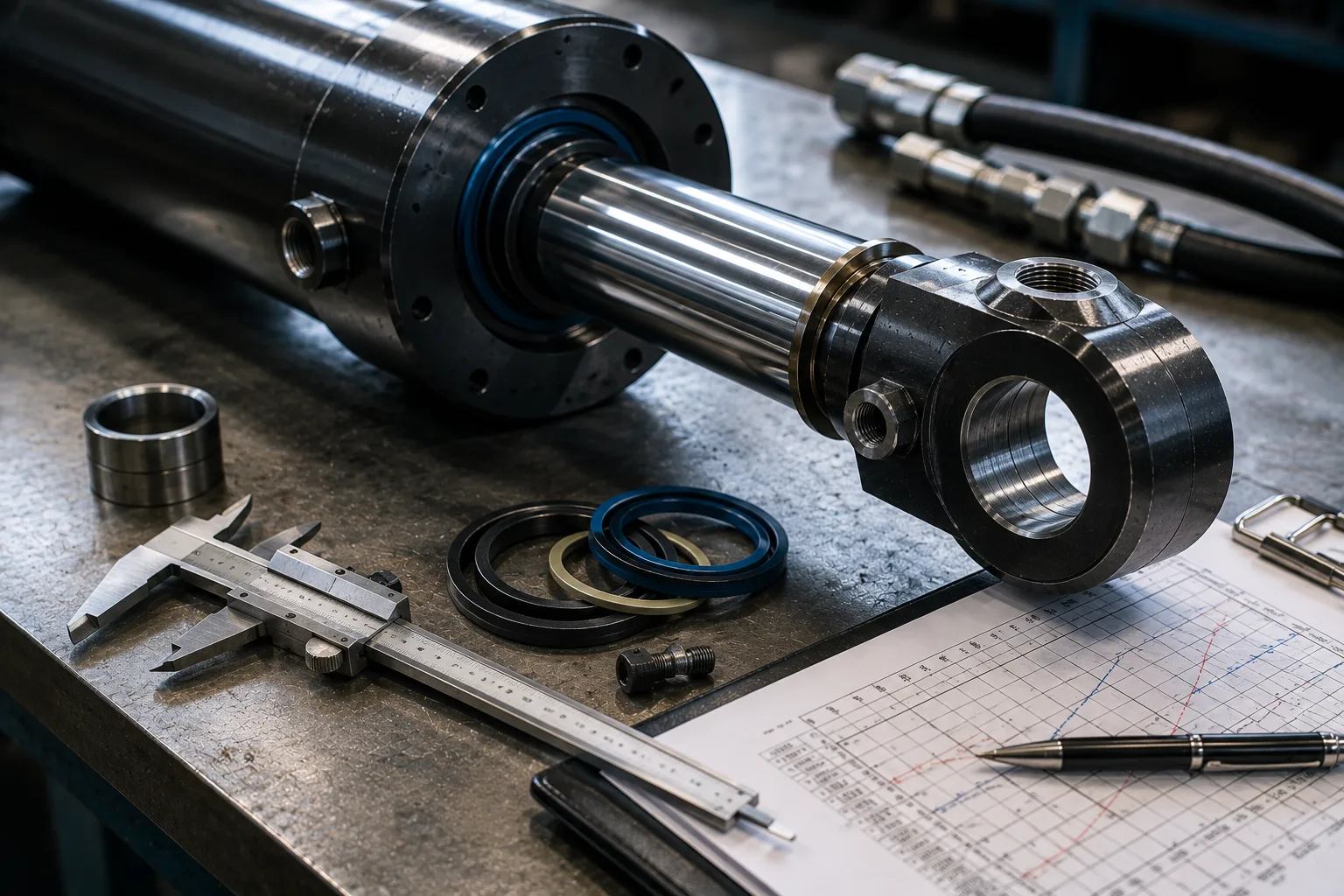
What failure happens when a standard cylinder is used in high-pressure cycles?
The most likely failures are seal extrusion, internal leakage, rod seal damage, tube deformation, end-cap movement, and fatigue cracking. These failures often begin as small leakage or drift, then become operational downtime when pressure cycling continues.
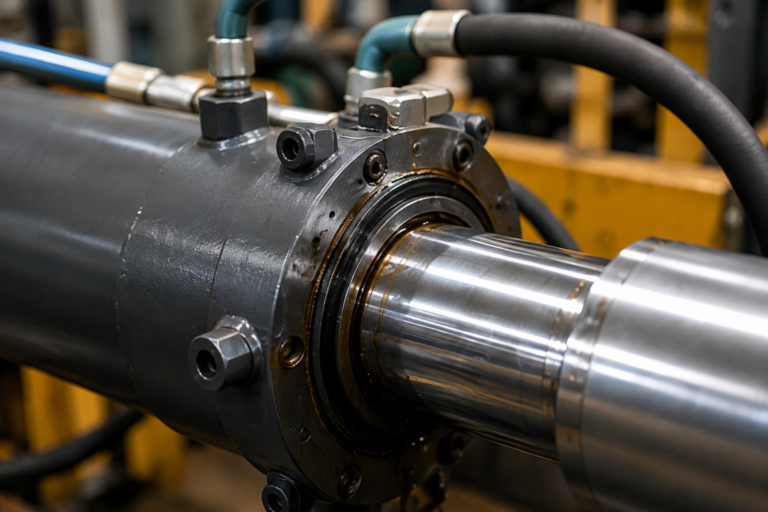
Seal failure is usually the first visible warning. At high pressure, the elastomer or polyurethane sealing lip can be forced into clearance gaps if the gland design lacks adequate support. Heat, dirty oil, and rapid speed accelerate wear. Once the seal edge is damaged, internal bypass increases and the cylinder loses holding force.
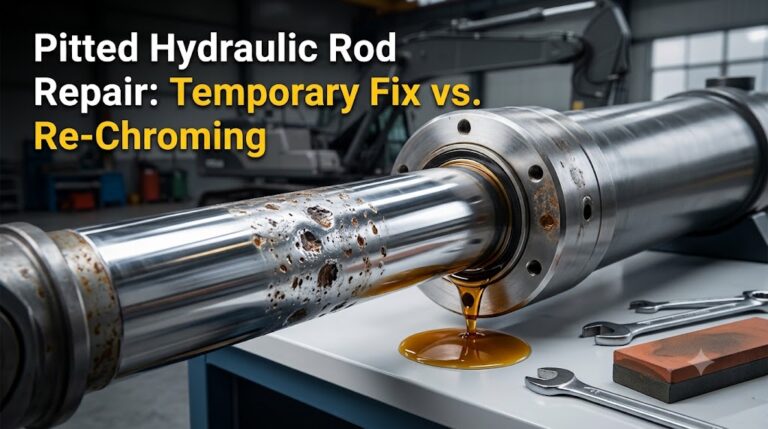
Tube damage is more expensive. If the barrel expands microscopically under repeated pressure, the piston seal geometry changes and leakage worsens. If welding, threading, or end closure design is weak, pressure cycling can concentrate stress at the joint. A heavy-duty design reduces this risk through stronger geometry, better material control, and more conservative manufacturing inspection.
Rod strength matters when the cylinder works at long extension. Even if pressure rating is adequate, a slender rod may buckle under compression or suffer side-load wear at the bushing. A purchasing team should therefore avoid approving a cylinder solely because the bore creates enough theoretical force. Force calculation must be paired with rod column strength and mounting alignment.
Best for: Standard cylinders are best for stable, well-controlled circuits; heavy-duty cylinders are best for shock-loaded machines where seal support, tube strength, and rod stiffness determine real service life.
Which standards and compliance points should appear in the specification?
The specification should identify dimensional standards, pressure class, safety expectations, and acceptance testing. Recognized standards do not remove the need for engineering review, but they make supplier quotations easier to compare and reduce the chance of ambiguous pressure claims.
ISO 4413:2010 is a central safety reference for hydraulic fluid power systems. It addresses general rules and safety requirements for systems and components, including the need to consider intended use, pressures, and safe operation. For cylinder dimensions, ISO 6020-2 and ISO 6022 are frequently relevant in metric industrial applications, while ISO 10100 defines acceptance testing for hydraulic cylinders.
ISO 3320 is useful when discussing metric cylinder bores and piston rod diameters, because it provides standardized diameter series. ISO 5598 supports consistent terminology across fluid power systems and components. For global projects, this language prevents a common purchasing problem: the buyer says “high pressure,” the supplier quotes a catalog standard, and neither side defines the actual test requirement.
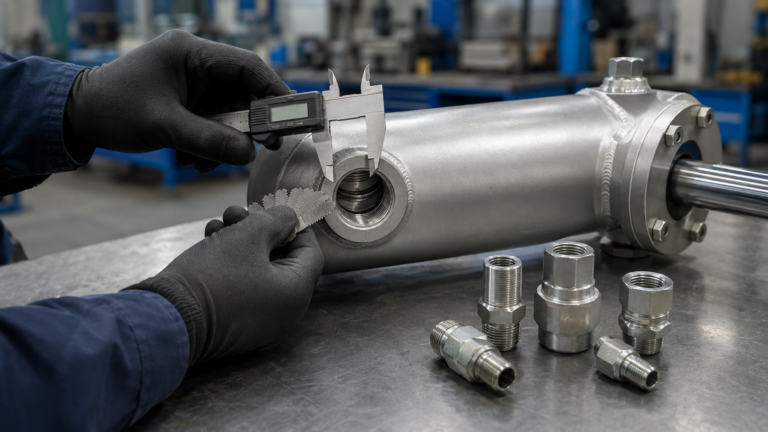
A complete RFQ should state whether the cylinder must follow a named standard or whether the supplier may propose a custom design. If custom, ask for the calculation basis and test plan. If standard, ask which standard, which pressure series, and which deviations are being made for ports, mounting, rod end, seals, coating, or stroke tolerance.
Practical asset: a pressure-grade verification checklist before ordering
This checklist is designed for procurement managers comparing cylinder quotations at MOFU stage. Use it before approving samples or bulk production, especially when replacing failed cylinders or sourcing for a new heavy-duty machine.
- Ask the engineering team for three pressure values: normal operating pressure, relief valve setting, and estimated or measured peak pressure. Do not accept “about high pressure” as a specification.
- Check the duty cycle in writing: cycles per hour, hours per day, stroke speed, holding time under load, and whether the cylinder hits end stops.
- Request the supplier’s rated pressure and proof-test pressure. Ask whether testing follows ISO 10100 or an internal procedure, and require the method on the inspection report.
- Ask for tube material, rod material, rod diameter, rod surface finish, chrome or coating specification, and seal material. Compare these items, not only the total price.
- Check installation risk: side load, pin alignment, long-stroke buckling, vibration, contamination, and oil temperature. These factors can make a nominally correct cylinder fail early.
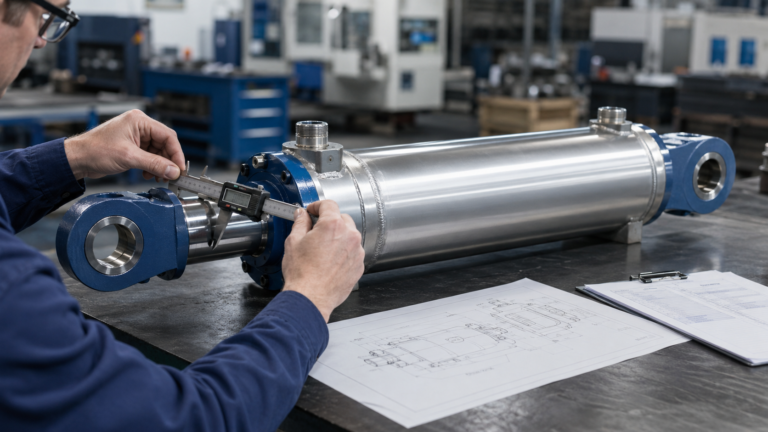
- Require a sample approval record: dimensional inspection, pressure test, leakage check, coating inspection, port inspection, and packaging review.
- For repeat orders, require batch traceability. The test report should connect to production date, batch number, or serial number so future failures can be investigated.
- If two quotations are close, choose the supplier that explains pressure margin, seal backup, and rod strength more clearly. A low price without pressure evidence is not a cost saving.
FAQ
1. What pressure is considered high pressure for a hydraulic cylinder?
There is no single universal cutoff, because pressure class depends on the cylinder standard, machine type, bore size, mounting, and safety margin. In metric industrial cylinder standards, ISO 6020-2 is associated with 16 MPa compact cylinders, while ISO 6022 is associated with 25 MPa cylinders. Many buyers begin treating the application as high pressure when the circuit operates near these higher pressure classes or sees frequent peaks, shock loads, or long holding periods under load.
2. Can I replace a high-pressure cylinder with a standard cylinder if the bore and stroke match?
No, matching bore and stroke is not enough. A standard cylinder may fit the machine physically but still lack the tube strength, rod stiffness, gland support, seal backup, and proof-test margin needed for the application. Before approving a replacement, compare rated pressure, peak pressure, rod diameter, end-cap design, seal arrangement, and mounting load. If the original cylinder failed, copying its dimensions without reviewing pressure and duty cycle may repeat the same failure.
3. Why do seals fail faster in high-pressure hydraulic cylinders?
Seals fail faster when pressure forces the sealing material into clearance gaps, especially if the gland design lacks anti-extrusion support. High temperature, contamination, rapid cycling, and pressure spikes further damage the sealing lip. In heavy-duty cylinders, suppliers often use stronger seal profiles, backup rings, and materials selected for pressure and temperature conditions. Buyers should ask for seal material, temperature range, and backup-ring configuration instead of accepting a generic standard seal description.
4. What test report should I request before buying a heavy duty hydraulic cylinder?
Request a pressure test report that identifies the cylinder model or serial number, rated pressure, proof-test pressure, holding time, leakage result, and inspector approval. ISO 10100 is a useful reference for hydraulic cylinder acceptance testing. For demanding applications, also ask for dimensional inspection, rod surface inspection, seal confirmation, port inspection, and packaging photos. The goal is not paperwork for its own sake; it is traceability if leakage, drift, or structural damage appears later.
5. What information should I send ZHY for a high-pressure cylinder quotation?
Send bore, stroke, mounting style, rod end, normal working pressure, peak pressure, relief valve setting, duty cycle, operating temperature, load direction, speed, and machine photos if available. If the cylinder is a replacement, include failure photos and any marking on the old unit. This allows ZHY to judge whether a standard design is acceptable or whether heavy-duty construction, stronger seals, larger rod diameter, or special testing is needed.
References
- ISO 4413:2010 Hydraulic fluid power — General rules and safety requirements for systems and their components, International Organization for Standardization, ISO, 2010.
- ISO 6020-2:2015 Hydraulic fluid power — Mounting dimensions for single rod cylinders, 16 MPa compact series — Part 2, International Organization for Standardization, ISO, 2015.
- ISO 6022:2015 Hydraulic fluid power — Mounting dimensions for single rod cylinders, 25 MPa series, International Organization for Standardization, ISO, 2015.
- ISO 10100:2020 Hydraulic fluid power — Cylinders — Acceptance tests, International Organization for Standardization, ISO, 2020.
- ISO 3320:2013 Fluid power systems and components — Cylinder bores and piston rod diameters and area ratios — Metric series, International Organization for Standardization, ISO, 2013.
- ISO 5598:2020 Fluid power systems and components — Vocabulary, International Organization for Standardization, ISO, 2020.
- Hydraulic Cylinders and Parts — Hydraulic Cylinder Safety, Enerpac Tool Group, Enerpac, 2024.
- Industrial Hydraulic Cylinders Product Catalog, Parker Hannifin Corporation, Parker Hannifin, 2023.
How should buyers make the final pressure-grade decision?
Buyers should make the final decision by treating pressure grade as an engineering risk filter, not as a product label. A standard cylinder is the right choice when the application has controlled pressure, clean oil, moderate speed, good alignment, and low commercial impact from replacement. A heavy-duty cylinder is the right choice when pressure spikes, shock loading, extended rods, temperature variation, or downtime costs are part of the real operating environment.
The strongest purchasing evidence is a complete pressure profile. ISO 4413 reinforces the need to consider safe operation of hydraulic systems and components, while ISO 10100 gives buyers a practical route to acceptance testing. ISO 6020-2 and ISO 6022 also show why dimensional standards and pressure series should be discussed together: a cylinder can share a familiar mounting style but still belong to a different pressure class.
From a market perspective, equipment builders are asking cylinders to deliver more force in smaller envelopes. Compact mobile machinery, automated presses, recycling equipment, and energy-related maintenance tools increasingly favor dense hydraulic force because space is limited and productivity targets are higher. That trend makes under-specification more costly. A cylinder that was acceptable in an older, slower machine may not survive the same bore and stroke in a faster system with higher peak pressure.
The best option is therefore not the thickest or most expensive cylinder by default. The best option is the lowest-risk design that can prove its margin against actual pressure, load, and duty cycle. For a procurement manager, that means asking for system pressure, peak pressure, relief setting, rod calculation, seal arrangement, and proof-test records before comparing unit prices. If those details are unavailable, the safer commercial position is to pause the order and collect the data, because a failed cylinder can cost far more than the price difference between standard and heavy-duty construction.
For ZHY projects, this decision process keeps the quotation objective. It avoids overselling heavy-duty designs where a standard unit is sufficient, but it also prevents the more serious mistake: using a standard cylinder in high-pressure cycles where seal failure or tube damage is predictable.