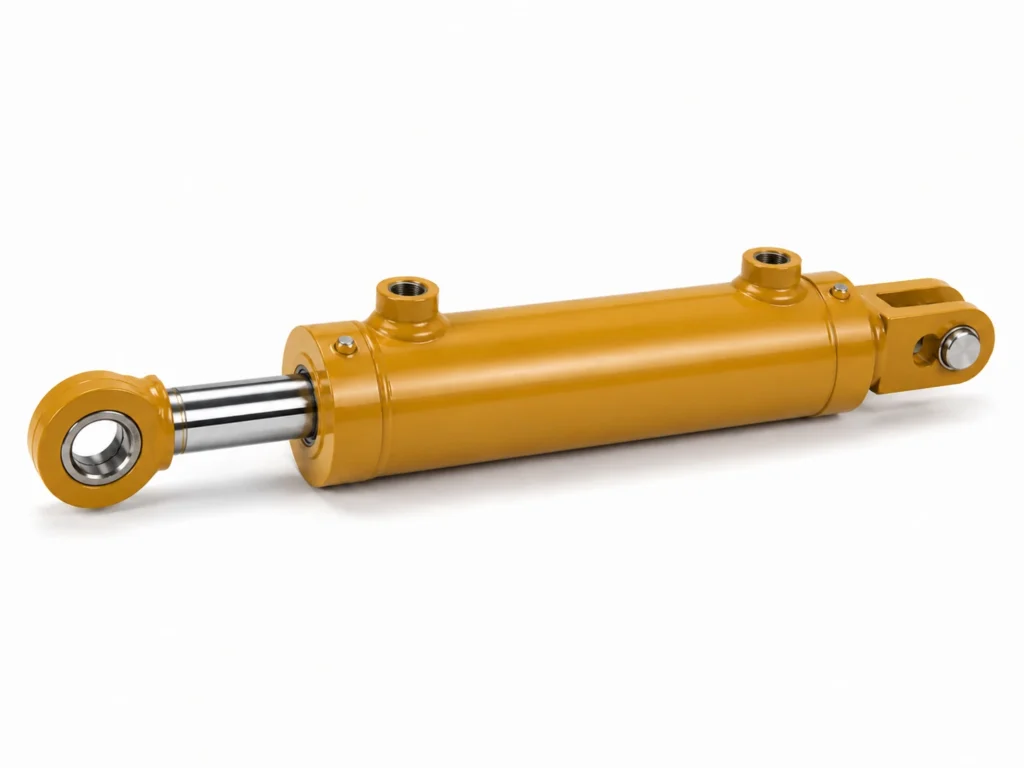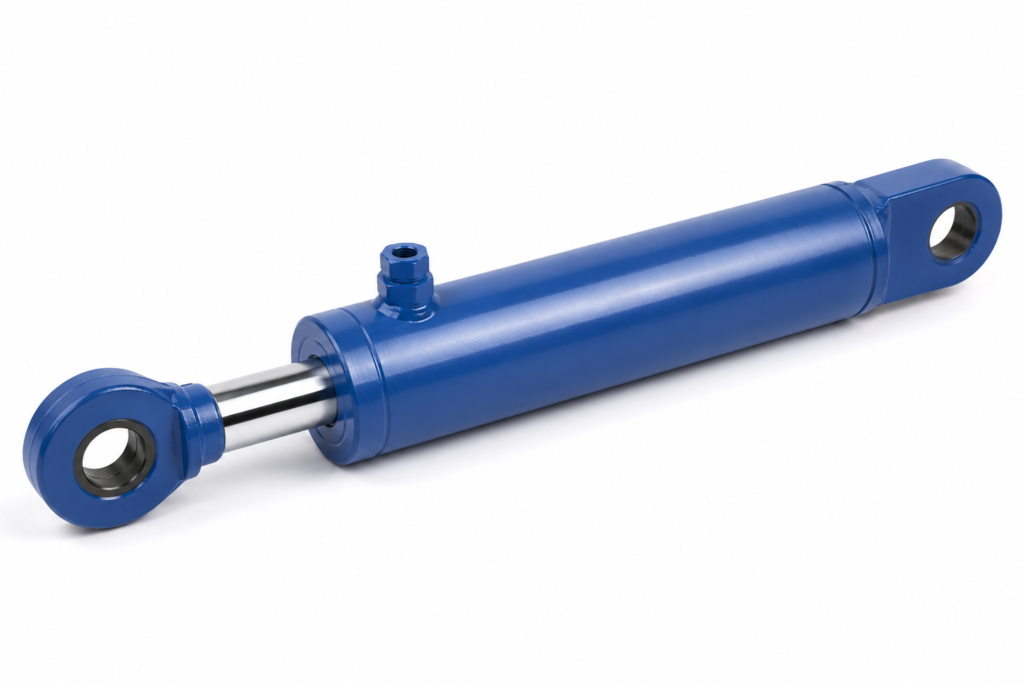
Why do many lifting calculations fail before the cylinder is ordered?
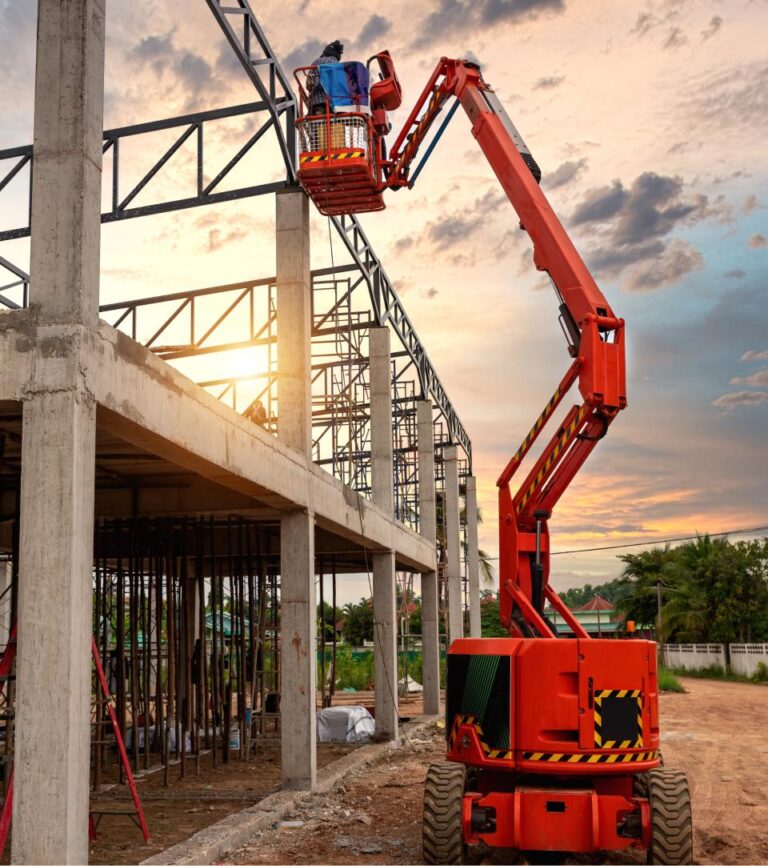
The calculation often fails because the buyer checks the vertical load but ignores how the cylinder is mounted. A cylinder does not automatically deliver all rated force upward; it delivers force along its own centerline, so an angled installation reduces the useful vertical lifting component.
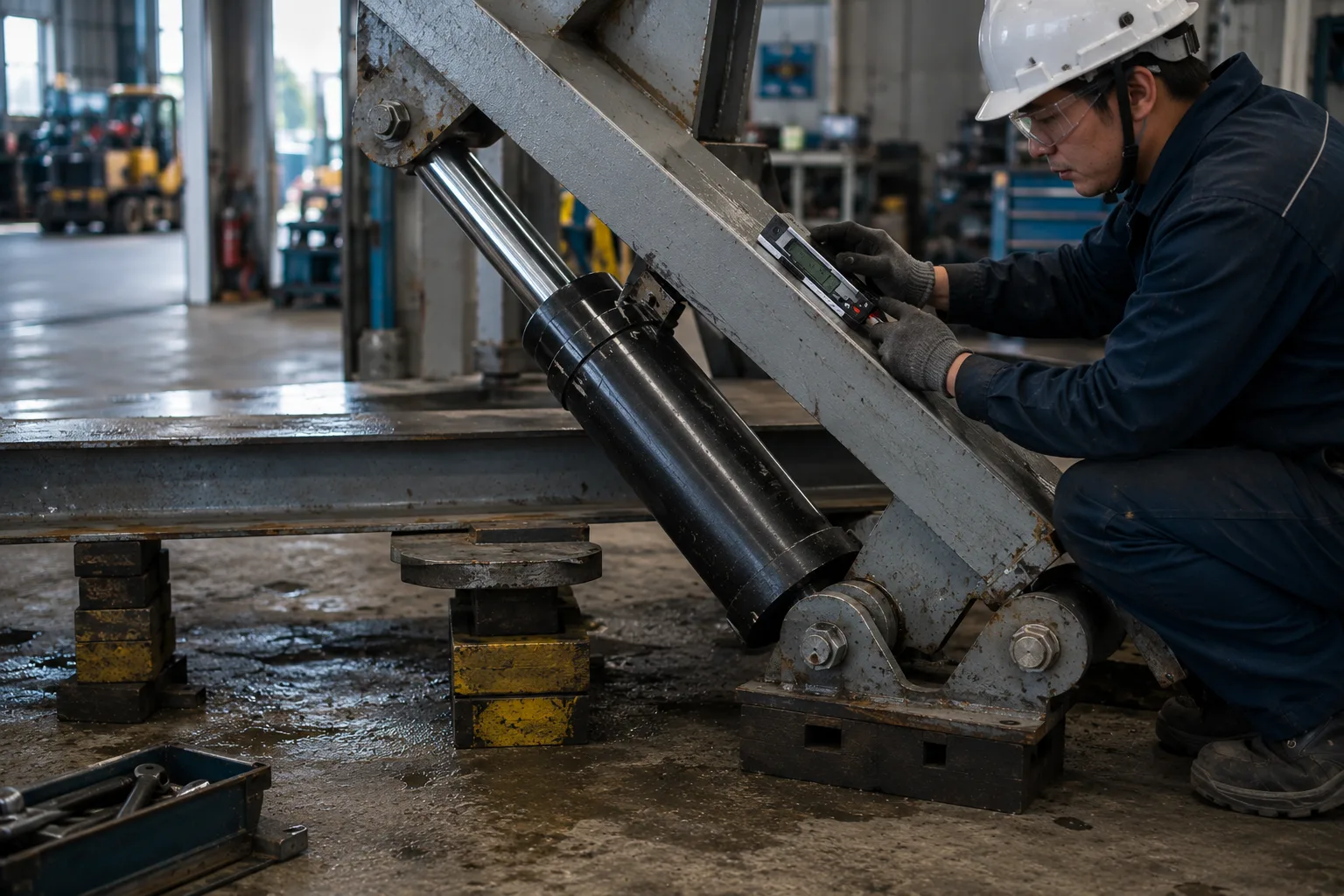
Picture a maintenance contractor lifting one side of a 12-ton machine base with a cylinder mounted inside a hinged bracket. If the cylinder axis is 40 degrees above horizontal, only the vertical component of its force is doing the lifting. The remaining force pushes sideways into pins, brackets, guides, and the machine frame.
This is the mistake that creates undersized cylinders and unsafe field behavior. A catalog may say a cylinder can generate 20 tons, but the actual lift may be far lower if geometry is wrong, friction is high, or the load is not centered. For project contractors, equipment builders, and maintenance teams, the safer decision is to calculate force, convert force to tons, then check the load path.
In ZHY selection discussions, the first useful question is not “How many tons is the load?” It is “At what angle does the cylinder apply force when the load starts moving?” Starting angle usually produces the worst case because the lever arm, pin friction, and side loading are often least favorable at the beginning of the stroke.
What is the basic formula for cylinder force in tons?
The basic answer is simple: piston force equals hydraulic pressure multiplied by piston area, and tonnage equals that force divided by 2,000 when using US short tons. This gives the theoretical cylinder force in tons before subtracting angle losses, friction, pressure drop, and safety margin.
Hydraulic cylinder tonnage is the rated push or pull force produced when pressurized fluid acts on the piston area inside the cylinder. In US customary calculations, pressure is commonly expressed in pounds per square inch, area in square inches, force in pounds-force, and tonnage in short tons.
Use these formulas for a single-acting or double-acting cylinder on the extend side:
Piston area = 3.1416 × bore diameter² ÷ 4
Force in pounds-force = pressure × piston area
Force in short tons = force in pounds-force ÷ 2,000
For the retract side of a double-acting cylinder, subtract the rod area from the piston area because the rod occupies part of the pressure surface. That means retract force is always lower than extend force when pressure is the same.
- Bore diameter
- The internal diameter of the cylinder barrel; it determines piston area and has the largest effect on theoretical force.
- Working pressure
- The hydraulic pressure available during operation, not simply the pump’s maximum printed rating.
- Short ton
- A US force conversion basis of 2,000 pounds-force; do not confuse it with metric tonne-force.
- Effective lifting force
- The useful force component acting in the lifting direction after correcting for cylinder angle and load path.
Key Takeaways
- How to calculate hydraulic cylinder tonnage: multiply PSI by piston area, then divide pounds-force by 2,000 for short tons.
- An angled cylinder must be checked by effective lifting force, not by catalog tonnage alone.
- Retract force is lower than extend force on double-acting cylinders because rod area reduces pressure area.
- Side load, pin alignment, pressure drop, and friction can turn a mathematically adequate cylinder into a field risk.
- For lifting applications, confirm geometry, safety blocking, pressure rating, and applicable standards before selecting the cylinder.
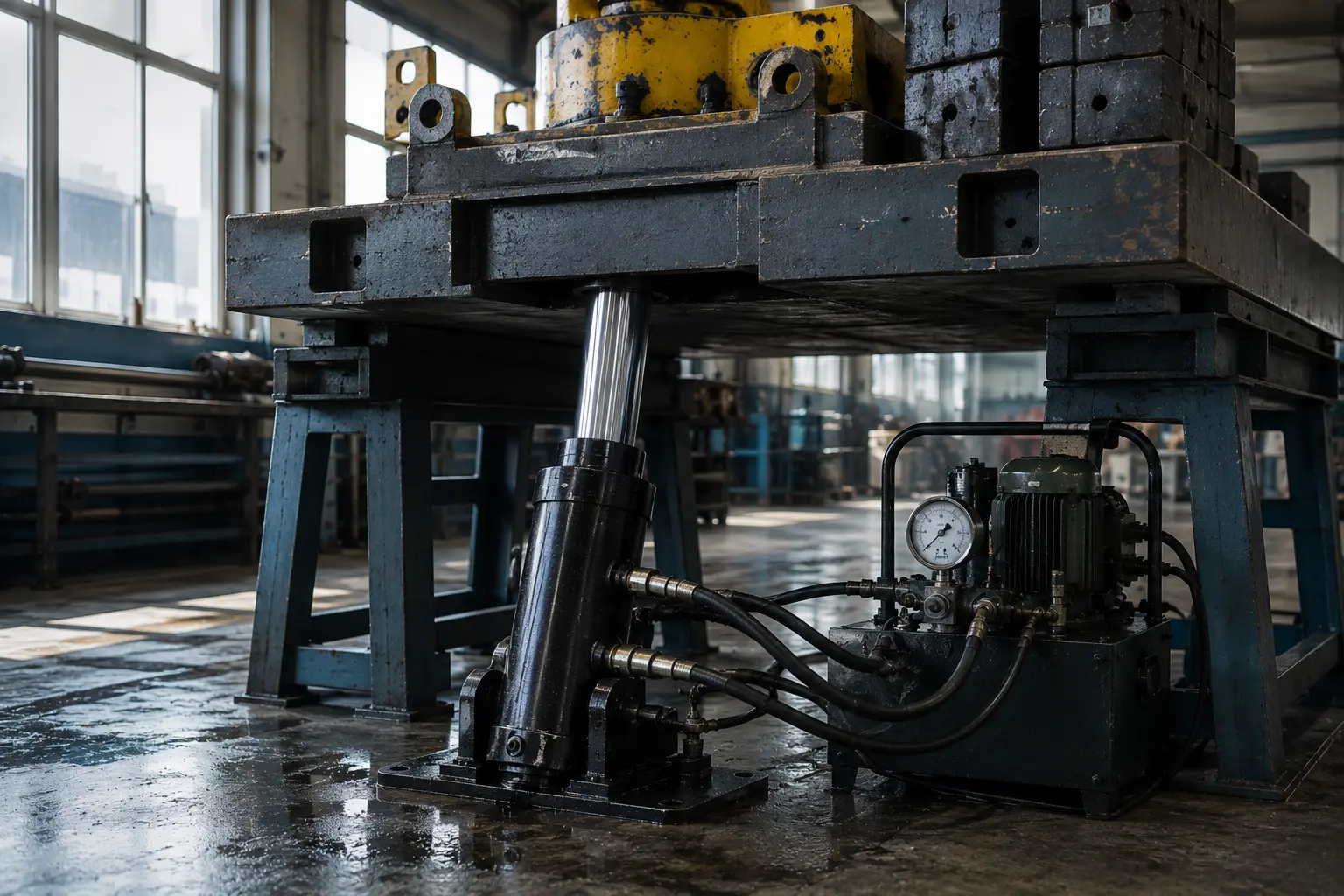
How do you convert PSI and bore size into hydraulic cylinder lifting capacity?
To convert PSI and bore size into hydraulic cylinder lifting capacity, calculate piston area from bore diameter, multiply by pressure, then convert pounds-force to tons. The table below uses short tons and shows why bore size changes capacity faster than many buyers expect.
The values are calculated from the standard force relationship used across hydraulic manufacturers: force equals pressure multiplied by area. The 10,000 psi column is relevant to many high-pressure industrial hydraulic tools, while 3,000 psi represents a common industrial hydraulic design pressure. Always verify the actual pressure rating of the cylinder, hose, couplers, pump, valves, and fittings as a complete system.
| Cylinder bore | Piston area | Force at 3,000 psi | Force at 10,000 psi | Selection note |
|---|---|---|---|---|
| 2 in | 3.14 sq in | 4.7 short tons | 15.7 short tons | Useful for compact pushing or light lifting, not heavy off-center loads. |
| 3 in | 7.07 sq in | 10.6 short tons | 35.3 short tons | Good middle range when stroke and mounting space are limited. |
| 4 in | 12.57 sq in | 18.8 short tons | 62.8 short tons | Often considered when the load is heavy or the cylinder angle is unfavorable. |
| 5 in | 19.63 sq in | 29.5 short tons | 98.2 short tons | Requires careful checks on structure, pins, hoses, and pump flow. |
How to use this table: start with the pressure your system can safely sustain, then compare bore size against the required force; if two options are close, choose the larger bore only after checking space, stroke speed, mounting strength, and side-load risk.
The table is a calculation aid, not a product rating. Real cylinders also need a rated maximum pressure, proof testing by the manufacturer, compatible hydraulic oil, seal material suited to temperature, and a mounting method that does not create bending stress on the rod.
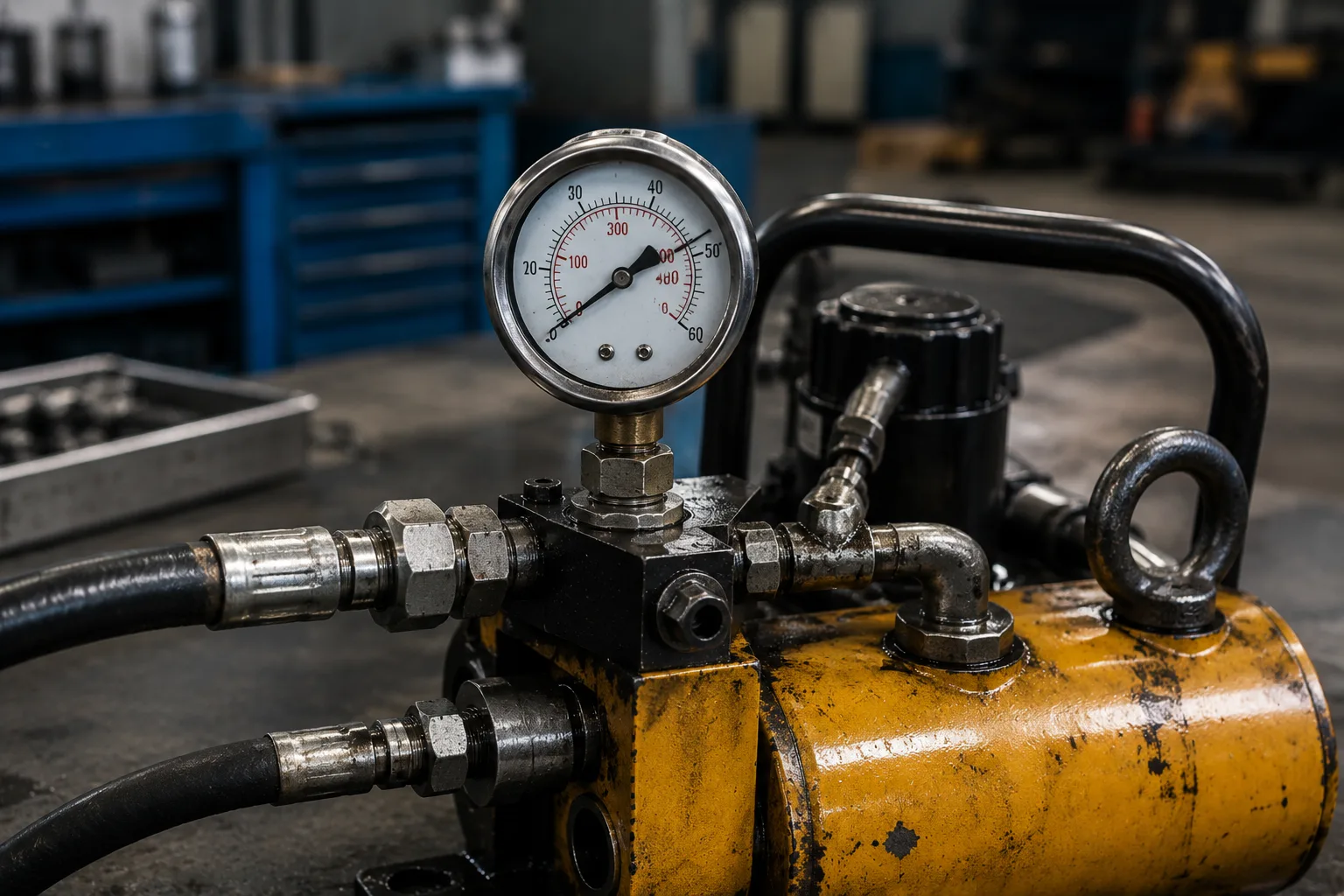
How does cylinder angle change the real lifting force?
Angle changes the answer because a cylinder pushes along its centerline, while the load usually needs vertical movement. If the cylinder is mounted at an angle, calculate the vertical component of force rather than assuming the full catalog rating lifts the load.
If the angle is measured from horizontal, use Vertical force = cylinder force × sin(angle). If the angle is measured from vertical, use Vertical force = cylinder force × cos(angle). These two formulas describe the same physical idea; the only difference is where the angle measurement starts.
For example, a cylinder producing 20 short tons along its axis provides only about 10 short tons of vertical lift at 30 degrees above horizontal because sin(30°) = 0.5. At 60 degrees above horizontal, the useful vertical component rises to about 17.3 short tons. The cylinder did not change; the geometry changed.
This is the buyer decision logic that matters most in hinged lifts, dump bodies, tilt tables, press fixtures, mobile service tools, and maintenance jacking. If the cylinder lifts at an angle, calculate effective force, not only vertical load. Then check the bracket and pin loads because the horizontal component still exists and still stresses the structure.
| Situation | Main risk | Recommended calculation | Procurement action |
|---|---|---|---|
| Cylinder nearly vertical | Overlooking friction or pressure drop | Use full axial force, then subtract practical losses. | Confirm rated pressure, stroke, mounting, and safety factor. |
| Cylinder 30–45 degrees from horizontal | Useful lift is much lower than catalog tonnage | Use vertical component based on sine of the angle. | Increase bore, change mounting geometry, or use a linkage redesign. |
| Long stroke with side load | Rod bending, seal wear, and guide damage | Check force plus buckling and side-load limits. | Request engineering review, guided mechanism, or trunnion mounting. |
| Load shifts during lifting | Peak force occurs away from the starting position | Calculate several stroke positions, not one static point. | Ask for a geometry review before releasing purchase order. |
How to use this table: match your installation geometry to the left column first, then prioritize the calculation column before price; when two recommendations seem similar, choose the option that reduces side load and improves the starting-angle force.
What real-world parameters should be checked before choosing a cylinder?
The correct cylinder is selected by force, geometry, pressure rating, stroke, mounting style, and safety requirements together. Bore size creates force, but the installation decides whether that force can be used safely.
- Bore size: larger bore increases force at the same pressure but may reduce speed if pump flow is unchanged.
- Stroke length: longer stroke increases reach but may increase buckling risk, especially when pushing without guidance.
- Rod diameter: larger rod improves column strength but reduces retract-side area on double-acting cylinders.
- Rated pressure: the weakest rated component in the circuit limits safe system pressure.
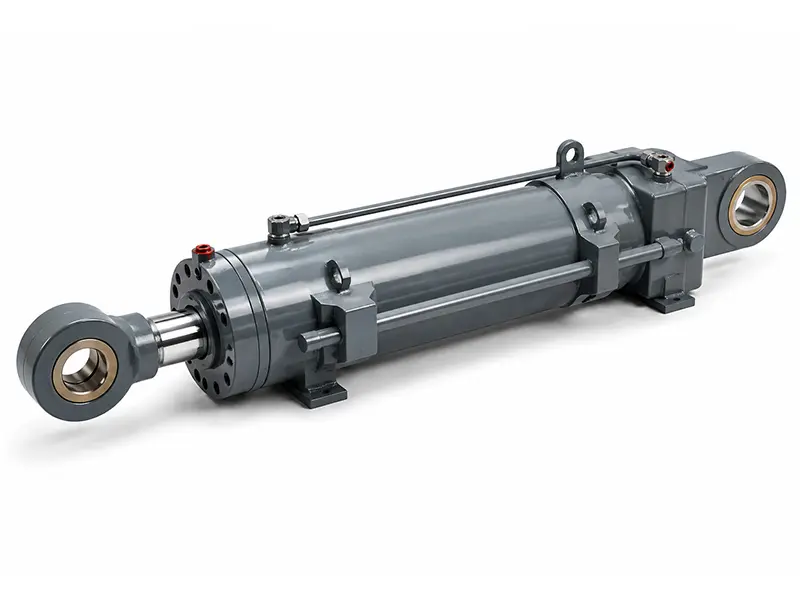
- Mounting style: clevis, flange, trunnion, and base mounts transfer loads differently into the machine frame.
- Seal and oil compatibility: temperature, oil type, and duty cycle influence leakage, friction, and service life.
A procurement manager should also ask whether the cylinder will hold a suspended load. If yes, the system may need load-holding valves, mechanical locking, cribbing, or another positive support method. Hydraulic pressure alone should not be treated as a permanent support for personnel safety or maintenance work.
For ZHY customers comparing customized cylinders, the most useful drawing package includes bore, rod, stroke, retracted length, extended length, pin diameter, mounting width, working pressure, proof pressure expectation, surface treatment, seal type, and operating temperature range. Without these details, two quotes that appear similar may represent very different safety and service outcomes.
Which standards and safety rules affect hydraulic lifting applications?
Hydraulic lifting applications are not only engineering calculations; they are safety-controlled operations. The most relevant requirements usually concern machine safety, hydraulic system design, jacks, lockout, rated components, and safe maintenance practices.
ISO 4413:2010 gives general rules and safety requirements for hydraulic fluid power systems and components. ISO 12100:2010 provides the risk assessment framework used broadly in machinery safety. For jacks and similar lifting devices, ASME B30.1 is a key US reference for jacks, industrial rollers, air casters, and hydraulic gantries.
In workplaces, OSHA requirements become important when hydraulic equipment is used for maintenance, servicing, or energy control. OSHA 29 CFR 1910.147 addresses control of hazardous energy, and OSHA 29 CFR 1910.244 includes provisions for portable powered tools and jacks. These references reinforce a practical rule: the cylinder calculation is only one layer of safety.
For purchasing, ask for rated pressure information, proof-test documentation where applicable, material traceability for critical parts, assembly inspection records, and user instructions. When a cylinder will be used near personnel or valuable equipment, a lower-priced unit without documentation can become the most expensive option on the project.
What trends are changing cylinder selection for lifting projects?
The trend is toward more documented, application-specific selection instead of buying by nominal tonnage alone. Buyers increasingly request geometry checks, CAD confirmation, pressure-test records, surface treatment details, and packaging suitable for international shipment or long-term storage.
In factory maintenance and equipment retrofit projects, teams are also paying closer attention to compact cylinders that fit existing structures. Compactness creates a trade-off: small cylinders may require higher pressure to produce the same force, and high-pressure systems demand stricter compatibility across hoses, couplers, gauges, valves, and seals.
Another shift is the use of sensors and digital inspection records. Position sensors, pressure transducers, and load monitoring are more common in automated equipment and lifting fixtures because they help operators see whether the cylinder is behaving as calculated. This does not replace mechanical safety, but it improves diagnosis when loads bind, linkages wear, or pressure rises unexpectedly.
For importers and OEM buyers, the sourcing trend is clear: ask suppliers to confirm application geometry before the order is finalized. A cylinder quote based only on bore, stroke, and pressure is incomplete when the cylinder works at an angle or carries a changing load through a linkage.
Practical Asset: a step-by-step checklist before ordering a hydraulic lifting cylinder
Use this checklist before requesting a quotation or approving a drawing. It is designed for procurement managers, engineering buyers, and contractors who need a repeatable way to prevent undersized cylinders and unsafe installations.
- State the load clearly: ask the project team for maximum load weight, load center, expected movement path, and whether the load can shift during lifting.
- Record the geometry: measure the cylinder angle at the starting position, mid-stroke, and final position; mark whether the angle is measured from horizontal or vertical.
- Calculate theoretical force: use pressure multiplied by piston area, then convert pounds-force into short tons using 2,000 pounds-force per short ton.
- Calculate effective force: apply sine or cosine correction based on the cylinder angle and compare the useful force with the required lifting force.
- Check retract force if relevant: for double-acting cylinders pulling a load, subtract rod area from piston area before calculating force.
- Ask for rated-pressure proof: request the cylinder rated pressure, compatible hose and coupler ratings, pressure gauge range, and any available test documentation.
- Review side-load risk: check whether the rod is guided, whether pins are aligned, and whether the mounting brackets can absorb horizontal force.
- Confirm safety method: require mechanical blocking, load-holding valves, locking collars, or other positive support when personnel or equipment could be exposed.
- Verify standards context: ask which safety and hydraulic design standards the supplier used when reviewing the application.
- Freeze the drawing before production: approve bore, rod, stroke, mount, pin size, port type, seal material, surface coating, and packaging requirements in writing.
FAQ
1. How do I calculate hydraulic cylinder tonnage from PSI?
Calculate piston area from the cylinder bore, multiply that area by hydraulic pressure in PSI, then divide the result by 2,000 to get short tons. For example, a 4-inch bore has about 12.57 square inches of area. At 3,000 PSI, theoretical force is about 37,700 pounds-force, or 18.8 short tons. This is theoretical extend force only. For a real lift, also check cylinder angle, pressure drop, friction, mounting strength, and a suitable safety margin before selecting the cylinder.
2. Is hydraulic cylinder lifting capacity the same as load weight?
No. Hydraulic cylinder lifting capacity is the force the cylinder can generate under rated pressure and usable geometry. Load weight is only the vertical force that must be lifted. If the cylinder pushes at an angle, only part of the cylinder force acts upward. If the mechanism has friction, side loading, or a shifting load center, required force can be higher than the load weight suggests. This is why buyers should calculate effective force rather than comparing catalog tonnage directly with the load.
3. Why is retract force lower than extend force in a double-acting cylinder?
Retract force is lower because the rod occupies part of the piston area on the rod side of the cylinder. Hydraulic pressure acts only on the remaining annular area, so the same PSI produces less force during retraction than extension. The correct calculation is pressure multiplied by piston area minus rod area. This difference matters when a cylinder pulls a linkage, clamps a fixture, or lowers a controlled load using hydraulic pull force.
4. What safety factor should I use for a hydraulic lifting cylinder?
There is no single universal safety factor that fits every hydraulic lifting application. The correct margin depends on the equipment type, applicable standards, load uncertainty, duty cycle, personnel exposure, and consequences of failure. For safety-critical lifting, buyers should not rely on a formula alone. They should follow relevant standards such as ISO 4413, ASME B30.1 where applicable, OSHA workplace requirements, and the equipment designer’s risk assessment.
5. What information should I send a supplier before buying a cylinder?
Send the supplier the load weight, starting angle, full stroke geometry, required stroke, bore preference if known, available system pressure, mounting style, pin dimensions, operating temperature, duty cycle, and whether the cylinder will hold a suspended load. Include photos or drawings of the mechanism if possible. For ZHY or any qualified supplier, this information allows an engineering review that checks effective force, side-load risk, pressure compatibility, and manufacturability before production.
References
- Hydraulic Basics, Enerpac, Enerpac, 2024.
- Cylinder Force and Speed Calculations, Parker Hannifin, Parker Hannifin Corporation, 2023.
- The Hydraulic Trainer, Volume 1: Basic Principles and Components of Fluid Power, Bosch Rexroth, Bosch Rexroth AG, 2011.
- ISO 4413:2010 Hydraulic fluid power — General rules and safety requirements for systems and their components, International Organization for Standardization, ISO, 2010.
- ISO 12100:2010 Safety of machinery — General principles for design — Risk assessment and risk reduction, International Organization for Standardization, ISO, 2010.
- ASME B30.1-2023 Jacks, Industrial Rollers, Air Casters, and Hydraulic Gantries, ASME B30 Committee, American Society of Mechanical Engineers, 2023.
- 29 CFR 1910.244(a), Other portable tools and equipment, Occupational Safety and Health Administration, U.S. Department of Labor, 2024.
- 29 CFR 1910.147, The control of hazardous energy, Occupational Safety and Health Administration, U.S. Department of Labor, 2024.
- NIST Special Publication 811: Guide for the Use of the International System of Units, Ambler Thompson and Barry N. Taylor, National Institute of Standards and Technology, 2008.
How should buyers turn cylinder tonnage calculations into a safe selection decision?
The safest way to use tonnage calculations is to treat them as the first filter, not the final purchase approval. The formula tells you what force a cylinder can theoretically produce at a given pressure and bore size. The application decides how much of that force becomes useful work.
Start with the “what”: define the load, motion, pressure, bore, stroke, and mounting. Then move to the “how”: calculate piston area, pressure force, and short-ton force, and repeat the calculation for the retract side if the cylinder pulls. After that, answer the “why”: why is this cylinder mounted at this angle, why is the load path safe, and why will the structure tolerate the horizontal force component?
The strongest buying option is not always the cylinder with the largest advertised tonnage. A larger bore may slow the cycle if pump flow is limited, increase package size, overload brackets, or require heavier hoses and fittings. A smarter option may be a geometry change that lets a smaller cylinder work more vertically, or a guided mechanism that removes side load from the rod.
For compliance and risk control, connect the calculation with recognized safety references. ISO 4413 frames hydraulic system safety requirements, ISO 12100 supports machinery risk assessment, ASME B30.1 applies to many jack-related lifting contexts, and OSHA rules matter when equipment is used in workplace maintenance. These sources do not replace engineering judgment, but they help buyers ask better questions before money is committed.
The clear recommendation is this: before selecting a lifting cylinder, confirm application geometry in writing. If the cylinder lifts at an angle, calculate effective force at the worst stroke position. If the load is suspended or personnel may be exposed, require a mechanical safety method in addition to hydraulic pressure. That is how hydraulic cylinder lifting capacity becomes a reliable engineering decision rather than a risky catalog assumption.