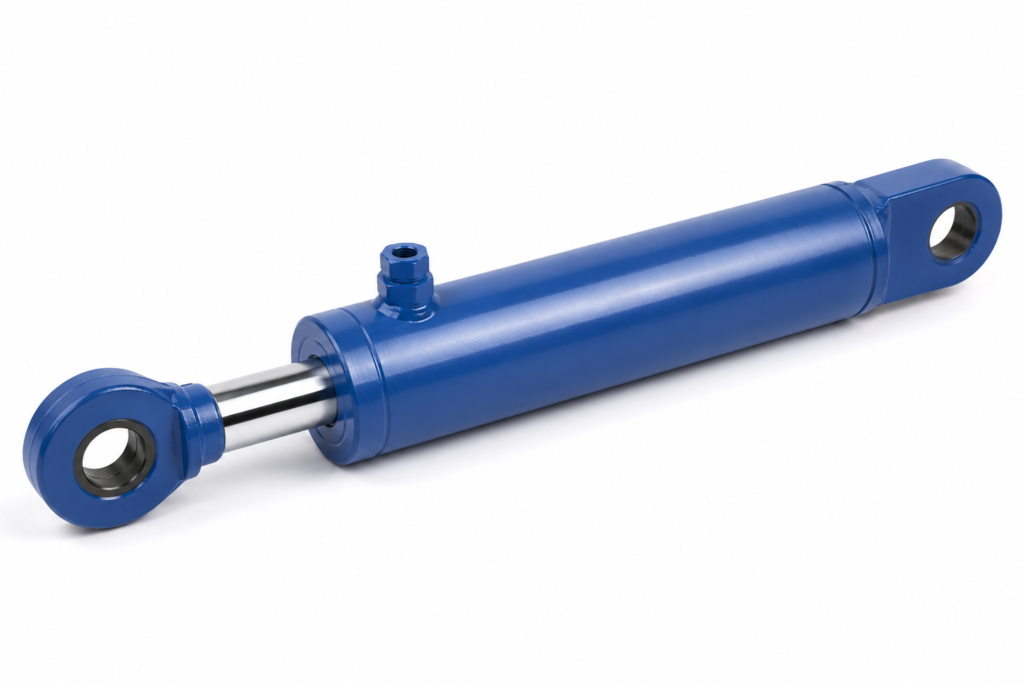
Why do repeated cylinder failures usually point to one component, not the whole cylinder?
Repeated leakage, scoring, drift, or broken mounts usually starts with one mismatched component: the wrong seal profile, a rough or bent rod, a contaminated barrel, an undersized port, or a mount that forces side load into the piston. Treating every cylinder as a standard assembly hides the root cause and shortens service life.
A technician often sees the symptom first: oil around the gland, a rod that retracts slowly, or a machine boom that cannot hold position. The useful question is not only “What size is the cylinder?” but “Which component is carrying pressure, guiding movement, sealing fluid, or absorbing load?” That component-level view helps procurement managers, maintenance teams, and engineering buyers confirm a replacement before downtime expands.
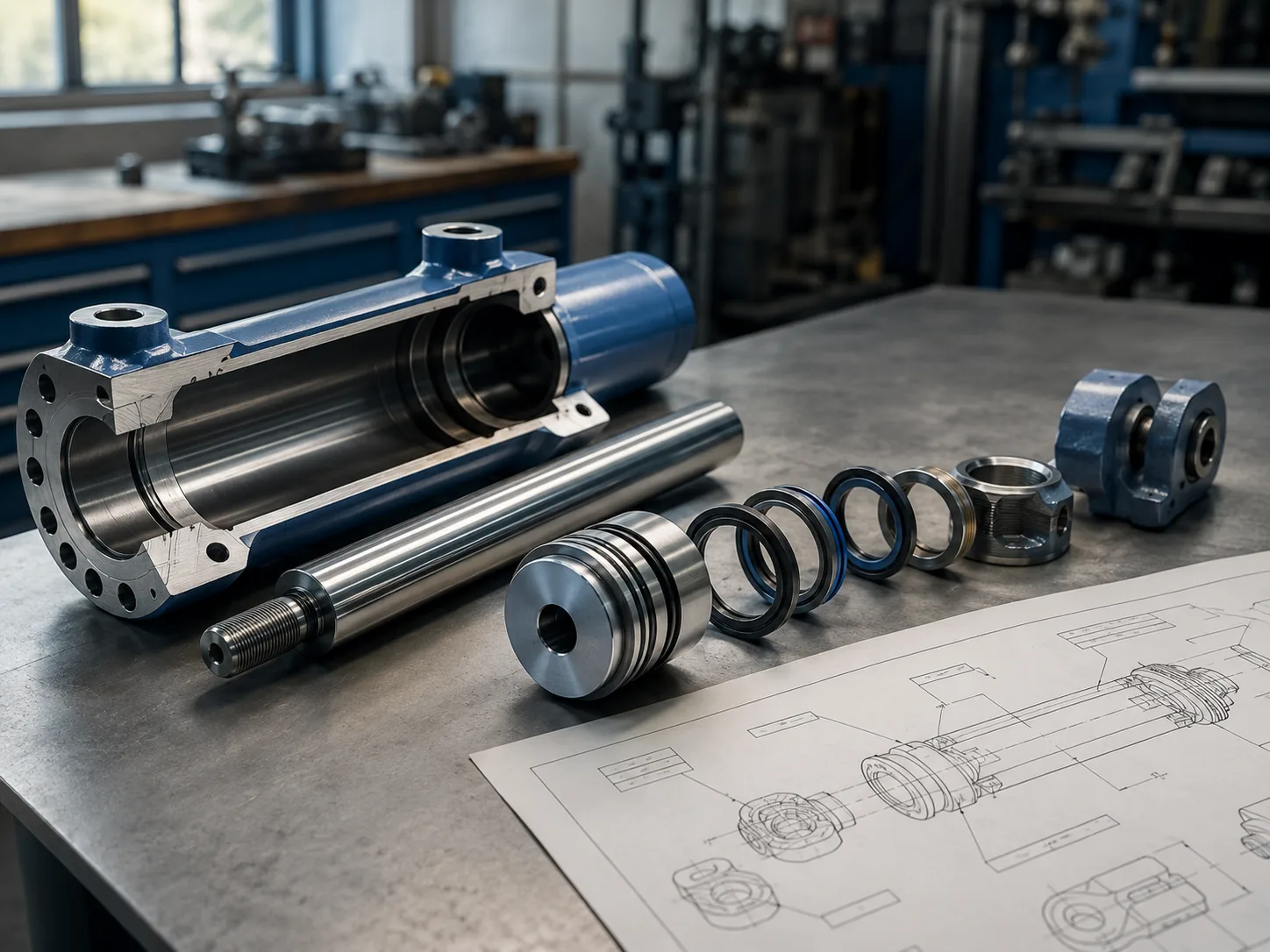
The definition is straightforward: hydraulic cylinder components are the barrel, rod, piston, end caps, gland, seals, ports, fasteners, and mounts that together create a sealed pressure chamber and controlled linear motion. Each part has a different failure signature, so inspection should follow the oil path and the load path rather than the catalogue picture alone.
For example, external leakage at the rod end may look like a seal problem, but the cause can be a damaged chrome surface, poor wiper performance, excessive pressure spikes, or abrasive contamination. Internal drift may look like valve leakage, yet a worn piston seal or scored bore can allow fluid to bypass the piston. A broken clevis may not be a mounting material problem; it may come from misalignment that forces bending into the rod.
Key Takeaways
- The barrel contains pressure, while the rod and piston control motion, guidance, and load transfer.
- Rod-end leakage is not always a seal-only issue; surface finish, contamination, and side load must be checked together.
- ISO 3320 defines metric bore and rod diameter series, helping buyers avoid nonstandard sizing surprises during replacement.
- ISO 4406 fluid cleanliness coding is directly relevant because hard particles damage seals, rods, and barrel surfaces.
- Before quotation, photos, drawings, pressure rating, stroke, mounting style, and port details reduce the risk of receiving the wrong cylinder.
What does the barrel do, and why does bore quality matter?
The barrel is the pressure tube that forms the cylinder bore and guides the piston, so its inside diameter, roundness, straightness, and surface condition decide whether the cylinder can hold pressure without excessive friction or bypass. A good barrel is not just a steel tube; it is a machined sealing surface.
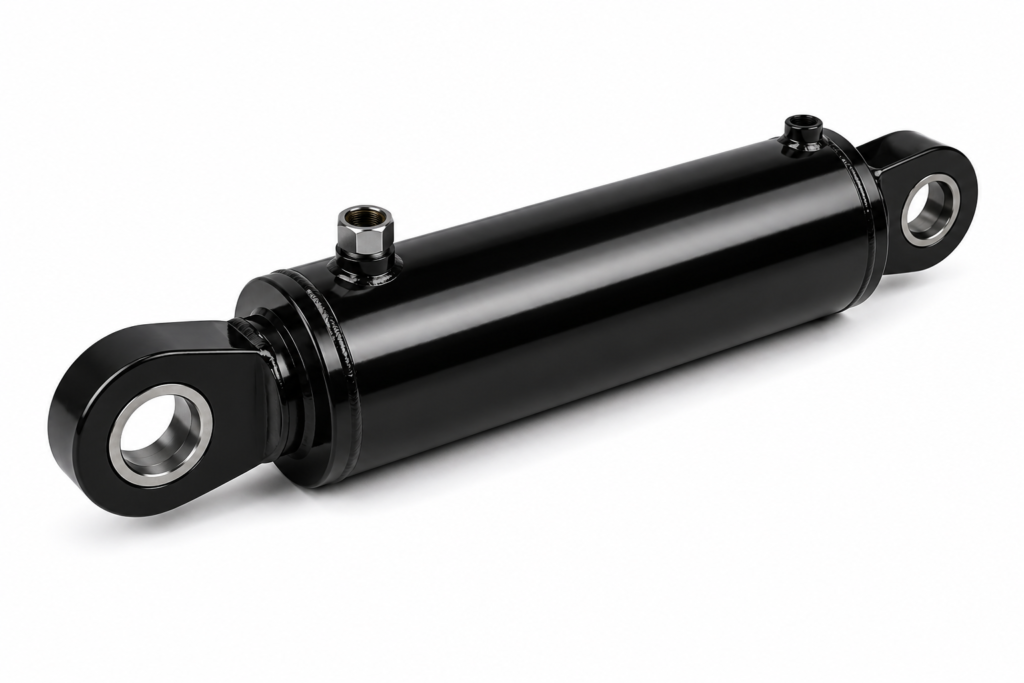
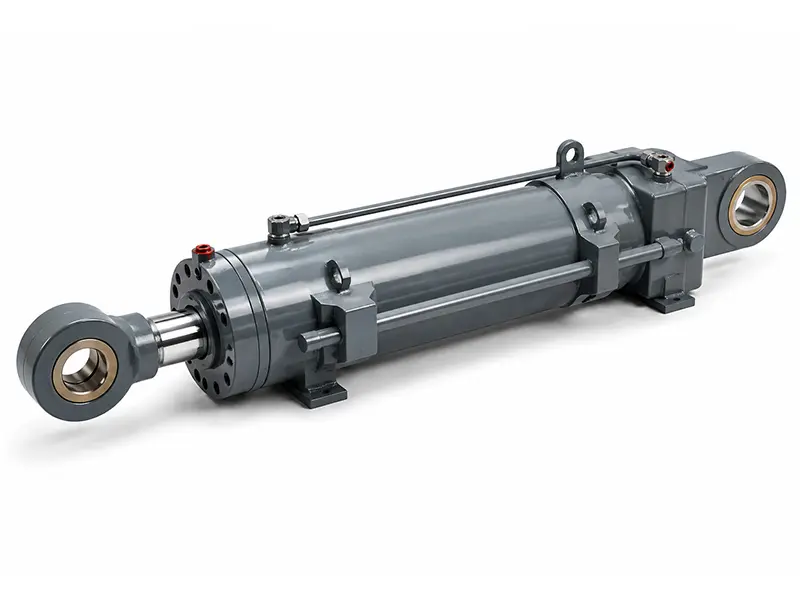
In welded cylinders, the barrel is commonly integrated with a welded base end. In tie-rod cylinders, the barrel is compressed between end caps by tie rods, which makes service and seal replacement easier in many industrial applications. For mobile machinery, welded designs are common because compact size and vibration resistance are priorities. For factory automation, tie-rod cylinders are often selected where maintenance access and standardized mounting dimensions matter.
Bore sizing is not arbitrary. ISO 3320:2013 provides metric series for cylinder bores and piston rod diameters, which helps designers and buyers communicate sizes consistently. ISO 6020 series cylinders are commonly associated with 16 MPa mounting-dimension classes, while ISO 6022 covers heavy-duty 25 MPa mounting dimensions. These standards do not replace application engineering, but they give buyers a shared language for comparing drawings.
Barrel problems usually show up as internal leakage, jerky motion, or shortened seal life. If the bore is scored by particles, the piston seal may pass pressure even when the seal is new. If the bore is out of round, the seal can be squeezed unevenly. If the barrel is not straight, the rod can side-load the gland and accelerate wear.
When should a buyer question the barrel specification?
Question the barrel when a machine has frequent internal drift, when the cylinder overheats under normal load, or when a replacement piston seal fails quickly after installation. In a lifting table, for instance, a scratched bore can let fluid bypass the piston, causing gradual descent even if the control valve is functioning. The inspection should include bore condition, oil cleanliness history, and whether the previous cylinder operated above its intended pressure class.
How should the piston rod be evaluated before ordering?
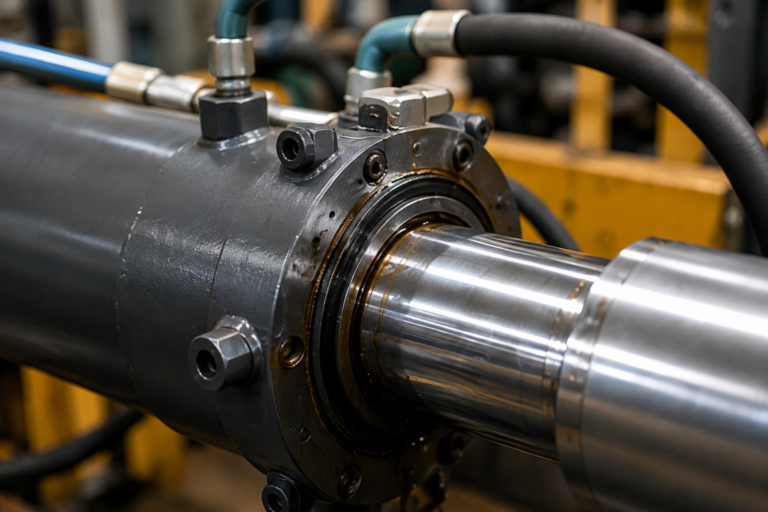
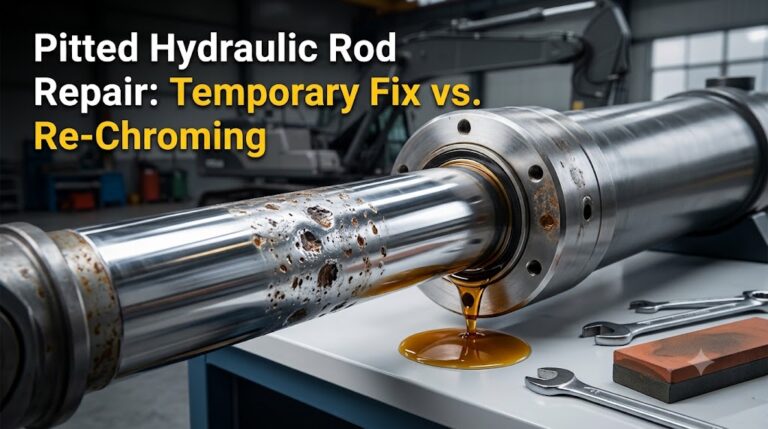
The piston rod should be evaluated by diameter, material, surface hardness, chrome or coating condition, straightness, thread form, and end connection because it is the exposed moving member most affected by side load, corrosion, dust, and impact. A visually shiny rod can still be unsuitable if it is bent, pitted, or poorly finished.
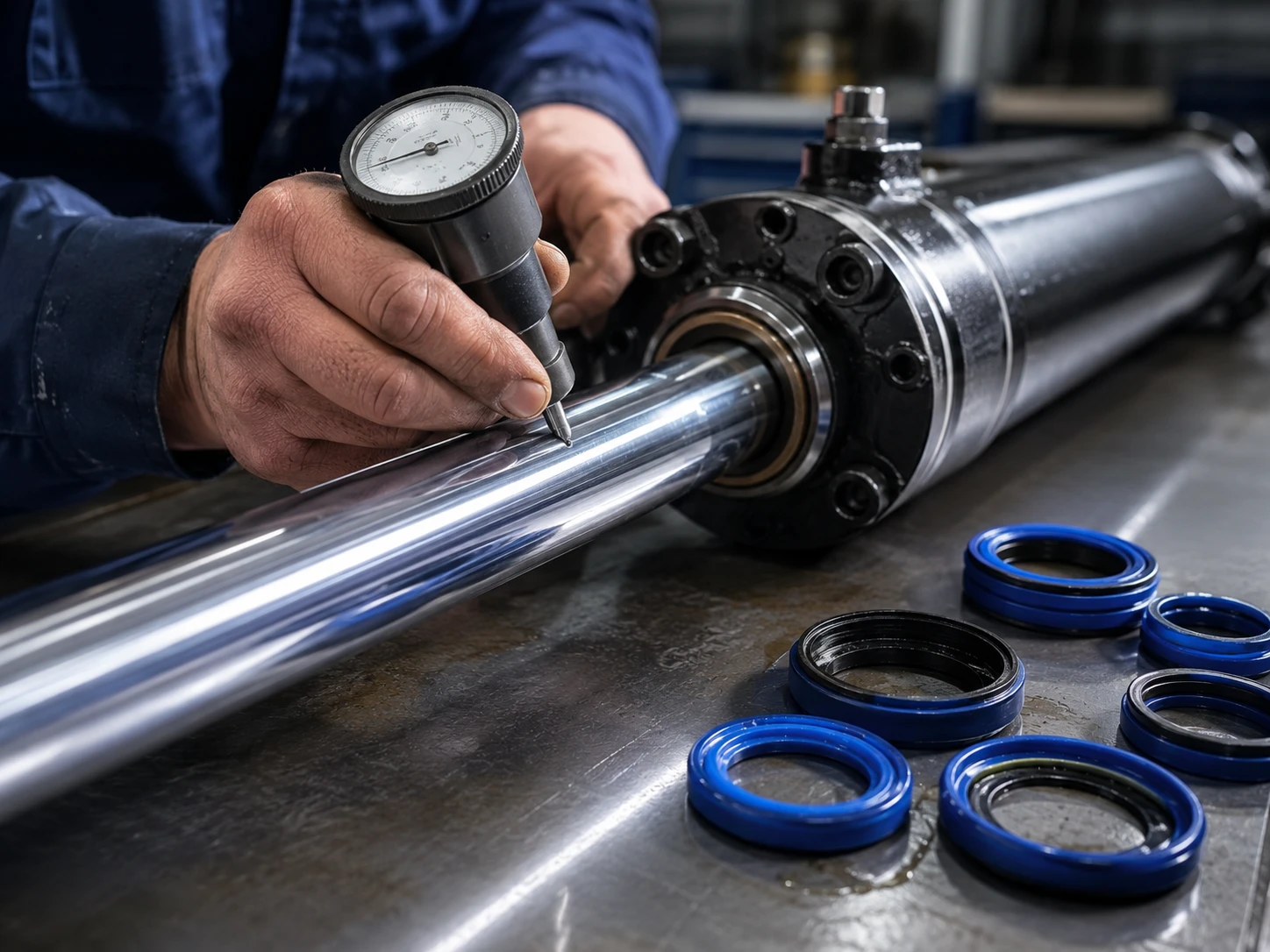
Rod condition strongly influences seal life. A rough rod drags across the rod seal and wiper, cutting sealing edges and carrying dirt into the gland. A pitted rod creates small oil pockets that pass through the seal lip. A bent rod causes uneven contact in the gland bearing and may turn a simple seal replacement into a repeat failure.
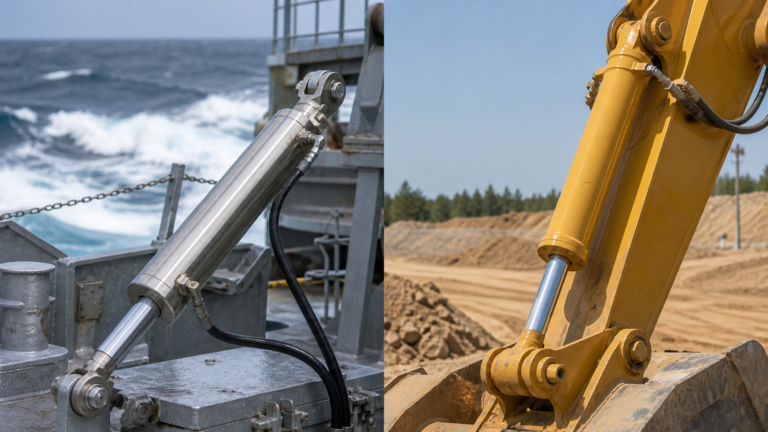
In outdoor mobile equipment, the rod must resist rain, mud, stone impact, and long idle periods. In industrial presses, it may face high cycle counts and heat from continuous operation. In marine or fertilizer equipment, corrosion resistance becomes a stronger design factor than basic appearance. Buyers should therefore ask whether the rod finish is hard chrome, nickel-chrome, induction-hardened chrome, stainless, or another coating system suitable for the environment.
Rod diameter also affects buckling risk. A long-stroke cylinder used in pushing duty needs more attention than a short-stroke cylinder used mainly in pulling duty. When a machine repeatedly bends rods, the answer is rarely “use a stronger seal.” The rod diameter, stroke length, mounting alignment, and external guide structure must be reviewed together.
Which seals matter most in a hydraulic cylinder?
Hydraulic cylinder seals control external leakage, internal bypass, contamination entry, and friction, so seal selection must match pressure, speed, temperature, fluid type, and surface finish. The most important sealing points are the piston seal, rod seal, wiper, buffer seal, wear ring, and static O-rings.
The piston seal separates the pressure chambers. If it wears or extrudes, the cylinder may drift, lose force, or fail to hold position. The rod seal prevents oil from escaping where the rod exits the gland. The wiper keeps dust, water, and grit outside the cylinder. Wear rings guide the piston and rod, reducing metal-to-metal contact and protecting the bore.
ISO 3601 defines dimensions and tolerances for O-rings used in fluid power systems, while ISO 4406 provides a cleanliness code for hydraulic fluids based on particle counts. These two standards connect directly to seal performance: a seal sized incorrectly may leak even in clean oil, while the correct seal may fail early if the oil carries abrasive contamination.
Material choice matters as much as profile. Nitrile rubber is widely used with mineral hydraulic oils in general industrial temperature ranges. Polyurethane is common for rod and piston seals where abrasion resistance and extrusion resistance are needed. PTFE-based seals are used where low friction, chemical resistance, or high speed is important, often with an energizer. Fluoroelastomers may be selected for higher temperature or chemical exposure.
- Piston seal
- A dynamic seal on the piston that separates the two pressure chambers and prevents internal bypass.
- Rod seal
- A dynamic seal in the gland that keeps pressurized oil inside as the rod extends and retracts.
- Wiper
- A scraper element that removes dirt, moisture, and debris from the rod before it enters the cylinder.
- Wear ring
- A guide band that supports side load and prevents direct metal contact between moving parts.
- Buffer seal
- A pressure-reducing seal placed ahead of the rod seal in demanding applications to absorb pressure spikes.
How do ports, pistons, and mounts affect performance?
Ports control oil flow, pistons convert pressure into force, and mounts transfer force into the machine frame, so these parts decide how smoothly the cylinder moves and how safely it carries load. Undersized ports, loose pistons, or misaligned mounts can create heat, shock, vibration, and premature wear.
The piston is more than a disc. It carries the piston seal, wear rings, and sometimes cushioning features that slow the cylinder near the end of stroke. A piston with poor machining or weak fastening can loosen, cause knocking, or damage the barrel. In high-cycle applications, piston retention methods and seal groove quality deserve close inspection.
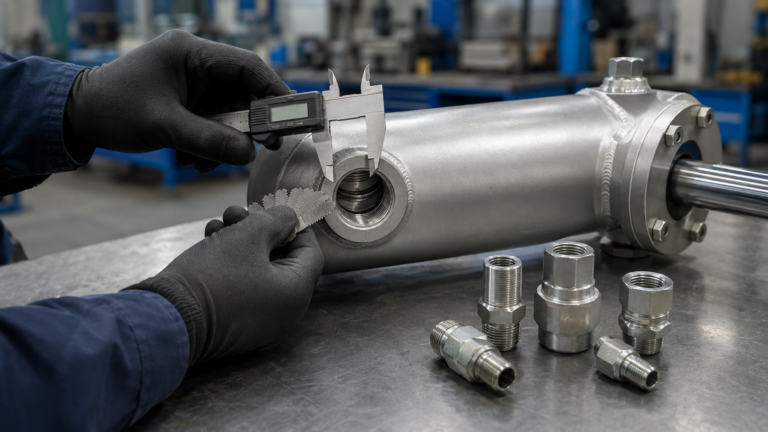
Ports must match the required flow rate and connection style. A port that is too small for the pump flow can increase pressure drop and heat. A port positioned poorly may complicate hose routing, expose fittings to impact, or trap air during commissioning. Thread standards and port orientation should be confirmed from drawings rather than guessed from photos.
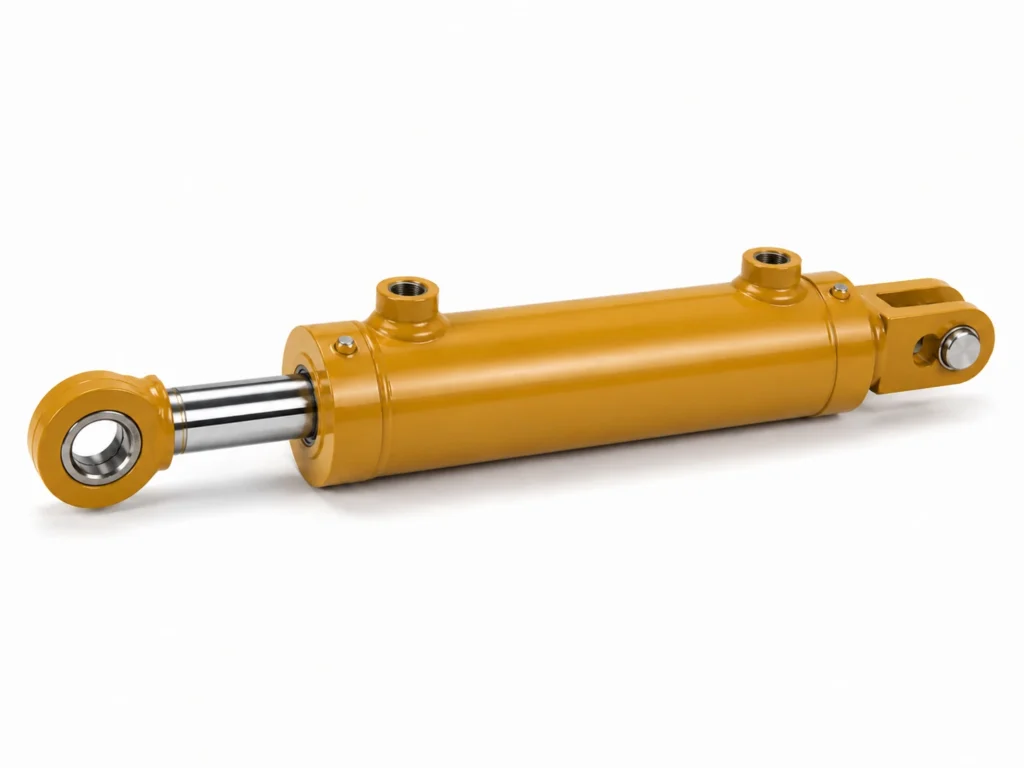
Mounts determine how force enters the structure. Clevis, trunnion, flange, spherical bearing, and pin-eye mounts each handle motion differently. A clevis allows pivoting in one plane, while a spherical bearing can tolerate angular misalignment better. A flange mount is rigid and compact but can transmit bending if the structure is not square. When mounts fail, the root cause is often alignment, not simply weak steel.
| Cylinder area | What to check | Common failure sign | Relevant standard or source | Buyer priority |
|---|---|---|---|---|
| Barrel bore | Bore diameter series, scoring, straightness, pressure class | Internal drift, jerky motion, rapid piston seal wear | ISO 3320:2013; ISO 6020-1:2007; ISO 6022:2015 | High for replacement interchangeability and pressure safety |
| Piston rod | Diameter, coating, straightness, corrosion, end thread | Rod seal leakage, gland wear, bent rod, sticking | ISO 3320:2013 for rod diameter series | High for outdoor, long-stroke, or pushing applications |
| Seals | Profile, material, hardness grade, temperature, oil compatibility | External leakage, bypass, extrusion, swelling | ISO 3601-1:2012; SKF hydraulic seal guidance | High when failures repeat after seal replacement |
| Ports | Thread type, orientation, flow path, hose clearance | Heat, pressure drop, hose interference, slow movement | Manufacturer drawings and hydraulic circuit requirements | Medium to high for retrofits and compact equipment |
| Mounts | Mounting style, pin size, bearing type, alignment | Broken eye, pin wear, side-loaded rod, cracked bracket | ISO 6020 and ISO 6022 mounting-dimension families | High for mobile machines and oscillating loads |
How to use this table: Start with the failure sign column, then move left to the cylinder area and right to the standard or source; when two areas look equally likely, prioritize the part that touches both pressure and movement, such as the rod seal system or piston assembly.
What component details should be confirmed before requesting a quote?
A useful quote request should confirm dimensions, pressure, mounting style, port details, rod condition, seal environment, and operating symptoms. For TOFU buyers learning the basics, this step prevents the most common mistake: asking only for bore and stroke while leaving out the details that decide interchangeability and service life.
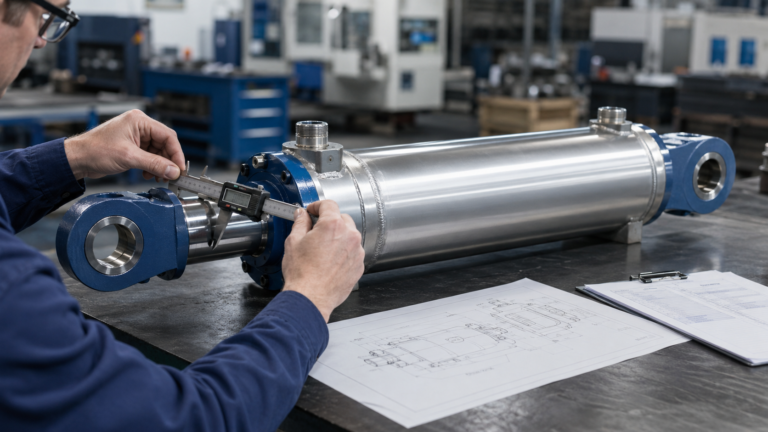
At minimum, provide bore diameter, rod diameter, stroke, retracted length, extended length if known, port thread and position, mounting type, pin diameter, working pressure, fluid type, and machine model. If the cylinder failed, add photos of the damaged rod, gland, piston seal, mount, and oil condition. ZHY can usually confirm much more from clear photos and a simple sketch than from a one-line size request.
The buyer decision logic should be direct. If rod-end leakage repeats, inspect rod finish, wiper condition, seal material, contamination, and pressure spikes. If the machine drifts under load, compare piston seal condition with valve leakage tests. If rods bend, review rod diameter, stroke, mounting alignment, and whether the external structure provides enough guidance. If ports overheat or hoses vibrate, confirm flow, port size, and hose routing.
| Situation | First component to inspect | Second check | Recommended next action |
|---|---|---|---|
| Oil appears at the rod end after seal replacement | Rod seal and wiper | Rod pitting, scratches, straightness, contamination | Send close-up rod photos and request seal material confirmation |
| Cylinder slowly retracts or extends under load | Piston seal | Control valve leakage and bore scoring | Test bypass before replacing the full cylinder assembly |
| Rod bends or gland wears unevenly | Mounts and rod diameter | Side load, pin wear, external guide condition | Review mounting geometry and rod buckling risk before reordering |
| Cylinder runs hot or moves too slowly | Ports and hoses | Flow rate, pressure drop, trapped air | Confirm port thread, port size, and hydraulic circuit layout |
| Seals harden, swell, or crack | Seal material | Fluid type, temperature, chemical exposure | Request compatibility review instead of copying the old seal blindly |
How to use this table: Choose the situation closest to the machine symptom, follow the first component column for immediate inspection, and use the second check column when the first part looks damaged but may be reacting to a deeper cause.
What trends and standards influence cylinder part selection?
Modern cylinder selection is being shaped by higher duty cycles, cleaner hydraulic systems, tighter installation spaces, and stronger expectations for service documentation. Buyers increasingly want part-level traceability, not only a finished cylinder price, because downtime costs often exceed the cost of the cylinder itself.
ISO 5598:2020 standardizes fluid power vocabulary, which helps teams use terms like piston rod, bore, cushioning, and seals consistently across drawings and purchase orders. ISO 4406:2021 supports oil cleanliness communication by coding particle contamination levels, which is critical because microscopic hard particles can damage sealing lips and sliding surfaces. ISO 6020 and ISO 6022 mounting standards help with interchangeability, especially when a project needs multiple replacement cylinders across different machines.
Another trend is application-specific sealing. Many buyers no longer ask for “standard seals” because operating temperature, side load, pressure spikes, and fluid chemistry change from one machine to another. A warehouse dock leveler, agricultural loader, marine hatch, and injection molding clamp may all use hydraulic force, but their contamination, corrosion, and duty-cycle risks are different.
For procurement managers, the practical standard is evidence. Ask for drawings, dimensional tolerances, material or coating description, pressure rating, seal material, testing method, and packaging details. A supplier that can explain component choices is more useful than one that only quotes a low price from a photo.
Practical Asset: Copy-ready hydraulic cylinder parts confirmation checklist
Use this checklist before sending a quotation request or approving a replacement drawing. It is designed for maintenance engineers, importers, equipment rebuilders, and procurement teams who need to confirm a cylinder without assuming that all visible parts are standard.
- Take four overview photos: fully retracted cylinder, fully extended cylinder, rod end mount, and base end mount. Make sure ports and hose positions are visible.
- Measure bore diameter if disassembled; if not, provide the outside barrel diameter and machine model so the supplier can estimate and verify from drawings.
- Measure the rod diameter with a caliper and photograph any scratches, rust, chrome peeling, or impact marks under side light.
- Record stroke length, closed length, pin-to-pin length, pin diameter, mount width, and mounting style such as clevis, flange, trunnion, or spherical bearing.
- Identify port thread type, port size, port orientation, and whether fittings must clear nearby frames, guards, or moving arms.
- Ask what seal material is recommended for your oil, temperature, pressure, speed, and contamination level; do not approve “standard seals” until these points are checked.
- Ask whether the cylinder is intended for 16 MPa, 25 MPa, or another pressure class, and compare that answer with the machine’s relief valve setting.
- Report the failure symptom in one sentence: external leakage, internal drift, bent rod, slow movement, cracked mount, overheating, or seal swelling.
- Request a drawing for approval before production when the order is not an identical catalogue cylinder.
- For repeat failures, send the old rod, seal photos, oil cleanliness information, and mounting photos so ZHY can help separate component failure from system causes.
FAQ
1. What are the main hydraulic cylinder parts?
The main parts are the barrel, piston rod, piston, gland, end caps, rod seal, piston seal, wiper, wear rings, ports, fasteners, and mounts. The barrel contains pressure, the piston separates the pressure chambers, and the rod transfers motion to the machine. Seals prevent internal bypass and external leakage. Ports connect the cylinder to the hydraulic circuit, while mounts transfer force into the machine frame.
2. Why do hydraulic cylinder seals fail so often?
Seals often fail because the surrounding conditions are wrong, not because the seal alone is poor. Common causes include scratched rods, contaminated oil, excessive pressure spikes, wrong seal material, high temperature, poor groove dimensions, and side loading. ISO 4406:2021 is relevant because it describes fluid cleanliness coding; dirty oil can damage seal lips and polished metal surfaces. Always inspect the rod, bore, and fluid before replacing the same seal again.
3. How can I identify a damaged piston rod?
A damaged piston rod may show scratches, pitting, rust, chrome peeling, oil streaks, bending, or uneven wear near the gland. Run a clean cloth along the rod carefully; if fibers catch, the surface may cut the rod seal. Visual inspection should be supported by diameter and straightness checks when repeat leakage occurs. A bent rod usually indicates side load, poor mounting alignment, overload, or insufficient external guidance.
4. Are hydraulic cylinder components standardized?
Some dimensions and terms are standardized, but complete cylinders are not always interchangeable. ISO 3320:2013 defines metric bore and piston rod diameter series, while ISO 6020 and ISO 6022 address mounting dimensions for common pressure classes. However, port orientation, seal design, stroke, cushioning, rod end thread, material, coating, and installation space can still differ. Buyers should confirm drawings rather than assume that matching bore and stroke are enough.
5. What information should I send to confirm a replacement cylinder?
Send bore, rod diameter, stroke, closed length, mount type, pin size, port thread, port position, pressure rating, oil type, machine model, and failure symptoms. Photos should show the whole cylinder, both mounts, ports, rod surface, and any damaged seals or cracked areas. If dimensions are uncertain, a hand sketch is still useful. Clear photos or drawings help suppliers confirm the correct part before quoting or manufacturing.
References
- ISO 5598:2020 Fluid power systems and components — Vocabulary, International Organization for Standardization, 2020.
- ISO 3320:2013 Fluid power systems and components — Cylinder bores and piston rod diameters and area ratios — Metric series, International Organization for Standardization, 2013.
- ISO 6020-1:2007 Hydraulic fluid power — Mounting dimensions for single rod cylinders, 16 MPa series — Part 1: Medium series, International Organization for Standardization, 2007.
- ISO 6022:2015 Hydraulic fluid power — Mounting dimensions for single rod cylinders, 25 MPa series, International Organization for Standardization, 2015.
- ISO 4406:2021 Hydraulic fluid power — Fluids — Method for coding the level of contamination by solid particles, International Organization for Standardization, 2021.
- ISO 3601-1:2012 Fluid power systems — O-rings — Part 1: Inside diameters, cross-sections, tolerances and designation codes, International Organization for Standardization, 2012.
- Hydraulic Seals, SKF, 2024.
- Cylinder Division Catalog HY08-0910, Parker Hannifin Corporation, 2023.
How to think about hydraulic cylinder parts before buying, repairing, or redesigning
The best way to understand a hydraulic cylinder is to separate pressure containment, motion guidance, sealing, flow connection, and structural mounting. The barrel and end caps contain pressure; the piston and rod convert that pressure into movement; seals and wear rings control leakage and friction; ports manage oil entry and exit; mounts transfer force into the machine. This part-by-part model explains why a cylinder can fail even when its basic bore and stroke match the old unit.
For maintenance teams, the most valuable habit is linking symptoms to components. External leakage points toward the rod sealing system, but the rod surface and contamination level must be inspected before blaming the seal. Load drift points toward piston bypass, but valve leakage and bore scoring also need review. Broken mounts and bent rods point toward alignment, pin wear, side load, and buckling risk, not only material strength.
For buyers, the important option is not “standard versus custom” as a vague category. Choose a catalogue-style cylinder when the mounting dimensions, pressure class, stroke, ports, and duty cycle are already verified. Choose a drawing-confirmed or customized cylinder when the machine has unusual installation space, repeated failures, aggressive contamination, corrosion exposure, nonstandard ports, or long-stroke pushing duty. That decision reduces the risk of leakage, short service life, and unplanned downtime.
Standards help, but they do not complete the engineering work. ISO 3320 gives common bore and rod series; ISO 6020 and ISO 6022 support mounting-dimension communication; ISO 4406 gives a cleanliness code that matters directly to seal and surface life. The practical conclusion is clear: a cylinder quotation should include dimensions, operating conditions, failure history, and photos or drawings. When those details are available, ZHY can help confirm whether the problem is a replaceable part, a specification mismatch, or a system condition that will damage the next cylinder as well.