Why would a buyer choose a telescopic cylinder instead of a standard cylinder?
A telescopic cylinder is the correct direction when the machine needs a long lifting or pushing stroke but the available retracted space is too short for a conventional single-stage cylinder. This is the classic problem on dump trucks, tipper trailers, refuse compactors, agricultural carts, and compact lifting frames.
A standard double-acting or single-acting cylinder usually needs a body length close to its stroke plus the closed-end hardware. When the stroke becomes very long, the installed package becomes difficult to fit, protect, and support. A telescopic design solves that packaging problem by nesting multiple sleeves, also called stages, inside one another.
For an engineering buyer or procurement manager, the decision should start with geometry rather than price. If the required extended length is high and the closed mounting distance is limited, the compact retracted length of a multi stage hydraulic cylinder can reduce frame redesign, avoid awkward linkage geometry, and keep the machine’s center of gravity closer to the intended design.
The trade-off is that telescopic cylinders are less tolerant of side load, poor mounting alignment, and uncontrolled body movement. They also require closer attention to stage overlap, seal protection, oil cleanliness, and end-of-stroke behavior. A low-cost cylinder that fits the drawing but runs with side load can wear the stages quickly or bend a smaller sleeve under real working conditions.
How does a telescopic hydraulic cylinder work inside the stages?
A telescopic cylinder works by sending pressurized hydraulic oil into nested sleeves, causing the largest effective piston area to extend first and the smaller stages to extend afterward. The extension sequence is controlled by pressure, area, internal ports, mechanical stops, and load resistance.
In a common single-acting hoist cylinder, oil enters the base port and pushes the largest stage outward. When that stage reaches its end of travel, oil flow is directed to the next stage. The process continues until the final and smallest stage extends. Retraction is often driven by gravity or external load, especially in dump bodies, although double-acting telescopic cylinders use hydraulic pressure for both extension and retraction.
The force changes during extension because each stage has a different effective area. The largest stage produces the highest force at a given pressure, while smaller stages produce less force. This is why many dump bodies start lifting with high force at a low body angle and then need less force as the body rises and the load begins to slide.
Speed also changes. With the same pump flow, a larger stage moves more slowly because it has more volume to fill; smaller stages may move faster because their oil volume is lower. Buyers should therefore evaluate not only total stroke but also lifting time, stage transition smoothness, and whether the pump flow is compatible with the working cycle.
- Stage
- One moving sleeve in a telescopic cylinder; larger stages usually extend before smaller stages because they have greater effective hydraulic area.
- Stroke
- The total linear travel from fully retracted to fully extended position, equal to the combined travel of all active stages.
- Retracted length
- The closed length between mounting points; this is usually the main reason a telescopic design is selected.
- Side load
- A lateral force acting across the cylinder axis, often caused by misalignment, uneven loading, twisting frames, or poor mounting geometry.
Key Takeaways
- A telescopic design is mainly a space-saving solution for long stroke in a short closed envelope.
- Stage force decreases as smaller stages extend because effective hydraulic area becomes smaller.
- Ignoring side load and mounting alignment is the most common cause of stage wear, scoring, or bending.
- Single-acting telescopic cylinders suit gravity-return hoist applications; double-acting versions suit controlled powered retraction.
- Buyers should specify retracted length, extended length, load, pressure, mounting type, duty cycle, and working angle before quotation.
What happens during extension, holding, and retraction?
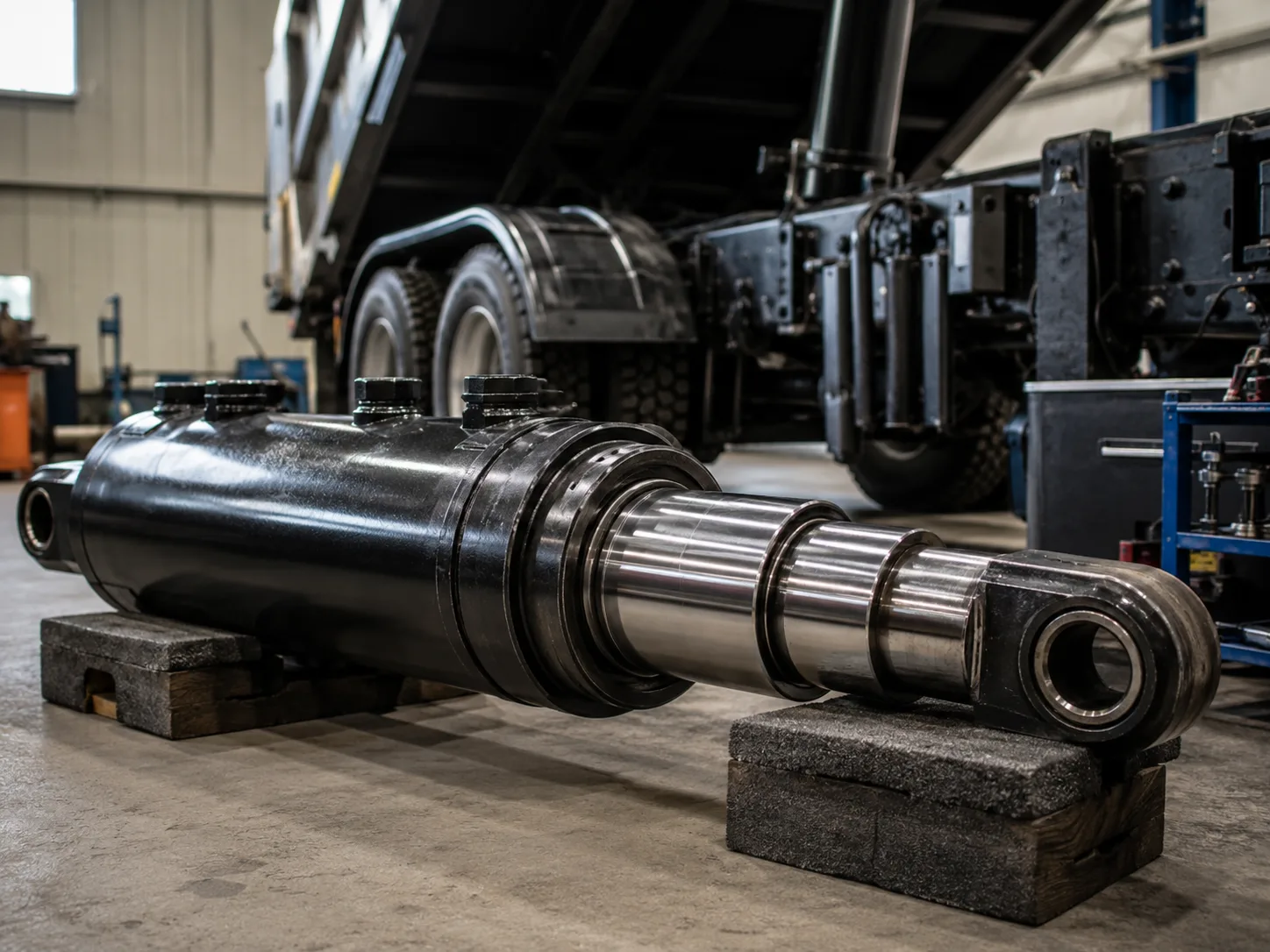
Extension, holding, and retraction are three different hydraulic events, and each one affects buying decisions. Extension depends on pump flow and available pressure; holding depends on valve sealing and load control; retraction depends on gravity, external force, or powered return.
Extension sequence
During extension, pressurized oil fills the base chamber and acts on the largest stage first. In a well-designed cylinder, stage movement should be smooth, without sudden jumping, chatter, or visible deflection. A small speed change between stages is normal, but hard impact at transition can indicate poor cushioning, wrong flow rate, trapped air, or excessive load variation.
Load holding
Load holding is not only a cylinder issue; it is also a valve and system issue. ISO 4413:2010 emphasizes safe hydraulic system design, including preventing unintended movement and controlling stored energy. In real equipment, this means a raised body or lifted load should not rely on cylinder friction alone. The circuit may need load-holding valves, pilot-operated check valves, mechanical props for service, and safe lowering procedures.
Retraction behavior
Single-acting hoist cylinders retract when the load pushes oil back to tank. If the body is empty, cold, sticky, or misaligned, retraction may be slower than expected. Double-acting telescopic cylinders use hydraulic pressure to retract stages, which improves control but increases internal complexity, cost, and porting requirements.
For ZHY projects, the most useful early information is not a finished drawing; it is the working envelope. A buyer who sends the closed length, required extended length, load, mounting positions, and intended pressure gives the engineering team enough data to identify whether the concept is reasonable before detailed manufacturing review.
Which cylinder type fits which application?
The best cylinder choice follows the application’s geometry, return method, load profile, and alignment quality. A dump trailer, a scissor lift, and an industrial press may all need linear force, but they do not need the same actuator design.
| Application condition | Recommended direction | Reason | Main risk to check |
|---|---|---|---|
| Long stroke with limited closed space | Telescopic cylinder | Nested stages provide long extension from a compact package. | Stage overlap, side load, mounting alignment. |
| High side load or poor guide structure | Standard cylinder with external guides | A conventional cylinder is easier to protect when the machine frame carries lateral force. | Rod bending, bearing wear, frame twist. |
| Dump body or tipper trailer with gravity return | Single-acting telescopic cylinder | The raised body can return oil to tank as it lowers. | Uncontrolled descent, contaminated oil, off-center load. |
| Controlled powered extension and retraction | Double-acting telescopic cylinder | Hydraulic pressure controls both directions where gravity return is unreliable. | Higher circuit complexity and seal maintenance. |
| Frequent precision cycling | Standard industrial cylinder or guided actuator | Simpler sealing and guiding usually support repeatable high-cycle motion better. | Heat, seal wear, positional drift. |
How to use this table: start with the first column that matches the machine’s strongest constraint, then read the risk column as the mandatory design check; if two options are close, prioritize the one that reduces side load and uncontrolled movement.
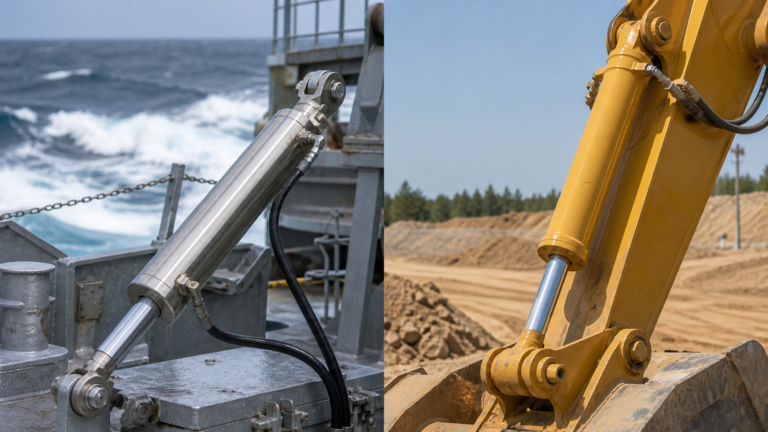
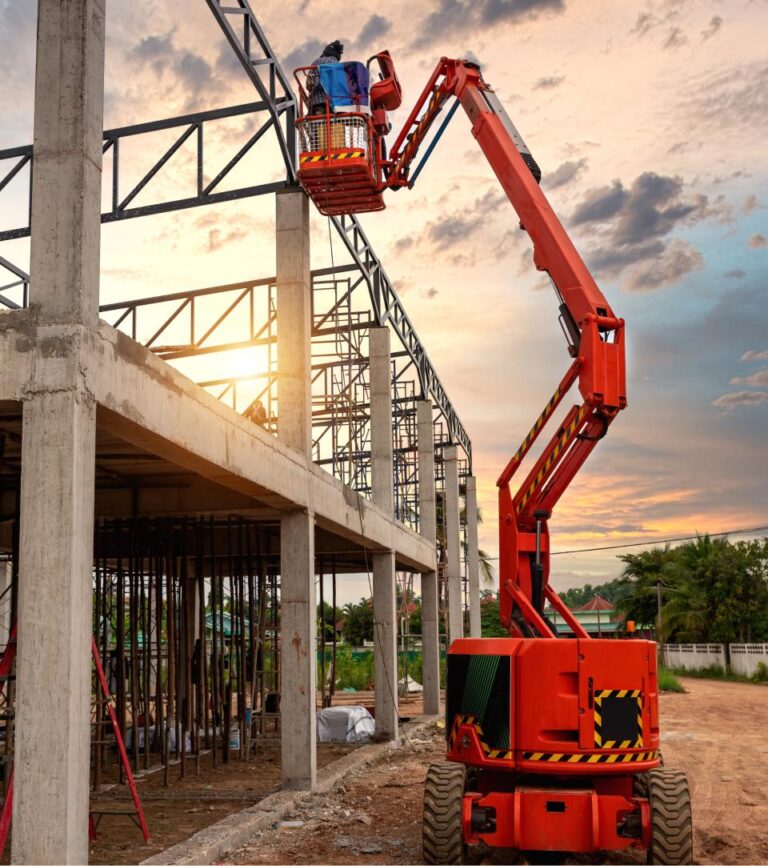
In mobile tipping equipment, a telescopic hydraulic cylinder is often selected because the body must lift high while the chassis leaves only a short mounting distance. In factory automation, however, the same long-stroke requirement may be better solved by a guided linear actuator if repeatability and side-load control are more important than compact closed length.
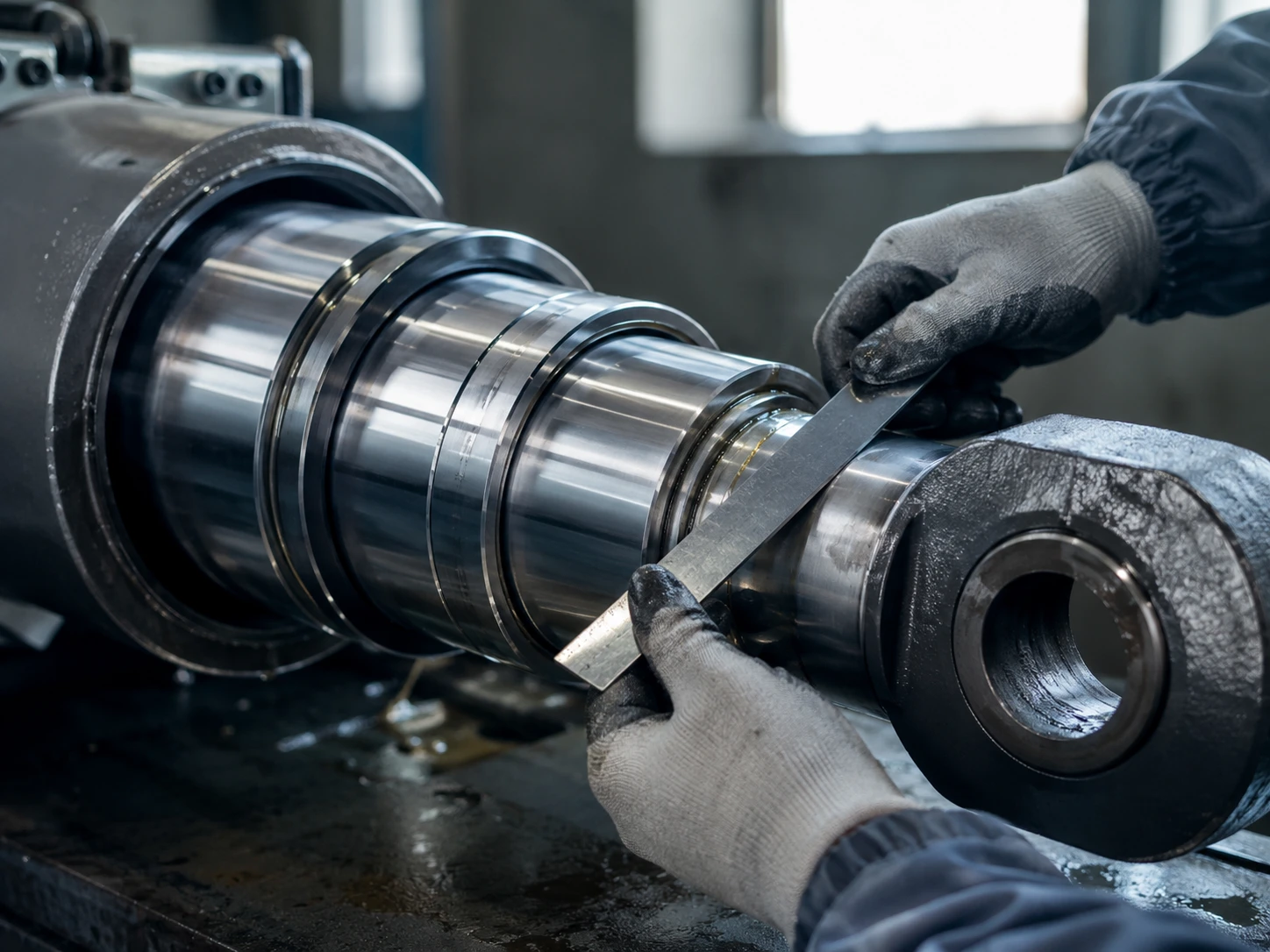
What specifications should procurement confirm before ordering?
Procurement should confirm geometry, force, pressure, mounting, duty cycle, and environment before comparing prices. A cylinder quote without these details can be cheap on paper and expensive after installation because the wrong stage size or mount can damage the machine.
Geometry and stroke
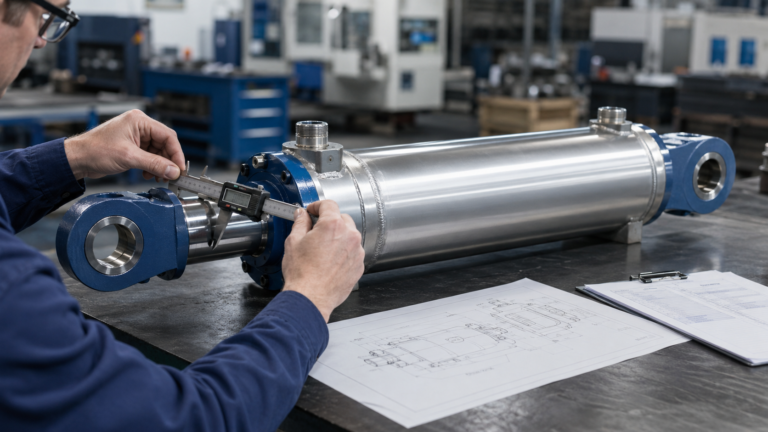
The minimum required data are retracted length, extended length, stroke, available mounting envelope, and whether the cylinder must pass through any frame opening. Buyers should also confirm the body angle or linkage position at the start and end of travel. A long stroke is not useful if the cylinder collides with the chassis, crossmember, hose routing, or safety prop.
Load and pressure
Force is related to hydraulic pressure and effective piston area, but telescopic force changes by stage. This is why the load curve matters more than a single maximum load number. If the cylinder must break a sticky load loose at a low angle, the largest stage and the machine geometry must produce adequate initial lift force.
Mounting and alignment
Mounting information should include pin diameter, eye width, bearing type, clevis or trunnion style, and whether the mounts can self-align. The most damaging mistake is treating the cylinder as a structural guide. The machine frame should guide the load; the cylinder should push or lift along its axis.
Oil cleanliness and environment
Hydraulic contamination affects seals, valves, and polished stage surfaces. ISO 4406:2021 is widely used for coding particulate contamination levels in hydraulic fluids, and many equipment builders specify cleanliness targets according to valve and pump sensitivity. Dusty job sites, road salt, fertilizer, mining slurry, and outdoor storage all justify stronger wiper design, surface protection, and maintenance planning.
What are the main mistakes that cause stage wear or bending?
The main failure pattern is not mysterious: telescopic stages wear or bend when the cylinder is forced to carry lateral load it was not designed to carry. Misaligned mounts, twisted frames, uneven loads, worn pins, and poor installation angles create side forces that damage the stage surfaces and bearings.
- Ignoring side load: A cylinder can lift the load but still fail if the load pushes sideways during travel.
- Using worn or loose pins: Excess clearance lets the body shift and creates impact during stage transition.
- Skipping frame alignment checks: A straight cylinder installed between crooked mounts will operate under stress from the first cycle.
- Overspeeding descent: Fast lowering can create shock, cavitation risk, heat, and unstable body movement.
- Allowing dirty oil: Abrasive particles can score chrome stages, damage seals, and increase leakage.
- Comparing only closed length and price: A matching envelope does not prove matching force, stability, or service life.
For field inspection, look for uneven polish marks, one-sided seal wear, scoring lines, leaking between stages, and a cylinder that does not remain centered through the lift arc. These symptoms often point to machine geometry rather than only cylinder manufacturing quality.
What standards and safety rules matter for telescopic hydraulic cylinders?
Standards do not replace engineering judgment, but they give buyers a safer language for specifications, inspection, and documentation. For hydraulic systems, ISO 4413:2010 is a key reference because it covers general rules and safety requirements for hydraulic fluid power systems and components.
ISO 5598:2020 is useful for vocabulary, especially when buyers, factories, and contractors use different names for stages, ports, pressure, or actuators. ISO 3320:2013 helps standardize cylinder bore and piston rod diameter references, although custom telescopic designs often require project-specific dimensions.
For fluid cleanliness, ISO 4406:2021 provides the coding method commonly used to express particulate contamination in hydraulic oil. This matters because a telescopic cylinder exposes multiple polished moving surfaces and seal interfaces. Clean assembly, capped ports, flushed hoses, and filtered oil should be treated as procurement requirements rather than afterthoughts.
In the United States, OSHA rules for construction and material handling equipment are also relevant where raised beds, lifting equipment, or maintenance access create crush hazards. The practical takeaway is simple: never service equipment under a raised body without proper mechanical support, lockout practice, and stored-energy control.
How are market trends changing telescopic cylinder sourcing?
Mobile equipment buyers are pushing telescopic cylinders toward higher consistency, better surface protection, and more complete supplier documentation. The trend is not only stronger cylinders; it is better-defined application data before production begins.
Several forces are driving this shift. First, compact mobile machines are expected to lift more while keeping chassis size manageable. Second, fleets want lower downtime, so seal life, chrome quality, and contamination control matter more than initial part cost. Third, export buyers increasingly ask for traceable material, pressure testing records, dimensional inspection, and packaging that protects polished stages during sea freight.
Electrification and hybrid hydraulic systems also make efficiency more visible. When pump power is limited, cylinder sizing, flow demand, and stage speed changes become part of the energy calculation. A cylinder that worked with an oversized diesel-driven pump may not perform the same way in a compact electric power unit.
ZHY sees the most productive sourcing discussions when the buyer treats the cylinder as part of the machine system. Instead of asking only for a replacement by outside diameter and stroke, better RFQs include load position, lift angle, hydraulic pressure, oil type, cycle frequency, and mounting drawings.
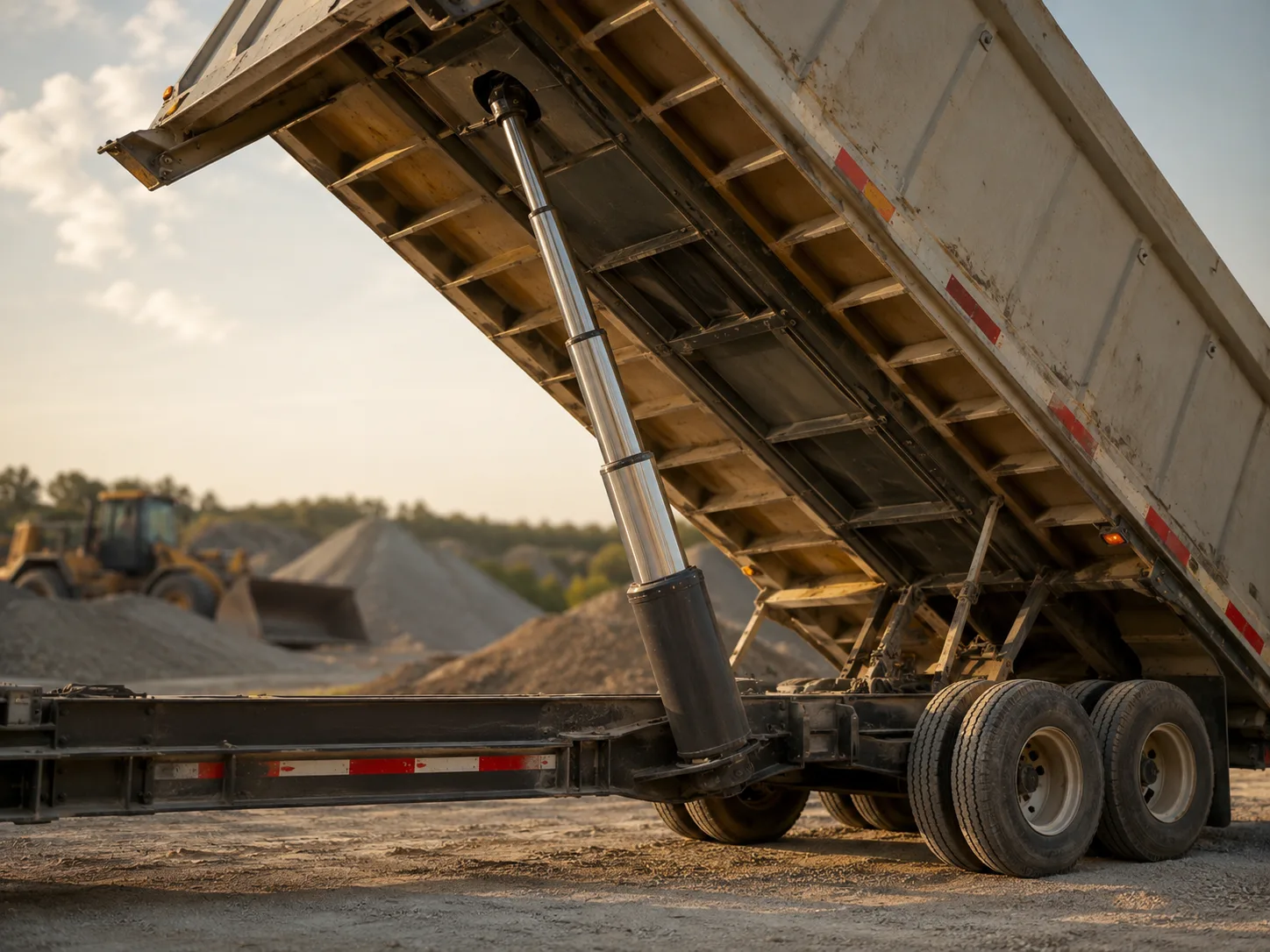
Practical Asset: copy-ready RFQ and inspection checklist
Use this checklist before sending an RFQ or approving a sample. It is written for procurement managers, trailer builders, equipment repair teams, and engineering buyers who need a practical sequence rather than a general discussion.
- State the machine application first: tell the supplier whether the cylinder is for a dump truck, tipper trailer, refuse equipment, agricultural cart, lift table, or custom machine.
- Send the core dimensions: provide retracted length, extended length, required stroke, maximum outside diameter allowed, and the space available around the cylinder during motion.
- Define load and geometry: provide maximum lifted load, load center, starting angle, final angle, hinge position, and whether the load can shift during operation.
- Confirm hydraulic data: list working pressure, maximum relief pressure, pump flow, oil type, operating temperature range, and expected cycle frequency.
- Specify mounting details: provide pin diameter, mounting eye or clevis width, bearing requirement, trunnion position if used, and whether spherical bearings are needed for self-alignment.
- Ask for stage information: request number of stages, stage diameters, overlap concept, material and surface treatment, seal type, and whether the cylinder is single-acting or double-acting.
- Require test records: ask for pressure test method, leakage inspection, dimensional report, visual surface inspection, and port protection before shipment.
- Check packaging: require capped ports, protected chrome stages, rust prevention, stable wooden packing for export, and clear handling marks to prevent impact damage.
- Validate installation before full production: install the sample without load first, check alignment through the full travel, then test progressively with load while watching for side movement, noise, leakage, and uneven stage marks.
- Document service rules: define oil cleanliness practice, inspection intervals, safe body support procedure, and replacement criteria for worn pins, seals, and damaged stages.
FAQ
1. How does a telescopic hydraulic cylinder work in simple terms?
A telescopic hydraulic cylinder works like a set of nested metal sleeves that extend one after another when hydraulic oil enters the cylinder. The largest stage usually moves first because it has the largest effective area, then smaller stages follow as the stroke continues. This design gives long movement from a short closed length, which is why it is common on dump trucks, tipper trailers, and compact lifting equipment.
2. What is the difference between a single-acting and double-acting telescopic cylinder?
A single-acting telescopic cylinder uses hydraulic pressure to extend and relies on gravity or external load to retract. It is common in dump hoist applications because the raised body naturally lowers the cylinder. A double-acting telescopic cylinder uses hydraulic pressure for both extension and retraction, giving better control where gravity return is not reliable. The double-acting version is more complex and usually requires more careful porting, sealing, and maintenance.
3. Why does force change as each stage extends?
Force changes because each stage has a different effective hydraulic area. At the same pressure, a larger stage produces more force than a smaller stage. This is useful in dump applications because the initial lift often needs the highest force at a low body angle, while later stages may need less force as the body rises. Buyers should check the load curve instead of relying only on total stroke or maximum pressure.
4. What causes telescopic cylinder stages to bend or wear unevenly?
The most common cause is side load from misalignment, uneven loading, worn pins, frame twist, or poor mounting geometry. A telescopic cylinder should push along its axis, not act as the machine’s guide structure. Uneven polish marks, one-sided seal wear, scoring, and leakage between stages can indicate lateral force. Correcting the mounting and external guidance is usually more effective than only changing seals after damage appears.
5. What information should I send to a supplier before requesting a quote?
Send the retracted length, required extended length, stroke, working load, pressure, pump flow, mounting type, pin dimensions, operating angle, duty cycle, and working environment. Photos or drawings of the installation area are also useful. If the application involves a dump body or trailer, include hinge location and load center. This information lets the supplier check whether a multi stage hydraulic cylinder is suitable before discussing price.
References
- ISO 4413:2010 Hydraulic fluid power — General rules and safety requirements for systems and their components, International Organization for Standardization, ISO, 2010.
- ISO 5598:2020 Fluid power systems and components — Vocabulary, International Organization for Standardization, ISO, 2020.
- ISO 3320:2013 Fluid power systems and components — Cylinder bores and piston rod diameters and area ratios — Metric series, International Organization for Standardization, ISO, 2013.
- ISO 4406:2021 Hydraulic fluid power — Fluids — Method for coding the level of contamination by solid particles, International Organization for Standardization, ISO, 2021.
- Hydraulic Fluid Power — Cylinders — Method for Determining the Buckling Load, International Organization for Standardization, ISO 13725, 2001.
- 29 CFR 1926 Subpart O — Motor Vehicles, Mechanized Equipment, and Marine Operations, Occupational Safety and Health Administration, U.S. Department of Labor, current electronic CFR edition.
- Fluid Power Basics, National Fluid Power Association, NFPA, 2024.
- Hydraulic Cylinder Maintenance and Service Guidance, Parker Hannifin Corporation, Parker Cylinder Division, 2023.
Semantic Closure: how to turn the working principle into a better buying decision
The practical value of understanding how does a telescopic hydraulic cylinder work is that it changes the buying conversation from “what is the stroke and price?” to “will this actuator lift safely in this machine geometry?” A telescopic cylinder is not simply a longer cylinder. It is a staged force system, a compact packaging solution, and a component that depends heavily on alignment, oil cleanliness, and load control.
The strongest reason to choose this design is compact retracted length. When a trailer, truck chassis, refuse compactor, or agricultural body cannot accept a long conventional cylinder, nested stages solve a real mechanical packaging problem. That benefit is especially important in mobile equipment, where frame space, ground clearance, weight distribution, and installed angle are tightly constrained.
The strongest reason to hesitate is side load. The polished stages are designed to transmit axial force, not to guide a twisting structure. ISO 4413:2010 reinforces the broader safety principle that hydraulic systems must control unintended movement and stored energy. For telescopic cylinders, this translates into sound mounting geometry, safe load holding, controlled lowering, and mechanical support during maintenance. ISO 4406:2021 is also relevant because contamination control directly affects seals, sliding surfaces, valves, and service life.
For buyers comparing options, the clearest rule is this: if long stroke and short closed length are the hard constraints, a telescopic cylinder is usually the right design path; if the machine has high side load, high precision cycling, or weak external guidance, solve the structure first or consider a standard guided actuator. A supplier can quote more accurately when the RFQ includes retracted length, extended length, load, pressure, pump flow, mounting drawings, working angle, and environment. Without those inputs, even a correctly manufactured cylinder can fail in the wrong installation.
ZHY’s recommended next step is to treat the cylinder as part of the machine system. Share the geometry and load case before locking the drawing. That early review helps identify whether the number of stages, mounting type, pressure range, and protection details match the real application rather than only the catalog dimensions.