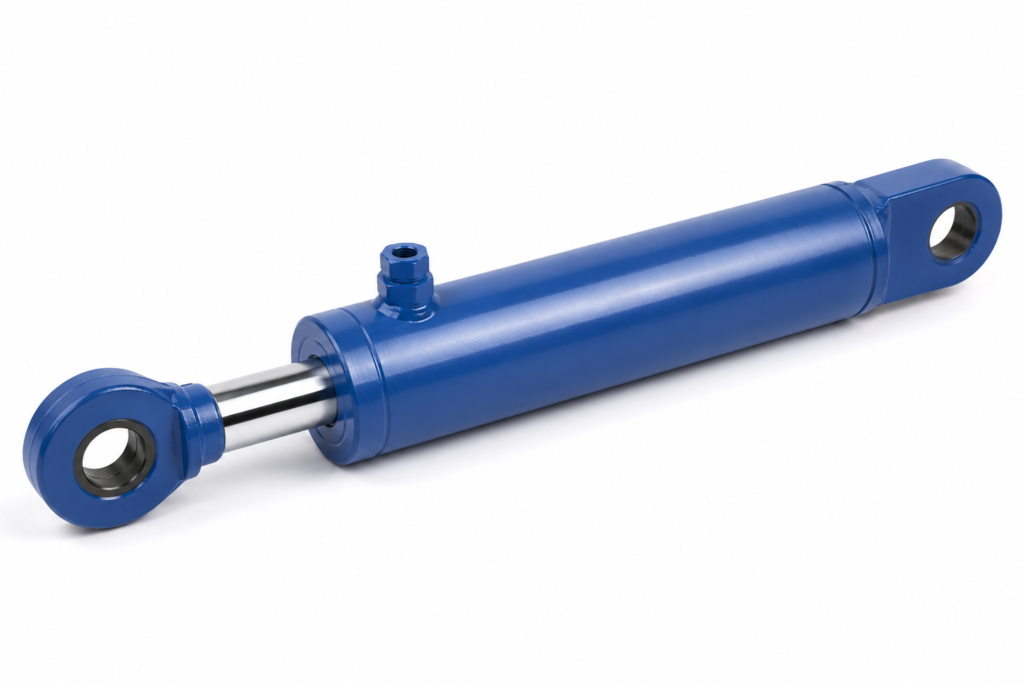
What oil is normally used in a hydraulic cylinder?
Most hydraulic cylinders run on mineral-based anti-wear hydraulic oil, commonly specified as ISO VG 32, ISO VG 46, or ISO VG 68, depending on temperature, pump design, and duty cycle. For many factory cylinders, ISO VG 46 is the starting point, but it is not automatically correct for hot, cold, mobile, or fire-risk equipment.
A procurement mistake often begins with a simple refill: the maintenance team changes the oil grade without checking seals, ambient temperature, or the original equipment manual. The cylinder may work for a few days, then the rod seal starts weeping, the wiper hardens, or the piston seal swells. That is why the real question is not only which oil is used in hydraulic cylinder equipment, but which oil is compatible with the cylinder’s seals, speed, pressure, and contamination control plan.
In industrial plants, mineral hydraulic oils classified under ISO 6743-4 and specified under ISO 11158 are widely used because they balance lubrication, oxidation stability, anti-wear protection, rust inhibition, and water separation. Mobile equipment may need a higher viscosity index fluid for outdoor temperature swings, while steel mills, die-casting machines, and underground operations may require fire-resistant fluids such as water-glycol or phosphate ester types.
Why can the wrong oil damage seals before it damages the metal?
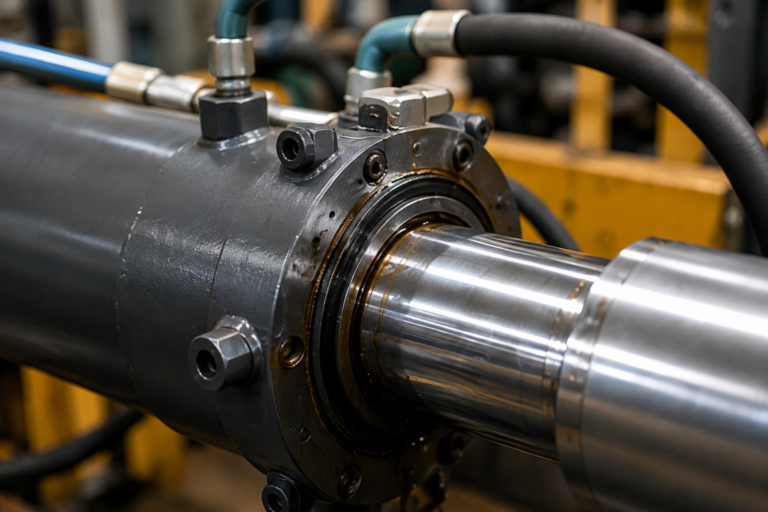
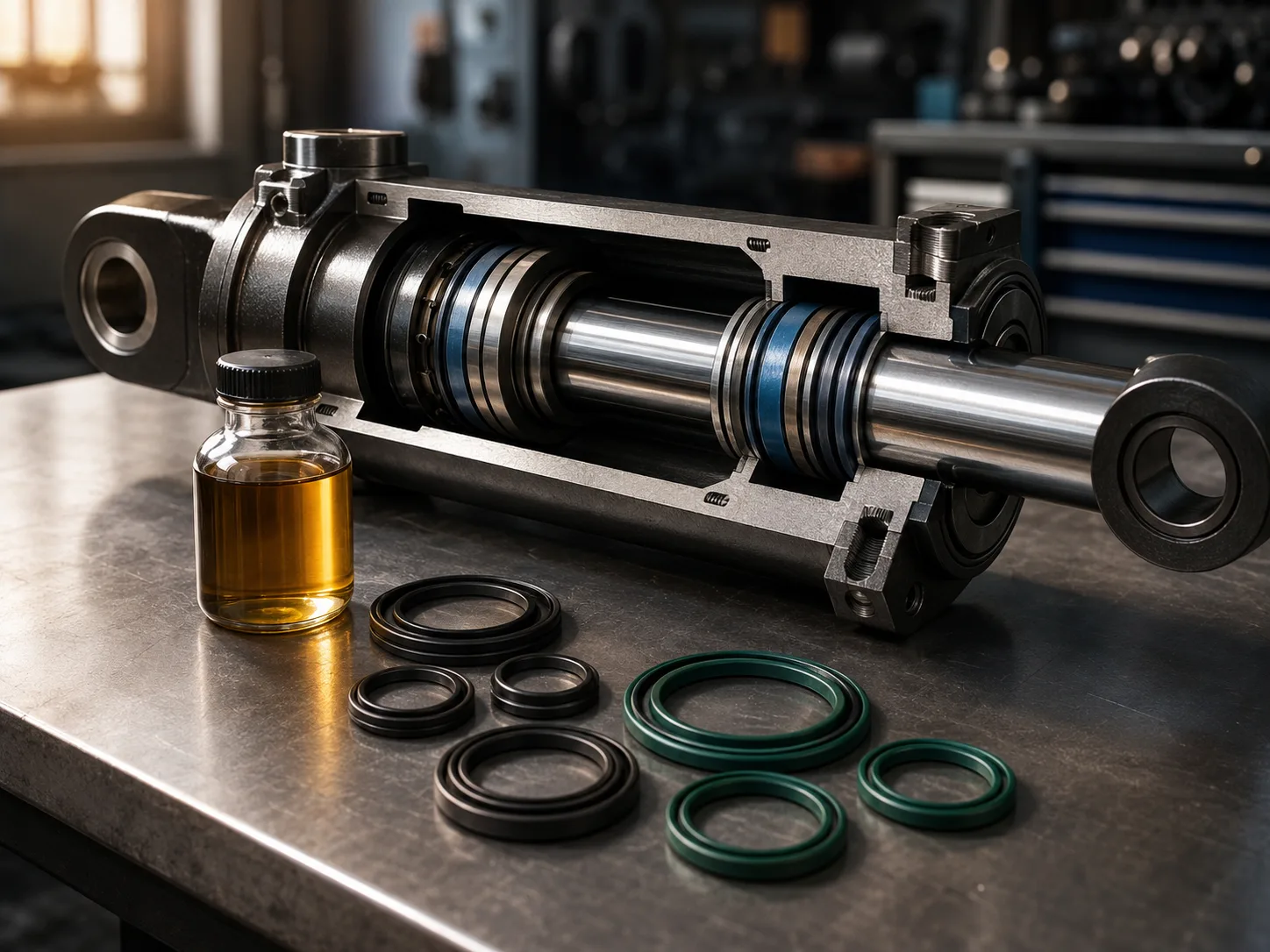
The wrong oil often attacks elastomer seals first because seals are chemically active materials, not just passive rings. A piston rod may still look polished while the NBR, FKM, polyurethane, or EPDM sealing element has already softened, shrunk, swollen, or lost compression set resistance.
This is the main risk behind changing hydraulic oil for cylinders without a compatibility review. Mineral oil is generally suitable for many NBR and polyurethane seals, while some synthetic or fire-resistant fluids require different elastomers. EPDM, for example, is usually poor with petroleum oil but can be used with selected non-petroleum fluids when the compound is designed for that chemistry. FKM handles many high-temperature and synthetic fluid conditions better than standard NBR, but it is not a universal answer for every water-based fluid.
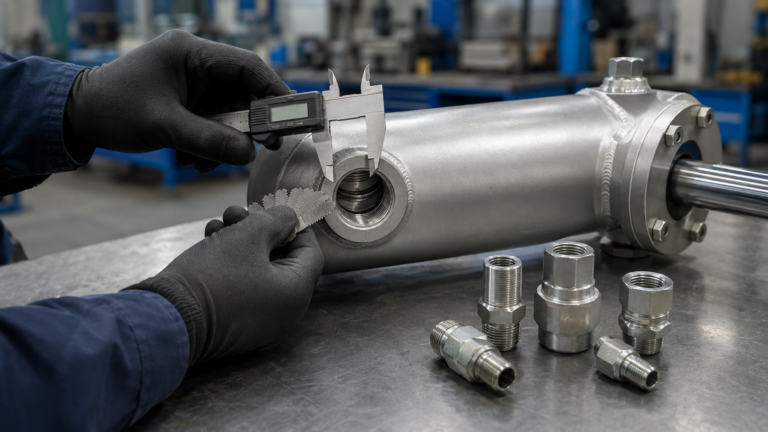
For OEM buyers and engineering purchasers, the decision should be made before production. If the operating temperature is high or the fluid is special, choose the seal material first, then confirm machining tolerance, surface finish, and groove design. ZHY typically asks for oil type, working temperature, pressure range, and cycle frequency before confirming a cylinder sealing plan because seal life is usually decided at the specification stage, not after leakage appears.
Key Takeaways
- Mineral anti-wear hydraulic oil is the common default for industrial cylinders, but temperature and seal material can override that default.
- ISO VG 32, 46, and 68 describe viscosity at 40°C under ISO 3448, not a complete fluid approval by themselves.
- Changing oil without checking seal compatibility can cause swelling, leakage, friction rise, and early cylinder failure.
- High-temperature, fire-risk, biodegradable, or water-based fluids should be reviewed before cylinder production, not after commissioning.
- Cleanliness control under ISO 4406 is part of oil selection because abrasive particles can destroy rod seals and piston seals even when the oil grade is correct.
How should hydraulic fluid viscosity be selected?
Hydraulic fluid viscosity should be selected by operating temperature first, then pump and cylinder speed. A fluid that is too thin reduces film strength and increases internal leakage; a fluid that is too thick increases drag, heat generation, slow response, and cold-start stress.
ISO viscosity grade is measured by kinematic viscosity at 40°C. ISO 3448 gives the viscosity bands used by industrial lubricants, which is why ISO VG 32, 46, and 68 appear so often in cylinder and power-unit documentation. These numbers are not brand names and do not prove the oil has the required anti-wear, oxidation, demulsibility, or seal performance.
| ISO viscosity grade | Kinematic viscosity range at 40°C | Typical cylinder use | Main risk if misapplied |
|---|---|---|---|
| ISO VG 32 | 28.8–35.2 mm²/s | Cooler indoor systems, light-to-medium duty, faster response needs | May become too thin in hot service, increasing leakage and wear |
| ISO VG 46 | 41.4–50.6 mm²/s | General industrial hydraulic cylinders in moderate temperatures | May be too heavy for cold starts or too light for sustained high heat |
| ISO VG 68 | 61.2–74.8 mm²/s | Hotter environments, heavier loads, and slower large-bore cylinders | Can raise energy loss, sluggish movement, and suction problems in cold conditions |
How to use this table: start with the operating oil temperature, not the warehouse temperature; if two grades look close, choose the grade that keeps viscosity stable during the cylinder’s longest loaded stroke rather than the grade that only feels correct at startup.
Which oil types match different hydraulic cylinder conditions?
The best oil type is the one that matches the cylinder’s heat, fire exposure, environmental rules, and seal compound. Mineral anti-wear oil is the baseline, but special operating environments can make it the wrong choice even when the viscosity grade appears correct.
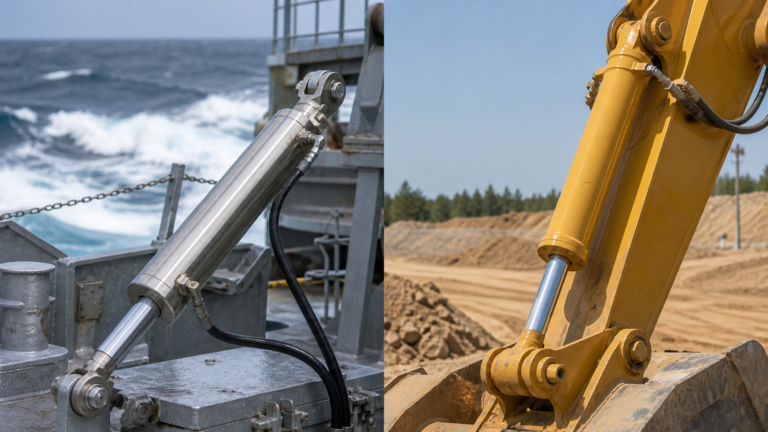
For a standard press, lift table, baler, or injection molding auxiliary cylinder, mineral anti-wear hydraulic oil is normally efficient and economical. For equipment near flames, molten metal, or hot surfaces, fire-resistant hydraulic fluids may be required. For marine, forestry, and environmentally sensitive work, biodegradable or environmentally acceptable lubricants may be requested by the project owner or local regulation. Each change affects seal choice and sometimes paint, hose, filter, and reservoir materials.
- HM hydraulic oil
- An anti-wear mineral hydraulic oil category described in ISO hydraulic-fluid classification, commonly used where pumps and cylinders need wear protection under normal industrial conditions.
- HV hydraulic oil
- A high-viscosity-index hydraulic oil intended for wider temperature variation, often useful for mobile or outdoor equipment where cold start and hot running both matter.
- HFC fluid
- A water-glycol fire-resistant hydraulic fluid used where ignition risk is a major concern; it requires careful seal, pump, and corrosion compatibility checks.
- ISO 4406 cleanliness code
- A particle contamination coding method for hydraulic fluids; it helps maintenance teams control abrasive contamination that can cut seals and score cylinder surfaces.
| Operating situation | Recommended direction | Seal the decision before production | Procurement priority |
|---|---|---|---|
| Standard indoor industrial equipment | Mineral anti-wear hydraulic oil, often ISO VG 46 | NBR or polyurethane is commonly considered, subject to temperature and pressure | Confirm OEM oil specification and cleanliness target |
| Outdoor equipment with cold starts and hot running | High-viscosity-index hydraulic oil | Check low-temperature flexibility and extrusion resistance | Balance startup flow with hot-load film strength |
| Steel, foundry, or flame-exposed areas | Fire-resistant fluid such as water-glycol or phosphate ester, if required by risk assessment | Select elastomer only after fluid chemistry is confirmed | Prioritize safety approval and material compatibility |
| Marine, forestry, or sensitive outdoor sites | Biodegradable or environmentally acceptable hydraulic fluid where specified | Verify seal swelling, hose compatibility, and temperature range | Prioritize compliance with project environmental requirements |
How to use this table: read the operating situation first, then treat the seal decision as a mandatory engineering gate; if cost and compatibility conflict, compatibility should win because seal replacement, downtime, and oil cleanup usually cost more than the correct specification.
What standards and contamination controls matter?
Oil selection should be checked against recognized hydraulic-fluid and safety standards because cylinder failure is rarely caused by viscosity alone. ISO 4413 covers general rules and safety requirements for hydraulic systems, while ISO 4406 provides a coding method for solid particle contamination in hydraulic fluids.
For mineral hydraulic oils, ISO 11158 and ASTM D6158 are useful specification references because they address industrial hydraulic-fluid performance categories rather than only the viscosity grade. ISO 6743-4 provides classification language for hydraulic fluid families, helping buyers distinguish ordinary mineral fluids from high-viscosity-index or fire-resistant families.
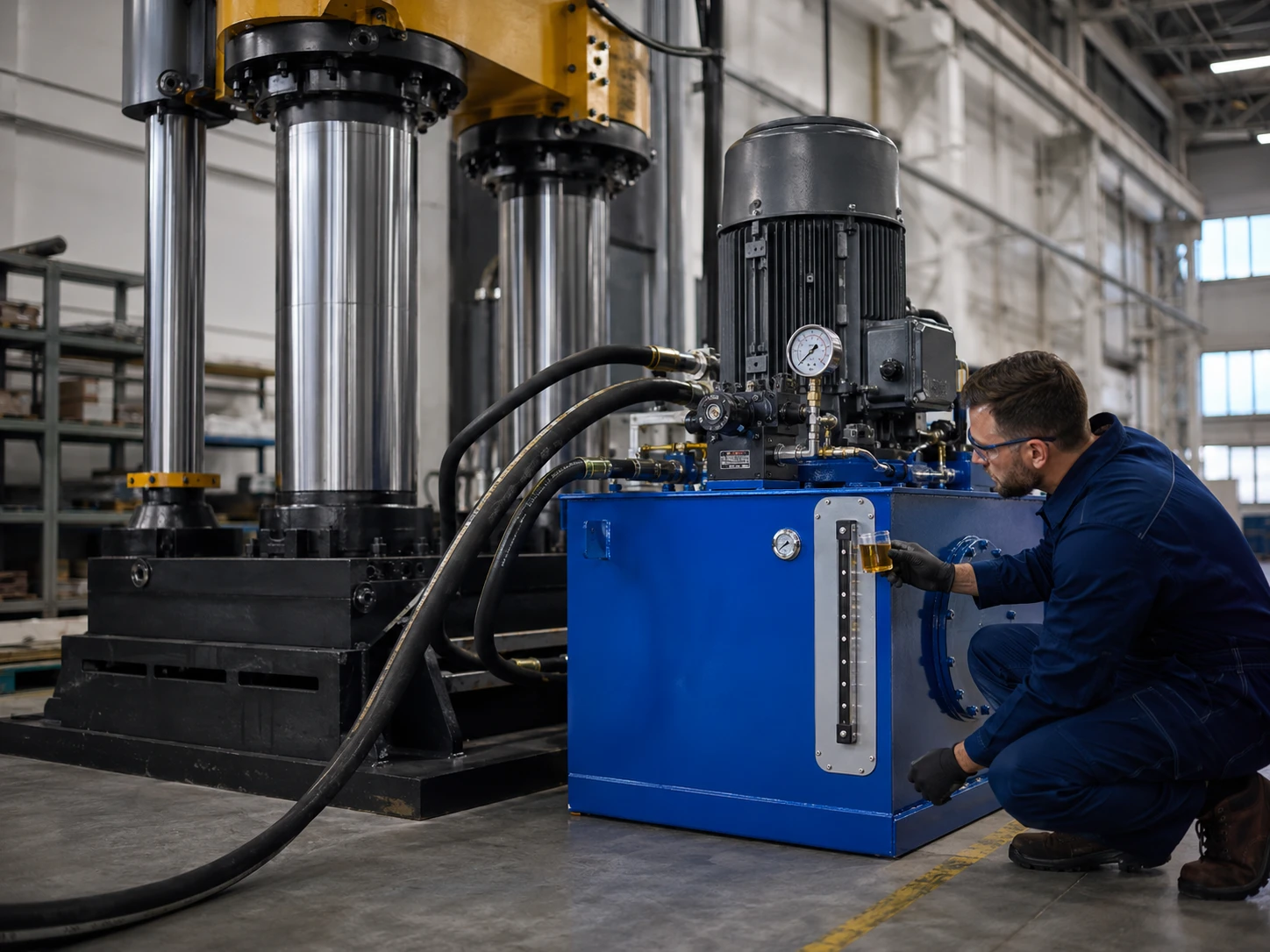
Contamination is the silent failure route. Hard particles can damage rod coatings, embed in soft sealing lips, and accelerate leakage even when the oil chemistry is correct. Water contamination can reduce lubricity, promote corrosion, and degrade additives. For procurement managers, the practical requirement is to ask the equipment supplier and oil supplier for the target cleanliness code, filtration rating, oil sampling interval, and commissioning flushing method before the cylinders are put under production load.
Industry demand is also shifting toward safer and more application-specific fluids. Fire-resistant fluids are increasingly specified in high-risk plants, while environmentally acceptable lubricants are requested in marine, forestry, and outdoor public works. These trends do not eliminate mineral oil, but they make early seal compatibility review more important.
What practical problems appear after an oil change?
The first signs of a bad oil change are usually leakage, jerky motion, higher temperature, foaming, slow extension, or seal debris in the filter. These symptoms should be treated as specification warnings, not as routine maintenance noise.
- Seal swelling: the rod seal becomes tight, friction rises, and the cylinder may stick-slip during low-speed movement.
- Seal shrinkage: the sealing lip loses contact pressure, causing external leakage or internal bypass.
- Viscosity mismatch: thin oil leaks across clearances; thick oil raises pressure drop and heat.
- Additive conflict: mixed oils may foam, separate water poorly, or reduce anti-wear protection.
- Particle contamination: dirty transfer containers introduce abrasive material during what should be a simple refill.
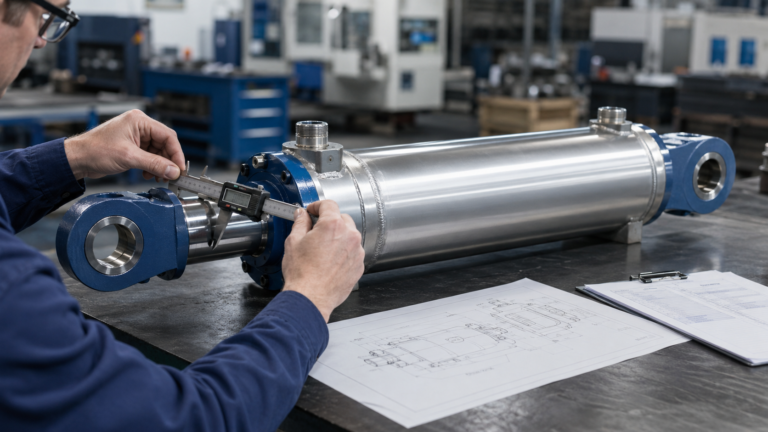
For a hydraulic cylinder supplier such as ZHY, the most useful buyer information is simple: oil brand and type, ISO viscosity grade, highest working oil temperature, lowest startup temperature, pressure range, stroke speed, and whether the system previously used a different fluid. Those details allow the engineering team to reduce leakage risk before the seal groove and material are finalized.
Practical Asset: oil and seal verification checklist before ordering cylinders
Use this checklist before ordering replacement cylinders, custom cylinders, or seal kits. It is designed for project contractors, OEM buyers, and maintenance engineers who need a practical sequence rather than a general recommendation.
- Ask the equipment owner for the current oil name, brand, ISO viscosity grade, and whether any emergency top-up oil has been added.
- Check the machine manual for approved hydraulic-fluid categories, not only the viscosity grade printed on the reservoir label.
- Record the lowest startup temperature and the highest stabilized oil temperature during the longest loaded cycle.
- Ask the oil supplier for the product data sheet and confirm whether the fluid is mineral, synthetic, water-glycol, phosphate ester, biodegradable, or another special type.
- Send the oil chemistry and temperature range to the cylinder or seal supplier before production, especially when using FKM, EPDM, HNBR, NBR, or polyurethane seals.
- Request a target cleanliness level or flushing requirement for commissioning, then confirm filter element rating and oil sampling access.
- Do not mix old and new fluids unless the oil supplier confirms compatibility in writing; drain, flush, or segregate the system when chemistry changes.
- After commissioning, inspect rod seals, wipers, hose ends, and reservoir foam during the first working shift and again after the first high-temperature cycle.
FAQ
1. Can I use engine oil in a hydraulic cylinder?
Engine oil should not be used unless the equipment manufacturer specifically approves it. Hydraulic oil is formulated for hydraulic pumps, valves, seals, oxidation control, air release, and water separation. Engine oil is designed around combustion-engine conditions and detergent packages that may not suit hydraulic valves or seals. If the system was built for mineral anti-wear hydraulic oil under ISO or ASTM hydraulic-fluid specifications, using engine oil can increase foaming, sluggish response, seal risk, and warranty problems.
2. Is ISO VG 46 always the best hydraulic oil for cylinders?
ISO VG 46 is common, but it is not always best. It works well in many moderate-temperature industrial systems, which is why buyers often treat it as the default. However, ISO VG 32 may be better for cooler equipment or faster response, while ISO VG 68 may be better for hotter, heavier-duty cylinders. The correct choice depends on operating oil temperature, pump requirements, cylinder speed, leakage sensitivity, and the original equipment specification.
3. What happens if hydraulic oil is too thin?
If hydraulic oil is too thin at operating temperature, the fluid film weakens and leakage across internal clearances can increase. A cylinder may drift, lose holding force, run hotter, or show faster wear at the piston seal and bearing surfaces. Thin oil can also reduce pump efficiency. The viscosity grade should be checked against real operating temperature because an oil that looks acceptable at startup may become too thin after a long loaded production cycle.
4. Which seals are compatible with hydraulic oil?
Many standard mineral hydraulic oils are compatible with common NBR and polyurethane sealing materials, but compatibility must still be verified by temperature, additive package, and pressure. FKM is often considered for higher temperature or selected synthetic-fluid conditions, while EPDM is generally unsuitable for petroleum oil but may be used with some non-petroleum fluids. Because seal compounds differ by manufacturer, buyers should confirm the exact oil chemistry before approving cylinder production or changing fluid type.
5. How often should hydraulic oil in cylinder systems be changed?
There is no universal safe interval because oil life depends on temperature, contamination, water ingress, duty cycle, reservoir size, filtration, and fluid type. A better method is condition-based maintenance using oil analysis, cleanliness monitoring, and inspection for oxidation, water, viscosity shift, and particle load. Systems exposed to heat, dust, outdoor weather, or high duty cycles usually need closer monitoring. Always follow the equipment maker’s manual and oil supplier guidance before extending drain intervals.
References
- ISO 3448:1992 Industrial liquid lubricants — ISO viscosity classification, International Organization for Standardization, ISO, 1992.
- ISO 6743-4:2015 Lubricants, industrial oils and related products — Classification — Part 4: Family H, Hydraulic systems, International Organization for Standardization, ISO, 2015.
- ISO 11158:2009 Lubricants, industrial oils and related products — Family H, Hydraulic systems — Specifications for categories HH, HL, HM, HV and HG, International Organization for Standardization, ISO, 2009.
- ISO 4406:2021 Hydraulic fluid power — Fluids — Method for coding the level of contamination by solid particles, International Organization for Standardization, ISO, 2021.
- ISO 4413:2010 Hydraulic fluid power — General rules and safety requirements for systems and their components, International Organization for Standardization, ISO, 2010.
- ASTM D6158-18 Standard Specification for Mineral Hydraulic Oils, ASTM International, ASTM International, 2018.
- Parker O-Ring Handbook ORD 5700, Parker Hannifin O-Ring and Engineered Seals Division, Parker Hannifin Corporation, 2021.
- Environmentally Acceptable Lubricants, United States Environmental Protection Agency, U.S. EPA, 2011.
How to make a defensible oil decision for hydraulic cylinders
A defensible hydraulic-cylinder oil decision starts with the working condition, not with a favorite oil grade. The practical sequence is: identify the fluid family, confirm viscosity at real operating temperature, verify seal chemistry, define cleanliness control, and then approve the cylinder design. This order matters because a cylinder is a system of interacting surfaces. Oil that protects the pump may still be wrong for the rod seal; oil that flows well in winter may be too thin at a hot loaded stroke; a biodegradable or fire-resistant fluid may solve a site requirement while creating a seal-material change.
The strongest purchasing position is to treat oil as an engineering input. ISO 3448 helps buyers speak clearly about viscosity grades, ISO 6743-4 and ISO 11158 help classify hydraulic-fluid categories, ISO 4406 makes contamination measurable, and ISO 4413 frames hydraulic-system safety expectations. None of these standards replaces the machine manual or the fluid supplier’s data sheet, but together they prevent vague ordering language such as “normal hydraulic oil.”
The market direction is toward more specific fluids, not fewer choices. Factories still use mineral anti-wear oil because it is proven, available, and cost-effective. At the same time, fire-risk plants, outdoor equipment owners, and environmental projects increasingly ask for fluids that meet special safety or site requirements. That makes early communication more valuable. If a buyer asks which oil is used in hydraulic cylinder systems, the short answer is mineral anti-wear hydraulic oil for standard industrial work. The professional answer is to share oil type, viscosity grade, operating temperature, and seal requirements before the cylinder is built. That is the difference between a cylinder that merely moves and a cylinder that stays dry, stable, and serviceable over its intended life.