Why do buyers confuse ram cylinders and piston cylinders?
The confusion starts because both products convert hydraulic pressure into linear force, but they do not control motion in the same way. A ram-style unit is usually selected for simple lifting or pressing, while a piston-based cylinder is selected when the machine must extend, retract, stop, and hold position under command.
For an engineering buyer or procurement manager, the risky mistake is not buying the wrong name; it is specifying the wrong motion behavior. A maintenance jack, press bed adjustment system, or fixture clamp may only need force in one direction. A production press, positioning device, or automated lift table may need predictable two-way movement.
A plunger cylinder normally has pressure acting on one effective area, with return provided by gravity, spring force, or external load. A piston hydraulic cylinder uses a piston inside a barrel, often with ports on both sides, so oil can drive extension and retraction. That difference changes control accuracy, circuit design, safety review, and long-term maintenance cost.
What is the core mechanical difference?
The core difference is the sealing and pressure area: a ram cylinder pushes directly through a plunger, while a piston cylinder separates two pressure chambers with a piston and rod. That makes the ram simpler and robust for one-way work, but the piston design offers better controlled return and positioning.
Definition: A ram cylinder, also called a hydraulic ram or plunger cylinder, is a linear actuator where hydraulic pressure acts on a solid or sleeve-like plunger to produce outward force. It is commonly single-acting, so retraction depends on spring force, gravity, or an external mechanical return.
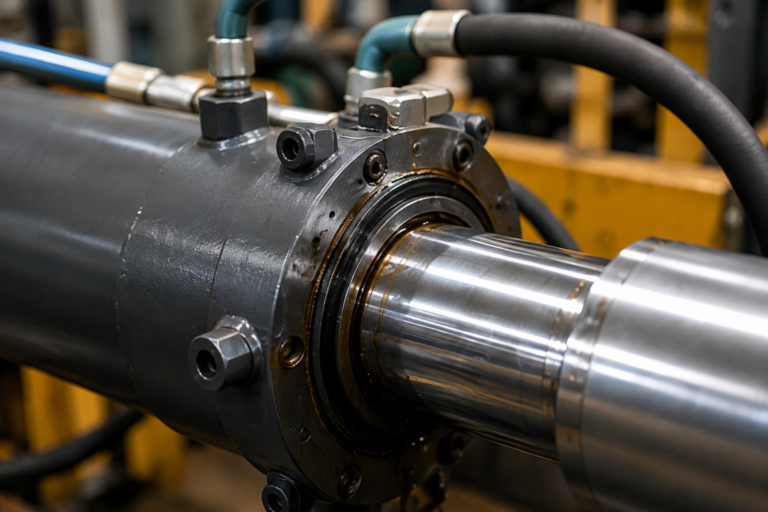
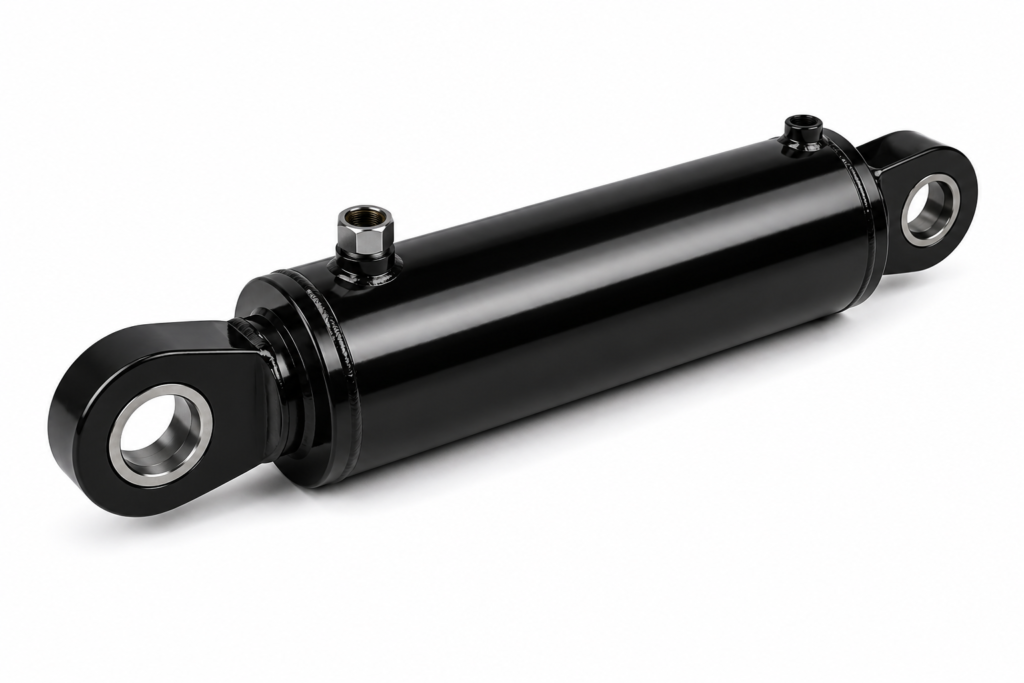
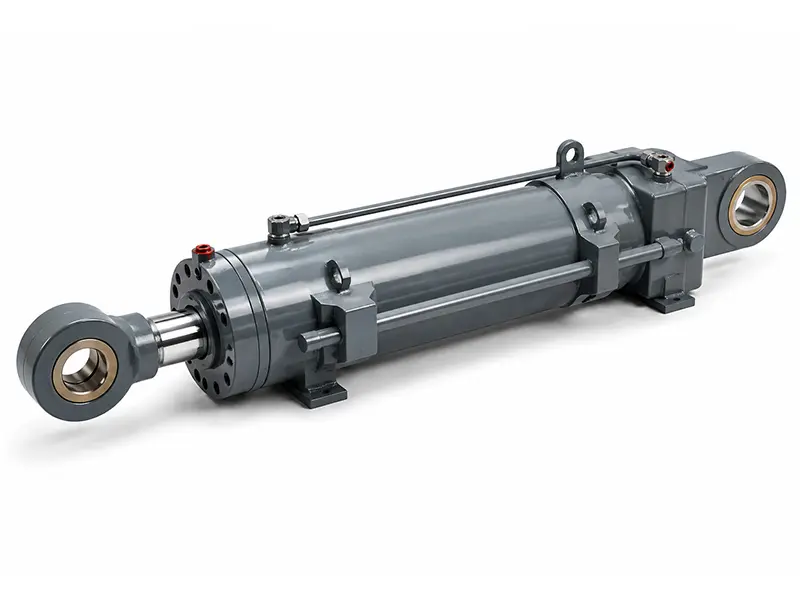
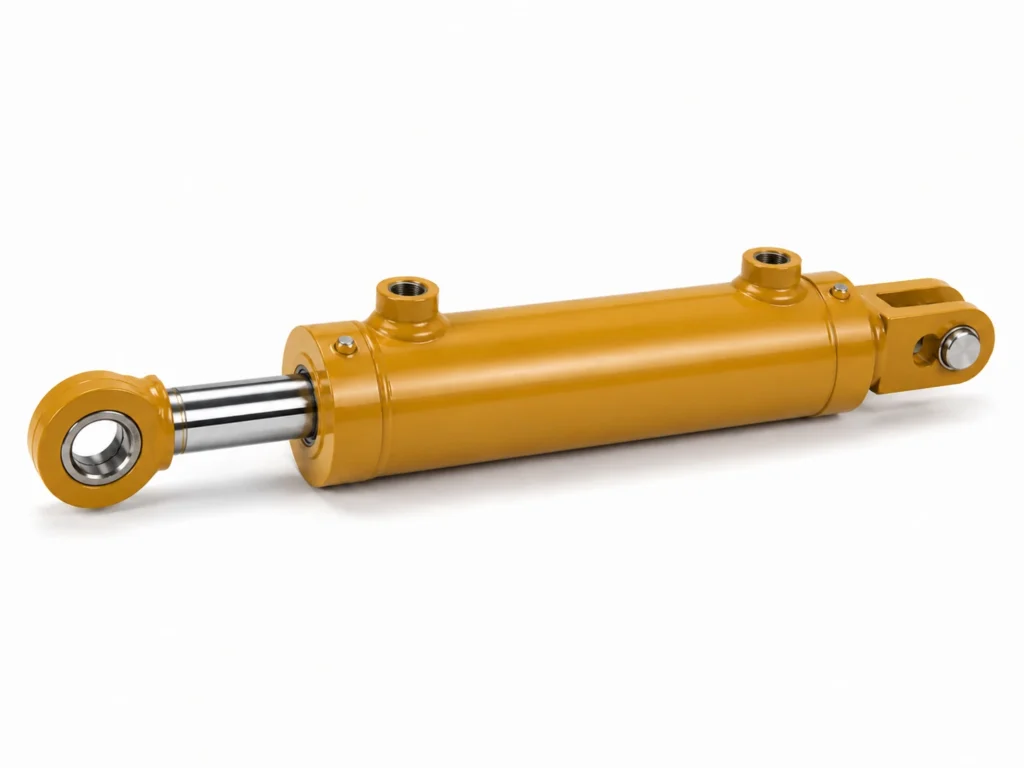
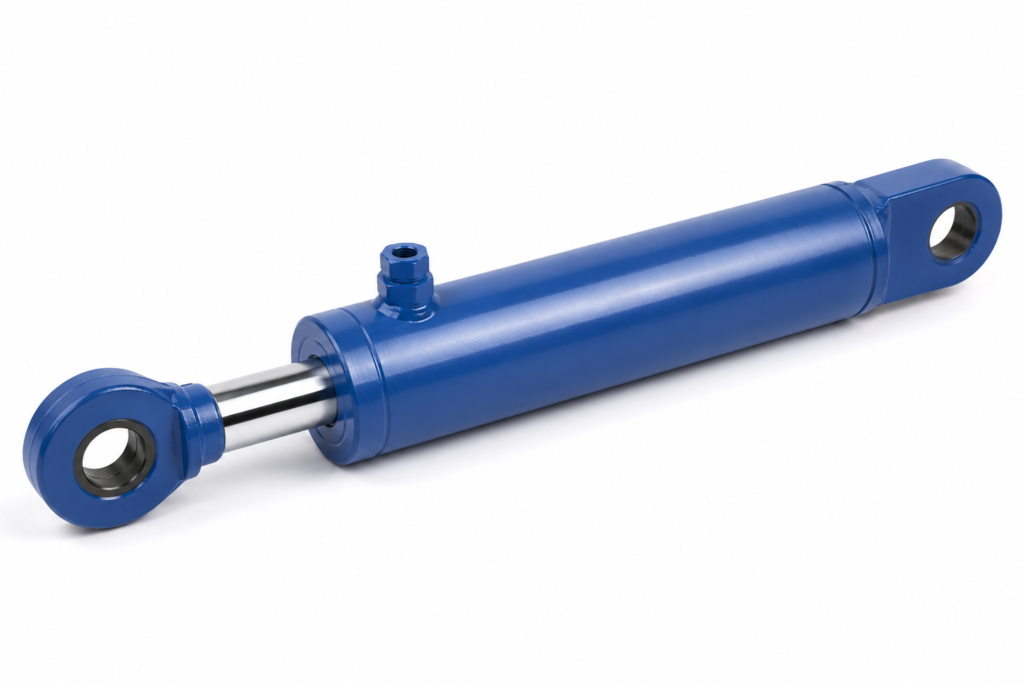
A piston cylinder has a piston assembly with seals moving inside a honed tube. In a double-acting version, oil pressure can be applied alternately to the cap end and rod end. This gives the designer active control in both directions, although the retracting force is usually lower than extending force because the rod reduces effective area on one side.
ISO 6020-1 covers 16 MPa, or 160 bar, mounting dimensions for certain single-rod cylinders, while ISO 6022 covers 25 MPa, or 250 bar, single-rod cylinder mounting dimensions. These standards do not make every cylinder interchangeable, but they show why piston cylinders are frequently specified in engineered machinery where mounting, stroke, and interface repeatability matter.
Key Takeaways
- Choose a ram cylinder when force is needed mainly in one direction and return can be handled by gravity, spring, or the machine frame.
- Choose a piston cylinder when the application requires powered retraction, repeatable positioning, or controlled two-way movement.
- For lifting and jacking, simple hydraulic ram designs are compact and force-dense, but they are not ideal for precise retract control.
- For pressing fixtures, automation, and guided motion, a piston hydraulic cylinder usually reduces control risk and commissioning time.
- Check ISO 4413 safety principles, ISO 10100 acceptance testing, and machine-specific lockout requirements before approving a cylinder package.
When should you choose a ram cylinder?
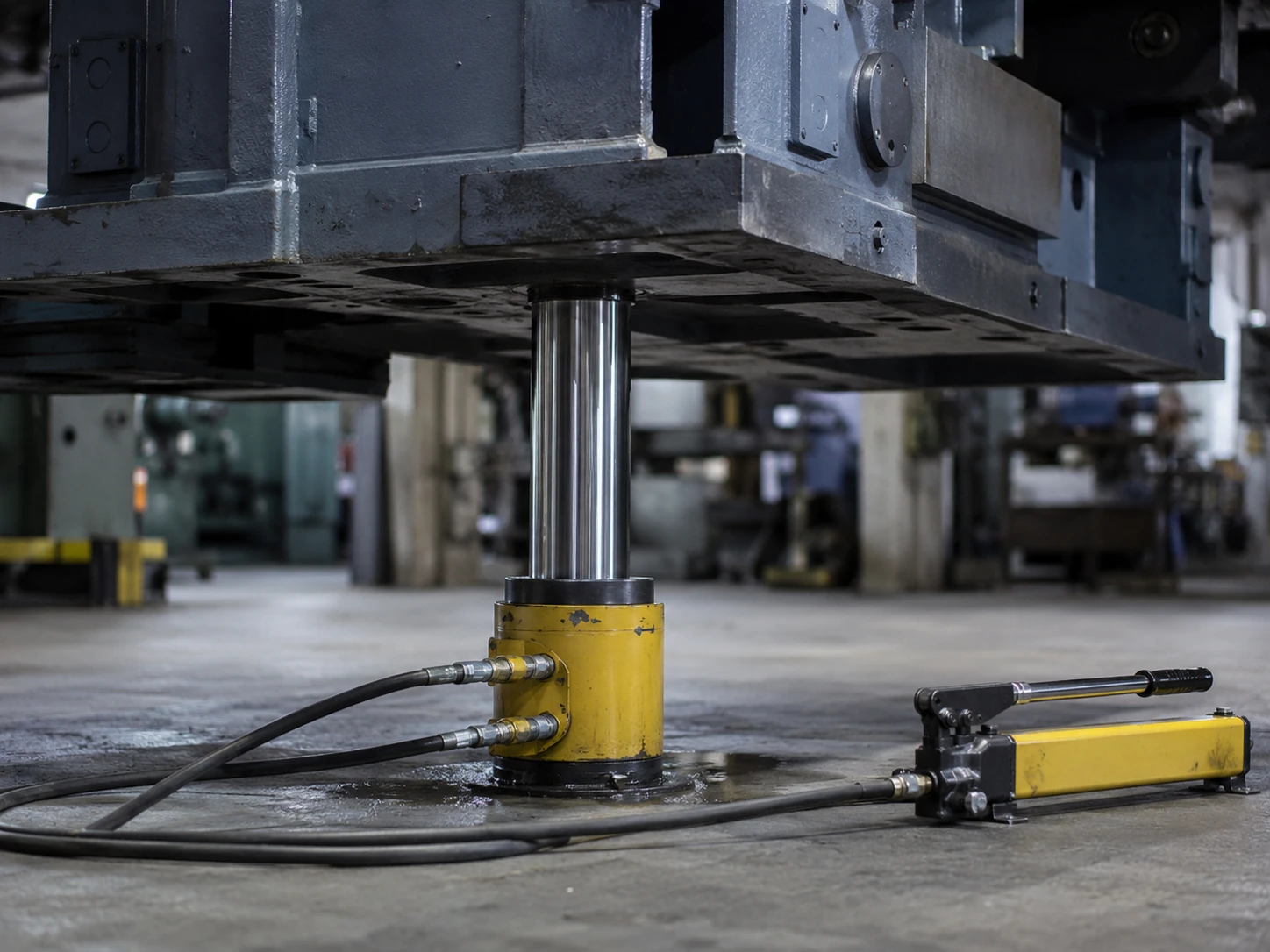
Choose a ram cylinder when the application needs strong pushing force, short-to-medium stroke, and a simple return method. The best examples are maintenance lifting, bridge bearing work, shop-floor jacking, static load support during repair, and vertical pressing where gravity can help retract the plunger.
A ram design has fewer internal control surfaces than a double-acting piston cylinder. This can make it compact for high-force lifting packages. Many portable industrial lifting cylinders are single-acting because the operator pumps oil in to raise the load and then releases oil to lower it in a controlled way through the valve.
The limitation is equally important: a ram should not be treated as a positioning actuator unless the external system provides guidance, metering, and mechanical safety. If a buyer applies a ram to a fixture that needs accurate retract timing, the return motion may lag, bounce, or stop before the machine cycle is ready. That is the classic control failure in this comparison.
When is a piston hydraulic cylinder the safer choice?
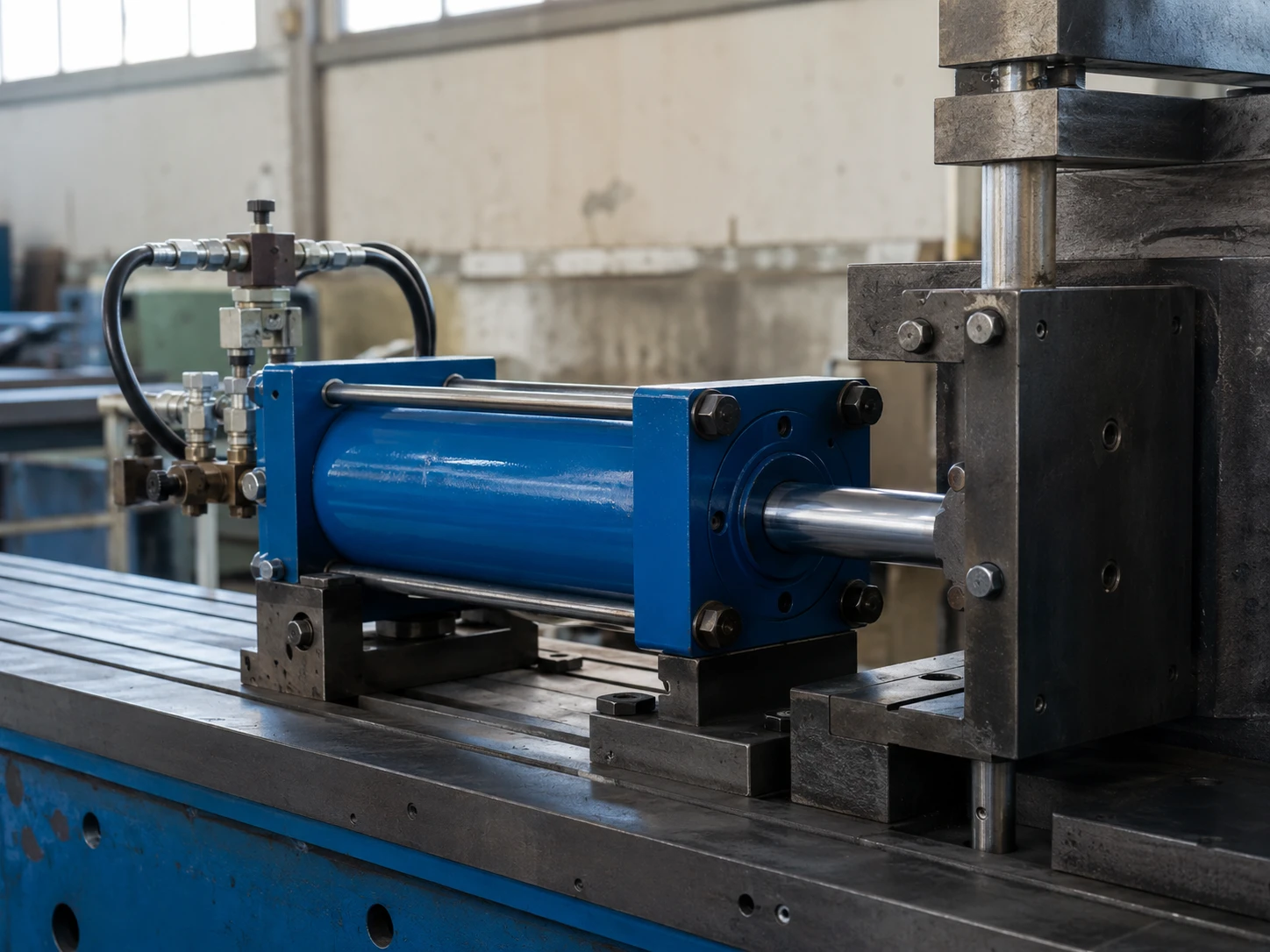
A piston cylinder is the safer choice when the machine needs active extension and active retraction, especially in production pressing, clamping, lifting tables, die handling, and process equipment. It gives the control system a direct hydraulic method to move the rod in both directions.
In a fabrication fixture, for example, the cylinder may need to press a workpiece, retract fully before the operator unloads it, and confirm position through a sensor. A double-acting piston hydraulic cylinder fits that logic better than a ram, because hydraulic pressure can be directed to either side of the piston.
The cost is higher circuit complexity. You may need a directional control valve, flow controls, counterbalance or pilot-operated check valves, and more careful seal selection. However, that added complexity is often cheaper than downtime caused by uncontrolled retract behavior, damaged tooling, or manual intervention after every cycle.
How do performance parameters compare for lifting and pressing?
The useful comparison is not only force output; it is force, control, return method, mounting, seal exposure, acceptance testing, and safety circuit design. For most lifting and pressing buyers, the decision becomes clear when each parameter is connected to a real failure mode.
| Parameter | Ram cylinder | Piston cylinder | Buyer priority |
|---|---|---|---|
| Typical motion direction | Primarily one powered direction; return by gravity, spring, or external load | One-way or two-way; double-acting versions power both extension and retraction | Choose based on whether retract control is essential |
| Control accuracy | Suitable for simple lifting and static pressing; limited active retract control | Better for repeatable stroke control, sequencing, and sensor integration | Prioritize piston design for automated equipment |
| Standard pressure references | Portable high-force rams are often cataloged separately by manufacturer series | ISO 6020-1 references 16 MPa series; ISO 6022 references 25 MPa series | Use standards where mounting interchangeability matters |
| Acceptance testing | Pressure integrity and stroke function still require documented testing | ISO 10100 provides acceptance-test guidance for hydraulic cylinders | Require test records before shipment |
| Best project fit | Jacking, lifting, maintenance support, simple pressing | Production presses, guided lifts, clamps, automated mechanisms | Match cylinder behavior to machine cycle risk |
How to use this table: read the “motion direction” and “control accuracy” rows first; if both products seem acceptable, choose the option with the lower safety and commissioning risk, not simply the lower cylinder price.
What terms should buyers clarify before requesting quotes?
Clarifying terminology prevents quotation errors. Suppliers may use “ram,” “plunger,” “single-acting cylinder,” and “jack cylinder” differently across catalogs, so the purchase request should define motion, mounting, stroke, pressure, load-holding method, and acceptance requirements in plain engineering language.
- Ram cylinder
- A cylinder where hydraulic pressure acts on a plunger or ram to generate linear force, usually in one powered direction.
- Plunger cylinder
- A common term for a ram-style actuator with a plunger element; often used in jacking, high-force lifting, and simple pressing systems.
- Piston hydraulic cylinder
- A cylinder using an internal piston and seals to create separate pressure chambers, enabling single-acting or double-acting motion control.
- Load holding
- The ability of the hydraulic circuit and mechanical system to prevent uncontrolled movement under load, commonly supported by check valves, counterbalance valves, mechanical locks, or safe blocking methods.
Which applications expose the biggest selection risks?
The largest risk appears when a simple lifting cylinder is pushed into a controlled machine-cycle role. If the system must retract on command, synchronize with tooling, or hold position while operators work nearby, a basic ram may create unacceptable control and safety exposure.
| Situation | Recommended cylinder type | Reason | Procurement check |
|---|---|---|---|
| Vertical machine lifting for maintenance | Ram cylinder | High push force is needed, and return can be managed after unloading | Ask for rated capacity, stroke, safety factor guidance, and pressure test record |
| Automated press with timed retract | Piston cylinder | Powered retract prevents cycle delay and tooling interference | Confirm valve logic, sensor mounting, cushioning, and seal compatibility |
| Fixture clamping with operator loading | Piston cylinder | Controlled release and repeatable position improve operator safety | Specify fail-safe load holding and lockout procedure compatibility |
| Occasional shop pressing | Ram cylinder | Simple one-way force is usually enough for low-frequency manual work | Check frame guidance, pressure gauge range, and return method |
How to use this table: start from the “Situation” column, then challenge the recommendation with the “Procurement check”; if the retract action affects safety, cycle time, or tooling clearance, move toward the piston option.
What standards and safety requirements matter?
Hydraulic cylinder selection should be tied to machine safety, not treated as a catalog-only decision. ISO 4413 gives general rules and safety requirements for hydraulic fluid power systems, while ISO 10100 addresses acceptance testing for hydraulic cylinders. In the United States, OSHA lockout/tagout rules under 29 CFR 1910.147 are also relevant when stored hydraulic energy could create hazardous motion during service.
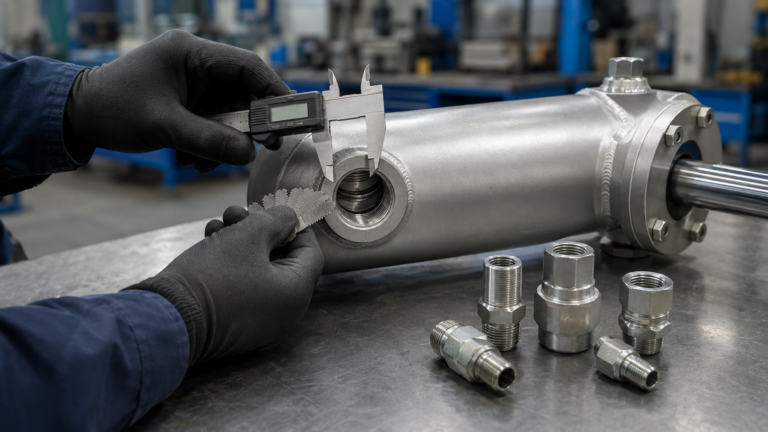
For piston cylinders in machinery, ISO 6020-1 and ISO 6022 are often useful reference points because they define mounting dimensions for common pressure series. The buyer should still confirm bore, rod diameter, stroke tolerance, port type, seal material, mounting style, and operating fluid. A drawing that only says “hydraulic cylinder” is not enough for repeatable procurement.
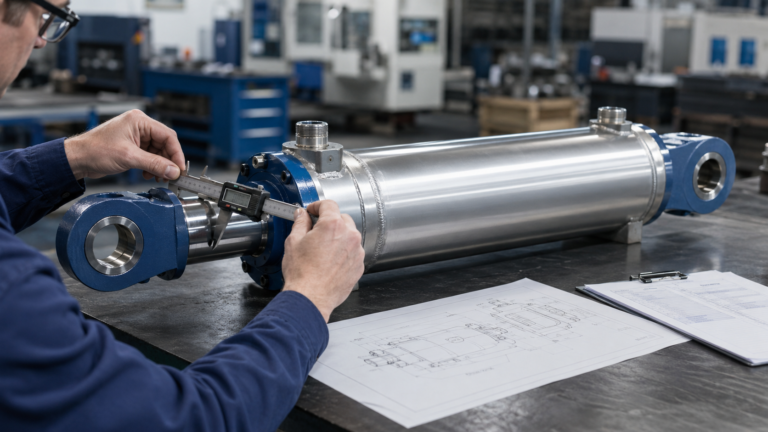
ZHY buyers who source for lifting or pressing equipment should also ask whether the supplier performs proof pressure testing, leakage inspection, dimensional inspection, and surface checks before shipment. Where a cylinder supports a suspended load, mechanical blocking and load-holding valves should be reviewed by a qualified engineer rather than assumed from cylinder capacity alone.
How are market and design trends changing cylinder selection?
The trend in industrial lifting and pressing is toward more documented control, not less. Even simple hydraulic equipment is increasingly expected to include traceable testing, clearer load-holding logic, safer maintenance procedures, and compatibility with sensors or automated controls.
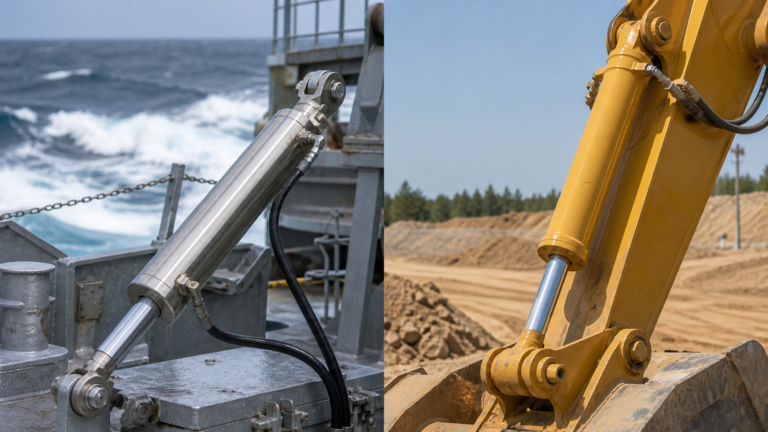
This trend favors piston cylinders in automated production, because machine builders want confirmation of extension, retraction, pressure, and cycle completion. At the same time, hydraulic rams remain important in maintenance and construction because they deliver high force in compact packages and can be deployed quickly with portable pumps.
Procurement teams are also asking for more complete quotation packs. Instead of requesting only price and lead time, stronger buyers request a drawing, pressure rating, seal specification, inspection standard, packaging method, and replacement-part plan. ZHY can support this discussion by helping buyers confirm motion direction, load holding, and working environment before the cylinder type is frozen.
Practical Asset: a copy-ready cylinder selection checklist
Use this checklist before asking a supplier for a quotation. It is written for lifting and pressing applications where the main risk is choosing a simple ram for a motion cycle that actually requires powered return.
- Define the motion first: write whether the cylinder must push only, pull only, or push and retract under power. If retraction timing affects the next machine step, specify a double-acting piston design.
- State the load condition: record maximum load, working load, direction of gravity, whether the load is guided, and whether people can be near the load during movement.
- Ask for the return method: require the supplier to state spring return, gravity return, external return, or hydraulic return. Do not accept “standard return” without explanation.
- Check load holding: ask whether the design uses pilot-operated check valves, counterbalance valves, mechanical locking, or external blocking. For suspended loads, do not rely only on seal friction.
- Request test evidence: ask for pressure test records, leakage inspection results, stroke confirmation, and visual inspection notes aligned with the supplier’s quality procedure or ISO 10100 where applicable.
- Confirm interfaces: verify mounting dimensions, port thread, hose orientation, stroke length, closed height, open height, rod end style, and space for maintenance access.
- Review maintenance safety: require instructions for pressure release and lockout. If the equipment is used in the U.S., align procedures with OSHA hazardous-energy control expectations.
FAQ
1. Is a ram cylinder the same as a piston cylinder?
No. A ram cylinder usually uses hydraulic pressure on a plunger to create force in one powered direction, while a piston cylinder uses a piston and seals inside a barrel to create controlled movement. Some piston cylinders are single-acting, but double-acting versions can power both extension and retraction. The practical difference is control: a ram is excellent for simple lifting or pressing, while a piston design is better when the machine cycle requires repeatable return motion.
2. Can a hydraulic ram retract by itself?
A hydraulic ram may retract by gravity, spring force, or an external load, but it does not automatically provide powered retraction unless the design specifically includes that function. This matters in pressing and lifting systems because return speed and position may vary with load, friction, hose restriction, and valve setting. If your process needs a predictable retract stroke, a double-acting piston cylinder is usually the safer specification.
3. Which cylinder is better for a hydraulic press?
For a manual shop press that only needs downward force and can return slowly, a ram or plunger cylinder may be suitable. For a production press that must retract on time, coordinate with guarding, or repeat the same stroke many times per shift, a piston hydraulic cylinder is usually better. The choice should be based on motion control, not force alone, because uncontrolled retraction can delay production or damage tooling.
4. What standards should I mention in a cylinder RFQ?
For engineered hydraulic systems, ISO 4413 is a useful safety reference because it covers general rules for hydraulic fluid power systems. ISO 10100 is relevant for hydraulic cylinder acceptance testing. If you need standardized mounting dimensions for piston cylinders, ISO 6020-1 and ISO 6022 may apply depending on pressure series and design. Always ask the supplier to confirm which standards are applicable to the quoted product.
5. What is the most common buying mistake in this comparison?
The most common mistake is buying a simple ram cylinder for equipment that needs precise or powered retraction. The cylinder may lift or press correctly, but the return stroke can become inconsistent once load, oil temperature, friction, or valve condition changes. That creates control failure in fixtures, automated presses, and lifting devices. Before ordering, confirm motion direction, return method, load holding, and inspection records with the supplier.
References
- ISO 4413:2010 Hydraulic fluid power — General rules and safety requirements for systems and their components, International Organization for Standardization, ISO, 2010.
- ISO 10100:2020 Hydraulic fluid power — Cylinders — Acceptance tests, International Organization for Standardization, ISO, 2020.
- ISO 6020-1:2007 Hydraulic fluid power — Mounting dimensions for single rod cylinders, 16 MPa (160 bar) series — Part 1: Medium series, International Organization for Standardization, ISO, 2007.
- ISO 6022:2005 Hydraulic fluid power — Mounting dimensions for single rod cylinders, 25 MPa (250 bar) series, International Organization for Standardization, ISO, 2005.
- 29 CFR 1910.147 — The control of hazardous energy (lockout/tagout), Occupational Safety and Health Administration, U.S. Department of Labor, current eCFR edition.
- Industrial Hydraulic Cylinders Catalog HY08-1132/US, Parker Hannifin Corporation, Parker Cylinder Division, 2023.
- RC-Series General Purpose Cylinders, Enerpac Tool Group, Enerpac, 2024.
- Hydraulic Cylinders CDH2 / CGH2 Series Catalog RE 17335, Bosch Rexroth AG, Bosch Rexroth, 2022.
How should buyers make the final cylinder decision?
The best way to decide is to describe the motion requirement before naming the cylinder. If the work only needs a strong push and the return stroke is slow, unloaded, or handled by gravity, a ram or plunger design is a practical and economical choice. If the cylinder must retract on command, coordinate with other actuators, hold a position during a sequence, or release a workpiece predictably, a piston-based cylinder is the more reliable engineering route.
This distinction matters because lifting and pressing applications often look simple until the return stroke is considered. A hydraulic ram can raise a machine base, press a bearing, or support a load during maintenance, but it should not be expected to behave like a servo-controlled actuator. A double-acting piston cylinder gives the hydraulic circuit a clear way to control both sides of motion, which improves commissioning logic and reduces operator workarounds.
From a compliance and quality perspective, the buyer should also connect the decision to standards and documentation. ISO 4413 supports safe hydraulic system design principles, ISO 10100 supports cylinder acceptance-test expectations, and OSHA lockout/tagout rules highlight the need to control hazardous stored energy during maintenance. These references do not replace project engineering, but they help procurement teams ask stronger questions.
The strongest purchasing position is therefore not “ram is cheaper” or “piston is better.” The stronger position is: use a ram when one-direction force is the main job, and use a piston hydraulic cylinder when controlled two-way movement protects safety, tooling, and production uptime. Before approving a purchase order, confirm motion direction, load holding, return method, working pressure, mounting dimensions, inspection evidence, and maintenance procedure. That short review prevents the most expensive failure in this topic: a cylinder that generates enough force but cannot control the machine when the load must come back.