Why do seal kits fail when the old seal “looks the same”?
Seal kits fail after a visual match because hydraulic seals work by controlled squeeze, extrusion clearance, surface finish, fluid compatibility, and pressure direction, not by outline alone. A seal that looks similar can have the wrong cross-section, lip geometry, hardness, or compound, causing leakage within hours of installation.
This is the common repair-shop mistake: the technician removes a rod seal, matches it to a catalog picture, and orders a low-cost kit. The cylinder is reassembled, passes a short idle test, and then leaks again after the machine returns to load. The root cause may be a worn rod, contaminated oil, wrong polyurethane hardness, or a groove that does not match the replacement profile.
For procurement managers, maintenance teams, and equipment rebuilders, hydraulic cylinder seal kit measurement should begin with the cylinder hardware, not the damaged rubber. Old seals are often swollen, flattened, cut, or thermally aged, so their apparent size is not reliable. Parker’s O-Ring Handbook explains that elastomer seals are affected by compression set, swelling, and chemical exposure; that is why measuring a used seal alone can mislead the repair decision.
The practical position is clear: if the cylinder has failed once because of age, a correct seal kit may solve it. If it fails repeatedly, do not keep buying visually similar seals. Check rod finish, oil contamination, operating pressure, temperature, and fluid compatibility before approving another kit.
What should you measure before ordering a hydraulic cylinder seal kit?
Measure the rod diameter, bore diameter, gland groove, piston groove, seal ID, seal OD, seal cross-section, and wear-ring dimensions before ordering. The fastest reliable method is to record the metal dimensions first, then compare the removed seals against the groove and operating conditions.
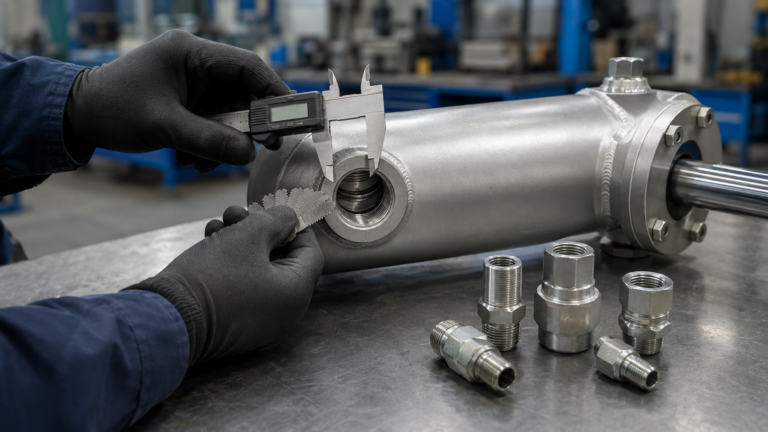
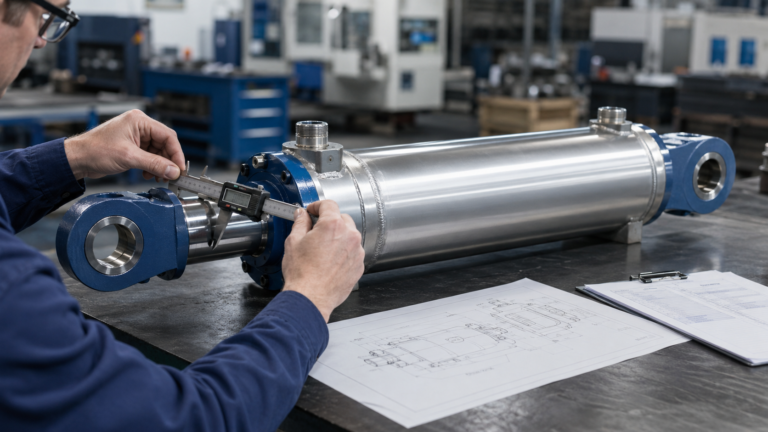
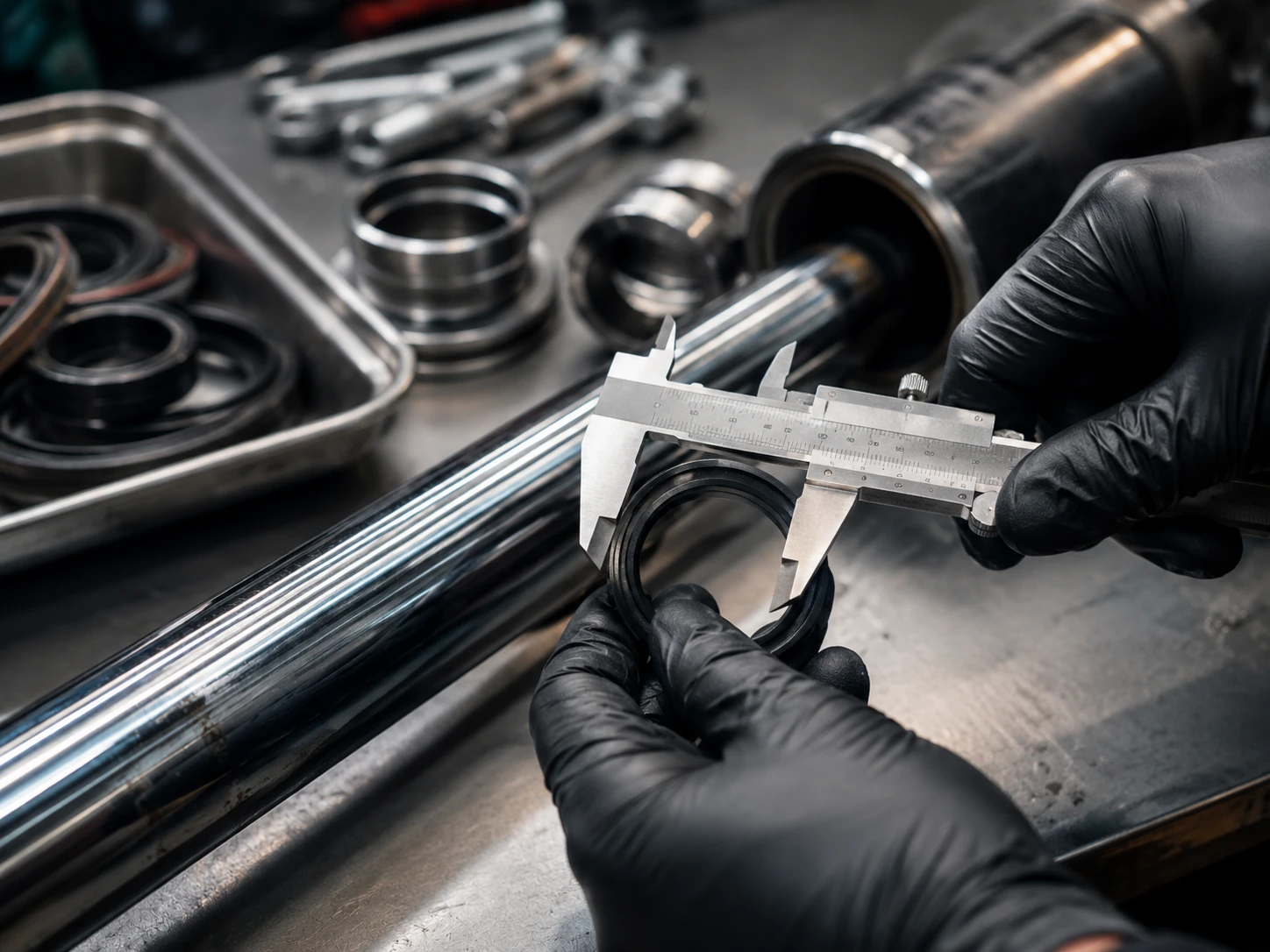
Start with clean parts. Wipe oil from the rod, piston, gland, and barrel mouth, but do not polish away damage before inspection. Use a digital caliper for general dimensions, a micrometer for rod and bore-related precision, a depth gauge for grooves, and a bright inspection light for scoring or pitting. If the cylinder is from a critical machine, photograph every seal in removal order.
Rod seals and wipers are usually selected from rod diameter and gland housing dimensions. Piston seals are usually selected from bore diameter and piston groove dimensions. O-rings and backup rings require inside diameter and cross-section, with ISO 3601 providing standardized O-ring dimensional references. Non-standard cylinders, older agricultural cylinders, and imported equipment may not follow a familiar catalog kit, so the measured groove becomes more important than the model number.
When ZHY supports seal kit selection for maintenance or replacement cylinder projects, the most useful information is not a single photo. A complete measurement set, fluid type, working pressure range, and failure symptom give a much stronger basis for identifying the right seal profile and compound.
Key Takeaways
- Measure cylinder hardware first because used seals can be swollen, flattened, cut, or permanently compressed.
- Rod diameter, bore diameter, groove width, groove depth, seal ID/OD, and cross-section are the core dimensions for kit selection.
- Repeated leakage after seal replacement usually points to rod finish, contamination, pressure spikes, or fluid incompatibility.
- ISO 3601 helps standardize O-ring dimensions, while ISO 5597 is relevant to hydraulic cylinder seal housing dimensions.
- For mobile equipment, material selection matters because polyurethane, NBR, FKM, and PTFE behave differently under pressure, heat, and oil exposure.
How do you measure rod, bore, groove, ID, OD, and cross-section correctly?
The correct sequence is rod and bore first, groove second, removed seal third, and material evidence last. This order prevents a damaged seal from becoming the master dimension and helps you identify cylinder seals by function instead of guesswork.
How do you measure the rod and bore?
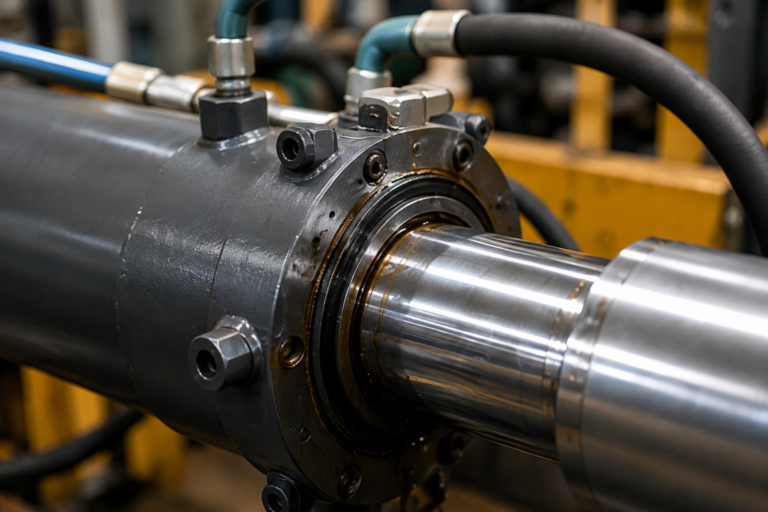
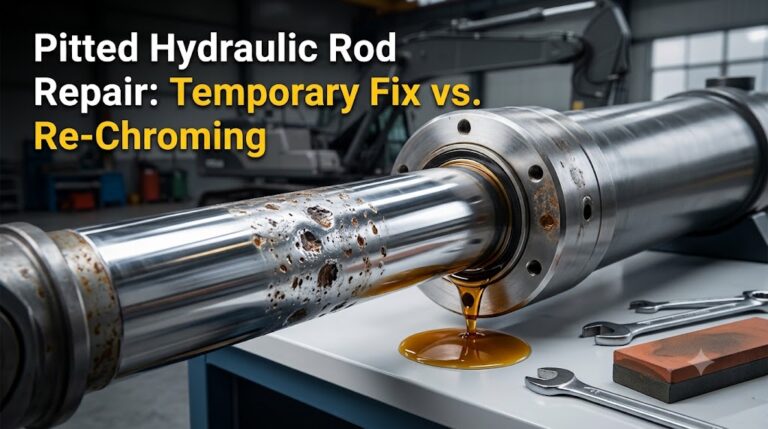
Measure the rod with a micrometer at several points along the stroke area, especially near the zone where leakage appeared. A chrome rod with local wear, corrosion pits, or scoring can destroy a new rod seal quickly. If the rod is visibly damaged, seal replacement alone is a short-term repair, not a reliable fix.
Measure the cylinder bore from the piston side when the cylinder is disassembled. Bore diameter determines piston seal sizing, but bore condition also matters. A scratched or bell-mouthed barrel can allow internal bypass, heat generation, and weak holding force even if external leakage is absent.
How do you measure seal grooves?
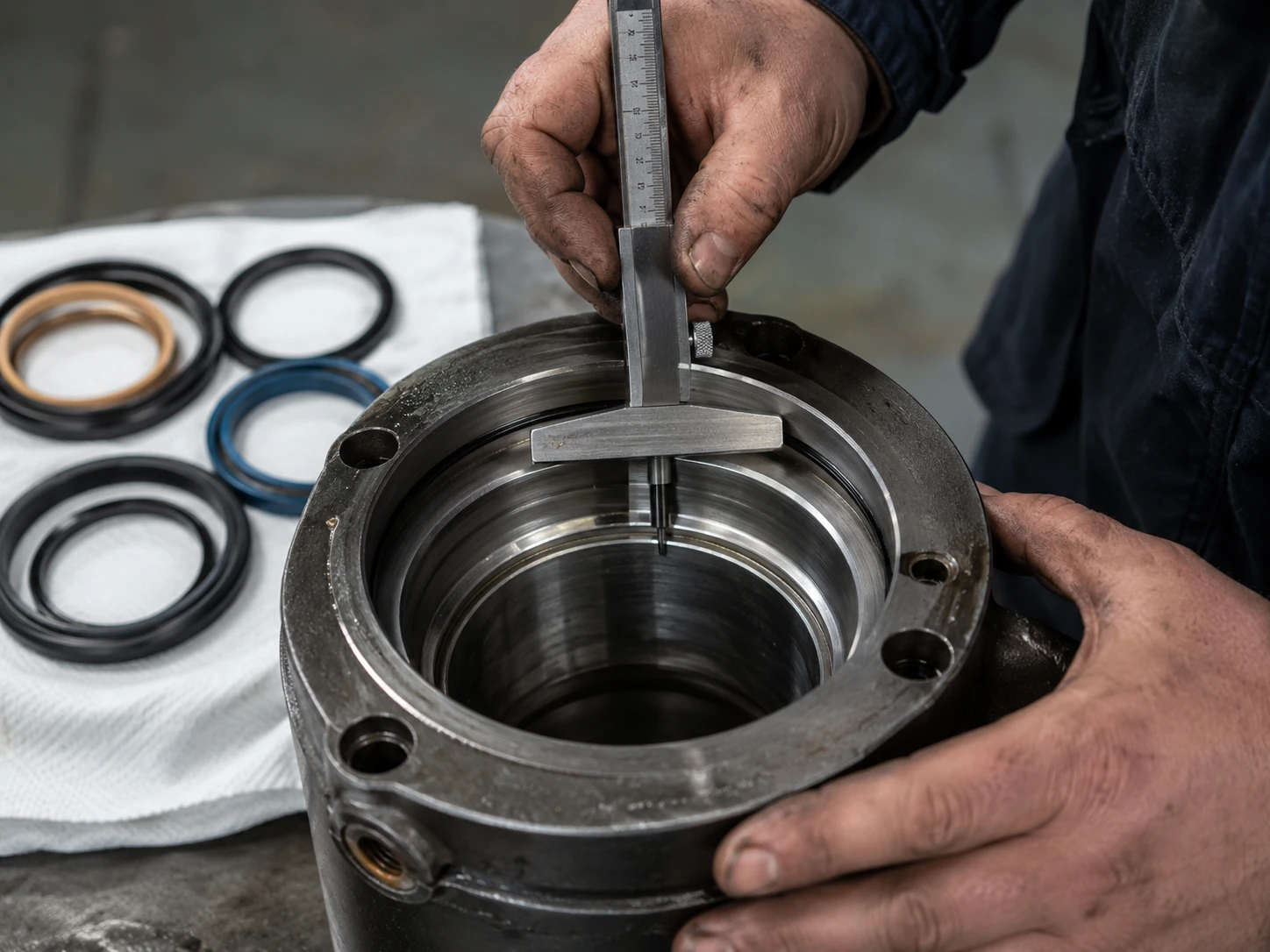
Measure groove width between the shoulders and groove depth from the sealing surface to the groove floor. Check whether the groove has a square shoulder, chamfer, stepped geometry, or backup-ring space. ISO 5597 is a useful reference because hydraulic seal housings are dimensional systems, not just spaces where rubber is inserted.
For a rod gland, the rod diameter and gland housing define the seal space. For a piston, the bore diameter and piston groove define the seal envelope. If groove depth is too large, the seal may not energize. If groove depth is too small, the seal may over-compress, overheat, or extrude.
How do you measure ID, OD, and cross-section?
For an O-ring, inside diameter and cross-section are the key values. For lip seals, measure ID, OD, height, and lip orientation, but treat those numbers as confirmation rather than the only basis. Cross-section is the radial thickness of the seal body and is often the dimension that separates a good fit from a leak.
Use light caliper pressure on elastomers. Squeezing a soft seal can distort the reading. If you have several identical removed seals, compare them and use the least damaged one as a reference, then validate against the groove. This is the safest approach to hydraulic cylinder seal kit measurement when no part number is visible.
Which seal terms should a buyer know before comparing kits?
Buyers should know the difference between a rod seal, piston seal, wiper, wear ring, O-ring, backup ring, and energizer before approving a kit. These terms describe different jobs inside the cylinder, so mixing them up leads to wrong materials, wrong profiles, and poor failure analysis.
- Rod seal
- A dynamic seal installed in the gland to prevent pressurized oil from leaking along the moving rod.
- Piston seal
- A seal mounted on the piston to separate pressure chambers and prevent internal bypass inside the cylinder barrel.
- Wiper or scraper
- An external-facing component that removes dirt, water, and debris from the rod before it retracts into the gland.
- Wear ring
- A guide element that supports side load and prevents metal-to-metal contact between rod, piston, gland, and barrel.
- Backup ring
- A harder support ring used with an elastomer seal to reduce extrusion into clearance gaps under pressure.
- Energizer
- An O-ring or spring-like element that provides initial force behind a PTFE or composite seal profile.
This vocabulary matters during purchasing because a “complete kit” is not always complete for every rebuild. Some kits include only dynamic seals; others include wipers, static O-rings, wear rings, and backup rings. When the machine downtime cost is high, ask the supplier to list every component by function, material, and quantity before dispatch.
What material notes should you record during measurement?
Record color, hardness impression, profile type, fluid type, temperature exposure, and pressure severity, then confirm with supplier data. Material selection is not cosmetic; NBR, polyurethane, FKM, PTFE, and fabric-reinforced composites respond differently to oil, heat, extrusion, friction, and contamination.
NBR is common for mineral hydraulic oil and general sealing. Polyurethane is widely used for dynamic hydraulic seals because it offers strong abrasion and extrusion resistance. FKM is selected where higher heat or chemical resistance is needed. PTFE-based seals are used when low friction, chemical resistance, or high speed is important, often with an energizer.
Temperature and hardness data should be treated as supplier-specific rather than universal. Parker’s published elastomer guidance commonly places NBR in moderate oil-service temperature ranges and FKM at higher heat capability, while ASTM D2240 and ISO 48-4 describe accepted hardness test methods rather than selecting the compound for you. This distinction helps buyers avoid false precision.
| Material family | Typical role | Practical strength | Main caution | Relevant source basis |
|---|---|---|---|---|
| NBR | O-rings, static seals, some dynamic seals | Good compatibility with many mineral hydraulic oils | Limited high-temperature and ozone resistance compared with FKM | Parker O-Ring Handbook; ASTM D2000 classification practice |
| Polyurethane | Rod seals, piston seals, wipers | Strong abrasion and extrusion resistance in mobile hydraulics | Compound must match temperature, fluid, and hydrolysis exposure | Trelleborg hydraulic sealing guidance; SKF hydraulic seal guidance |
| FKM | Higher-temperature O-rings and specialty seals | Better heat and chemical resistance than general NBR | Higher cost and not automatically best for every hydraulic fluid | Parker material guidance; ASTM D2000 material classification |
| PTFE composite | Low-friction rod or piston seals with energizers | Low friction and broad chemical resistance | Requires correct energizer, groove design, and installation care | SKF and Trelleborg technical sealing references |
How to use this table: prioritize the “Typical role” column when identifying the seal function, then use “Main caution” to decide what must be verified before purchase; if two materials appear suitable, choose the one with better compatibility for the actual fluid and temperature rather than the one that simply looks closest.
How do repeated seal failures change the measurement decision?
Repeated seal failure means the seal kit should not be treated as the only problem. If seals fail repeatedly, check rod finish, contamination, pressure spikes, side loading, heat, and fluid compatibility before ordering the same profile again.
ISO 4406 is commonly used to express hydraulic fluid cleanliness by particle counts, and contamination control is a major reliability factor in hydraulic systems. Dirt entering past a weak wiper can score the rod, damage the rod seal lip, and create a failure loop. In that situation, measuring the seal accurately helps, but replacing the wiper and cleaning the oil may matter more.
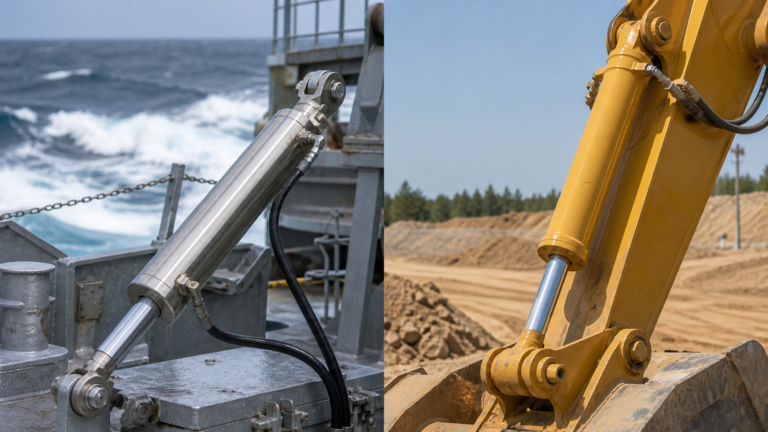
Pressure is another reason visual matching fails. A seal profile that survives in a low-duty steering cylinder may extrude in a high-pressure lift cylinder if clearance and backup support are wrong. The right question is not only “What size is this seal?” but also “What pressure, temperature, stroke speed, and side load did it experience?”
| Situation | Recommended check | Likely purchasing consequence |
|---|---|---|
| Seal leaks soon after installation | Check groove depth, lip orientation, rod scoring, and installation damage | Do not reorder by photo; verify dimensions and assembly method |
| Rod seal lip is cut or scratched | Inspect wiper condition, rod surface, and contamination level | Add wiper and wear elements to the kit, not only the rod seal |
| Seal is extruded or nibbled | Check pressure spikes, clearance gap, backup ring, and material hardness | Select a supported profile or confirm backup ring requirement |
| Seal is swollen or softened | Confirm hydraulic fluid, additives, cleaning chemicals, and temperature | Change compound instead of repeating the same material |
How to use this table: start with the visible failure pattern in the first column, then follow the inspection item before approving a purchase; when two causes seem possible, address contamination and surface damage first because they can destroy any new seal regardless of material.
What standards and compliance notes apply to seal kit measurement?
The most useful standards for this task are dimensional, material, and cleanliness references rather than a single legal rule. ISO 3601 supports O-ring size communication, ISO 5597 addresses hydraulic cylinder seal housing dimensions, ASTM D2240 and ISO 48-4 cover rubber hardness testing, and ISO 4406 supports oil cleanliness reporting.
For buyers, standards reduce ambiguity. If a supplier says an O-ring is “standard,” ask which standard and which size code. If a drawing lists hardness, ask whether it is Shore A or another scale and which test method applies. If a hydraulic system is failing because of contamination, a cleanliness code is more useful than a vague statement that the oil is “dirty.”
There is also a documentation trend in hydraulic maintenance. Equipment owners increasingly want measurable repair records: seal kit batch, material family, groove dimensions, rod condition, and oil condition. This is especially true for rental fleets, construction equipment, agricultural machinery, and industrial presses where one cylinder failure can stop a production line.
ZHY recommends treating standards as a shared language between the workshop, buyer, and supplier. They do not replace application judgment, but they make it easier to compare quotations, audit quality, and prevent the same leakage problem from recurring under a different part number.
Practical Asset: Copy-ready measurement checklist before you request a seal kit
Use this sequence when you need a supplier or internal repair team to identify cylinder seals without relying on a damaged sample. The order matters because it moves from hard metal dimensions to flexible seal confirmation and then to operating risk.
- Record the machine model, cylinder location, and failure symptom: external rod leakage, internal drift, slow movement, oil bypass, or contamination damage.
- Clean the cylinder parts and photograph the rod, gland, piston, barrel mouth, and every removed seal in removal order.
- Measure rod diameter with a micrometer at several stroke positions and note scoring, chrome flaking, rust pits, or uneven wear.
- Measure the bore diameter or confirm the bore from the piston and barrel dimensions if direct bore measurement is not practical.
- Measure each groove width, groove depth, shoulder shape, chamfer, and backup-ring space with calipers and a depth gauge.
- Measure removed seal ID, OD, height, and cross-section using light pressure; mark readings as “used seal reference,” not final design dimensions.
- Identify each seal function: rod seal, piston seal, wiper, O-ring, backup ring, wear ring, or energizer.
- Ask what hydraulic fluid is used, whether additives or biodegradable fluids are present, and whether cleaners or water exposure may contact the seal.
- Ask for the working pressure range, temperature range, stroke frequency, and whether the cylinder sees side load or shock load.
- Send the supplier the measurement sheet, photos, fluid information, and failure description; request material family, profile confirmation, and kit component list before ordering.
FAQ
1. Can I measure only the old seal to order a hydraulic cylinder seal kit?
No. You can use the old seal as a reference, but it should not be the only measurement source. Used hydraulic seals may swell, shrink, flatten, tear, or take a compression set after long service. Measure the rod, bore, gland groove, piston groove, and removed seal, then compare all values. This method is more reliable because the metal housing defines the working space for the replacement seal.
2. What tools do I need for hydraulic cylinder seal kit measurement?
Use a digital caliper, outside micrometer, depth gauge, inspection light, lint-free cloth, and a camera. A micrometer is better for rod diameter because small wear differences can matter. A depth gauge helps confirm groove depth, which is often missed when buyers only measure seal ID and OD. For higher-value repairs, add fluid cleanliness review and rod surface inspection before approving the kit.
3. How do I identify cylinder seals if there is no part number?
Identify the seal by location, function, profile, and dimensions. A seal in the gland facing pressure is usually a rod seal, while a component at the cylinder opening may be a wiper. A seal on the piston controls internal bypass. Record ID, OD, height, cross-section, groove dimensions, and lip direction. Photos help, but measurements and function are more dependable than appearance alone.
4. Why does a new hydraulic cylinder seal leak immediately?
Immediate leakage usually points to wrong size, wrong lip orientation, installation damage, damaged rod surface, incorrect groove fit, or pressure acting from the wrong side of the seal. If the seal was chosen by visual match, the cross-section or profile may be wrong even if the outside shape looked similar. Recheck the groove and rod before ordering another kit, or the same failure may repeat.
5. When should I replace the cylinder instead of only the seal kit?
Consider replacing or rebuilding the cylinder when the rod is deeply scored, chrome is peeling, the bore is damaged, the gland is worn, or the cylinder has repeated leakage after correct seal installation. A seal kit cannot compensate for poor metal surfaces or severe side loading. For procurement planning, compare seal-kit cost, labor, downtime, and expected service life against a replacement cylinder option.
References
- Parker O-Ring Handbook ORD 5700, Parker Hannifin O-Ring Division, Parker Hannifin Corporation, 2021.
- Hydraulic Seals Technical Information, Trelleborg Sealing Solutions Technical Team, Trelleborg Sealing Solutions, 2024.
- Hydraulic Seals, SKF Industrial Seals Technical Team, SKF Group, 2024.
- ISO 3601-1:2012 Fluid power systems — O-rings — Part 1: Inside diameters, cross-sections, tolerances and designation codes, ISO/TC 131 Fluid Power Systems, International Organization for Standardization, 2012.
- ISO 5597:2018 Hydraulic fluid power — Cylinders — Dimensions and tolerances of housings for single-acting piston and rod seals in reciprocating applications, ISO/TC 131 Fluid Power Systems, International Organization for Standardization, 2018.
- ISO 4406:2021 Hydraulic fluid power — Fluids — Method for coding the level of contamination by solid particles, ISO/TC 131 Fluid Power Systems, International Organization for Standardization, 2021.
- ASTM D2240-15(2021) Standard Test Method for Rubber Property — Durometer Hardness, ASTM Committee D11, ASTM International, 2021.
- ASTM D2000-18(2023) Standard Classification System for Rubber Products in Automotive Applications, ASTM Committee D11, ASTM International, 2023.
How measurement connects seal selection, machine reliability, and buying decisions
The best way to understand how to measure hydraulic cylinder for seal kit selection is to treat the cylinder as a working system rather than a container for replacement rubber. The seal kit must match geometry, pressure direction, surface finish, fluid chemistry, temperature, and contamination exposure. If one of these factors is ignored, the kit may be dimensionally close but operationally wrong.
Why does this matter commercially? A maintenance buyer usually does not pay only for seals. The real cost includes downtime, technician labor, oil loss, cleaning, machine transport, and the risk of another failure in the field. A small agricultural cylinder may justify a quick kit replacement, while a critical industrial press or construction machine needs a stricter measurement record and failure review. That is the buyer decision boundary: simple age-related leakage can be solved with a measured kit; repeat leakage demands root-cause inspection.
What should be prioritized? First, confirm the hard dimensions: rod, bore, groove width, groove depth, and housing condition. Second, identify the seal function and profile. Third, verify material compatibility with the hydraulic fluid and duty cycle. Fourth, check standards language where useful, especially ISO 3601 for O-rings, ISO 5597 for seal housings, ISO 4406 for contamination coding, and ASTM or ISO methods for hardness communication. These references do not make every cylinder universal, but they reduce the chance of vague purchasing instructions.
The market trend is toward more documented maintenance and more supplier accountability. Buyers increasingly expect seal kits to come with material notes, profile confirmation, and application checks, not just a bag of rubber parts. For ZHY customers comparing seal selection with replacement cylinder options, the practical recommendation is direct: if the metal parts are healthy, measure carefully and select the correct kit; if the rod, bore, or gland is damaged, a replacement cylinder or full rebuild may deliver better service life than another seal-only repair.