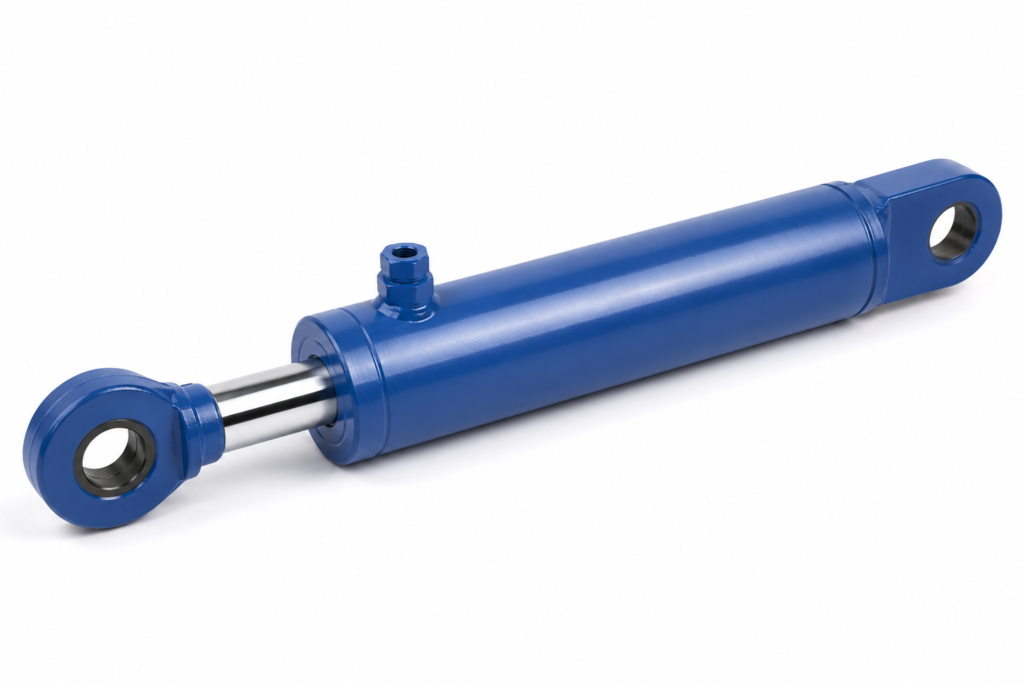
Why is “bore and stroke only” not enough for a custom cylinder RFQ?
The fastest way to create a wrong cylinder is to send only bore and stroke; those two dimensions describe movement capacity, not how the cylinder will survive side load, fit the machine, seal the fluid, connect to hoses, or pass testing.
In a real procurement case, two cylinders can both be 80 mm bore by 500 mm stroke and still be completely different products. One may use a clevis mount, SAE O-ring ports, nitrile seals, a 45 mm rod, and a 16 MPa working pressure. Another may need trunnion mounts, metric threaded ports, polyurethane seals, a 55 mm induction-hardened rod, and cushioning for repeated high-speed extension. If the missing details are discovered after production, the buyer usually faces re-machining, delayed installation, or a part that fits the drawing but fails in service.
Definition: To specify hydraulic cylinder requirements correctly, the buyer must define the mechanical interface, hydraulic interface, operating environment, pressure cycle, material finish, inspection method, and evidence required before shipment. This is not paperwork for its own sake; it is how engineering intent becomes a repeatable manufactured product.
This article is written for engineering buyers, maintenance managers, project contractors, and purchasing teams who are already close to ordering. It follows a checklist logic: if any key specification is unknown, request the drawing, sample cylinder, machine model, or duty-cycle information before production starts.
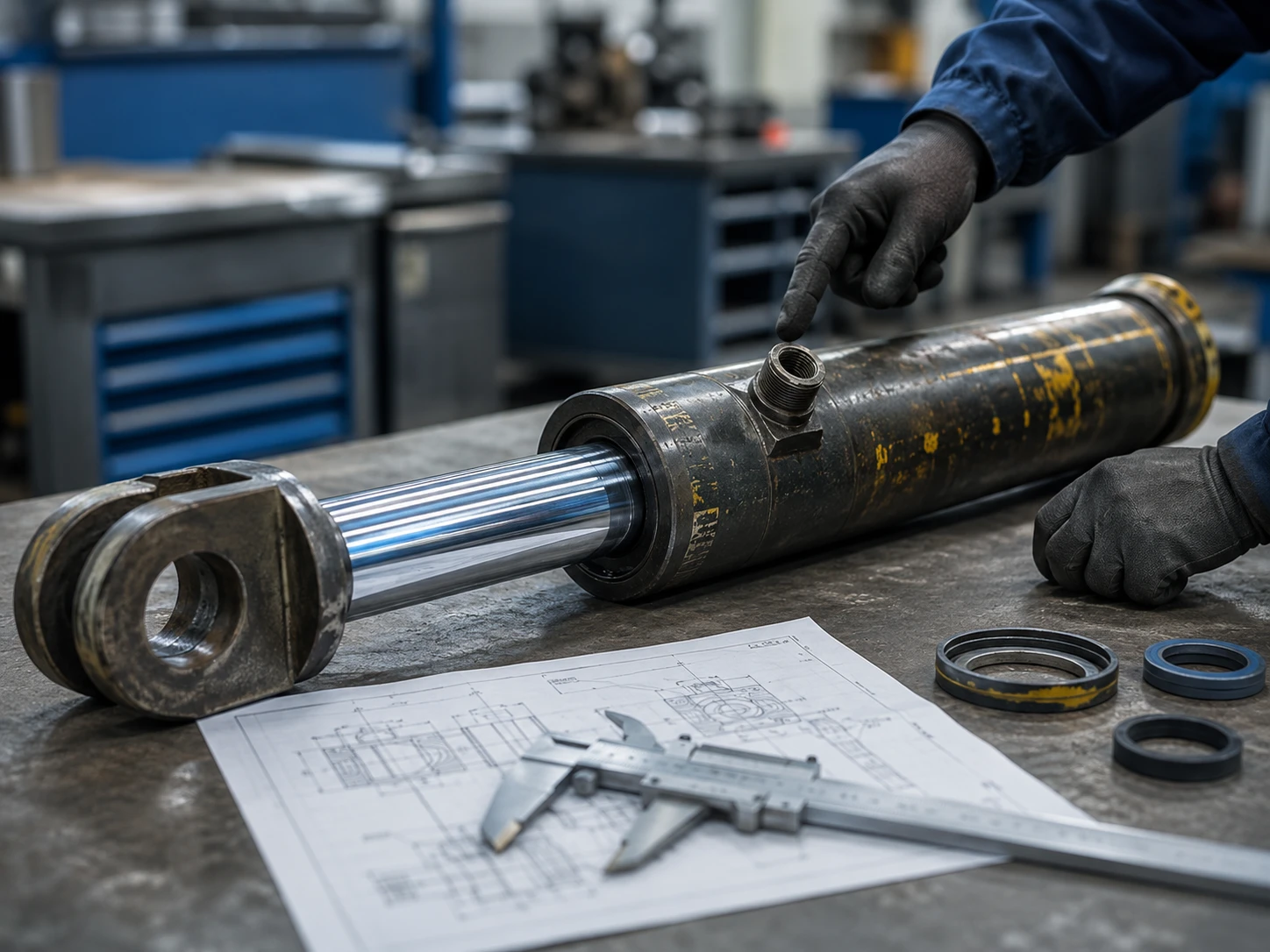
Question 1: What force, pressure, and safety margin does the cylinder need?
The first specification to confirm is not the bore itself but the force requirement; bore size should be calculated from required push or pull force, available system pressure, efficiency losses, and a realistic safety margin.
For pushing force, engineers usually calculate piston area multiplied by pressure. For pulling force, the rod area must be subtracted from the piston area, which means the same cylinder delivers less force on retraction. This is why an RFQ that states only “80 mm bore, 500 mm stroke” can still miss the actual performance target. A press, lift platform, agricultural implement, and construction attachment may all use similar sizes but see very different peak load and shock conditions.
International dimensional standards provide useful context. ISO 6020-1 covers 16 MPa medium-series mounting dimensions for single-rod cylinders, while ISO 6022 covers 25 MPa heavy-duty mounting dimensions. These values should not be copied blindly into every project, but they show why working pressure must be tied to the cylinder family, mounting envelope, and application severity.
Key Takeaways
- Bore and stroke are starting dimensions, not complete custom hydraulic cylinder specifications.
- Force must be checked separately for extension and retraction because rod area reduces pull force.
- Mounting style, port type, seal material, rod diameter, and testing evidence can all change the final cylinder.
- If a critical parameter is unknown, the safest procurement action is to request a drawing, sample, or equipment model.
- Standards such as ISO 6020-1, ISO 6022, ISO 3320, ISO 4406, SAE J1926-1, and ASTM D2000 help align dimensions, cleanliness, ports, and elastomer choices.
Question 2: Which stroke, closed length, and installation envelope must be protected?
Stroke defines travel, but closed length and installation envelope decide whether the cylinder can physically fit the equipment; confirm both before quoting or manufacturing.
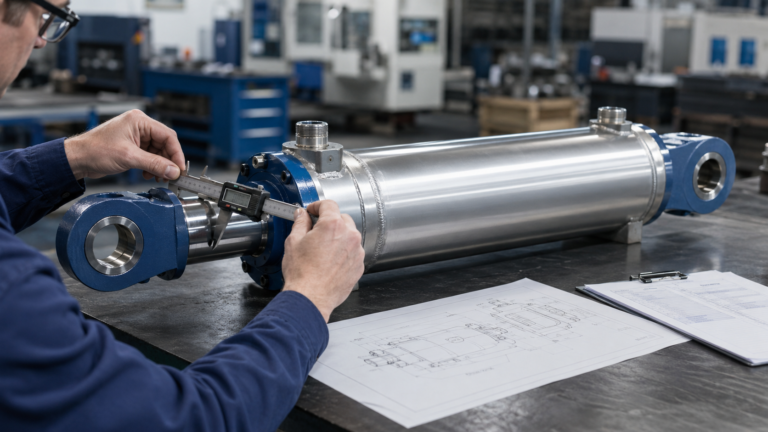
A replacement cylinder often fails procurement review because the buyer provides the stroke but not the pin-to-pin length at full retraction and full extension. For mobile equipment, those two dimensions affect boom geometry, linkage travel, end-stop loading, and hose routing. For industrial machines, closed length can interfere with guards, frames, sensors, or adjacent actuators.
Engineers should confirm whether the cylinder has internal cushions, external stops, stroke spacers, or position sensors. Each item can change the overall length. A 500 mm stroke cylinder with cushioning may need extra body length compared with a simple welded cylinder. A cylinder with an integrated linear transducer may also require additional space at the cap or rod end.
A practical rule for purchasing teams is simple: always ask for three dimensions together. Request retracted pin-to-pin length, extended pin-to-pin length, and usable stroke. If the sample cylinder is damaged and cannot extend fully, photograph the part, measure what is possible, and ask ZHY or another qualified manufacturer to verify the design from the equipment model and mounting geometry before production.
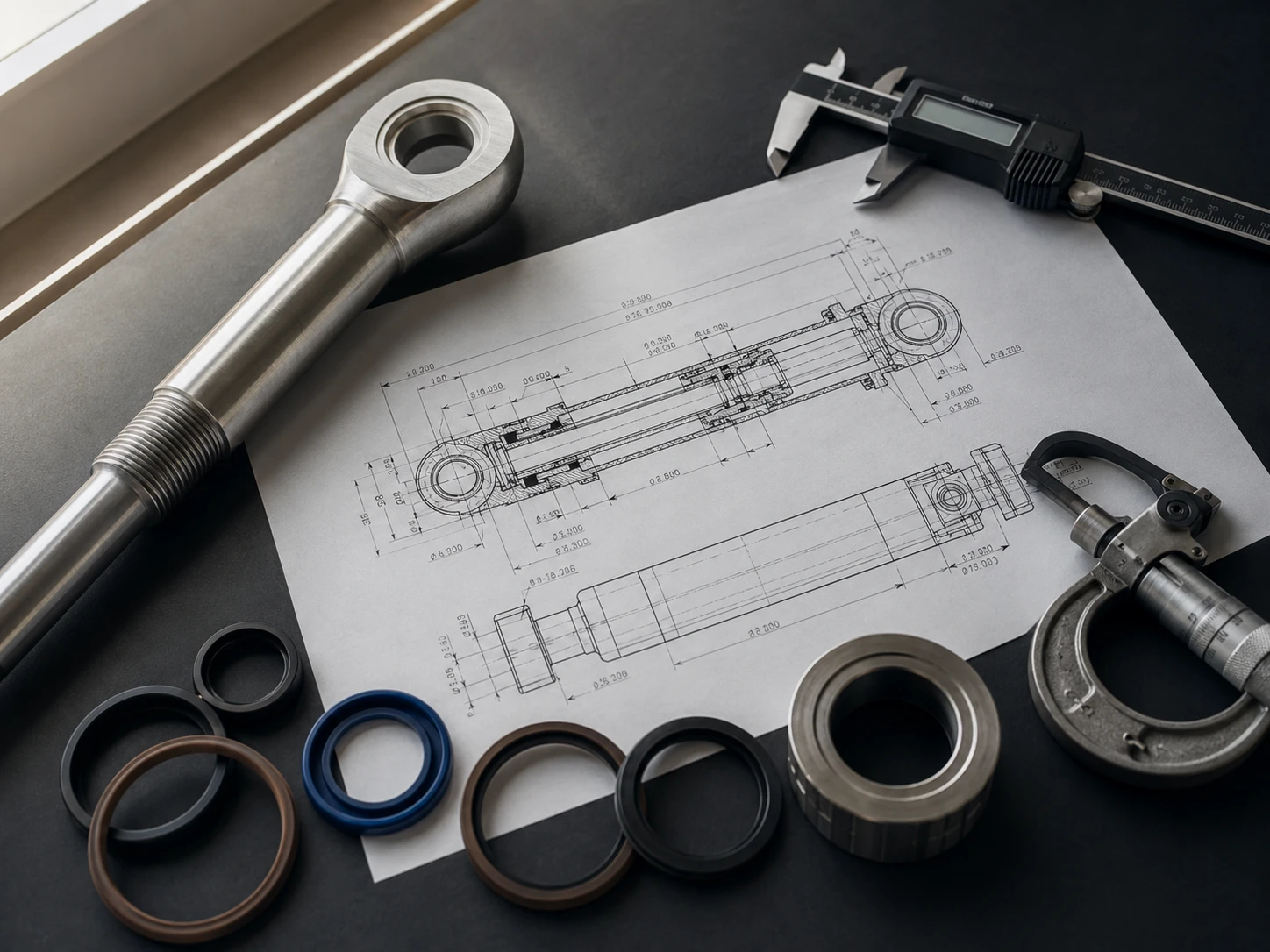
Question 3: What mount style and load direction will the cylinder see?
Mounting style controls how force enters the structure; choose the mount according to load direction, rotation requirement, side-load risk, and replacement compatibility.
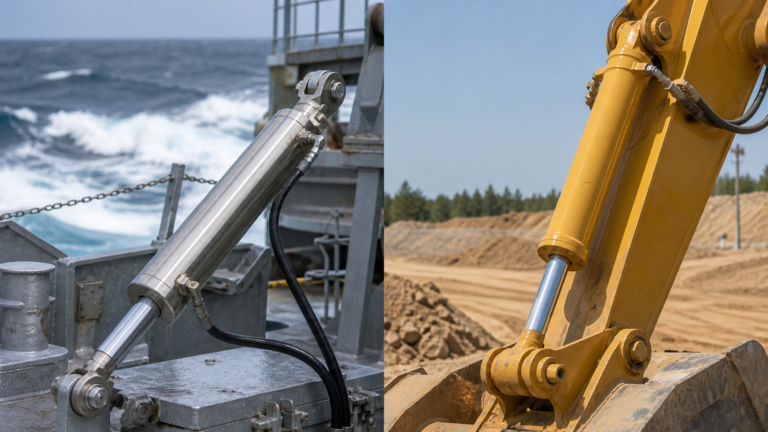
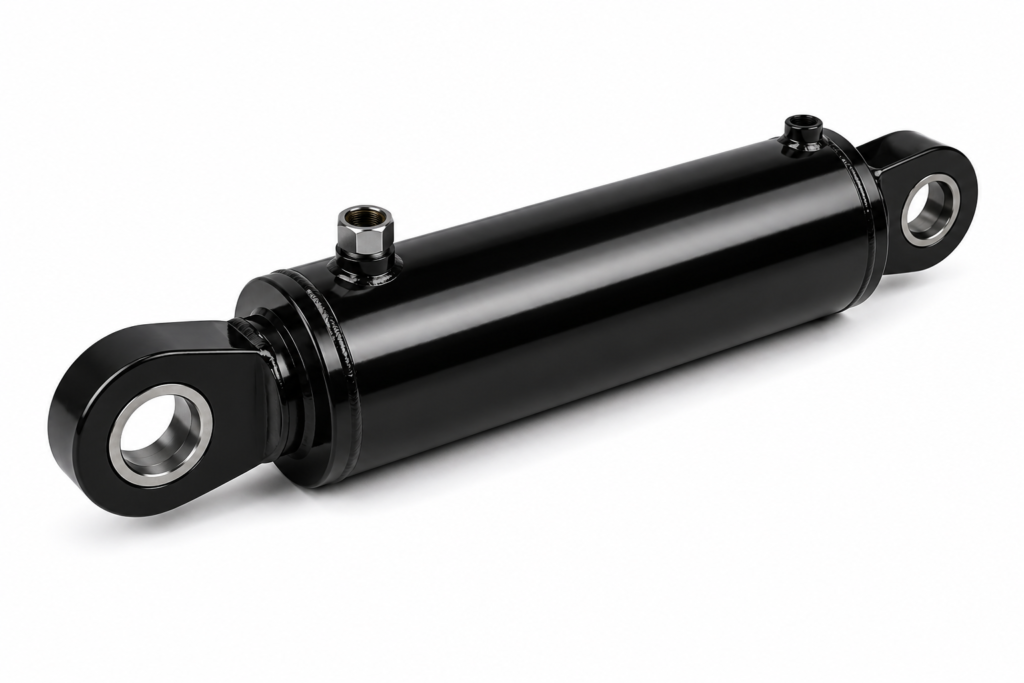
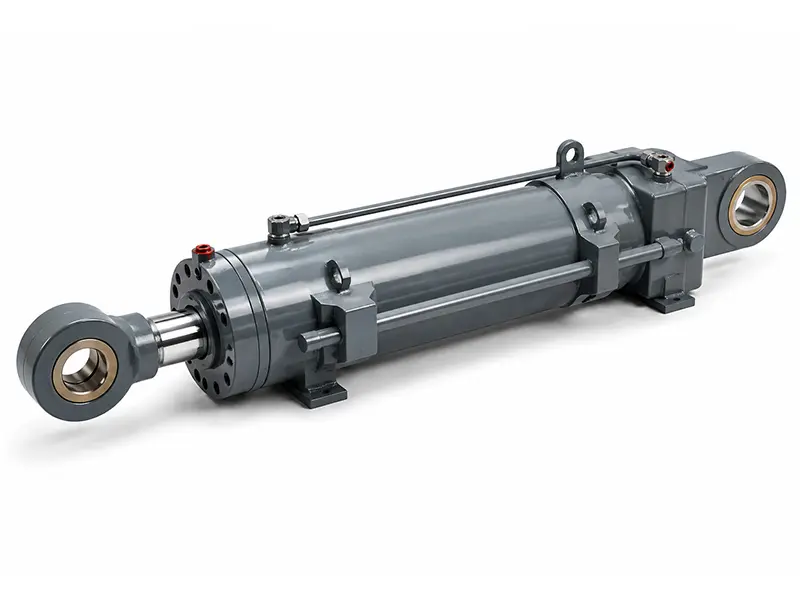
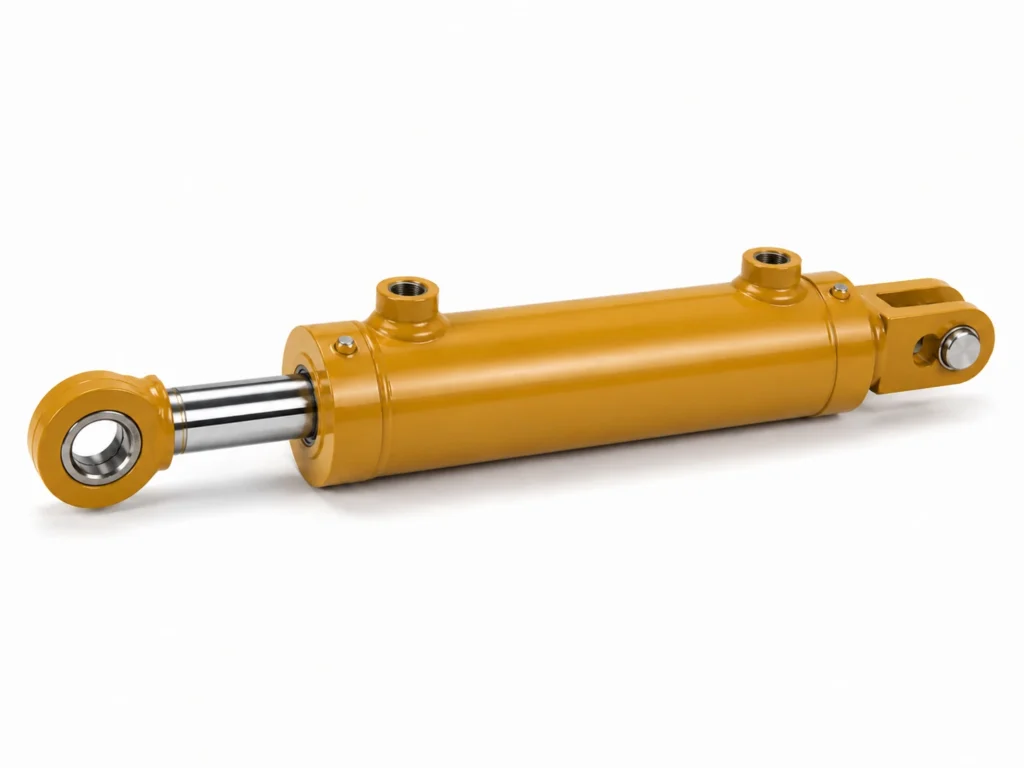
Clevis and eye mounts are common on mobile machinery because they allow angular movement around pins. Flange mounts are common when the cylinder must push straight against a machine frame. Trunnion mounts support pivoting near the cylinder body and can reduce unsupported length in certain mechanisms. The wrong mount may still bolt onto the machine, but it can introduce bending into the rod, accelerate bearing wear, and damage seals.
Side load is a major risk in cylinders because hydraulic seals are designed to control fluid, not to correct poor alignment. If the cylinder is part of a linkage, confirm whether the load path stays straight through the stroke. If the application has unavoidable side force, ask for bearing length, rod diameter, guide material, and mounting tolerance review rather than treating the mount as a simple accessory.
- Clevis mount
- A forked end mount using a pin, best for pivoting mobile equipment where the cylinder angle changes during motion.
- Flange mount
- A rigid mounting plate at the head or cap, best when the cylinder force must remain aligned with a fixed machine frame.
- Trunnion mount
- A pivot mount located on the cylinder body, useful when the design needs compact rotation around the cylinder centerline.
- Rod column strength
- The rod’s resistance to buckling under compression, especially important for long strokes, high push force, and horizontal installation.
Question 4: Which rod diameter, material, and surface finish are appropriate?
Rod design should be selected from force, stroke, buckling risk, corrosion exposure, and seal compatibility; it should not be chosen only because the old cylinder “looked similar.”
ISO 3320 standardizes metric cylinder bores, piston rod diameters, and area ratios, giving engineers a reference language when comparing sizes. In practice, a long-stroke cylinder under compression may require a larger rod than a short-stroke cylinder with the same bore. If the rod is undersized, the visible failure may be bending, scoring, seal leakage, or unstable movement rather than an immediate fracture.
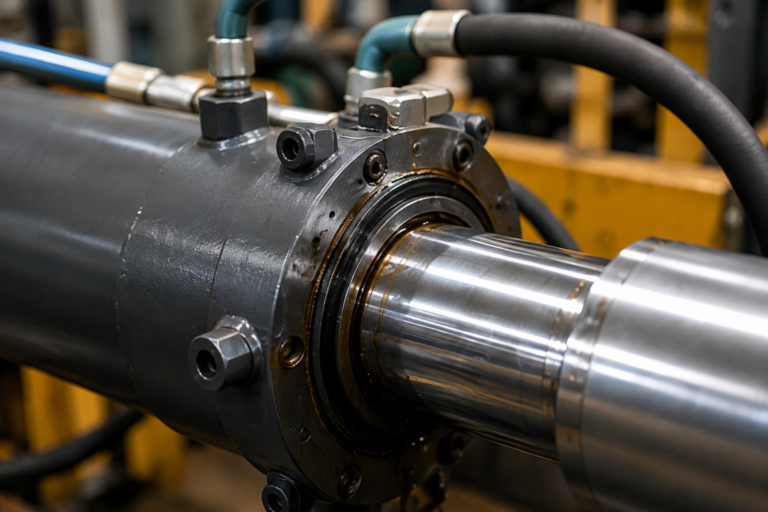
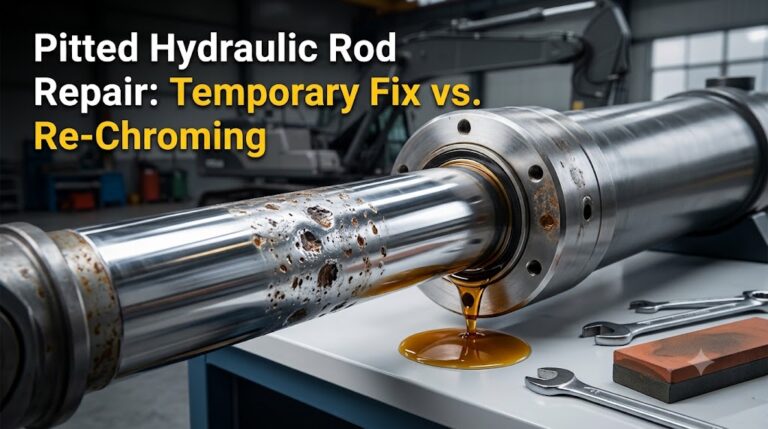
Surface treatment is equally important. Hard chrome plating is widely used because it offers wear resistance and a smooth sealing surface. In corrosive environments such as marine equipment, fertilizer machinery, road-salt exposure, or washdown systems, buyers may need improved corrosion resistance, protective boots, stainless-related solutions, or different plating specifications. The RFQ should state whether the cylinder is exposed to outdoor weather, abrasive dust, chemicals, or frequent cleaning.
The procurement question is not “What is the cheapest rod?” The correct question is “What rod diameter and surface finish will survive the working geometry and environment for the expected service interval?” That question belongs in every serious hydraulic cylinder design guide used by purchasing and engineering teams.
Question 5: What ports, threads, flow direction, and hose clearance are required?
Port specification must define thread standard, port size, port position, orientation, clearance, and sealing method; wrong ports can make a correct cylinder unusable at installation.
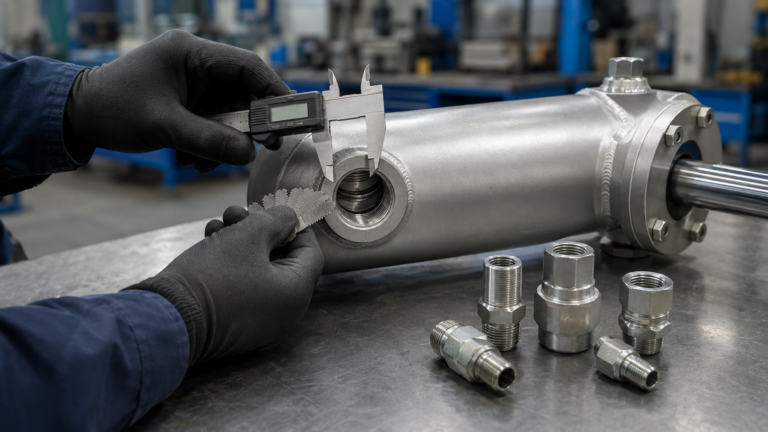
Common options include metric threads, BSPP, NPT, and SAE O-ring ports. SAE J1926-1 covers ports and stud ends with inch threads and O-ring sealing for fluid power applications, while many machines outside North America use metric or BSPP configurations. A mismatch may not be solved by an adapter if the port angle interferes with the machine frame or if added adapter length creates hose stress.
Flow also matters. High-speed cylinders may need larger ports to reduce pressure drop and heat generation. Double-acting cylinders require clearly identified cap-end and rod-end connections. Cylinders with counterbalance valves, pilot-operated check valves, or integrated manifolds require even more careful layout because valve clearance and service access become part of the specification.
For replacement projects, ask the maintenance team to send port close-ups with a ruler, thread gauge result, and photos showing hose routing in the installed position. If thread identification is uncertain, ship a sample fitting or original cylinder for verification. This is a small delay compared with receiving a production batch with ports that cannot connect to the equipment.
Question 6: Which seals and hydraulic fluid will be used?
Seal choice should follow fluid type, temperature range, pressure cycle, speed, contamination level, and storage conditions; the wrong seal compound can fail even when metal dimensions are perfect.
NBR is widely used in mineral-oil hydraulic systems because it balances cost and oil resistance. FKM is often selected for higher temperature or chemical exposure. Polyurethane seals can provide strong abrasion resistance in demanding reciprocating service. ASTM D2000 is a common classification system for rubber materials in automotive and industrial applications, and ISO 5597 provides dimensions and tolerances for seal housings in hydraulic cylinders.
Buyers should avoid writing “standard seals” unless the operating conditions are truly standard. Confirm minimum and maximum temperature, fluid type, duty cycle, rod speed, contamination exposure, and expected storage period. If the cylinder will operate in cold outdoor equipment, a seal that works in a warm factory test may become stiff and leak at startup. If it will operate near heat sources, a low-grade compound may harden early.
Cleanliness also affects seals. ISO 4406 provides a method for coding particle contamination levels in hydraulic fluids. Even a well-built cylinder can leak early when installed into a dirty system, so procurement acceptance should include cleanliness expectations, capped ports, clean packaging, and protection against shipping contamination.
Question 7: What testing, inspection, and documentation should be required?
Testing requirements should be stated before the order because inspection evidence is part of the product, not an optional report added after a dispute.
At minimum, a custom cylinder project should define dimensional inspection, pressure testing, leakage check, surface finish verification where needed, weld inspection level if welded construction is used, and packaging inspection. For safety-critical or high-value machinery, buyers may also request material certificates, seal material confirmation, test pressure records, and photos before shipment.
There is no single universal inspection package for every cylinder. A low-volume replacement for a farm attachment does not need the same documentation as a batch of cylinders for OEM equipment. However, both should have a clear acceptance standard. The purchasing file should state what ZHY or any supplier must provide before goods leave the factory, especially when the buyer cannot inspect the batch in person.
| Situation | Recommended action before production | Main risk if ignored | Evidence to request |
|---|---|---|---|
| Only bore and stroke are known | Hold quotation as preliminary and request drawing, sample, or machine model | Wrong mount, rod, ports, or closed length | Original drawing, failed cylinder photos, pin-to-pin dimensions |
| Pressure and load are uncertain | Confirm system pressure, peak load, and operating direction | Insufficient force or rod buckling | Hydraulic circuit data, equipment manual, duty-cycle description |
| Outdoor or corrosive use | Review rod finish, paint system, seal compound, and packaging protection | Early corrosion, seal wear, and leakage | Application photos, environmental description, coating requirement |
| Batch order for OEM or distributor | Approve sample first, then lock drawing revision and inspection records | Repeated batch defect across inventory | First article report, pressure test record, packing photos |
| Port thread is unknown | Measure thread or send sample fitting before machining ports | Hose incompatibility and field installation delay | Thread gauge result, fitting sample, port close-up photos |
How to use this table: prioritize the “Recommended action” column when the situation matches your RFQ; if two rows apply, follow the row with the higher installation or batch-risk consequence before approving price or lead time.
Question 8: Which standards, regulations, and compliance boundaries apply?
Standards help align dimensions and testing language, while regulations depend on the final machine, market, and safety function; confirm both early so the cylinder documentation supports the equipment file.
Hydraulic cylinders are often supplied as components, but they are installed into machinery that may need regional compliance. In the European Union, Machinery Regulation (EU) 2023/1230 replaces the older Machinery Directive framework for machinery safety obligations, with application dates defined in the regulation. For a cylinder buyer, this does not automatically mean every cylinder is certified as a standalone machine, but it does mean drawings, materials, risk controls, and maintenance information may need to support the overall machine documentation.
Dimensional and interface standards are more directly relevant during specification. ISO 6020-1 and ISO 6022 help define mounting dimensions for common industrial cylinder series. ISO 3320 supports bore and rod size language. SAE J1926-1 supports O-ring port specification. ISO 4406 supports fluid cleanliness communication. ASTM D2000 supports elastomer classification. When a project uses customer-specific dimensions, these standards still provide useful reference points for communication and inspection.
For buyers, the practical compliance question is: which standard is mandatory, which is only a reference, and which customer drawing overrides the catalog series? Write that distinction into the RFQ instead of assuming the supplier will infer it.
Question 9: What drawings, samples, and approval steps should be locked before the PO?
Before issuing a purchase order, lock the revision-controlled drawing, inspection plan, sample approval route, packaging method, and change-control rule; this prevents silent specification drift between quotation and production.
The most reliable BOFU workflow is evidence-based. First, collect the machine model, failed part photos, old cylinder dimensions, and installation constraints. Second, ask the supplier to create or verify a drawing. Third, review the drawing with engineering and maintenance teams. Fourth, approve a sample or first article where the project risk justifies it. Fifth, release batch production only after the drawing revision and inspection evidence are agreed.
This sequence is especially important for distributors and OEM buyers because one small error can be multiplied across inventory. A wrong port angle may affect every unit in a shipment. A rod that is slightly too short may cause field returns. A missing cushion may increase shock loads and reduce machine life. The procurement team should treat the RFQ checklist as a risk-control document, not just a request for price.
When working with ZHY, buyers can send drawings, samples, equipment photos, or incomplete specifications for technical review. The best result comes when purchasing and engineering teams share uncertainty honestly at the beginning rather than forcing a quotation from incomplete information.
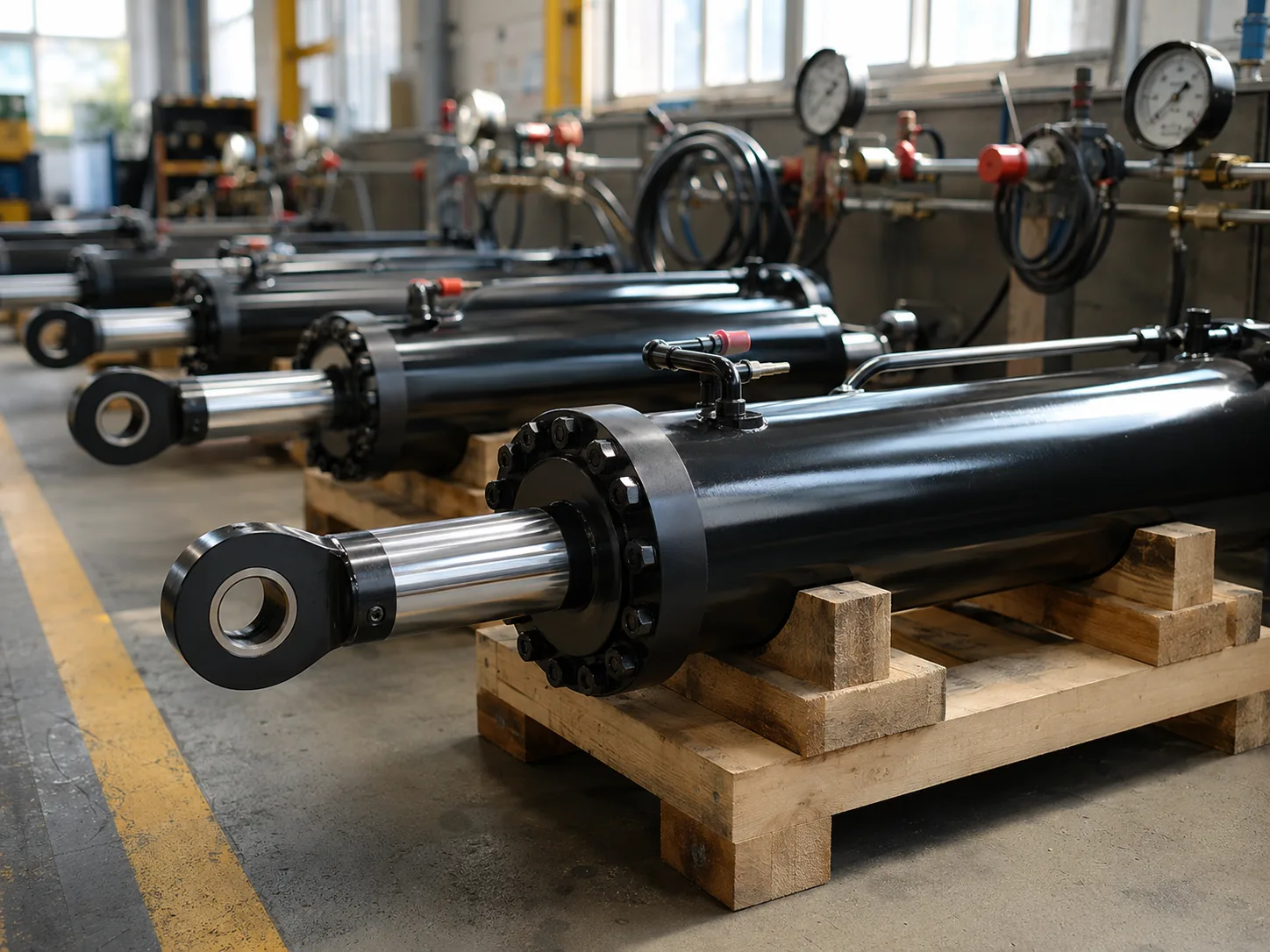
Practical RFQ Asset: Copy This 9-Step Cylinder Specification Checklist
Use this checklist in the order shown; it is designed to stop the common mistake of sending only bore and stroke while leaving manufacturing-critical details unresolved.
- Ask what the cylinder must do: record push force, pull force, working pressure, peak pressure, speed, and duty cycle before discussing price.
- Check installation geometry: request retracted length, extended length, usable stroke, pin diameter, pin width, and surrounding clearance photos.
- Identify mount style: confirm clevis, eye, flange, trunnion, threaded rod end, spherical bearing, or customer-specific mount with dimensions.
- Confirm rod design: ask for rod diameter, material expectation, surface finish, corrosion exposure, and whether buckling review is needed for long stroke.
- Verify ports: request thread type, port size, port position, orientation angle, hose clearance, and whether adapters or integrated valves are used.
- Define seals and fluid: ask for hydraulic fluid type, temperature range, contamination exposure, storage time, and any preference for NBR, FKM, polyurethane, or other compounds.
- State testing evidence: require pressure test record, leakage check, key dimensional report, and photos of finished parts before shipment for batch orders.
- Lock documentation: approve drawing revision, material notes, finish requirements, packaging method, and change-control responsibility before issuing the PO.
- Escalate unknowns: if any answer is missing, send the sample cylinder, machine model, or installation photos and mark the RFQ as pending technical confirmation.
This checklist can sit beside any internal hydraulic cylinder design guide. Its value is not that every project becomes complicated; its value is that the team knows exactly which missing details can turn into wrong ports, wrong mounts, wrong seals, or wrong rod design.
FAQ
1. What information is most important when specifying a custom hydraulic cylinder?
The most important information is the cylinder’s required force, working and peak pressure, stroke, closed and extended length, mount style, rod diameter, port type, seal material, hydraulic fluid, and operating environment. Bore and stroke are not enough because they do not define installation geometry, side-load risk, port compatibility, or sealing conditions. If the original drawing is unavailable, send the failed sample, machine model, photos, and measured pin-to-pin dimensions before production.
2. How do I know which bore size and rod diameter to choose?
Bore size should be calculated from required force and available pressure, while rod diameter should be checked against pull-force needs, compression buckling risk, stroke length, and side-load exposure. ISO 3320 provides standardized metric bore and rod diameter references, but the application still needs engineering review. A short, vertical cylinder may tolerate a smaller rod than a long horizontal cylinder under compression, even when both use the same bore.
3. Which hydraulic cylinder mount is best for mobile equipment?
For mobile equipment, clevis, eye, spherical bearing, and trunnion mounts are common because they allow movement as linkages rotate through the stroke. The best mount is the one that keeps the load path aligned while fitting the original pins and frame. If the mechanism changes angle during operation, a rigid flange mount may create bending and seal wear. Always confirm pin size, bearing width, and side-clearance photos before ordering.
4. What standards should be mentioned in a hydraulic cylinder RFQ?
Useful standards include ISO 6020-1 for 16 MPa medium-series mounting dimensions, ISO 6022 for 25 MPa cylinder mounting dimensions, ISO 3320 for metric bore and rod diameter series, ISO 5597 for seal housing dimensions, ISO 4406 for hydraulic fluid cleanliness coding, SAE J1926-1 for O-ring ports, and ASTM D2000 for rubber material classification. The RFQ should state whether a standard is mandatory or only a reference.
5. When should I send a sample cylinder instead of only a drawing?
Send a sample cylinder when the drawing is missing, the port thread is uncertain, the mount has custom geometry, the rod end has special machining, or the failed part shows wear that may reveal an alignment or sealing problem. A sample helps the manufacturer verify hidden details such as cushion design, bearing arrangement, port depth, and seal groove layout. For repeat orders, the sample should still be converted into a controlled drawing before batch production.
References
- ISO 6020-1:2015 Hydraulic fluid power — Mounting dimensions for single rod cylinders, 16 MPa (160 bar) series — Part 1: Medium series, International Organization for Standardization, ISO, 2015.
- ISO 6022:2015 Hydraulic fluid power — Mounting dimensions for single rod cylinders, 25 MPa (250 bar) series, International Organization for Standardization, ISO, 2015.
- ISO 3320:2013 Fluid power systems and components — Cylinder bores and piston rod diameters and area ratios — Metric series, International Organization for Standardization, ISO, 2013.
- ISO 5597:2018 Hydraulic fluid power — Cylinders — Dimensions and tolerances of housings for single-acting piston and rod seals in reciprocating applications, International Organization for Standardization, ISO, 2018.
- ISO 4406:2021 Hydraulic fluid power — Fluids — Method for coding the level of contamination by solid particles, International Organization for Standardization, ISO, 2021.
- SAE J1926-1:2023 Connections for General Use and Fluid Power — Ports and Stud Ends with ASME B1.1 Threads and O-Ring Sealing — Part 1: Threaded Port with O-Ring Seal in Truncated Housing, SAE International, SAE International, 2023.
- ASTM D2000-18 Standard Classification System for Rubber Products in Automotive Applications, ASTM Committee D11 on Rubber and Rubber-like Materials, ASTM International, 2018.
- Regulation (EU) 2023/1230 of the European Parliament and of the Council on machinery, European Parliament and Council of the European Union, Official Journal of the European Union, 2023.
How should buyers turn cylinder specifications into a safer purchasing decision?
A safer purchasing decision starts by treating the cylinder as an engineered interface between hydraulic power and machine structure, not as a commodity tube with a rod. The buyer’s job is to reduce uncertainty before production, especially where uncertainty creates irreversible machining choices: ports, mounts, rod diameter, seal grooves, stroke length, and closed length.
The strongest option is a controlled drawing supported by operating data. A drawing captures dimensions, tolerances, materials, port positions, and revision history. Operating data confirms whether the drawing is strong enough for the real job. When the drawing is missing, the next-best option is a physical sample plus equipment photos. A sample reveals hidden construction details, while photos show hose clearance, linkage angle, and environmental exposure. The weakest option is a text-only RFQ with bore and stroke because it forces the supplier to guess the most failure-sensitive details.
Why does this matter now? Hydraulic equipment buyers are under pressure to reduce downtime, standardize spare parts, and avoid inventory that cannot be installed. At the same time, machinery is becoming more application-specific, with integrated valves, sensors, compact envelopes, and higher expectations for cleanliness and traceability. Standards such as ISO 4406 for fluid cleanliness, ISO 6020-1 and ISO 6022 for mounting dimensions, and SAE J1926-1 for O-ring ports give teams a shared language, but they do not replace project-specific verification.
The practical consideration is clear: if the specification affects fit, force, sealing, safety, or compliance records, confirm it before the purchase order. If the answer is unknown, do not hide the uncertainty in the RFQ. Label it, request technical review, and provide drawings, samples, machine models, or photos. That approach may add one engineering review step, but it prevents the far more expensive outcome of receiving cylinders with wrong ports, wrong mounts, wrong seals, or a rod design that cannot survive the duty cycle.