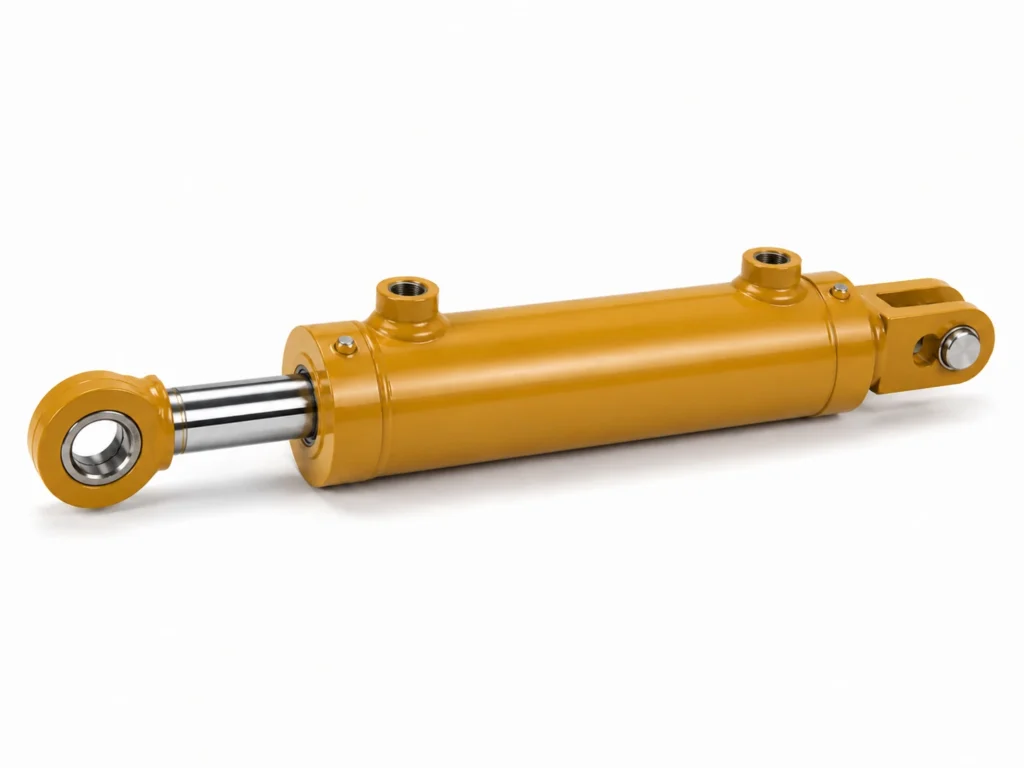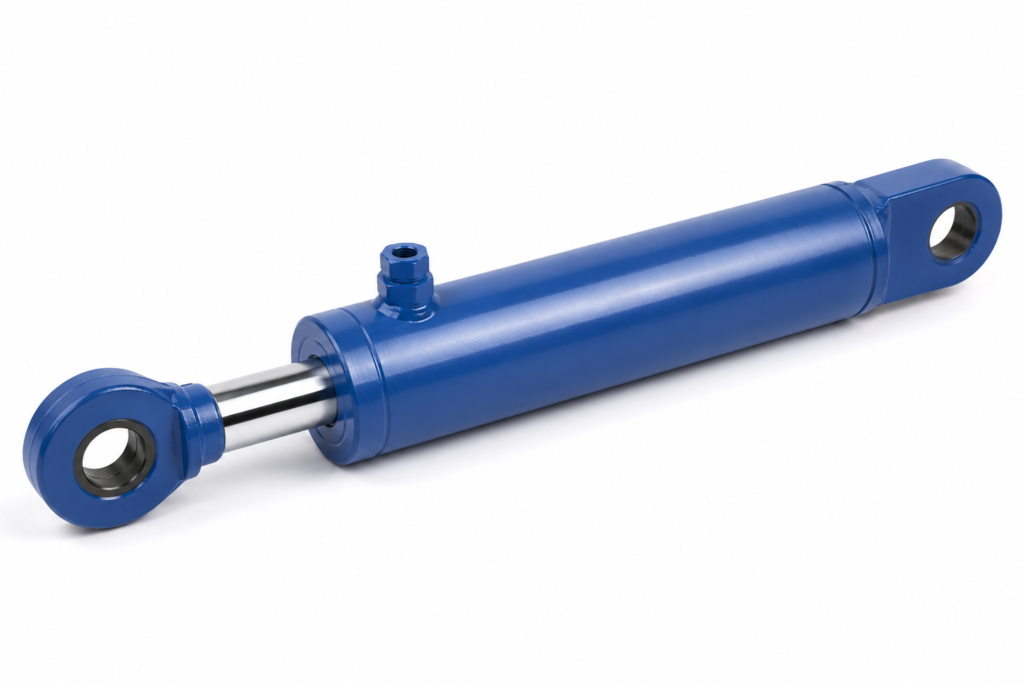
What should you measure first when no cylinder drawing exists?
Start with the old cylinder’s functional geometry, not its overall length alone. The first measurements should be bore, rod diameter, stroke, closed pin-to-pin length, mounting type, pin diameter, port type, and port orientation because these details decide whether the replacement can install, move, and connect safely.
A common procurement failure happens when a buyer sends only the cylinder’s total length and asks for a “same size” replacement. Overall length can be useful, but it does not prove stroke, piston area, end fitting location, port clearance, or load capacity. Two cylinders can share a similar overall length and still have different bore sizes, rod buckling resistance, clevis widths, or port threads.
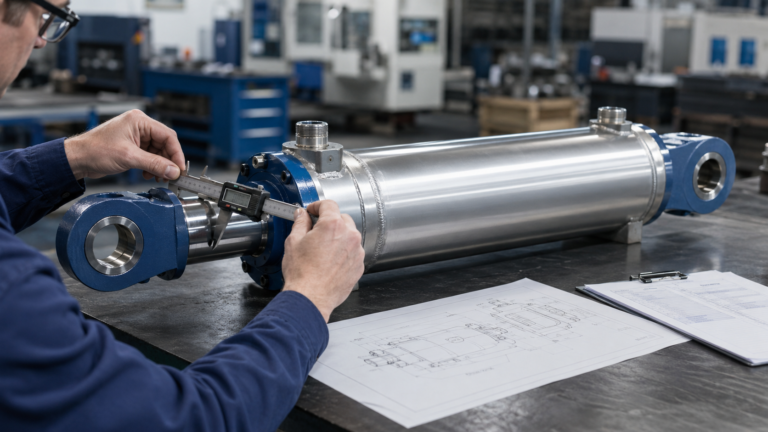
The practical rule is simple: if there is no drawing, measure the removed cylinder as if you are creating one. Photograph the nameplate if it exists, then photograph both mounts, both ports, the rod end, the base end, and the cylinder fully retracted and fully extended. For maintenance managers, importers, and procurement teams, this prevents a replacement that arrives on time but cannot be installed.
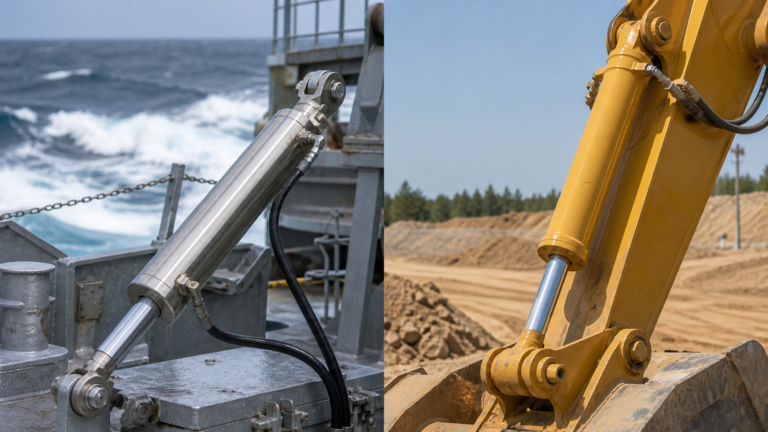
Measuring hydraulic cylinders also requires recording the machine context. A loader lift cylinder, a dump trailer cylinder, and a press cylinder may all look similar, but their side loading, duty cycle, mounting clearance, and pressure expectation are different. ISO 6020-2:2015 and ISO 6022 standards define mounting dimensions for common 16 MPa and 25 MPa cylinder series, but many mobile and aftermarket cylinders are custom or semi-standard rather than direct catalog matches.
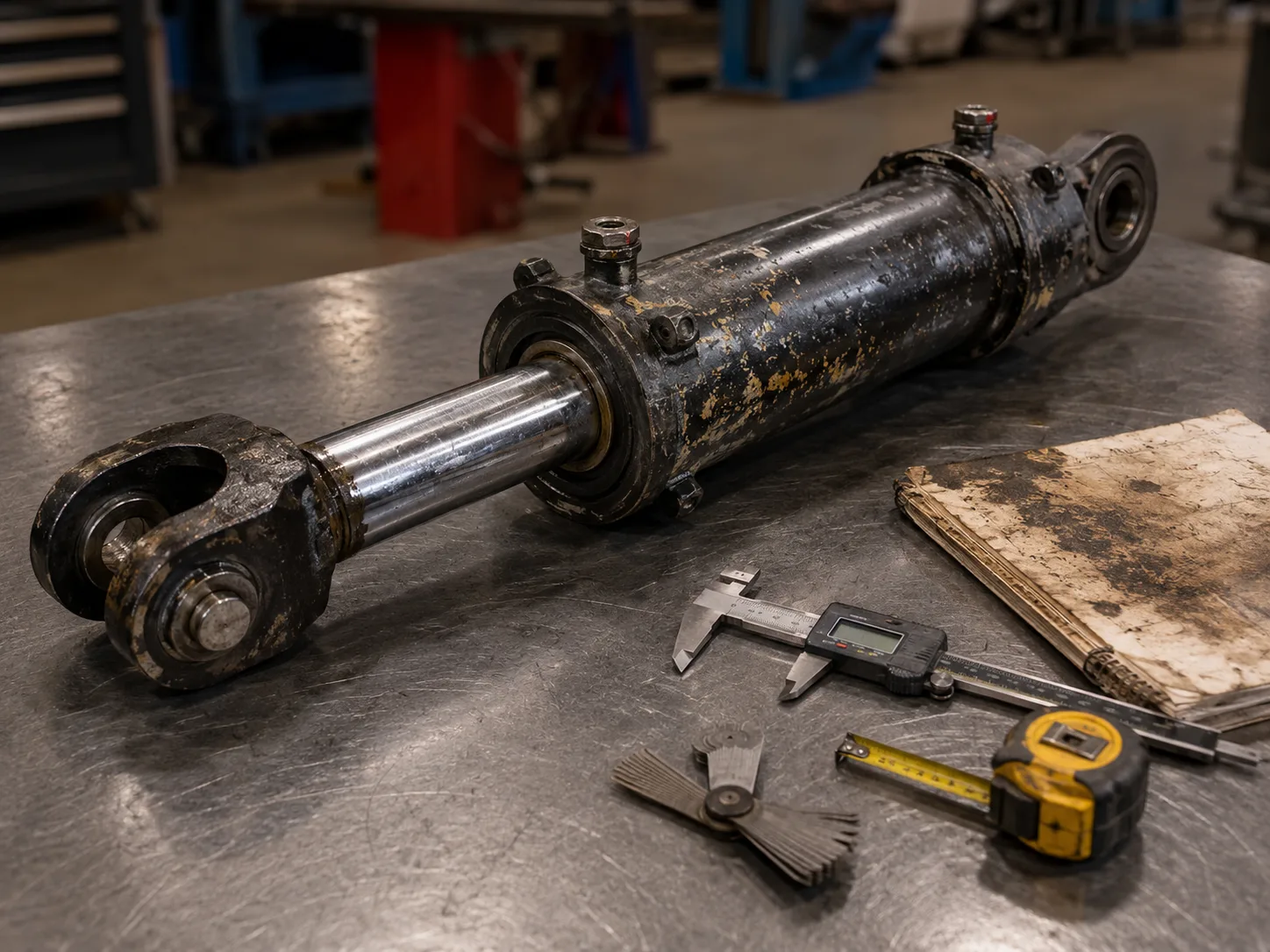
Which hydraulic cylinder terms must be clear before measuring?
Before measuring, confirm the vocabulary because the same part can be described differently by maintenance crews, distributors, and factories. The safest approach is to define each term on the RFQ sheet and match it to one physical measurement on the old cylinder.
- Bore
- The internal diameter of the cylinder barrel. Bore determines piston area and therefore extension force at a given pressure.
- Rod diameter
- The outside diameter of the chrome piston rod. Rod diameter affects retract force, column strength, and resistance to bending under load.
- Stroke
- The linear travel from fully retracted to fully extended position. Stroke is usually calculated from extended length minus retracted length, measured at the same reference points.
- Pin-to-pin length
- The distance between the center of the base-end pin and the center of the rod-end pin. This is normally more useful than overall length for replacement fit.
- Mounting style
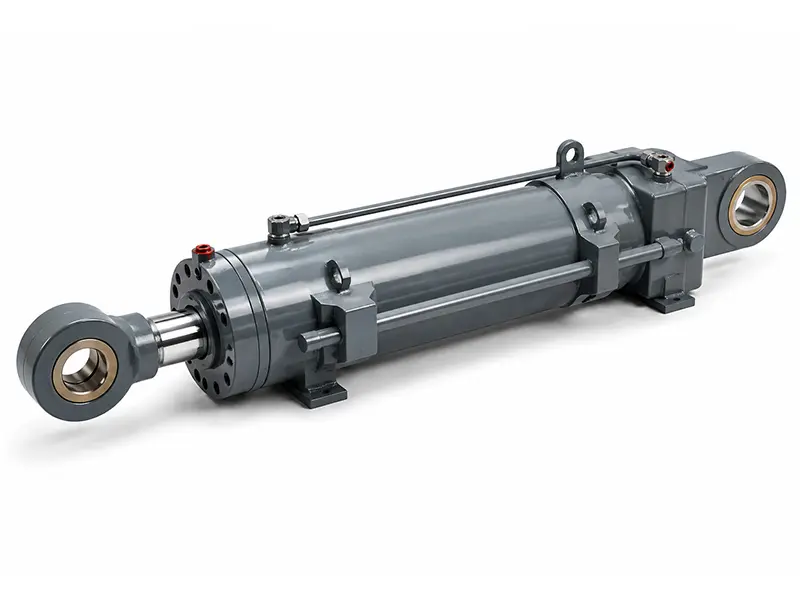
- The mechanical interface, such as clevis, cross tube, trunnion, flange, spherical bearing, or threaded rod end. Mounting style controls load path and installation clearance.
- Port orientation
- The clock position and location of hydraulic ports relative to the mounts. Incorrect orientation can cause hose interference even when the cylinder length is correct.
A useful definition for procurement records is this: a replacement hydraulic cylinder measurement is the documented set of dimensions, connection details, and application conditions needed to reproduce the working envelope of an existing actuator without assuming that the original drawing, part number, or nameplate is available.
Key Takeaways
- Closed and open pin-to-pin dimensions are more reliable than overall length for confirming fit.
- Bore and rod diameter affect hydraulic force, retract speed, and rod stability, so they cannot be guessed from outside length.
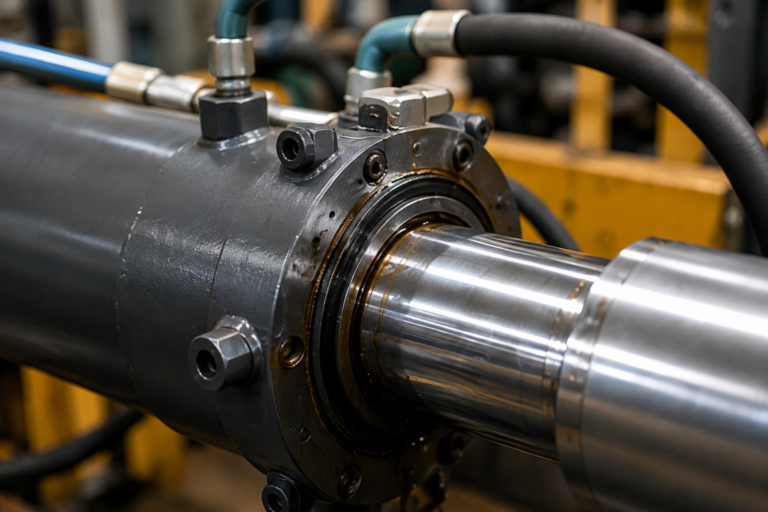
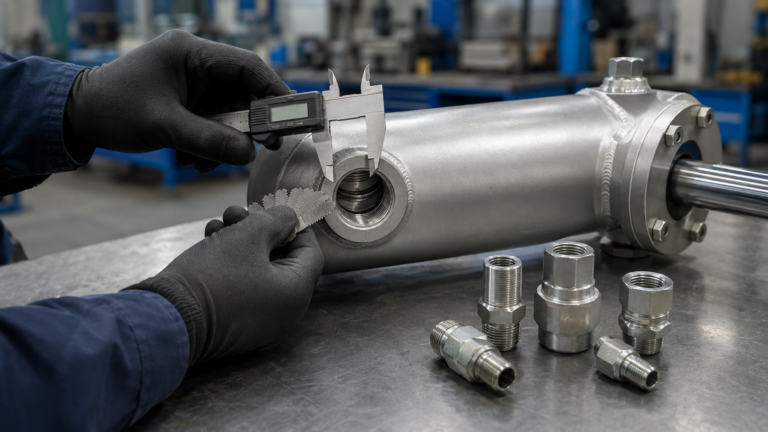
- Port thread, port location, and port clocking must be photographed because hose clearance is a common replacement failure point.
- ISO 6020-2:2015 and ISO 6022 define common metric mounting series, but many mobile cylinders require reverse measurement.
- A replacement RFQ should include dimensions, photos, pressure, machine model, quantity, and expected working environment.
How do you measure bore, rod diameter, and stroke correctly?
Measure rod diameter directly, calculate stroke from consistent pin-center positions, and confirm bore through the nameplate, drawing, disassembly, or verified part record. Bore is the hardest dimension to confirm without opening the cylinder, so do not estimate it only from barrel outside diameter.
How do you measure the rod diameter?
Clean the rod first, then use a digital caliper or micrometer on an unworn area. Do not measure over rust, chrome damage, or paint. Record the rod diameter in millimeters or inches and note the measuring tool used. For example, a rod measured at 49.98 mm should normally be reported as 50 mm, but a worn or damaged rod should be photographed so the supplier understands the condition.
Rod diameter matters because the rod side has less effective area than the cap side. It also matters mechanically: a long, slender rod is more vulnerable to bending when side load or poor alignment exists. That is why a replacement quote should not reduce rod diameter merely to lower cost.
How do you confirm the bore?
The best bore source is a stamped nameplate, OEM drawing, parts manual, or internal measurement during seal replacement. If the cylinder is already disassembled, measure the barrel inside diameter with an inside micrometer or bore gauge. If the cylinder is not opened, provide the barrel outside diameter but mark it as outside diameter, not bore.
Force depends on piston area. At the same pressure, a larger bore produces more extension force but may require more oil volume, changing speed. Industry standards such as ISO 6020-2:2015 use 16