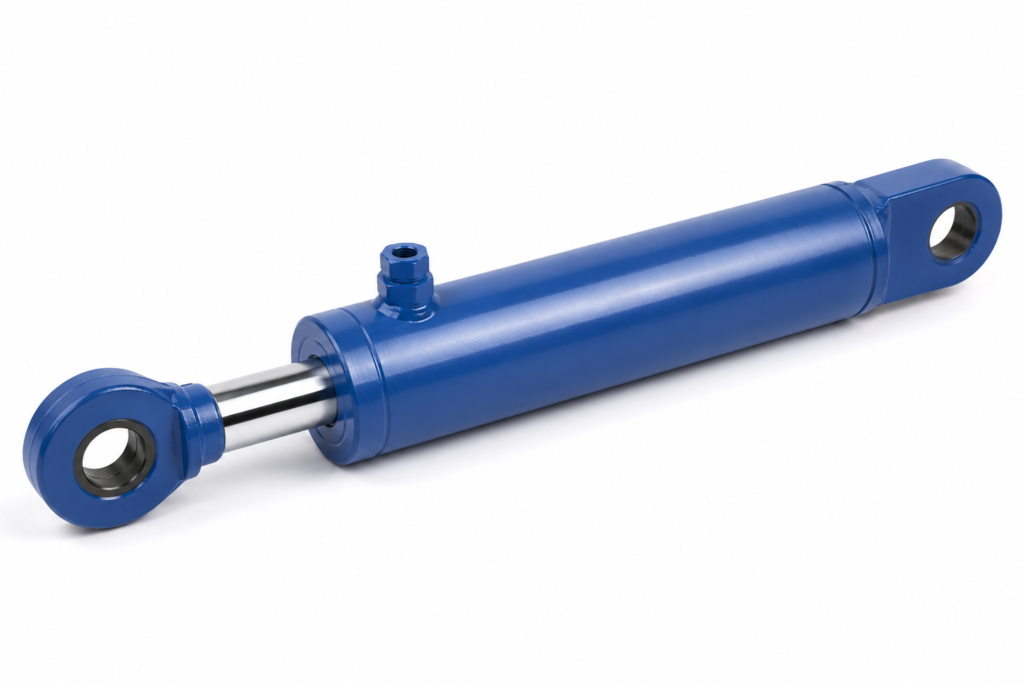
Why do buyers choose a double acting cylinder instead of a single acting cylinder?
A double acting cylinder is the better choice when the machine must push and pull with controlled force, speed, and positioning in both directions. In procurement terms, the decision is not about buying the “stronger” cylinder; it is about whether the return stroke can safely rely on gravity, load weight, or a spring.
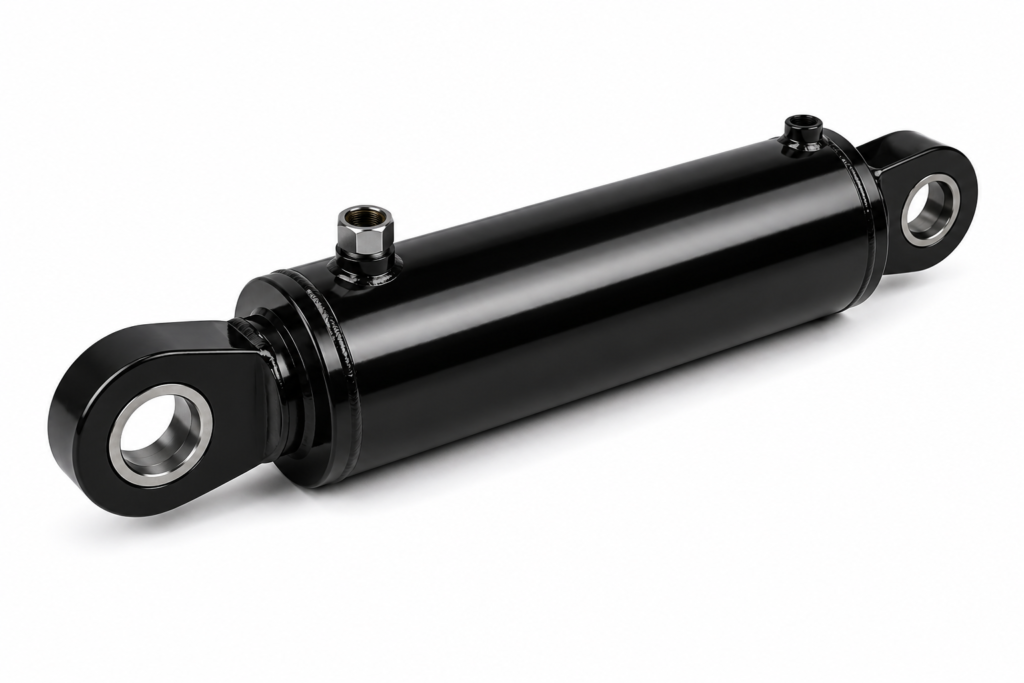
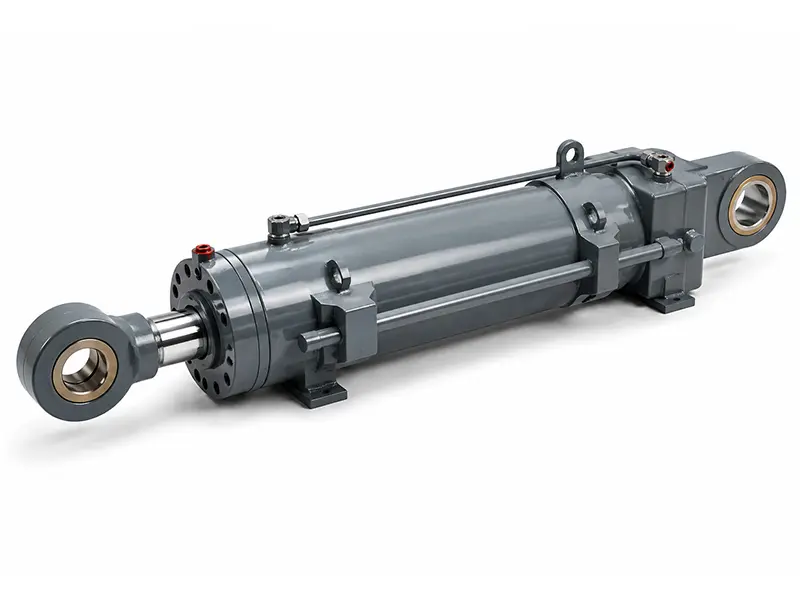
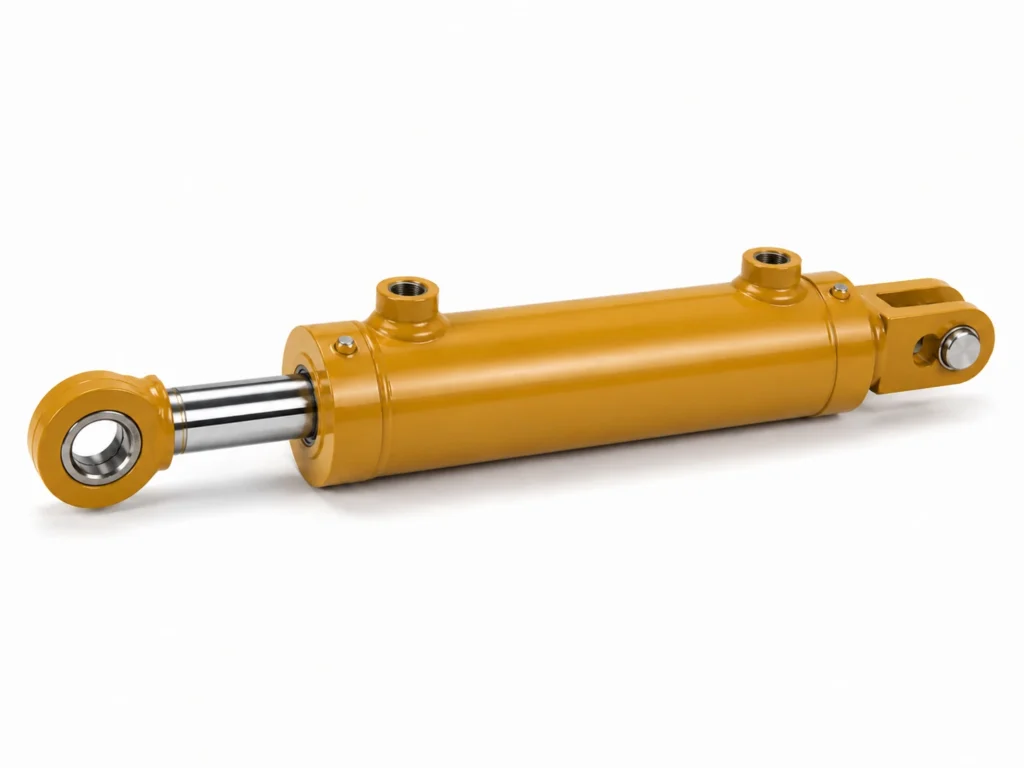
For project contractors, equipment rebuilders, and procurement managers, the practical question is often raised after a failure: the lift moved well in one direction, but return motion was slow, unstable, or unsafe. That is where double acting hydraulic cylinder working principles become important. Oil enters one port to extend the piston rod, while oil from the opposite chamber returns to tank. To retract, the valve reverses the flow path, sending pressure to the rod side.
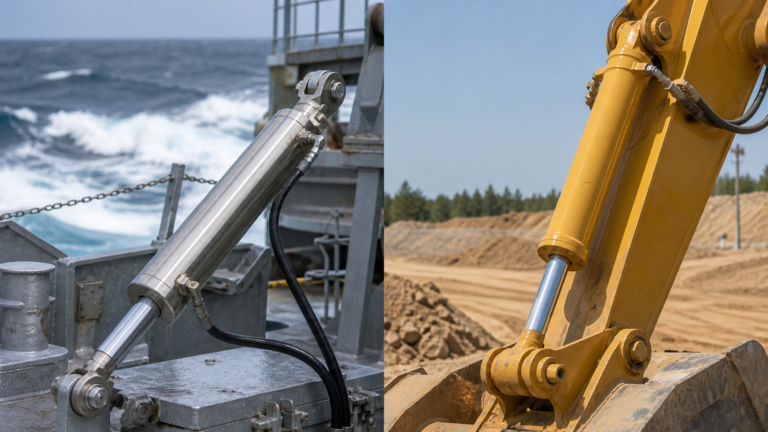
This makes the cylinder suitable for clamps, presses, construction attachments, agricultural implements, marine hatch systems, industrial doors, and material-handling equipment where both strokes must be powered. A two way hydraulic cylinder also gives the control valve more authority over acceleration, deceleration, holding, and reversing motion.
How does a double acting hydraulic cylinder work internally?
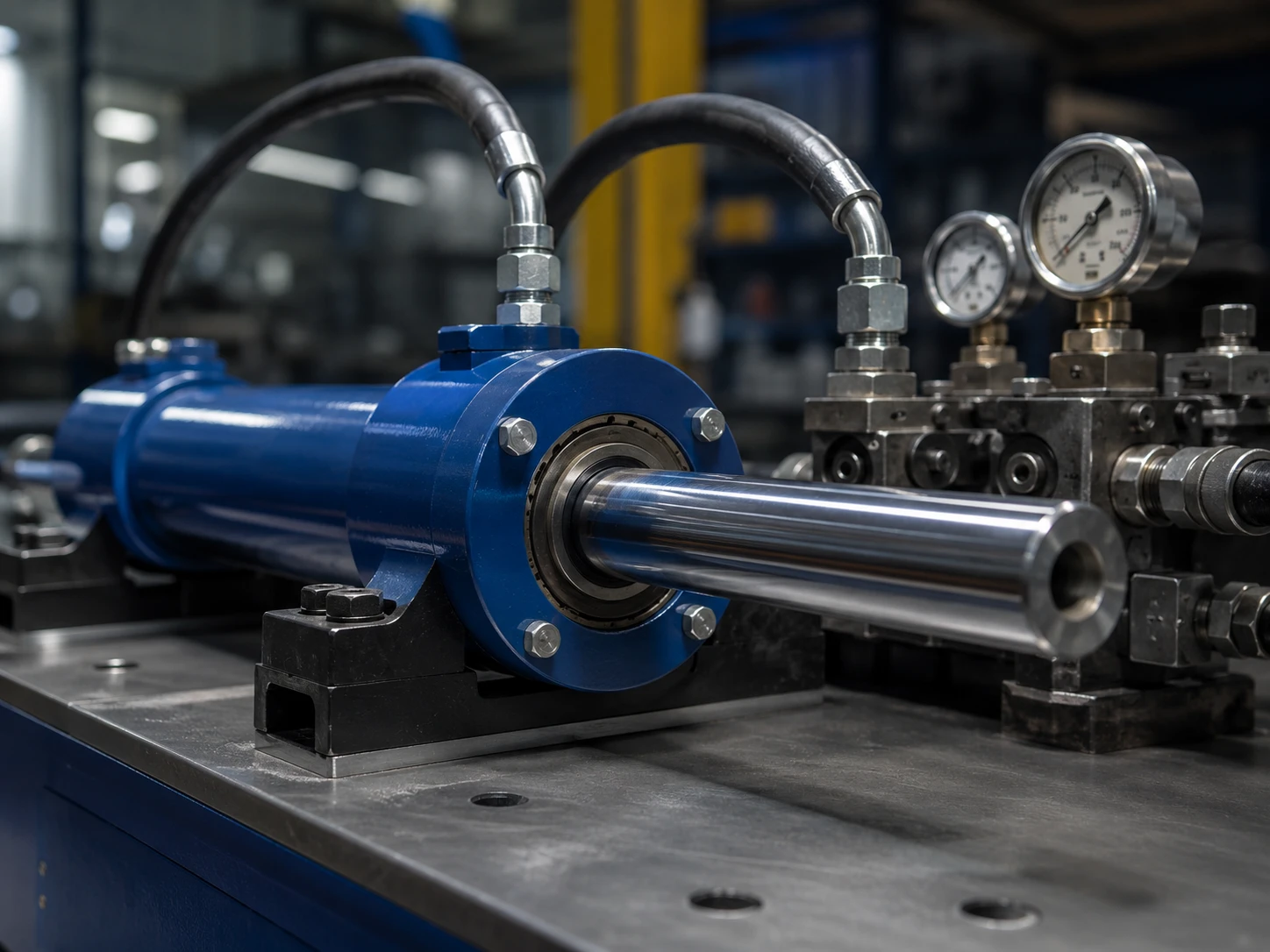
A double-acting cylinder works by directing hydraulic pressure alternately to the cap-end chamber and the rod-end chamber. Extension force is usually higher than retraction force because the full piston area is pressurized during extension, while the rod reduces the effective area during retraction.
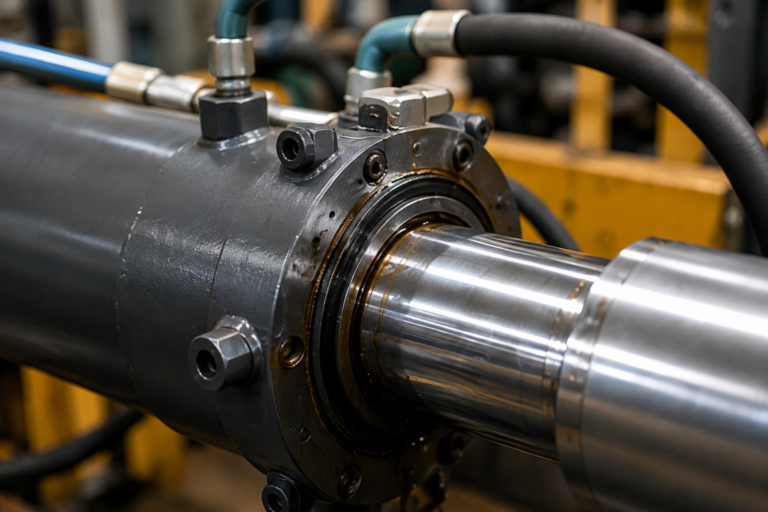
Inside the barrel, a piston separates two oil chambers. When the directional control valve sends oil into the cap-end port, the piston moves outward and the rod extends. When the valve shifts, oil enters the rod-end port, pushing the piston back and retracting the rod. The opposite chamber is never simply ignored; it must exhaust oil through the return line without excessive restriction.
This powered two-direction operation explains many common double-acting cylinder uses: loader buckets, hydraulic presses, steering cylinders, refuse compactors, scissor lifts, and machine fixtures. Buyers should not look only at maximum pressure. Flow rate, port size, valve capacity, hose length, and return-line back pressure can decide whether the cylinder cycles smoothly or creates heat and pressure spikes.
The important design detail is area difference. An 80 mm bore cylinder has a piston area of about 5,027 mm². With a 45 mm rod, the rod-side effective area is about 3,437 mm². At the same pressure, the retract force is therefore lower than the extend force, and retract speed is usually higher if pump flow is constant.
Key Takeaways
- A double acting cylinder uses two ports so oil can power both extension and retraction.
- Extension force is normally greater because the cap-end piston area is larger than the rod-side annular area.
- Ignoring port size and flow can cause slow cycle speed, heat generation, or pressure spikes.
- ISO 4413 requires hydraulic systems to be designed with safe control, pressure protection, and maintenance access.
- Buyers should provide bore, rod diameter, stroke, pressure, mounting, port type, and duty cycle before requesting a quote.
Which specifications decide performance before ordering?
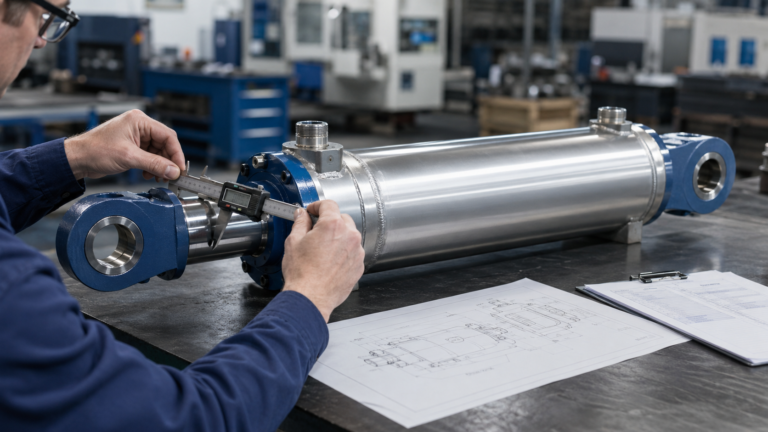
The specifications that decide performance are bore, rod diameter, stroke, rated pressure, port size, mounting style, seal material, and expected cycle speed. For a procurement manager, these values are not catalog details; they define force, speed, stability, installation fit, and service life.
ISO cylinder families give useful reference points. ISO 6020-1 covers 16 MPa medium-series single-rod cylinders, while ISO 6022 covers 25 MPa heavy-duty mounting dimensions. These standards do not replace engineering verification, but they help buyers compare dimensions and mounting interfaces across suppliers.
- Bore
- The internal cylinder diameter that determines piston area and theoretical extension force.
- Rod diameter
- The chrome-plated moving shaft diameter that affects retraction force, column strength, and buckling resistance.
- Stroke
- The total linear travel required by the machine, measured from fully retracted to fully extended position.
- Port size
- The hydraulic connection size that influences pressure drop, flow capacity, heat, and achievable cycle speed.
- Mounting style
- The mechanical interface, such as clevis, flange, trunnion, or foot mount, that determines load path and alignment.
For ZHY and any qualified cylinder manufacturer, a reliable quotation should start with the machine load and motion requirement, not only a photo of an old cylinder. Photos help identify mounting, but they do not confirm operating pressure, oil flow, or side-load risk.
What data should be checked for force, speed, and pressure?
Buyers should check calculated force, annular-area retraction force, required flow, cycle time, pressure rating, and port capacity before approving a cylinder. The following table uses standard engineering formulas and ISO pressure-series references to show why two cylinders with the same stroke can behave very differently.
| Selection item | Typical check | Example value | Buyer risk if ignored | Relevant source basis |
|---|---|---|---|---|
| Pressure class | Confirm system pressure and safety margin | 16 MPa medium series or 25 MPa heavy-duty series | Underspecified barrel, end cap, or mounting hardware | ISO 6020-1:2007; ISO 6022:2018 |
| Extension force | Pressure multiplied by full piston area | 80 mm bore at 16 MPa gives about 80.4 kN theoretical force | Machine cannot lift, clamp, or press at rated load | Calculated from piston area formula |
| Retraction force | Pressure multiplied by piston area minus rod area | 80 mm bore with 45 mm rod at 16 MPa gives about 55.0 kN | Pull-back force is overestimated during design | Calculated from annular area formula |
| Port and flow | Match port, hose, and valve flow to desired cycle time | High flow through a small port increases pressure drop | Slow motion, heat, noise, or pressure spikes | ISO 4413:2010 system design principles |
| Cleanliness and sealing | Specify filtration, oil condition, and seal compatibility | Cleanliness is commonly coded using ISO 4406 methods | Seal wear, scoring, leakage, and shortened service life | ISO 4406:2021 |
How to use this table: prioritize the pressure and force rows when the machine has a high load, prioritize the port and flow row when cycle time matters, and choose the more conservative specification when two options appear close but one has a smaller rod or port.
When should you choose a two way hydraulic cylinder for real equipment?
Choose a two-port double acting design when the application requires positive motion, load holding, or controlled reversal in both directions. The strongest candidates are machines where uncontrolled return movement would damage the mechanism, reduce productivity, or create a safety hazard.
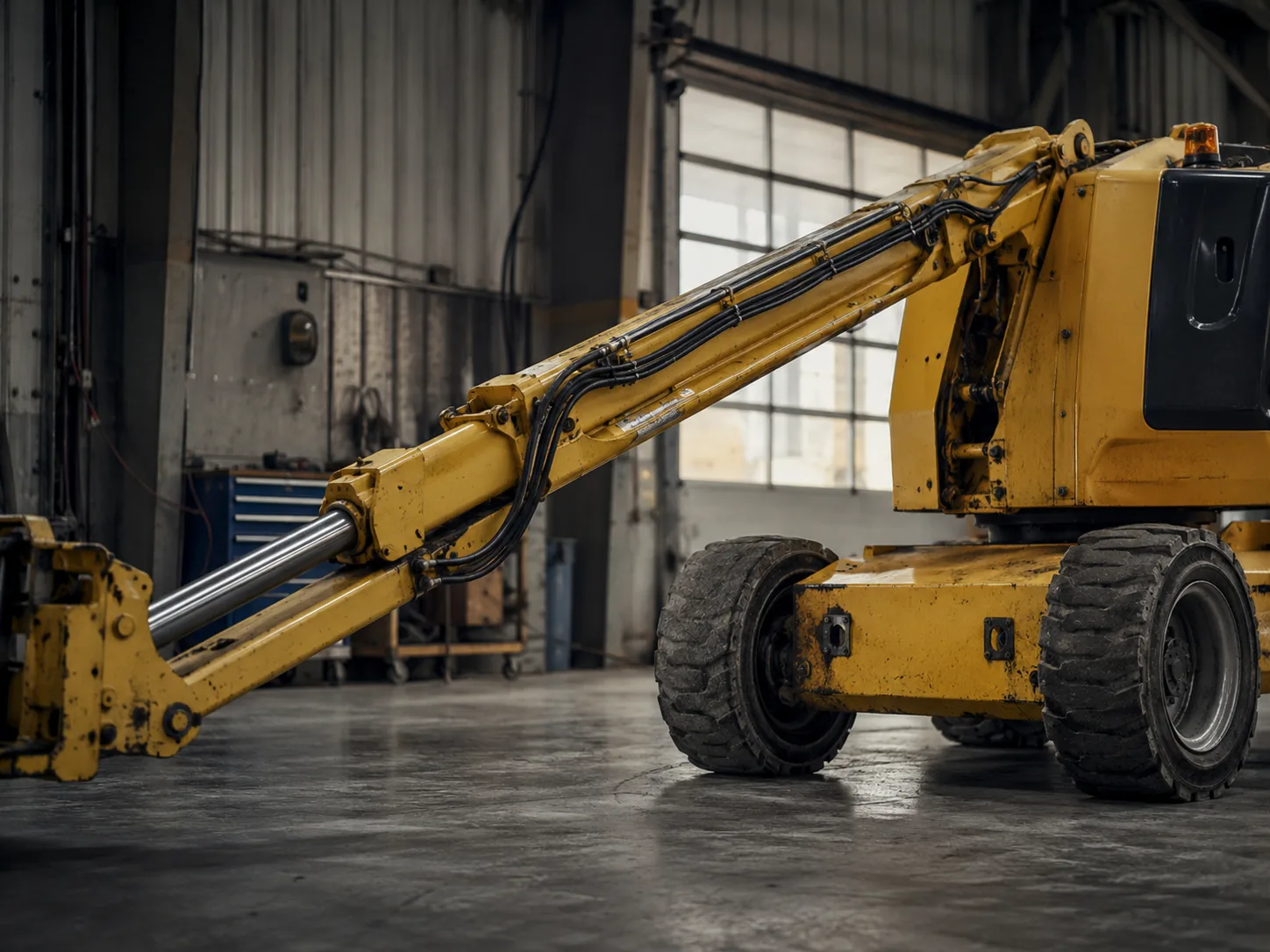
In mobile equipment, a two way hydraulic cylinder is common on loader attachments, tilt functions, stabilizers, grapples, and steering systems because the operator needs controlled movement under changing load angles. In industrial machinery, it is common on presses, positioning tables, clamps, automated gates, and lifting fixtures. In marine and agricultural environments, powered retraction helps overcome contamination, corrosion, uneven loads, and external resistance.
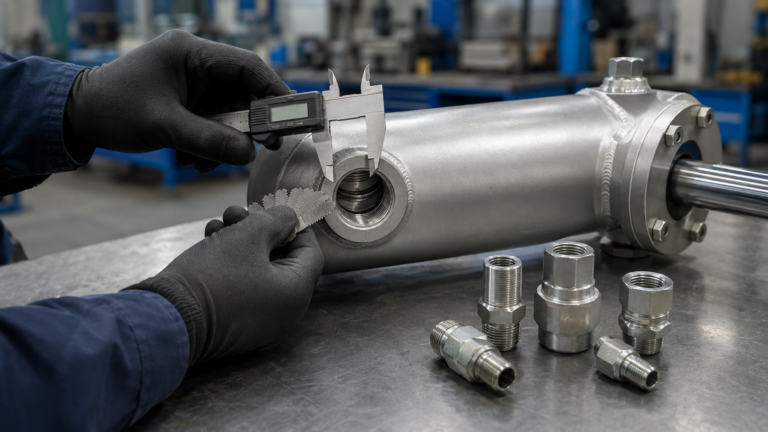
For distributors, the sourcing risk is mismatch. A cylinder may fit the pin-to-pin length but still fail because the rod is too small for side loading, the seal material is unsuitable for temperature, or the port thread differs from the customer’s hose fittings. For contractors, the delivery risk is different: replacement cylinders must arrive with the correct mounting center distance, rod-end thread, pin diameter, and port orientation, or installation is delayed.
Best for: equipment that must push, pull, hold, reverse, and meter motion with predictable control, especially where gravity return is too slow or unsafe.
What is the most common buying mistake with port size and flow?
The most expensive mistake is selecting the cylinder by bore and stroke while ignoring port size, valve capacity, hose diameter, and pump flow. A cylinder can be mechanically strong but hydraulically slow if oil cannot enter and leave the chambers at the required rate.
When a large bore cylinder is paired with small ports, the machine may extend slowly even when pressure is available. During rapid reversal, restriction can create pressure spikes, heat, cavitation risk, or unstable motion. This is especially important for applications with short cycle times, such as compactors, production clamps, loading equipment, and automated handling systems.
The buyer should ask for the expected cycle time, pump flow, valve size, port thread, and hose length together. If the supplier only confirms “working pressure” but does not ask about flow, the quotation is incomplete. For ZHY custom projects, this is one of the first checks because a small port can turn a correctly sized cylinder into a production bottleneck.
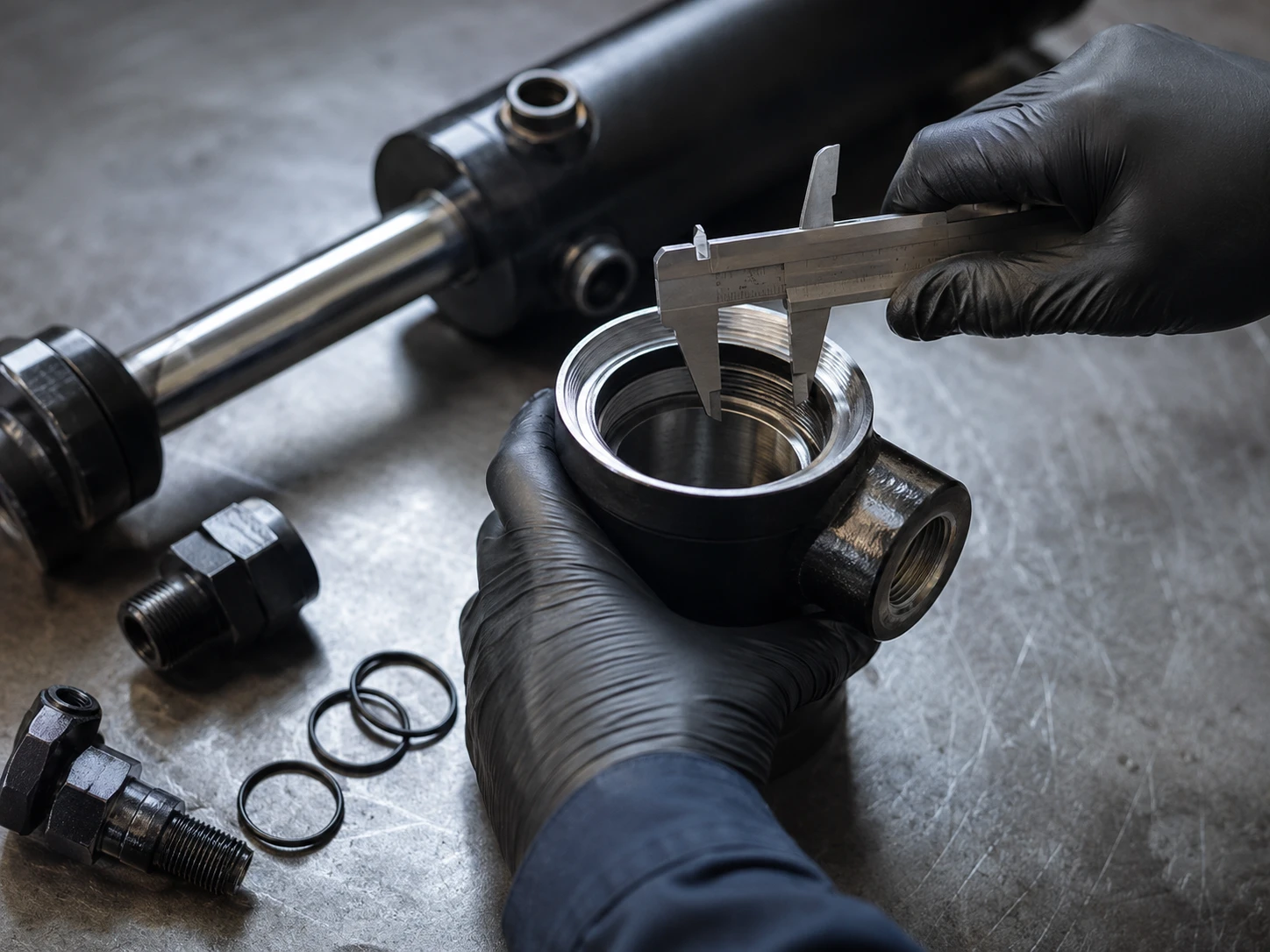
Which standards and compliance checks matter for hydraulic cylinders?
The most relevant checks are hydraulic safety design, dimensional interchangeability, cleanliness control, port compatibility, pressure protection, and safe maintenance. Standards do not guarantee a good supplier, but they create a common language for drawings, testing, installation, and risk review.
ISO 4413 is a central reference for hydraulic fluid power systems and covers general rules and safety requirements for systems and components. ISO 5598 defines fluid power vocabulary, which helps buyers avoid confusion between rated pressure, proof pressure, stroke, bore, and port terminology. ISO 6020-1 and ISO 6022 are useful where standardized mounting dimensions are required.
Maintenance teams should also consider OSHA lockout/tagout requirements in the United States when hydraulic equipment can release stored energy during service. Even outside the U.S., the principle is practical: isolate pressure, support suspended loads, and prevent unexpected movement before disconnecting hoses or removing pins.
Port standards deserve special attention. SAE J1926 and ISO 11926-style straight-thread O-ring ports are common in fluid power connections, but regional equipment may also use BSPP, metric, NPT, or flange connections. A buyer should never approve production until the drawing states the port type, thread, sealing method, and orientation.
How should buyers compare suppliers before a custom order?
Buyers should compare suppliers by engineering review quality, drawing control, material traceability, machining capability, pressure testing, packaging, and response to design questions. A low unit price is not a saving if the cylinder arrives with the wrong mounting geometry or unstable seal performance.
| Buyer situation | Recommended action | What to ask the supplier | Decision priority |
|---|---|---|---|
| Replacing an old cylinder | Confirm all physical dimensions before quoting | Can you review bore, rod, stroke, closed length, pin size, and port location from a drawing? | Fit and interchangeability |
| Designing a new machine | Start from load, pressure, speed, and mounting force path | Can you calculate force and recommend rod size against buckling risk? | Engineering safety margin |
| Fast-cycle production equipment | Validate flow, ports, and valve compatibility | What port size is suitable for the target cycle time and pump flow? | Cycle speed and heat control |
| Outdoor or corrosive environment | Specify rod coating, paint system, wipers, and seal material | What rod surface treatment and seal compound do you recommend for the environment? | Service life |
How to use this table: select the row closest to your project stage, treat the decision priority as the approval gate, and if two suppliers offer similar pricing, choose the one that asks more precise engineering questions before confirming production.
Practical asset: copy-ready double-acting cylinder ordering checklist
Use this checklist before sending an RFQ. It reduces quotation loops and prevents the common mistake of approving a cylinder that has the right stroke but the wrong hydraulic behavior.
- State the application first: lifting, clamping, tilting, steering, pressing, door control, or another motion.
- Provide bore, rod diameter, stroke, closed length, extended length, and pin-to-pin center distance.
- List working pressure, maximum system pressure, pump flow, target cycle time, and duty cycle per hour.
- Specify mounting style, pin diameter, rod-end thread or bearing type, and allowable installation space.
- Identify port type, port size, sealing method, port orientation, hose routing, and whether counterbalance or load-holding valves are needed.
- Describe the operating environment, including temperature, outdoor exposure, dust, water, chemicals, vibration, and side-load risk.
- Ask for material and process details: barrel tube, rod material, rod coating, piston design, seal compound, welding method, and paint system.
- Request inspection evidence: dimensional report, pressure test, leakage test, packaging method, and drawing approval before mass production.
- For repeat orders, require a controlled drawing revision number so future batches match the approved sample.
FAQ
1. What is the working principle of a double acting hydraulic cylinder?
A double acting hydraulic cylinder uses pressurized oil on both sides of the piston. Oil entering the cap-end port extends the rod, while oil entering the rod-end port retracts it. The opposite chamber returns oil to the tank through the valve. This design allows powered movement in both directions, unlike a single acting cylinder that normally relies on gravity, load weight, or a spring for return motion.
2. Is a double acting cylinder stronger than a single acting cylinder?
It is not automatically stronger; it is more controllable in two directions. Strength depends on bore size, pressure, rod diameter, tube design, mounting, and material quality. A double acting cylinder usually gives higher extension force than retraction force because the rod reduces the effective area on the rod side. Buyers should compare calculated force and application load rather than judging only by cylinder type.
3. Why does port size matter so much in a double acting cylinder?
Port size matters because oil must enter one chamber and leave the other chamber fast enough for the required cycle time. If the ports, hoses, or valve are too small for the flow, the machine may move slowly, generate heat, or experience pressure spikes during reversal. This is why buyers should provide pump flow, target speed, and port thread requirements together with bore and stroke.
4. What standards are useful when specifying hydraulic cylinders?
ISO 4413 is useful for hydraulic system safety rules, while ISO 6020-1 and ISO 6022 provide standardized mounting dimensions for 16 MPa and 25 MPa single-rod cylinder series. ISO 4406 is commonly used for coding particle contamination in hydraulic fluids. These standards help buyers and suppliers discuss safety, dimensions, cleanliness, and interchangeability with less ambiguity.
5. What information should I send to ZHY for a double acting cylinder quote?
Send bore, rod diameter, stroke, closed length, mounting style, pin dimensions, working pressure, maximum pressure, port type, port size, target cycle speed, and operating environment. If you are replacing an existing cylinder, add photos and a measured drawing. If you are designing new equipment, describe the load, motion direction, installation angle, and whether side load or load holding is expected.
References
- Hydraulic fluid power — General rules and safety requirements for systems and their components, International Organization for Standardization, ISO, 2010.
- Hydraulic fluid power — Mounting dimensions for single rod cylinders, 16 MPa (160 bar) series — Part 1: Medium series, International Organization for Standardization, ISO, 2007.
- Hydraulic fluid power — Mounting dimensions for single rod cylinders, 25 MPa (250 bar) series, International Organization for Standardization, ISO, 2018.
- Hydraulic fluid power — Fluids — Method for coding the level of contamination by solid particles, International Organization for Standardization, ISO, 2021.
- Fluid power systems and components — Vocabulary, International Organization for Standardization, ISO, 2020.
- Connections for General Use and Fluid Power — Ports and Stud Ends with ISO 725 Threads and O-Ring Sealing — Part 1, SAE International, SAE International, 2016.
- 29 CFR 1910.147 The Control of Hazardous Energy, Occupational Safety and Health Administration, U.S. Department of Labor, current regulation.
- Hydraulic Fluid Power — Cylinder Bore and Piston Rod Sizes — Metric Series, International Organization for Standardization, ISO, 1991.
How should a buyer turn the working principle into a confident purchase decision?
The practical value of understanding double-acting hydraulic cylinder working is that it turns a vague request into an engineering-controlled purchase. A buyer no longer asks only for “one cylinder with this length.” The buyer asks whether the machine needs a powered extension, powered retraction, holding force, controlled reversal, a defined cycle time, and a safe mounting load path.
The best option is clear when both directions must be controlled: choose a double-acting cylinder, then size it based on load, pressure, and speed. If the application only lifts and gravity can return the load safely, a single-acting design may reduce cost and plumbing. But for clamps, presses, steering, tilting, stabilizers, and automated machinery, powered retraction is not a luxury; it is part of predictable machine behavior.
Why does this matter more now? Modern equipment buyers increasingly expect shorter cycle times, easier replacement, traceable drawings, and cleaner hydraulic systems. ISO 4413 keeps safety and system design at the center of hydraulic work, while ISO 4406 reinforces the importance of contamination control. These details are not paperwork. They affect leakage, seal wear, downtime, and field maintenance costs.
The strongest purchasing approach is to combine application logic with measurable data. Start with force and stroke, then verify rod stability, port flow, seal material, mounting alignment, pressure rating, and inspection evidence. When a supplier asks for bore, rod, stroke, pressure, mounting style, port size, and flow before quoting, that is usually a positive sign. It means the supplier is checking whether the cylinder will work in the machine, not merely whether it can be manufactured.
For MOFU-stage buyers comparing options, the decision rule is direct: if controlled movement in both directions is needed, specify a double-acting cylinder and treat port and flow data as mandatory, not optional. That is the difference between a cylinder that fits on paper and one that performs reliably in service.