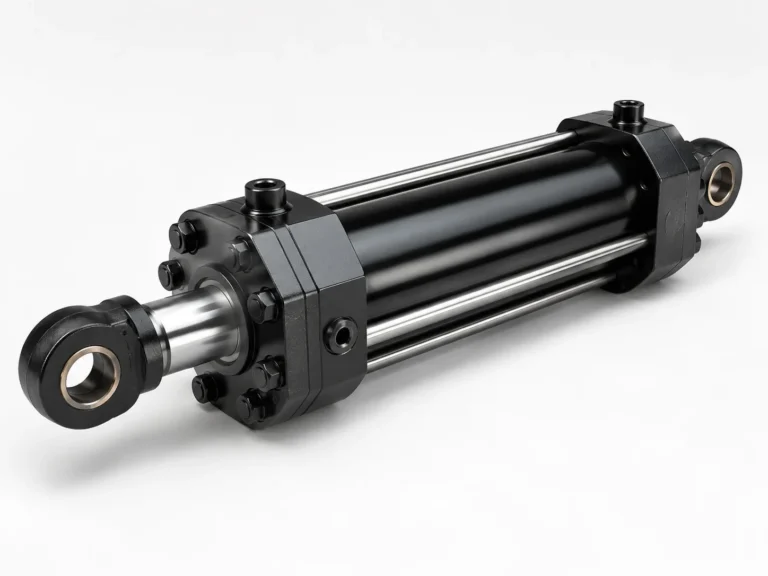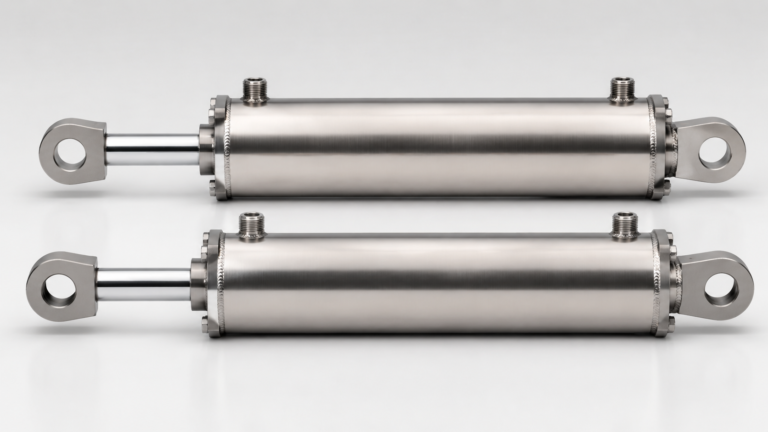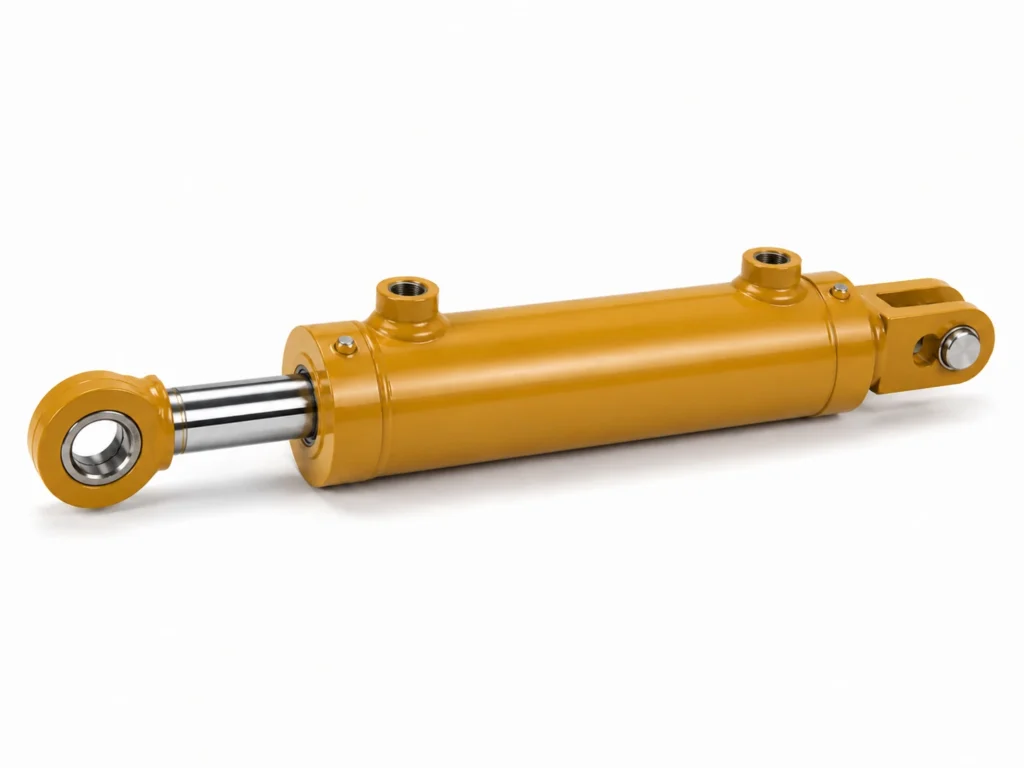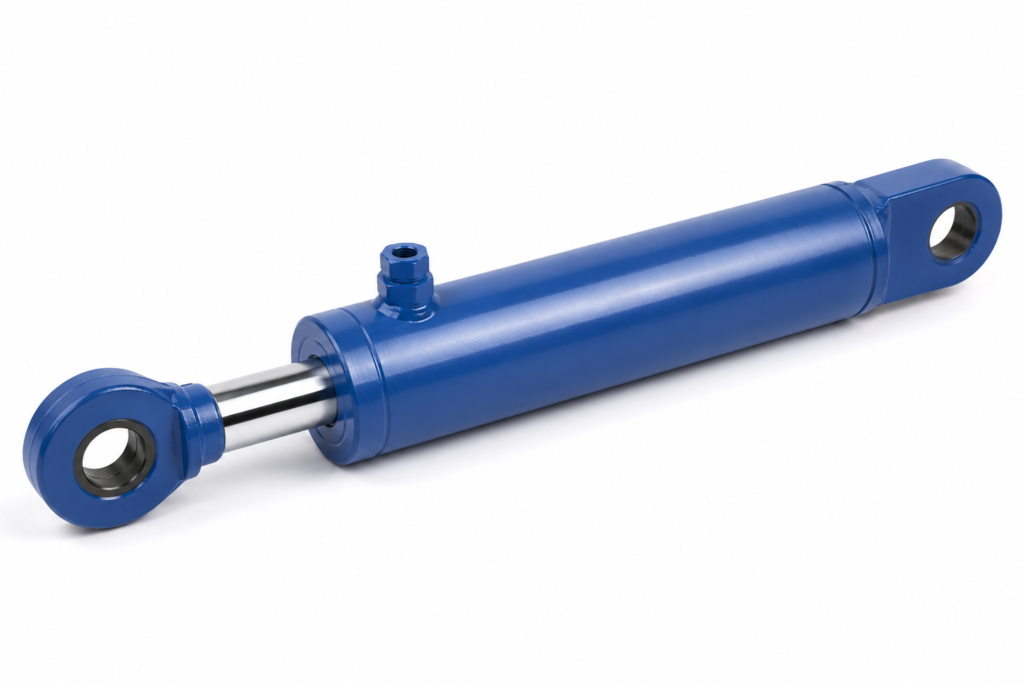
Learning how to choose hydraulic cylinder seals is not a matter of picking the hardest material or the most expensive brand. You are matching a sealing system to the cylinder’s pressure, temperature, speed, fluid, surface finish, contamination level and duty cycle.
Miss one of those conditions and a seal that looks perfect on a data sheet may leak, wear, harden or extrude soon after installation. This guide shows you how to make the choice in a practical order and what information to send your cylinder supplier.
Quick Answer
To choose hydraulic cylinder seals, first define the actual working pressure, peak pressure, temperature range, rod speed, hydraulic fluid, contamination exposure and expected duty cycle. Then select the seal functions—rod seal, piston seal, wiper, static seal and wear ring—and match their materials and profiles to those conditions. PU is a strong general-purpose choice, NBR is widely used for mineral oil and static sealing, FKM suits higher temperatures and selected aggressive fluids, while PTFE performs well at high speed and low friction but usually needs an energizer and precise hardware.
What Does a Hydraulic Cylinder Seal System Do?
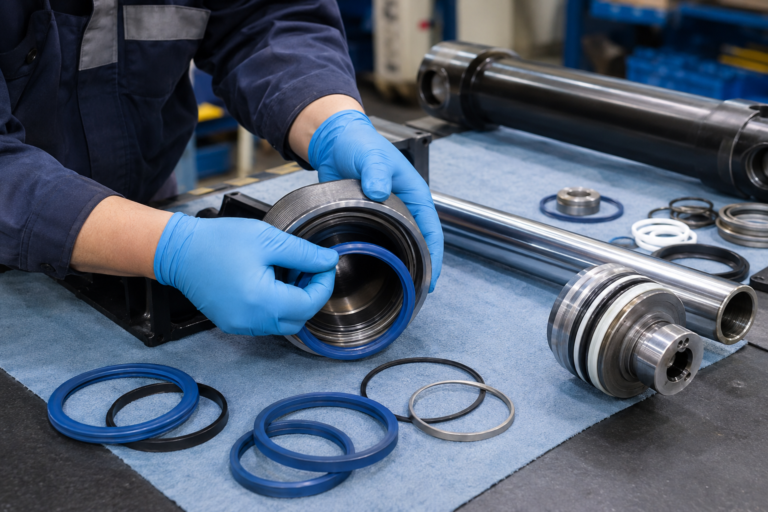
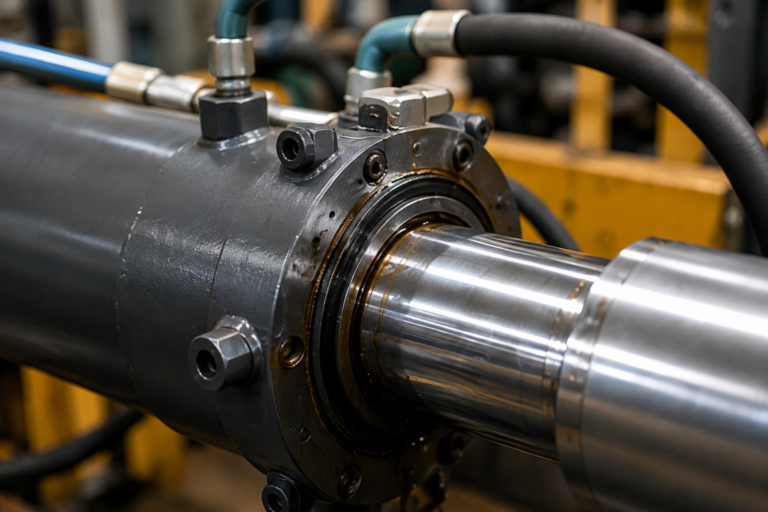
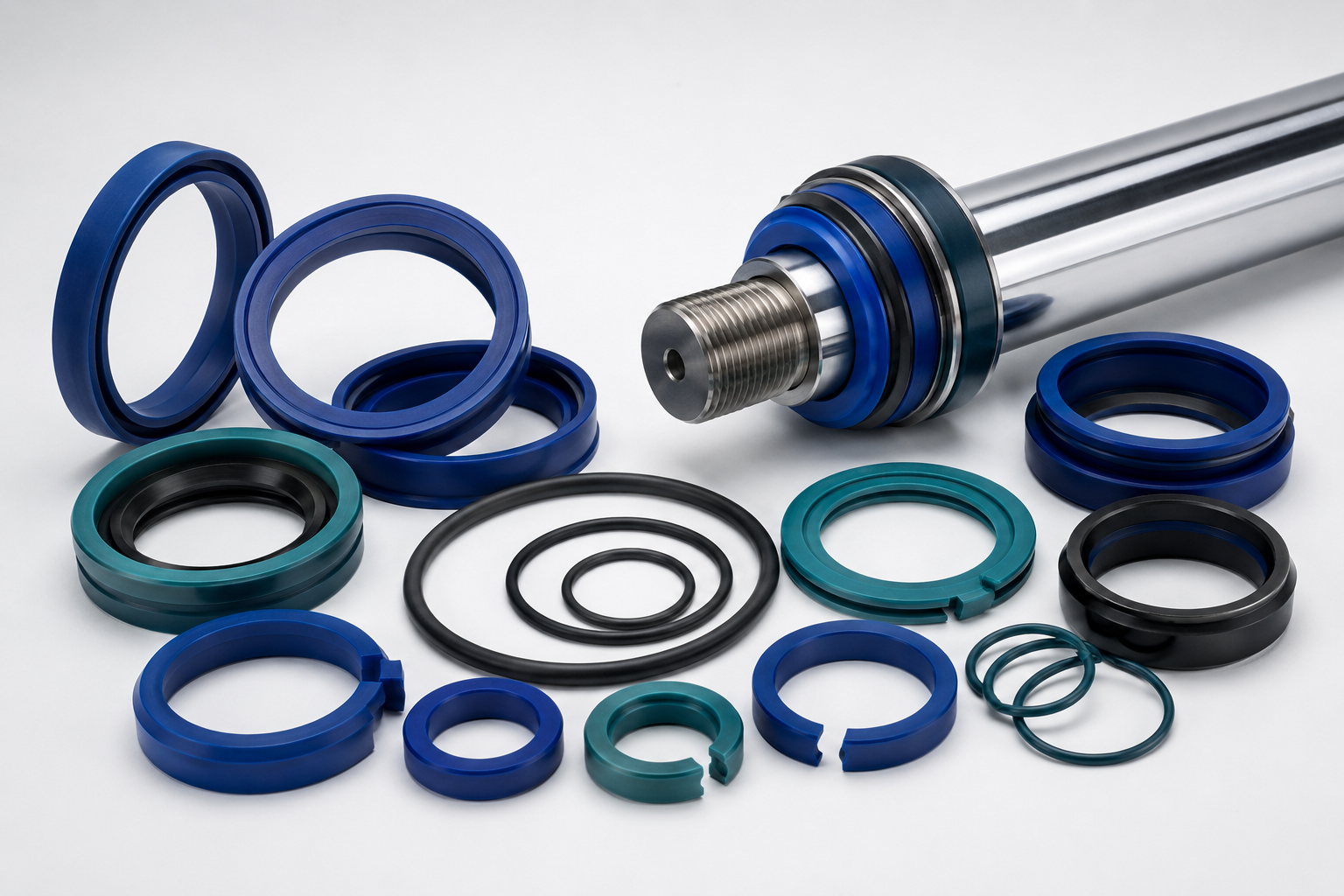
A hydraulic cylinder does not rely on one seal. It uses a system of components, and each one controls a different risk.
- Rod seal: keeps pressurized oil inside the cylinder as the rod moves.
- Piston seal: separates pressure between the two sides of the piston.
- Wiper or scraper: removes mud, dust, water and debris from the retracting rod.
- Static O-ring or gasket: seals non-moving joints such as the gland-to-tube connection.
- Wear ring or guide ring: carries side load and prevents metal-to-metal contact.
- Buffer seal: reduces pressure spikes before they reach the primary rod seal.
A seal cannot compensate for an undersized wear ring, a scratched rod or an unstable guide system. That is why you should evaluate the complete hydraulic cylinder sealing arrangement rather than buy individual rings by appearance.
How to Choose Hydraulic Cylinder Seals: Seven Conditions to Confirm
Start with the application, not the material catalog. Ask the following questions before comparing seal profiles.
1. Working and Peak Pressure
Use both normal working pressure and short-duration peak pressure. Pressure spikes caused by shock loads, valve switching or external forces may damage a seal even when the average pressure appears safe.
High pressure increases the risk of extrusion into the clearance gap. The solution may require a more extrusion-resistant material, a backup ring, tighter hardware clearance or a reinforced profile—not simply a harder seal.
2. Minimum and Maximum Temperature
Check the oil temperature near the seal, not only the ambient temperature. Cold starts can make some materials stiff. Excess heat can soften, harden or permanently deform others.
Temperature limits also depend on fluid, pressure, speed and exposure time. Treat catalog ranges as screening values and confirm the final combination with the seal or cylinder engineer.
3. Rod and Piston Speed
Fast movement creates frictional heat and changes the oil film under the sealing lip. A very tight elastomer seal may control leakage at low speed but generate excessive heat at high speed.
For high-speed or stick-slip-sensitive cylinders, a low-friction PTFE-based profile may be more suitable. The cylinder’s surface finish and alignment then become even more important.
4. Hydraulic Fluid
Identify the exact hydraulic fluid, concentration and additives. Mineral hydraulic oil, water-glycol, biodegradable ester, phosphate ester and fire-resistant fluids do not affect elastomers in the same way.
“Hydraulic oil” is not enough information. A compatible base polymer may still react poorly to a specific additive package or high-temperature exposure.
5. Contamination and Environment
A press cylinder in a clean factory and an excavator hydraulic cylinder in abrasive mud need different wiper systems. Outdoor cylinders may face water, salt spray, ice, cement dust or welding spatter.
In dirty service, the wiper is a primary reliability component. Severe contamination may justify a heavy-duty scraper, tandem wipers, corrosion-resistant rod treatment and stronger rod guidance.
6. Side Load and Alignment
Side load pushes the piston or rod against the bearing surface. If the guide rings cannot carry the load, the seal wears unevenly and leakage follows.
Before blaming the seal, check mounting alignment, pin clearance, rod straightness and bearing length. A better seal will not cure a mechanical alignment problem.
7. Duty Cycle and Required Life
Record cycles per hour, hours per day, stroke length and dwell time. A cylinder that moves twice per shift has different needs from one running continuously on an automation line.
Also define what failure means. A small oil film may be acceptable in one industrial machine but unacceptable in food, clean-room or environmentally sensitive equipment.
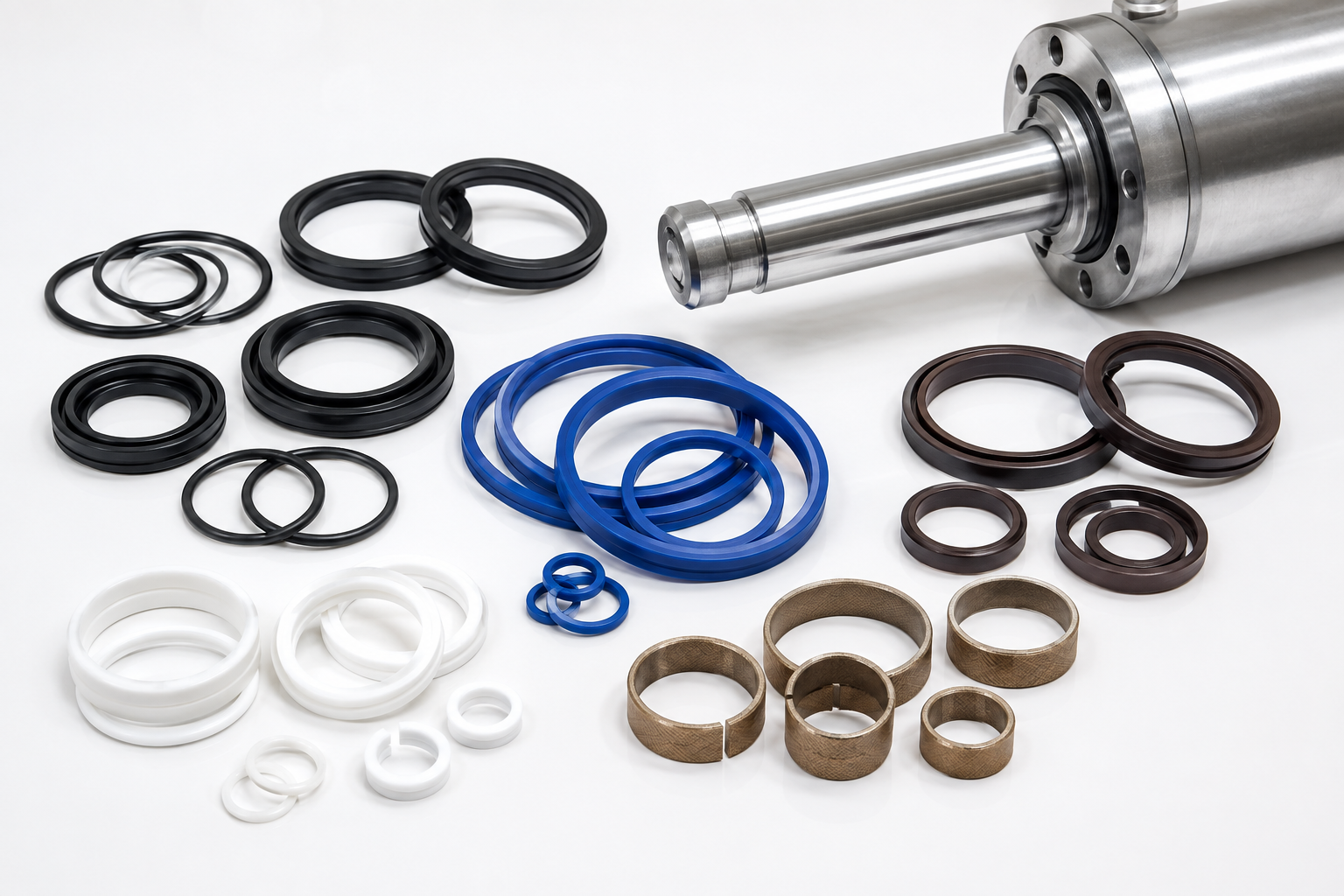
Hydraulic Seal Materials Compared
No material is “best” in every cylinder. The table below is a practical starting point, not a substitute for checking the compound-specific data sheet.
| Material | Main Strengths | Watch For | Typical Uses |
|---|---|---|---|
| PU / TPU | High wear and extrusion resistance; good general sealing | Heat, water exposure and fluid compatibility vary by grade | Rod seals, piston seals and wipers |
| NBR | Good mineral-oil compatibility and economical static sealing | Limited ozone, weather and high-temperature resistance | O-rings, energizers and moderate-duty seals |
| HNBR | Improved heat, wear and chemical resistance over NBR | Higher cost; compatibility still needs confirmation | Heavy-duty and higher-temperature applications |
| FKM | Good heat and resistance to many oils and chemicals | Cold flexibility and some fluid families can be problematic | High-temperature static and dynamic sealing |
| PTFE compounds | Low friction, broad chemical resistance and high-speed capability | Low elasticity; often needs an energizer and accurate grooves | Piston seals, rod seals and low-friction systems |
| POM / fabric composite | Load-carrying ability and dimensional stability | Not a pressure seal; material limits vary | Wear rings and guide rings |
How to Select Each Seal in the Cylinder?
Rod Seal
The rod seal controls external leakage. Choose it by pressure, speed, temperature, rod surface, fluid and acceptable oil film. A single-lip PU rod seal suits many general industrial cylinders. High-pressure spikes may require a buffer seal in front of the main seal.
Do not make the system too dry. A controlled microscopic oil film lubricates the seal lip and rod. Aggressive wiping combined with a tight rod seal can increase friction and shorten life.
Piston Seal
The piston seal limits internal bypass. For a double-acting hydraulic cylinder, the profile must seal pressure from both directions or use a suitable paired arrangement.
Compact PU seals are robust for many mobile and industrial applications. PTFE sliding seals can reduce friction and handle higher speed, but their energizers, grooves and mating surfaces must be designed as one system.
Wiper
Match the wiper to what actually reaches the rod. A light-duty dust wiper is not enough for dried concrete, abrasive mining dust, ice or saltwater.
An aggressive scraper can remove contaminants, but it may also remove the lubricating oil film. Balance exclusion and lubrication, especially in long-stroke cylinders.
Static Seals
O-rings are common at glands, ports and end caps. At higher pressure, clearance may allow an O-ring to extrude, so a backup ring may be necessary. Verify squeeze, groove fill, assembly stretch and thermal expansion.
Wear and Guide Rings
Guide rings protect seals from side load. Their width, material and bearing area should be calculated from expected transverse load, not chosen only by the groove already available.
If you are specifying a custom hydraulic cylinder, guide-system design should be reviewed before the seal kit is frozen.
Application-Based Selection Guide
| Operating Condition | Priority | Possible Direction | Also Check |
|---|---|---|---|
| General industrial mineral-oil service | Balanced wear, sealing and cost | PU dynamic seals; NBR static seals | Actual temperature and pressure peaks |
| Fast cycling or stick-slip sensitivity | Low friction and heat control | PTFE-based sliding seals | Surface finish, lubrication and groove accuracy |
| Hot environment | Thermal stability | FKM, HNBR or selected PTFE compound | Fluid chemistry and cold-start temperature |
| Mud, dust or abrasive debris | Contaminant exclusion | Heavy-duty wiper or scraper system | Rod coating, corrosion and guide support |
| Shock loads and pressure spikes | Extrusion and fatigue resistance | Buffer seal, backup ring or reinforced profile | Clearance gap and pressure measurement |
| Marine or corrosive exposure | Water exclusion and corrosion control | Environment-compatible wiper and seal compound | Rod coating, gland material and drainage |
Surface Finish and Hardware Matter as Much as the Seal
A correct seal installed against an incorrect surface will still fail. Rod roughness, tube finish, lead, scratches, hard-chrome quality, groove dimensions, extrusion clearance and edge radii all affect sealing.
A surface can meet one roughness value and still be unsuitable because its peaks, valleys or directional lead damage the lip or pump oil outward. Use the seal supplier’s recommended surface parameters and confirm them on the production process.
During assembly, remove burrs and protect the seal from threads, sharp ports and keyways. Use compatible lubricant and proper installation tools. Do not twist the seal or force it through an undersized edge.
Common Seal Failure Symptoms and Their Likely Causes
| Symptom | Likely Causes | What to Inspect |
|---|---|---|
| External rod leakage | Damaged lip, rod scratch, contamination, pressure spike or misalignment | Rod condition, wiper, guide rings and pressure history |
| Cylinder drift or weak holding | Piston-seal bypass, valve leakage or tube damage | Isolate the cylinder from the circuit before concluding |
| Seal edges extruded or nibbled | Excess pressure, large clearance, soft material or poor backup | Peak pressure, groove clearance and backup-ring orientation |
| Hard, cracked or brittle seal | Heat, aging, ozone or incompatible fluid | Actual temperature and exact fluid formulation |
| Uneven wear on one side | Side load, bent rod, worn guide or mounting error | Alignment, bearings, pins and rod straightness |
| Jerky movement | Excess friction, poor lubrication, air or unsuitable seal profile | Seal preload, surface finish, speed and circuit air |
Do not diagnose leakage from the damaged seal alone. A failed seal often records the symptom of another problem. Review these common causes of hydraulic cylinder failure after installation before fitting the same kit again. Check the hydraulic circuit, mounting and hardware before fitting the same kit again.
Six Common Seal-Selection Mistakes
Seal errors often begin during specification. The broader guide to hydraulic cylinder purchasing mistakes explains how incomplete application data creates leakage, wrong fit and avoidable downtime.
- Choosing by size only. Two seals with the same nominal dimensions may use different profiles, compounds and pressure capabilities.
- Using normal pressure but ignoring peaks. Short pressure spikes can extrude a seal long before average pressure becomes a problem.
- Assuming every oil is compatible. Fluid base, additives, water content and temperature all influence compatibility.
- Upgrading the seal but ignoring the guide rings. Side load will continue to damage the replacement.
- Copying a seal kit into a changed application. Higher speed, longer duty, new fluid or outdoor use can invalidate the original choice.
- Buying seals before confirming grooves. The seal, groove, clearance and mating surface must be checked together.
Seal Standards: What They Can and Cannot Tell You
Standards help communicate dimensions and terminology. For example, ISO 3601 covers O-ring dimensions and designation, ISO 5597 addresses rod and piston seal housings, and ISO 7425-1 covers piston seal housing dimensions. Always check the applicable edition and the seal manufacturer’s profile data.
A standard groove does not automatically guarantee application suitability. Pressure, fluid, temperature, speed, clearances and surface finish still determine whether a specific compound and profile will work.
What Information Should You Send for Seal Selection?
Send one complete operating-condition sheet instead of a message that says “need better seals.” This checklist reduces back-and-forth and prevents assumptions.
- Cylinder bore, rod diameter and stroke
- Seal groove dimensions and existing seal profile
- Normal working pressure and measured or estimated peak pressure
- Minimum and maximum fluid temperature
- Rod or piston speed and cycle frequency
- Exact hydraulic fluid and concentration
- Indoor, outdoor, marine, dusty, muddy or abrasive environment
- Side load, mounting method and alignment information
- Rod coating, tube finish and surface specifications
- Current failure photos, location and operating hours
- Required leakage level and expected service interval
If you are sourcing complete hydraulic cylinders, include this data with your drawing or sample. It allows the manufacturer to review the seal kit together with the tube, rod, piston, gland and guide system.
How ZHY Hydraulic Selects Seals for Custom Cylinders
ZHY Hydraulic reviews the application before confirming a seal arrangement. The engineering discussion covers pressure, temperature, speed, fluid, contamination, duty cycle, mounting and side load. Seal materials and profiles are then matched with the groove design, extrusion clearance, surface finish and guide system.
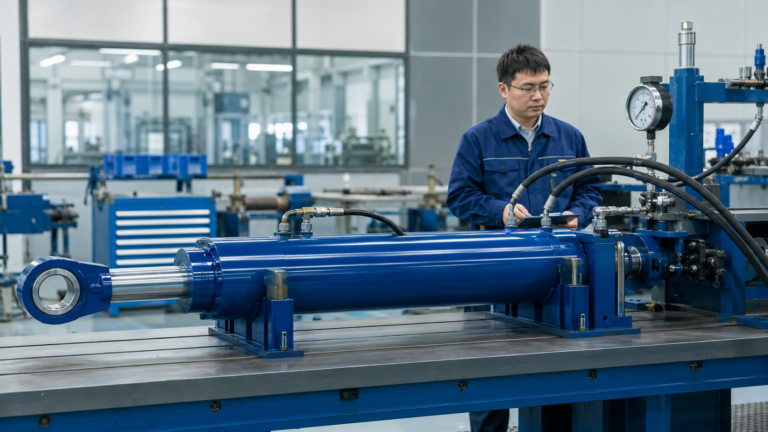
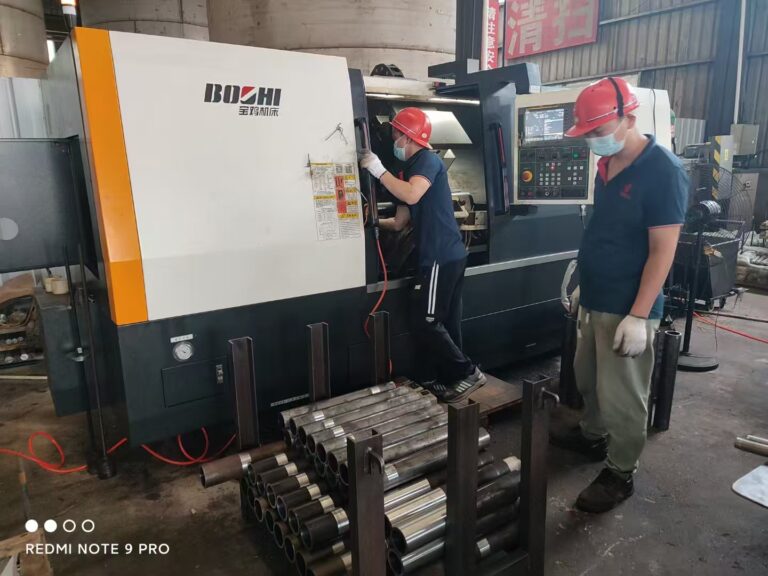
For OEM projects, we can manufacture from your drawing, sample or technical requirements. Critical dimensions are checked during machining and assembly, and the completed cylinder is pressure and leakage tested before shipment. If you are replacing an existing cylinder, failure photos and used seal samples help distinguish a seal problem from wear, contamination or misalignment.
Need Help Matching the Seal System to Your Cylinder?
Send your cylinder drawing, pressure, fluid, temperature, speed and application details. ZHY Hydraulic can review the sealing arrangement as part of your custom cylinder project.
Frequently Asked Questions
What is the best material for hydraulic cylinder seals?
There is no universal best material. PU is a strong general-purpose choice, while NBR, HNBR, FKM and PTFE compounds serve different fluid, temperature, speed and friction requirements.
Can I replace an NBR seal with a polyurethane seal?
Not by material name alone. Confirm the profile, groove, squeeze, fluid, temperature, pressure and dynamic behavior before changing compounds.
When should a hydraulic cylinder use a buffer seal?
A buffer seal may help when the rod seal faces pressure spikes or severe dynamic pressure. It must be designed to avoid trapping pressure between seals.
Why does a new hydraulic cylinder seal leak?
Possible causes include installation damage, wrong orientation, incompatible material, incorrect groove, rod scratches, contamination, excessive clearance, side load or pressure peaks.
Are harder hydraulic seals always better for high pressure?
No. Hardness can improve extrusion resistance, but excessive hardness may reduce low-pressure sealing and flexibility. Profile and clearance are equally important.
How do I know whether leakage comes from the piston seal or the valve?
Perform a controlled isolation test following the machine’s safety procedure. Cylinder drift alone does not prove piston-seal failure because valve leakage can produce similar symptoms.
Final Selection Recommendation
Choose the seal system only after the real application limits are known. Confirm pressure peaks, temperature, speed, fluid, contamination, side load and duty cycle. Then select the rod seal, piston seal, wiper, static seals and guide rings as a coordinated system.
If the cylinder repeatedly damages seal kits, stop replacing the same parts. Inspect alignment, guide support, surfaces, clearances and the hydraulic circuit. The most reliable seal is the one supported by correct hardware and verified operating data.