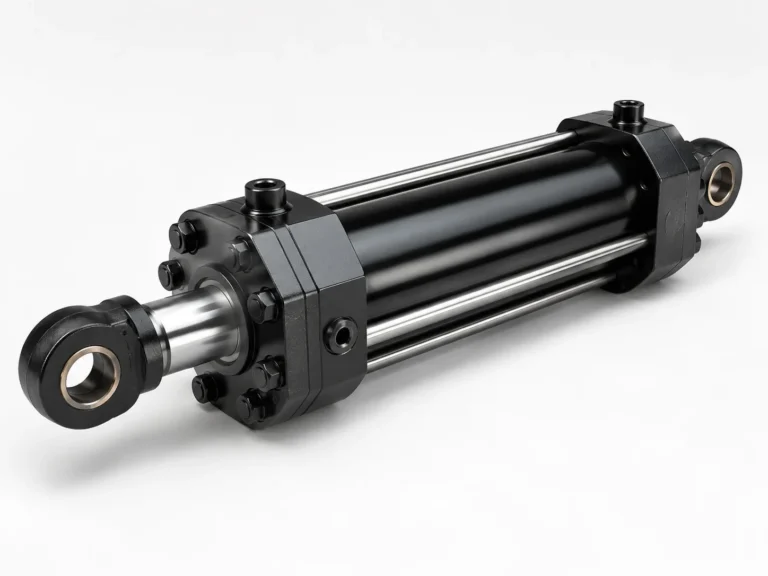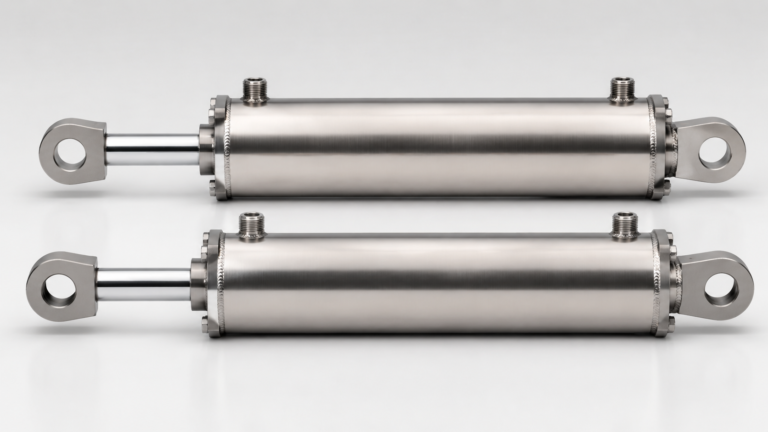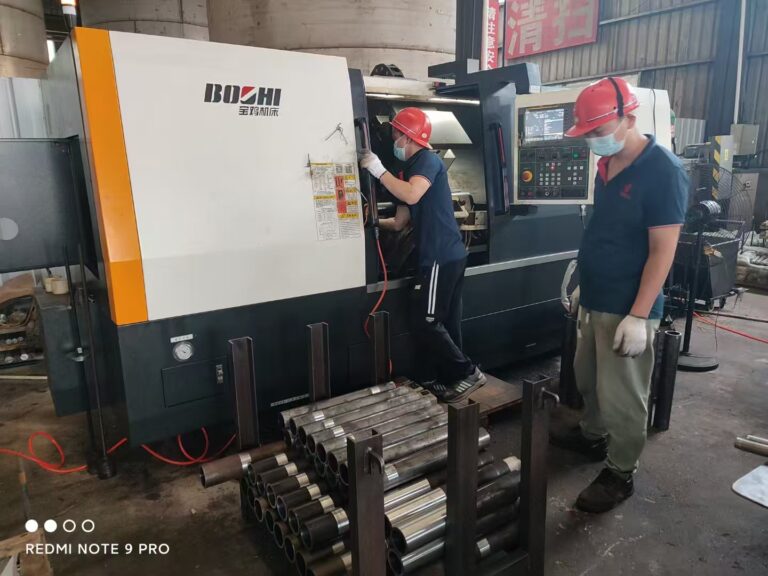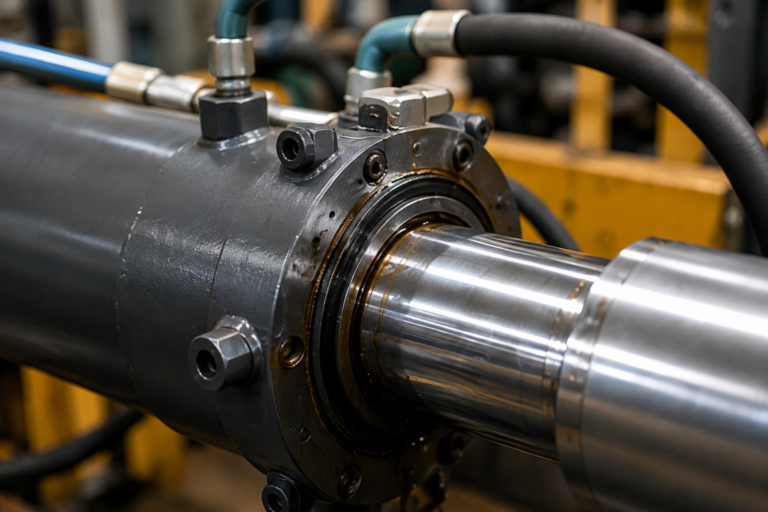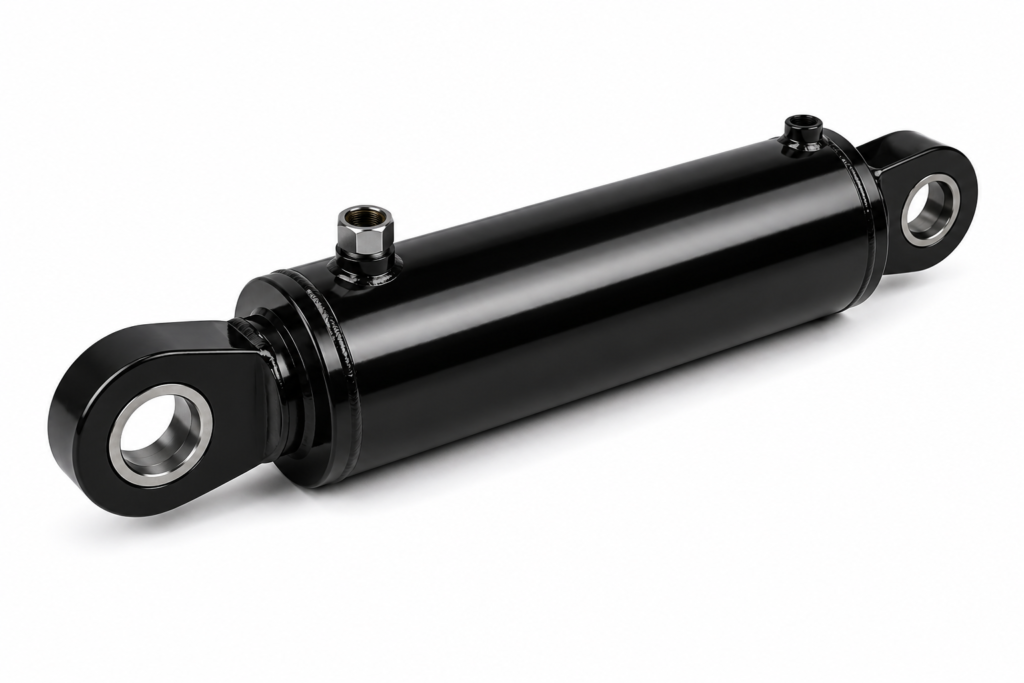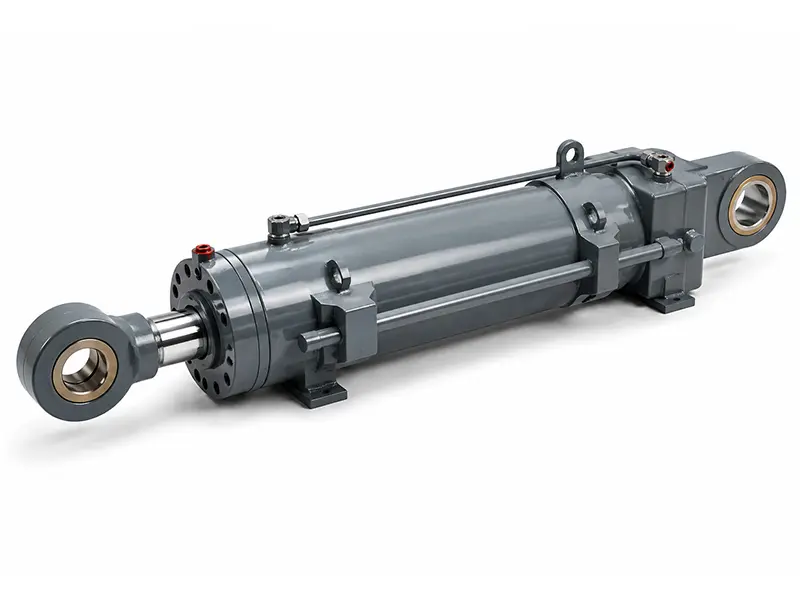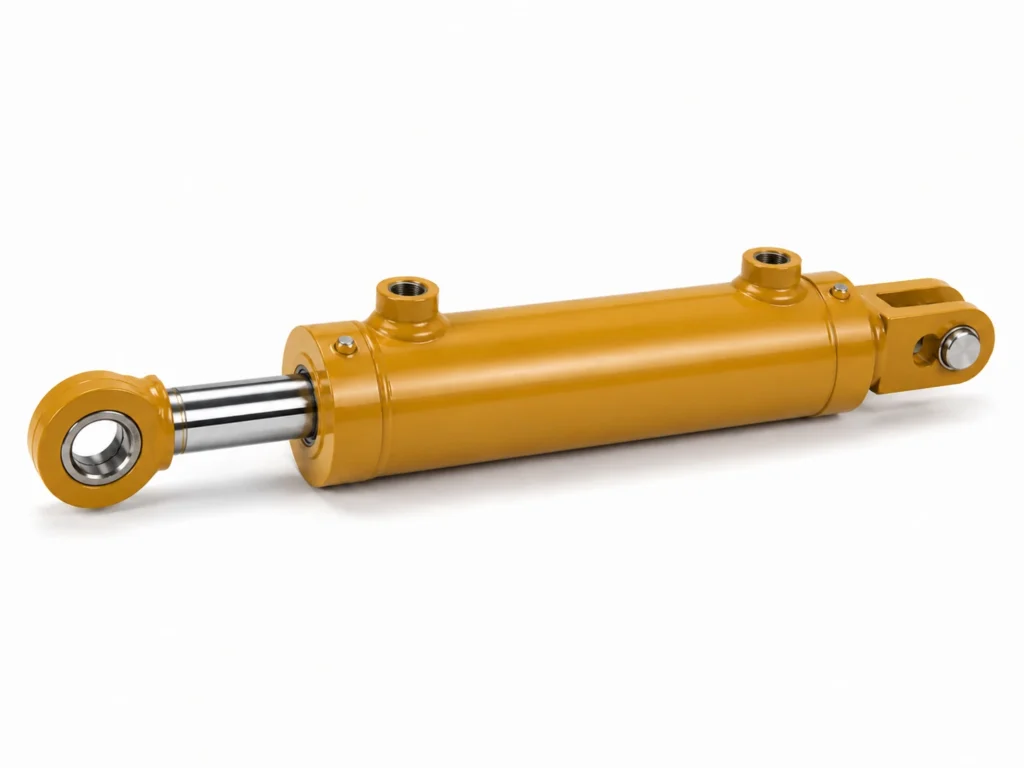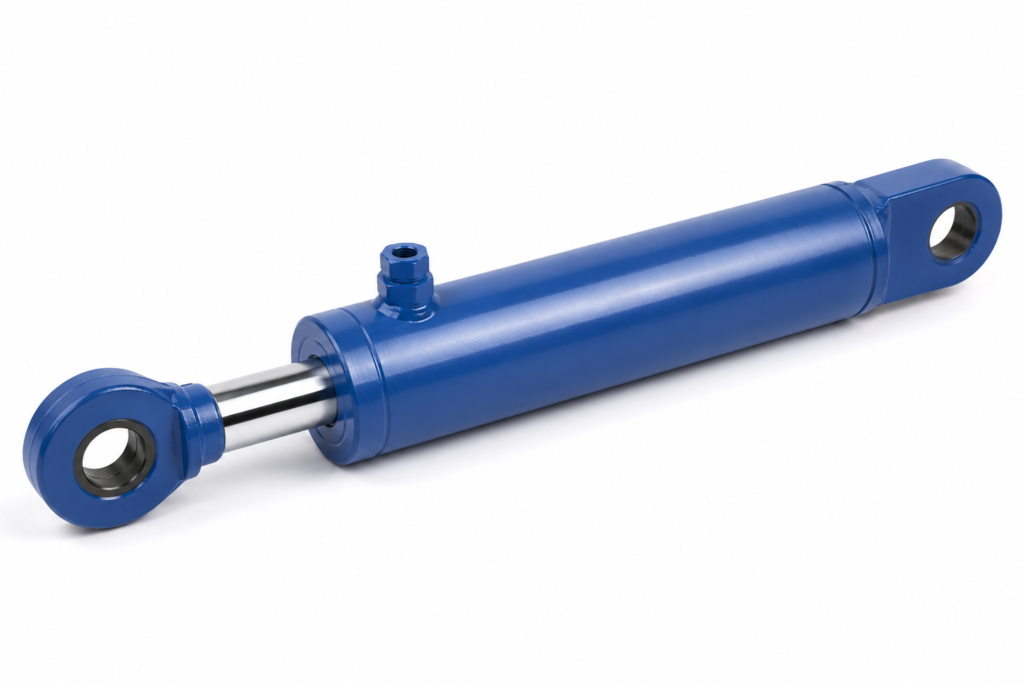
You cannot judge a hydraulic cylinder by fresh paint and smooth packaging. The real question is what happens when hydraulic pressure reaches the piston, the seals begin working, and every port, weld, thread, and closure must hold oil.
That is why hydraulic cylinder pressure testing is one of the final quality-control steps before shipment. A proper test does more than show that the rod can move. It checks whether the assembled cylinder can hold the specified pressure, complete its stroke, remain externally dry, and produce repeatable results that match the approved drawing and inspection plan.
Quick Answer: How Are Hydraulic Cylinders Pressure Tested?
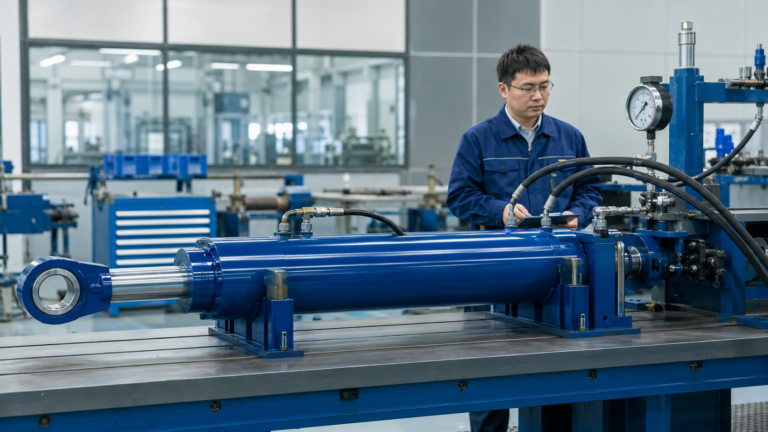
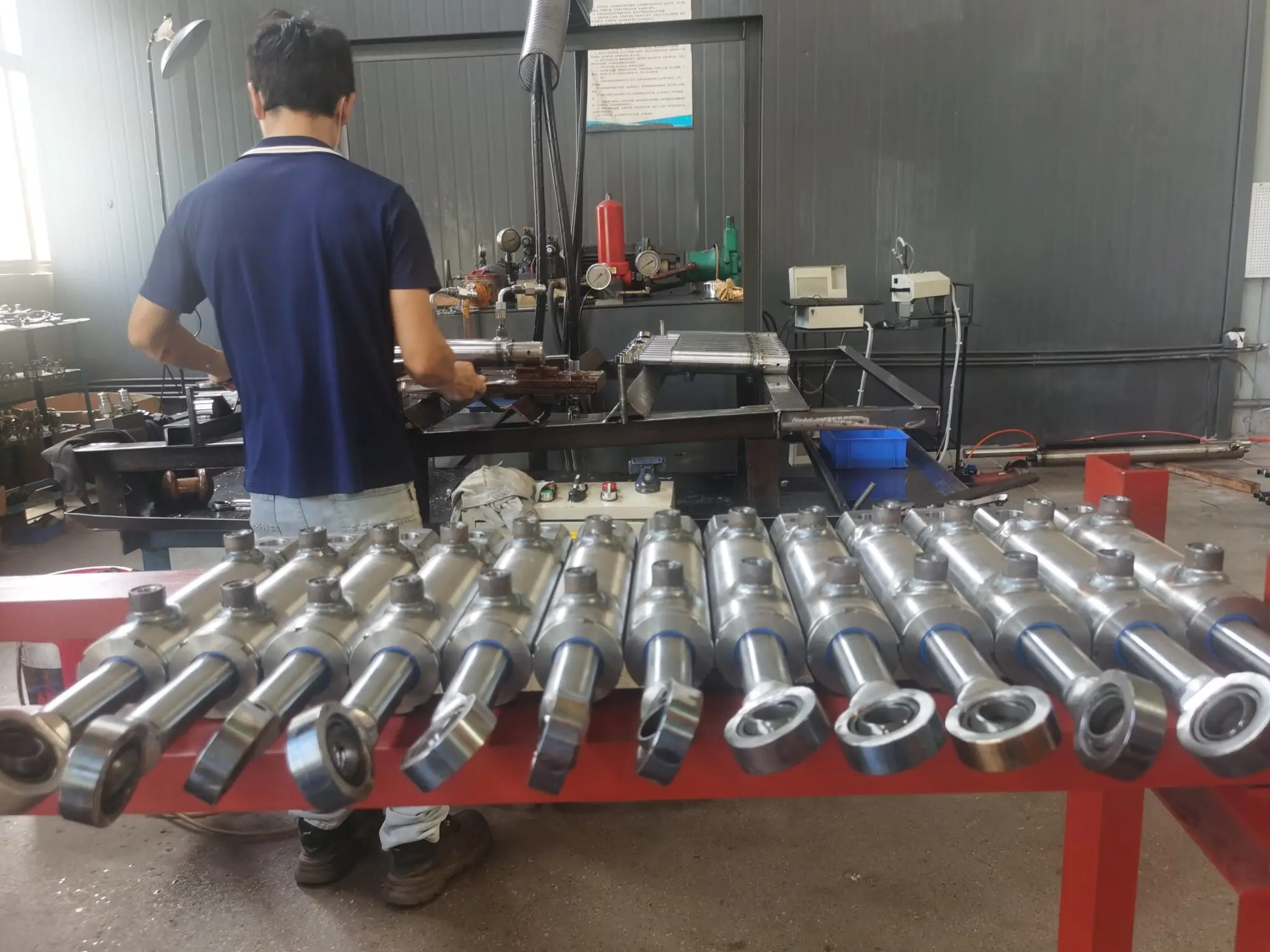
A completed cylinder is secured on a test bench, filled with clean compatible hydraulic fluid, and carefully bled to remove trapped air. The technician cycles the rod at low pressure, checks full extension and retraction, then applies the approved test pressure to the cap-end and rod-end chambers. Pressure stability, external leakage, seal performance, movement, ports, welds, dimensions, and test records are checked before the cylinder is released for packing.
What Hydraulic Cylinder Pressure Testing Actually Proves
Pressure testing is an acceptance check on a finished assembly. It can reveal leakage, incorrect assembly, damaged seals, loose fittings, flawed sealing surfaces, and some manufacturing defects before the cylinder reaches your machine.
However, one successful bench test does not prove unlimited fatigue life, safe operation under side load, correct machine geometry, or suitability for every fluid and temperature. Those issues must be controlled through design review, material selection, process control, and correct application data.
If your supplier treats a pressure test as the only proof of quality, the inspection plan is incomplete. A reliable shipment decision combines the test result with drawing verification, material and process controls, dimensional inspection, and traceable records. This is also why a structured hydraulic cylinder supplier audit should review both the test bench and the records behind it.
Key Takeaways for Buyers
- The test pressure must come from the approved specification, not a universal number copied from another cylinder.
- Both pressure chambers should be checked on a double-acting cylinder.
- Air must be removed before high pressure is applied.
- A dry exterior matters, but pressure stability and full-stroke movement matter too.
- The test gauge, fluid condition, fixture, and recording method affect the credibility of the result.
- A useful test report identifies the cylinder, test criteria, actual result, date, and inspector.
Pressure Test, Leakage Test, and Functional Test: What Is the Difference?
| Test | Main Purpose | What the Technician Checks | Typical Buyer Evidence |
|---|---|---|---|
| Proof/pressure test | Verify the assembled cylinder withstands the specified test pressure | Pressure holding, deformation, closures, welds, ports, and joints | Test pressure, hold period, pass/fail result |
| External leakage test | Confirm oil does not escape to the outside | Rod seal, ports, fittings, welds, gland, end closures | Dry inspection result and photos where required |
| Internal leakage test | Evaluate leakage across the piston sealing system | Pressure decay, bypass, drift, or measured leakage under defined conditions | Acceptance limit and measured result |
| Functional test | Confirm correct movement and usable stroke | Extension, retraction, cushioning, binding, abnormal noise, stroke | Stroke measurement and cycle result |
These checks overlap, but they are not interchangeable. A cylinder may remain dry externally while excessive internal bypass allows the load to drift. It may hold pressure but bind during part of the stroke. Your purchase specification should state which results are required.
Step-by-Step Hydraulic Cylinder Pressure Testing Process
1. Confirm the Approved Test Criteria
Testing starts before the pump runs. The technician confirms the cylinder drawing, serial or batch identity, bore, rod, stroke, port arrangement, working pressure, approved test pressure, test fluid, holding requirement, and acceptance limits.
The relationship between working, peak, and test pressure must be understood. If these terms are unclear in your RFQ, review the guide to hydraulic cylinder working pressure before approving production.
ZHY commonly states 1.5 times working pressure testing on its custom-cylinder quality page. That ratio should not be copied blindly into every order. The final value must match the approved design, applicable standard, customer requirement, and safe capacity of the cylinder and test equipment.
2. Complete Pre-Test Visual and Dimensional Inspection
A pressure bench should not be used to discover obvious dimensional errors. Before connection, the inspector checks the model or drawing number, closed length, stroke reference, mounting dimensions, pin holes, port size and orientation, rod surface, paint condition, weld appearance, and visible damage.
Port identity matters because a fitting that partly engages can fail under pressure. The supplier should verify thread type and sealing geometry rather than relying on nominal size. Your team can use this hydraulic cylinder port thread guide when reviewing replacement or OEM connections.
3. Secure the Cylinder and Connect the Test Circuit
The cylinder is restrained in a suitable fixture so it cannot roll, jump, or move unexpectedly. Hoses, adapters, valves, pressure-relief devices, and gauges must be rated for the intended test. The connection layout should allow the operator to stay away from the line of fire.
A test bench also needs a controlled pressure source and a reliable way to isolate or hold the circuit. A gauge with the wrong range can make a stable test look precise when it is not. Calibration status and suitable resolution are therefore part of test credibility.
4. Fill with Clean Fluid and Bleed Trapped Air
Trapped air compresses. That makes movement erratic, distorts pressure-hold observations, and stores energy that can increase risk. The technician fills the cylinder with a clean, compatible fluid and cycles or vents it at low pressure until air is removed.
Fluid cleanliness matters because contamination introduced during a factory test can damage seals and score precision surfaces before the cylinder enters service. The ISO 10100:2020 acceptance-test standard references fluid-related requirements and specifies acceptance and function tests for hydraulic cylinders.
5. Run Low-Pressure Functional Cycles
The rod is extended and retracted through the available stroke at controlled low pressure. The operator watches for binding, hesitation, abnormal sound, uneven movement, incorrect cushioning, contact at the fixture, and visible leakage.
This step is important because immediate high pressure can hide a simple assembly problem. Low-pressure cycling also distributes fluid, helps remove remaining air, and lets the seals settle before the proof-pressure stage.
6. Apply Pressure Gradually to the Cap End
Pressure is increased in a controlled manner rather than applied as a sudden shock. At the specified test condition, the circuit is held according to the approved procedure. The operator observes the gauge and inspects the cap-end closure, barrel, welds, port boss, fittings, gland area, and other joints.
A pressure change is not automatically proof of internal leakage. Fluid temperature, trapped air, hose expansion, gauge resolution, and test-circuit leakage can influence the reading. The procedure must define stable conditions and an acceptance method.
7. Test the Rod-End Chamber
For a double-acting cylinder, the rod-end circuit also needs verification. The effective pressurized area differs from the cap end because the rod occupies part of the piston area. The fixture and circuit must control rod movement safely while pressure is applied.
Testing both chambers checks more of the assembled sealing system and port arrangement. A test that pressurizes only one side can miss faults on the other side.
8. Check External and Internal Leakage
External leakage is checked around the rod seal, gland, end closures, welded seams, port bosses, fittings, bleed points, and plugs. Surfaces should be clean before the test so fresh leakage is not confused with oil left from assembly.
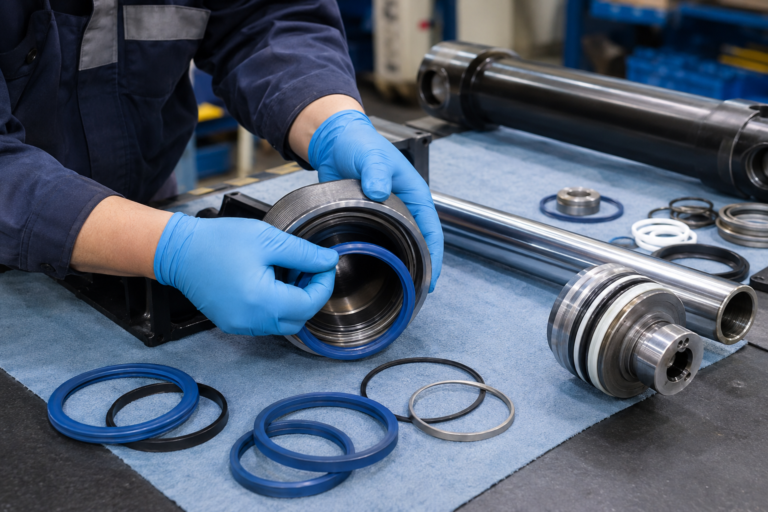
Internal leakage is more difficult because oil passes across the piston seal without appearing outside. The supplier may use a defined pressure-decay, bypass, drift, or leakage-measurement method depending on the cylinder design and customer specification. Seal material and geometry should already match pressure, temperature, fluid, speed, and environment; pressure testing cannot correct a poor seal selection. See the guide on choosing hydraulic cylinder seals for the design checks behind the test.
9. Verify Full Stroke and Final Condition
After pressure checks, the cylinder is cycled again. The inspector confirms full extension and retraction, usable stroke, smooth movement, rod condition, and any cushioning behavior specified on the drawing.
The cylinder is then depressurized safely. Test fluid is drained or retained according to the packing requirement, ports are protected, and exposed surfaces receive the specified corrosion protection. Any oil on the exterior is cleaned before final inspection.
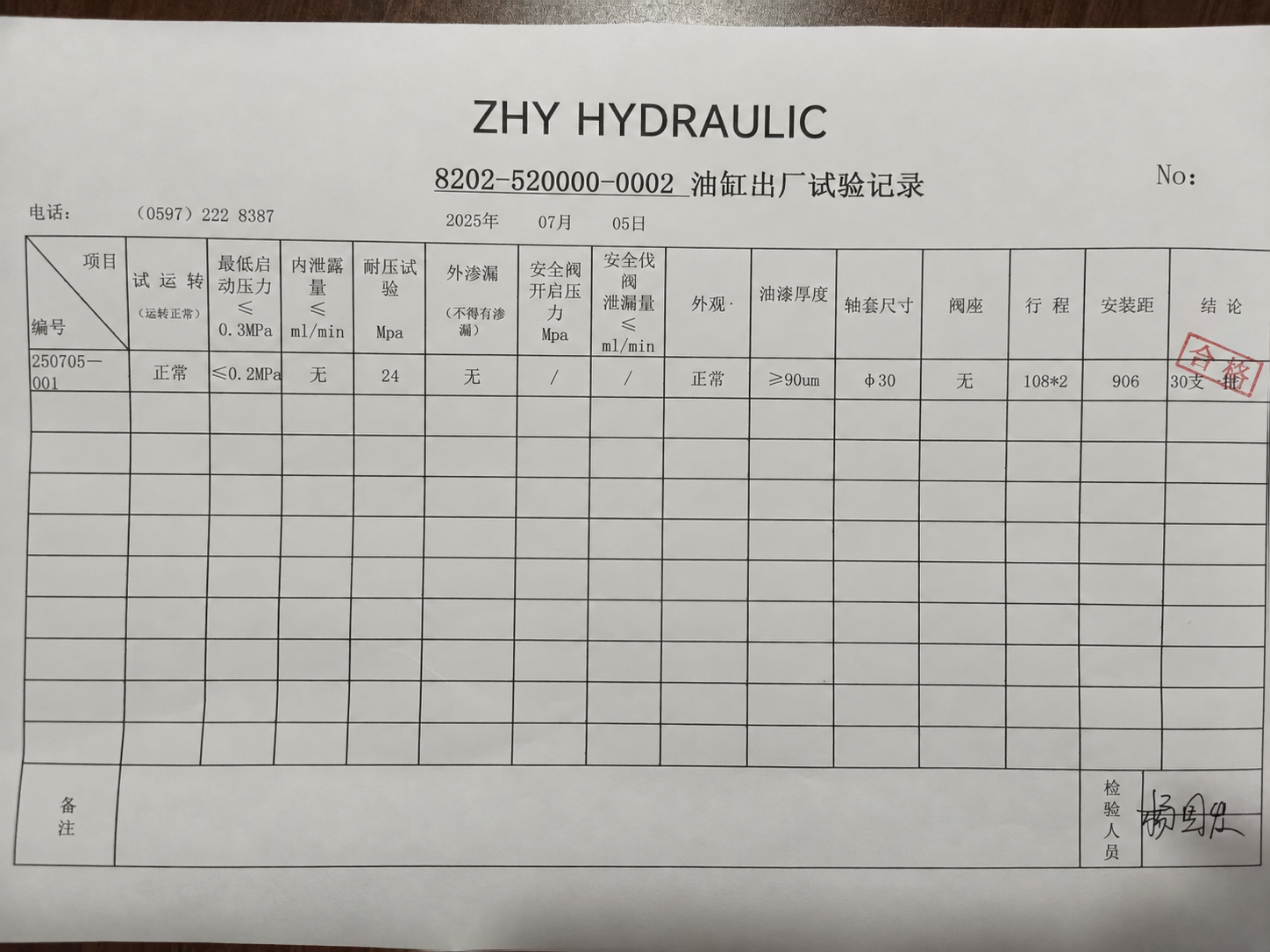
10. Record and Release the Result
A test that leaves no trace is hard for a buyer to audit. The record should identify the cylinder or batch, drawing revision, test date, test pressure, test duration or method, fluid where relevant, equipment or gauge identity, measured result, inspector, and final disposition.
For critical cylinders, you may also request photos, a pressure curve, video evidence, calibration certificates, material certificates, dimensional reports, or third-party witnessing. Ask for these before quotation because documentation changes cost and lead time.
What Should Pass or Fail a Cylinder?
| Inspection Item | Acceptable Direction | Reason to Stop and Investigate |
|---|---|---|
| External leakage | No visible fresh oil at seals, ports, welds, or closures | Weeping, droplets, spray, or repeated wetting |
| Pressure behavior | Meets the defined stability or leakage limit | Unexplained decay or inability to reach test pressure |
| Stroke movement | Smooth full travel without binding | Hesitation, sticking, chatter, or incomplete stroke |
| Structure | No permanent deformation or abnormal movement | Bulging, fixture movement, cracking, or dimensional change |
| Rod and finish | Clean rod surface and intact coating | Scoring, impact marks, damaged chrome, or coating damage |
Acceptance limits should be written, not improvised beside the bench. “No leakage” may mean no visible external leakage, while a defined internal leakage rate may still be permitted for a particular design. The drawing, customer specification, and agreed standard decide the result.
Common Pressure-Testing Mistakes Buyers Should Watch For
Using One Test Pressure for Every Cylinder
A small welded cylinder, a long-stroke telescopic cylinder, and a mill-duty cylinder do not automatically share one safe test procedure. Test values must follow the design and order requirements.
Testing Only Whether the Rod Moves
Movement alone does not prove pressure retention, internal sealing, port integrity, or structural acceptance. Ask what was measured and recorded.
Skipping the Rod-End Test
On a double-acting cylinder, this leaves part of the hydraulic circuit and sealing system unverified.
Applying High Pressure with Air Trapped Inside
Air can make the test unstable and more hazardous. Proper filling and bleeding are essential.
Using an Unverified Gauge
A test number is only as reliable as the measuring device and range behind it. Ask how gauges are calibrated and identified.
Cleaning the Cylinder Before Recording Leakage
If the exterior is wiped after a leak appears and no nonconformance is recorded, the inspection has failed even if the cylinder looks clean at packing.
No Link Between the Report and the Cylinder
A generic test sheet or video without a serial, batch, drawing, or order reference does not prove that your cylinder was tested.
These weaknesses are common examples of why buying only by price creates hidden risk. A broader list appears in the guide to hydraulic cylinder purchasing mistakes.
Which Standards Apply to Hydraulic Cylinder Testing?
ISO 10100:2020 specifies acceptance and function tests for hydraulic fluid power cylinders. It is the most directly relevant international reference for this topic.
ISO 4413 addresses general rules and safety requirements for hydraulic fluid power systems and components. Depending on the cylinder and market, dimensional-series standards, customer specifications, industry rules, or regulatory requirements may also apply.
Do not write “tested to ISO” on an order without naming the standard, edition, required tests, acceptance limits, and documentation. A standard reference becomes useful only when both buyer and supplier understand what compliance means for that specific cylinder.
What Test Documents Should You Request?
- Purchase order, drawing number, and drawing revision
- Cylinder serial number or traceable batch number
- Rated working pressure and approved test pressure
- Test method and pressure-hold requirement
- External and internal leakage acceptance criteria
- Actual result and pass/fail disposition
- Gauge or test-bench identification and calibration status
- Test date and inspector approval
- Photos, pressure curve, or witness record when contractually required
For routine commercial cylinders, a standard inspection report may be enough. For safety-critical, high-pressure, prototype, offshore, mining, or regulated equipment, define a stronger documentation package during RFQ review.
ZHY Hydraulic Pressure Testing Before Shipment
ZHY Hydraulic manufactures custom hydraulic cylinders from confirmed drawings and application requirements. Final inspection combines dimensional checks, pressure testing, sealing verification, and functional movement checks before shipment.
The test plan should reflect your working pressure, peak pressure, cylinder construction, port arrangement, fluid, duty, and documentation needs. When 1.5 times working pressure is specified, the value is confirmed against the approved drawing and safe test procedure rather than treated as a substitute for engineering review.
If you need a custom or replacement cylinder, send your cylinder drawing, working pressure, test requirement, and acceptance criteria. ZHY will prepare a recommended inspection and pressure-test plan before production, so the quotation, manufacturing drawing, and shipment records follow the same approved requirements.
Buyer Checklist Before Approving Shipment
- Does the report identify your order, drawing revision, and cylinder or batch?
- Are working pressure and test pressure clearly separated?
- Were both chambers tested where the design requires it?
- Was full extension and retraction verified?
- Are external and internal leakage criteria defined?
- Is the test equipment suitable and within calibration?
- Were ports, fittings, welds, closures, rod seals, and rod condition inspected?
- Were failures recorded, corrected, and retested rather than hidden?
- Are the required report, photos, curve, certificates, or witness records included?
- Are ports protected and the cylinder prepared correctly for transport?
Frequently Asked Questions
What pressure should a hydraulic cylinder be tested at?
The correct test pressure comes from the approved design, customer specification, and applicable standard. ZHY commonly uses 1.5 times working pressure when specified, but the ratio is not universal.
Is pressure testing the same as burst testing?
No. A proof or acceptance test is intended to verify the finished cylinder without destroying it. A burst test is a destructive validation test used for a different purpose and requires controlled engineering procedures.
Should both sides of a double-acting cylinder be tested?
Yes, the cap-end and rod-end chambers should be checked according to the approved procedure because each side uses different pressure areas, ports, and sealing paths.
Can a cylinder pass a pressure test and still fail in service?
Yes. Side load, contamination, pressure spikes, incorrect mounting, wrong fluid, temperature, poor alignment, and fatigue can cause field failure even after a valid factory test.
How do you check internal leakage?
The method may use pressure decay, measured bypass, drift, or another defined procedure. The acceptance limit must suit the cylinder design and customer specification.
What should be included in a hydraulic cylinder test report?
Include traceable cylinder identity, drawing revision, test pressure, method or hold period, acceptance criteria, actual result, test date, inspector, and equipment identification.
Does every ZHY cylinder receive pressure testing?
ZHY states that custom hydraulic cylinders undergo pressure testing, sealing verification, dimensional inspection, and functional checks before shipment, with the test criteria confirmed for the order.
Final Recommendation
Do not ask your supplier only, “Was the cylinder pressure tested?” Ask five better questions: What pressure was used? Which chambers were tested? How was leakage judged? Which gauge recorded the result? How is the report linked to my cylinder?
Those answers turn a factory claim into usable evidence. When your next project needs hydraulic cylinder pressure testing with defined acceptance records, include the test criteria in the RFQ and drawing approval stage—not after the cylinders are already packed.
Need a Test Plan for Your Custom Cylinder?
Send your cylinder drawing, working pressure, test requirement, and acceptance criteria. ZHY will prepare a recommended inspection and pressure-test plan before production and confirm the required records before quotation.