Stainless Steel vs Carbon Steel Hydraulic Cylinders: Which One Should You Choose?
Choosing the right hydraulic cylinder material is not only about strength or price. The material you select affects corrosion resistance, maintenance requirements, service life, and the total operating cost of your equipment.
When you compare stainless steel vs carbon steel hydraulic cylinders, the best choice depends on your working environment, load requirements, and long-term expectations.
Quick Answer
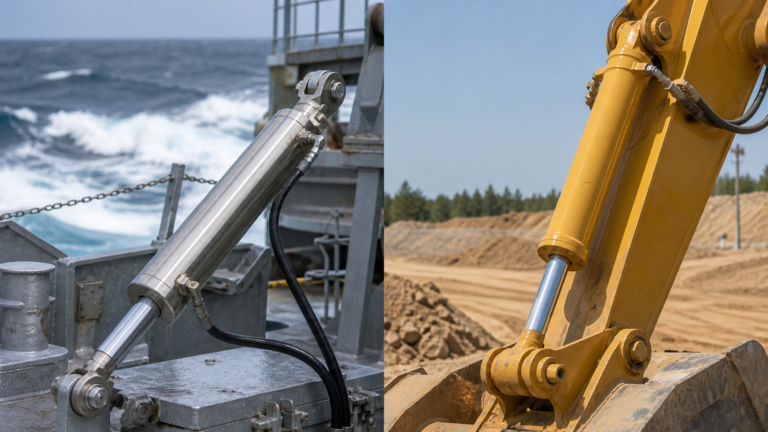
Stainless steel hydraulic cylinders are the better choice for corrosive environments such as marine equipment, food processing machinery, chemical applications, and outdoor systems exposed to moisture.
Carbon steel hydraulic cylinders are usually the preferred option for construction equipment, agricultural machinery, industrial machines, and applications where high strength and cost efficiency are the main priorities.
The right material depends on balancing corrosion protection, mechanical performance, maintenance cost, and project budget.
Key Takeaways
- Stainless steel cylinders provide superior corrosion resistance and require less surface protection.
- Carbon steel cylinders offer excellent strength and are more economical for general industrial applications.
- Material selection should consider environment, pressure, maintenance schedule, and expected service life.
- A professional hydraulic cylinder manufacturer can help you choose the most suitable material instead of simply choosing the most expensive option.
Stainless Steel vs Carbon Steel Hydraulic Cylinders Comparison
| Comparison Factor | Stainless Steel Hydraulic Cylinder | Carbon Steel Hydraulic Cylinder |
|---|---|---|
| Corrosion Resistance | Excellent resistance against moisture, salt spray, and chemicals | Requires coating or surface treatment for corrosion protection |
| Mechanical Strength | High strength with excellent durability | Very high strength and widely used for heavy-duty applications |
| Cost | Higher material and manufacturing cost | More economical and widely available |
| Maintenance | Lower maintenance in corrosive environments | May require coating inspection and maintenance |
| Typical Applications | Marine, food processing, chemical, pharmaceutical equipment | Construction, agriculture, mining, industrial machinery |
| Surface Treatment | Usually requires less additional protection | Often uses chrome plating, painting, or special coatings |
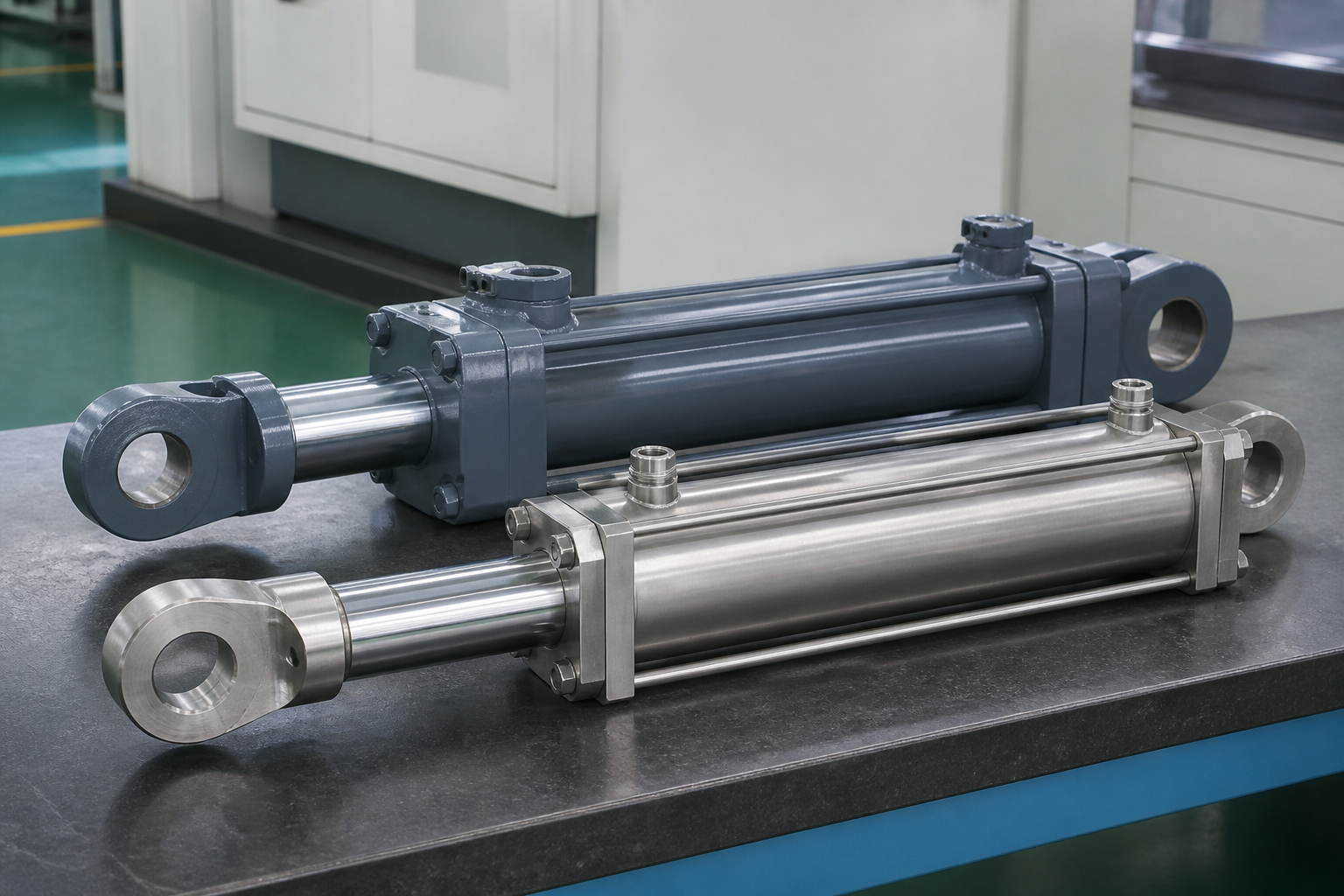
What Is a Stainless Steel Hydraulic Cylinder?
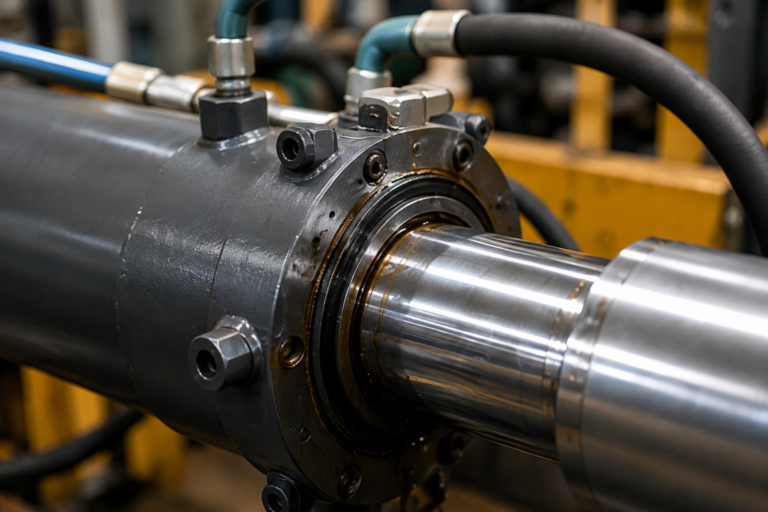
A stainless steel hydraulic cylinder uses stainless steel components such as the cylinder barrel, piston rod, or external parts to improve corrosion resistance and durability in harsh environments.
Compared with standard carbon steel cylinders, stainless steel designs are better suited for applications where water, chemicals, humidity, or frequent cleaning can accelerate corrosion.
However, stainless steel is not automatically the best choice for every project. The higher material cost means you should select it when the operating environment justifies the additional investment.
Advantages of Stainless Steel Hydraulic Cylinders
1. Superior Corrosion Resistance
The biggest advantage of stainless steel hydraulic cylinders is their ability to resist corrosion.
In marine hydraulic cylinder applications, food processing facilities, and outdoor equipment, moisture and chemicals can quickly damage untreated steel surfaces.
Stainless steel helps reduce risks such as:
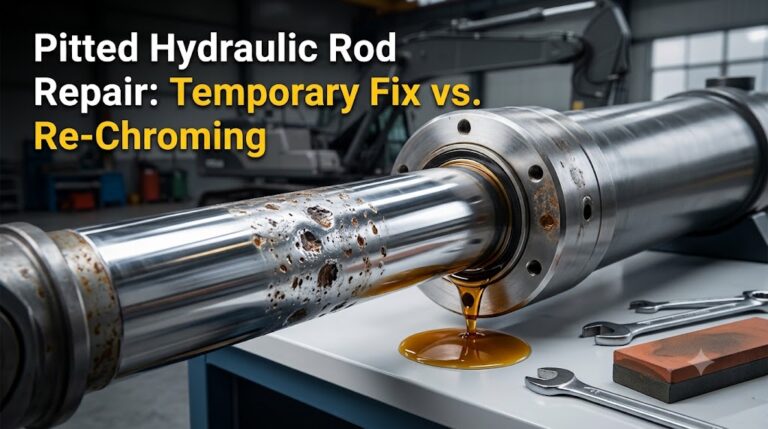
- Rod corrosion
- Surface rust
- Seal damage caused by corrosion particles
- Unexpected downtime
2. Lower Maintenance in Harsh Environments
Although stainless steel cylinders have a higher initial cost, they can reduce maintenance requirements when equipment operates in aggressive environments.
Less corrosion protection work and fewer replacement cycles can lower the total cost during the equipment lifetime.
3. Suitable for Hygienic Applications
Industries such as food processing and pharmaceutical manufacturing often require materials that are easy to clean and resistant to contamination.
Stainless steel hydraulic cylinders are commonly selected for these applications because of their clean surface and corrosion resistance.
What Is a Carbon Steel Hydraulic Cylinder?
A carbon steel hydraulic cylinder is the most commonly used cylinder type for industrial equipment because it provides a strong balance between mechanical performance, availability, and cost efficiency.
Most construction machinery, agricultural equipment, mining machines, and general industrial systems use carbon steel hydraulic cylinders because these applications usually require high strength and reliable performance under heavy loads.
With proper surface treatments such as hard chrome plating, painting, or protective coatings, carbon steel cylinders can achieve excellent durability in demanding operating conditions.
Advantages of Carbon Steel Hydraulic Cylinders
1. High Strength for Heavy-Duty Applications
Carbon steel offers excellent mechanical strength and impact resistance, making it suitable for equipment exposed to heavy loads, shock forces, and continuous operation.
Typical applications include:
- Construction equipment
- Mining machinery
- Agricultural machines
- Material handling equipment
- Industrial hydraulic systems
2. More Cost-Effective Solution
For many hydraulic cylinder applications, corrosion is not the main challenge. In these cases, carbon steel provides the required performance without unnecessary material costs.
Choosing carbon steel instead of stainless steel can significantly reduce initial investment, especially for large cylinders or high-volume OEM projects.
3. Easier Manufacturing and Customization
Carbon steel is widely used in hydraulic cylinder manufacturing because it is easy to machine, weld, and customize according to customer requirements.
For OEM buyers who need hundreds or thousands of cylinders, carbon steel is often the practical choice because it offers reliable quality and competitive production costs.
Key Differences Between Stainless Steel and Carbon Steel Cylinders
1. Corrosion Resistance: The Biggest Difference
The main difference between stainless steel and carbon steel hydraulic cylinders is corrosion resistance.
Stainless steel contains chromium, which forms a passive protective layer that improves resistance against rust and corrosion.
Carbon steel does not naturally provide the same protection, so it usually requires additional treatments such as:
- Chrome plating
- Painting
- Nickel coating
- Special corrosion-resistant finishes
If your equipment works near seawater, chemicals, moisture, or frequent washing conditions, stainless steel may provide better long-term reliability.
2. Strength and Load Performance
Many buyers assume stainless steel is always stronger than carbon steel. This is not necessarily true.
For heavy-duty hydraulic cylinders, carbon steel is widely selected because it provides excellent strength, toughness, and fatigue resistance.
The final performance depends on:
- Material grade
- Cylinder design
- Wall thickness
- Working pressure
- Heat treatment
- Manufacturing quality
A properly designed carbon steel hydraulic cylinder can outperform an incorrectly designed stainless steel cylinder.
3. Cost vs Lifetime Value
Stainless steel cylinders usually have a higher purchase price because stainless steel material and machining processes are more expensive.
However, the lowest initial price is not always the lowest total cost.
| Situation | Better Choice |
|---|---|
| Indoor industrial equipment | Carbon Steel |
| Outdoor equipment exposed to rain | Depends on protection requirements |
| Marine environment | Stainless Steel |
| Food processing equipment | Stainless Steel |
| Large construction machinery | Carbon Steel |
| Chemical environment | Stainless Steel |
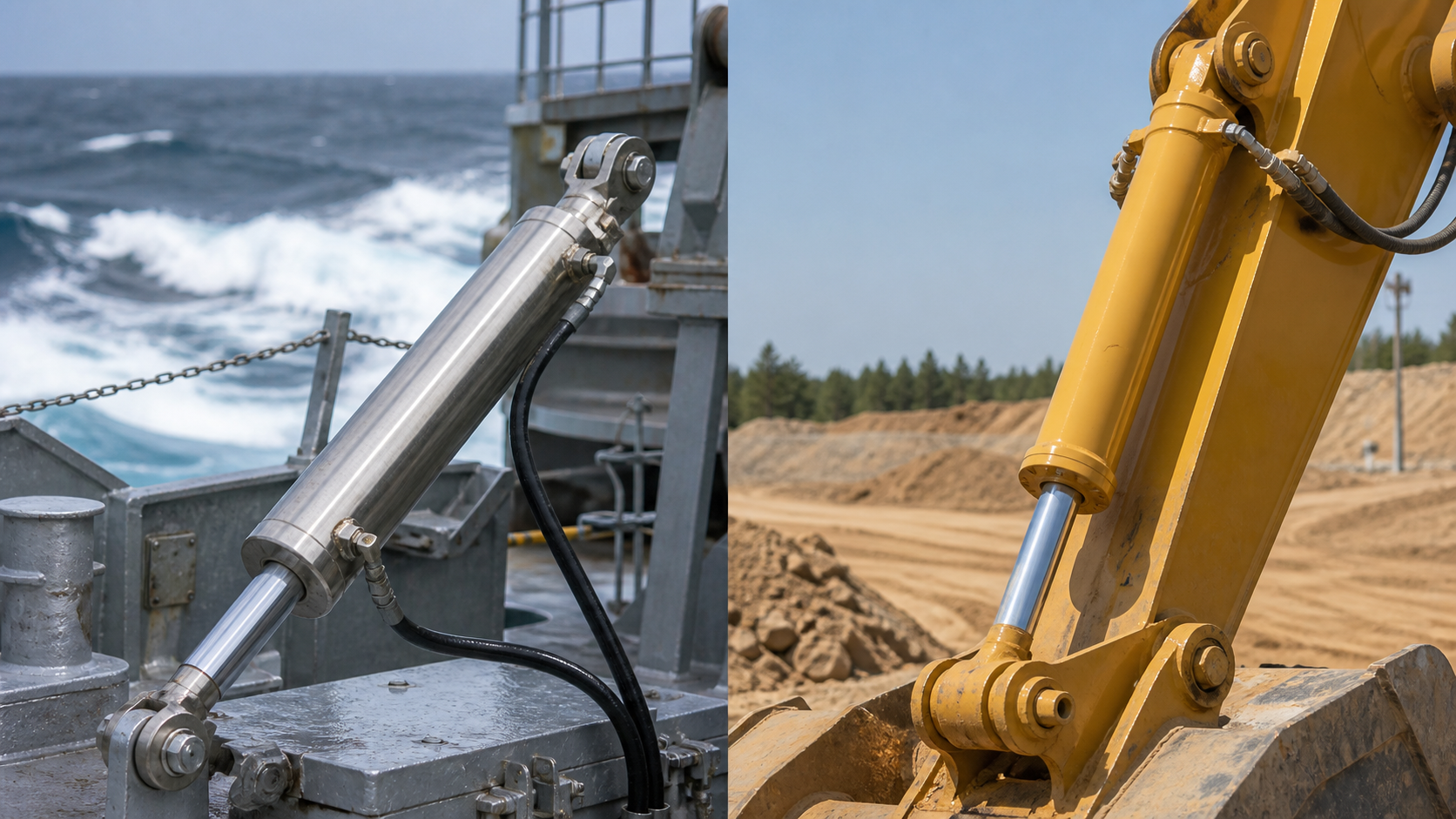
When Should You Choose Stainless Steel Hydraulic Cylinders?
Stainless steel hydraulic cylinders are recommended when corrosion resistance, cleanliness, and long-term reliability are more important than initial purchase cost.
Typical applications include:
- Marine Equipment: Saltwater and humid environments can quickly damage standard steel components.
- Food Processing Machinery: Frequent cleaning and hygiene requirements make stainless steel a suitable option.
- Chemical Equipment: Chemical exposure may require stronger corrosion protection.
- Outdoor Specialty Equipment: Long-term exposure to weather conditions can increase corrosion risks.
When Are Carbon Steel Hydraulic Cylinders the Better Choice?
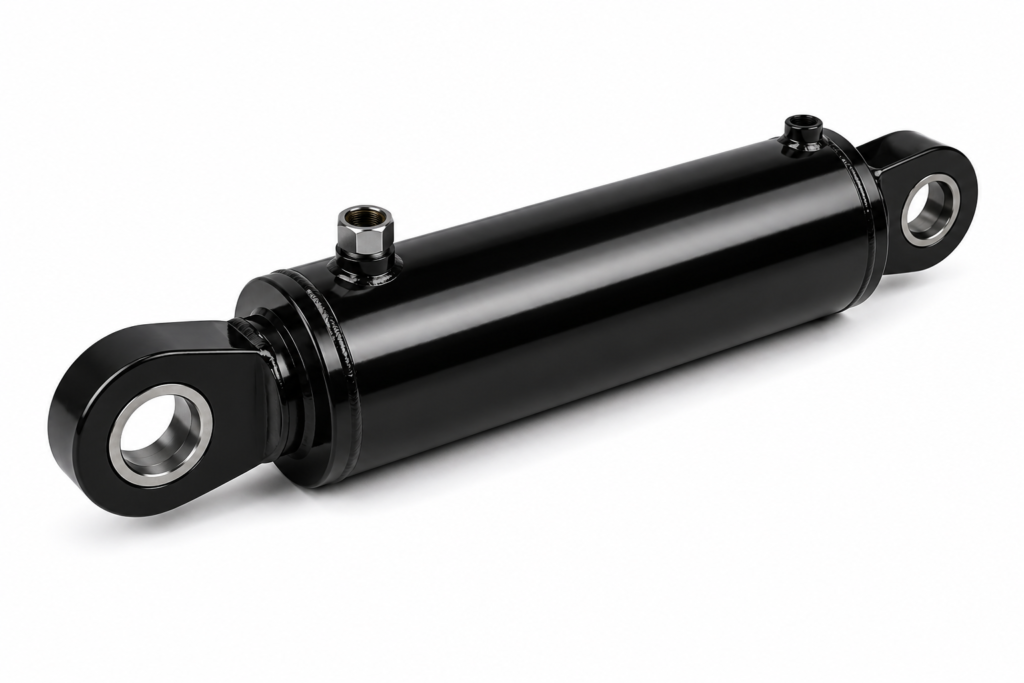
Carbon steel welded hydraulic cylinders are usually the better choice when the main requirements are strength, reliability, and cost efficiency.
They are commonly used in:
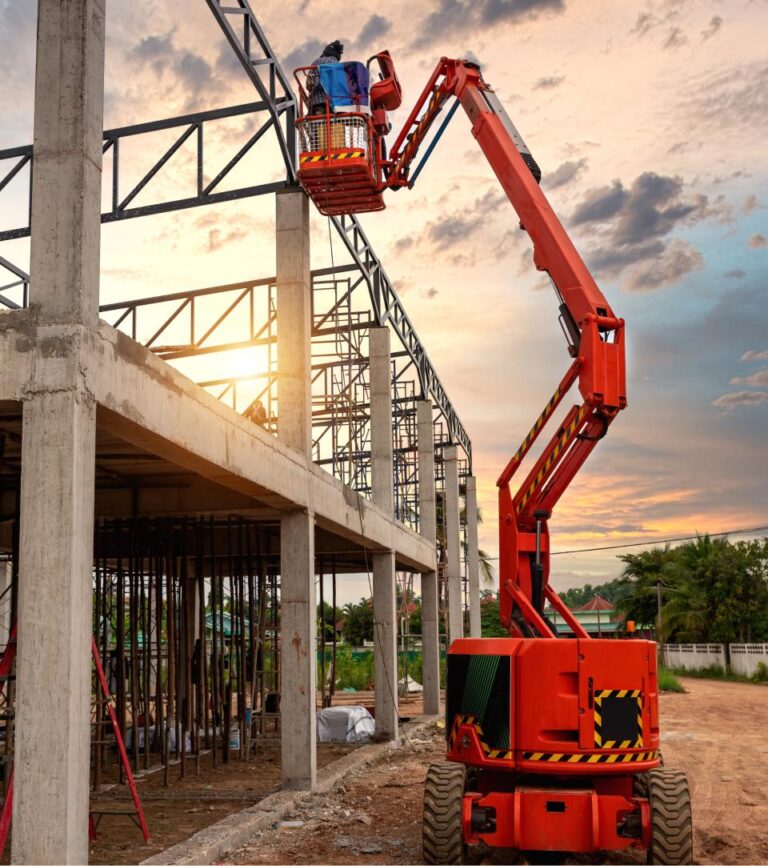
- Construction machinery such as excavators, loaders, and cranes
- Agricultural equipment including tractors and harvesting machines
- Mining equipment operating under heavy loads
- Industrial machines requiring high force output
With the correct surface treatment and sealing system, carbon steel cylinders can provide long service life in many demanding applications.
Common Mistakes When Selecting Hydraulic Cylinder Materials
Mistake 1: Choosing Stainless Steel Only Because It Looks More Premium
Some buyers select stainless steel because it appears to be a higher-quality material.
However, material selection should be based on actual working conditions, not appearance.
If your equipment operates in a normal industrial environment, carbon steel may already provide the required performance.
Mistake 2: Ignoring Surface Protection of Carbon Steel Cylinders
Carbon steel cylinders can perform reliably, but the surface protection system is critical.
Important factors include:
- Chrome thickness
- Rod surface hardness
- Painting quality
- Environmental exposure
Mistake 3: Focusing Only on Purchase Price
A cheaper cylinder may create higher costs later through:
- Frequent repairs
- Equipment downtime
- Replacement labor
- Production delays
The right decision should consider the complete operating environment and expected service life.
How ZHY Helps You Select the Right Hydraulic Cylinder Material
Choosing between stainless steel and carbon steel hydraulic cylinders is not only a material decision. It is an engineering decision that affects equipment reliability, maintenance frequency, and operating cost.
At ZHY Hydraulic, we evaluate your working conditions before recommending a cylinder solution. Instead of simply selecting the most expensive material, we help you choose the most suitable option based on your actual requirements.
Engineering Factors We Consider
- Working Environment: Exposure to seawater, chemicals, humidity, dust, and outdoor conditions.
- Pressure Requirements: Working pressure, impact load, and duty cycle of the hydraulic system.
- Material Requirements: Carbon steel, stainless steel, or special materials depending on application needs.
- Surface Treatment: Chrome plating, painting, nickel coating, and corrosion protection options.
- Seal Selection: Seal materials selected according to temperature, fluid type, and operating conditions.
By reviewing these factors, we help OEM customers avoid selecting a cylinder that is either over-designed or unable to handle the actual working environment.
Custom Stainless Steel and Carbon Steel Hydraulic Cylinder Manufacturing
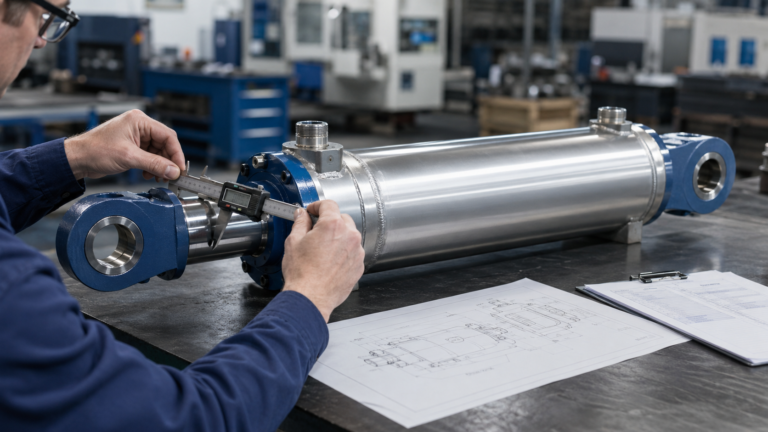
ZHY Hydraulic manufactures customized hydraulic cylinders according to customer drawings, samples, and technical requirements.
Whether you need stainless steel cylinders for corrosive environments or carbon steel cylinders for heavy-duty machinery, our engineering team can support your project from design review to production.
Customization Options Include:
- Cylinder bore diameter
- Stroke length
- Rod diameter
- Mounting style
- Working pressure
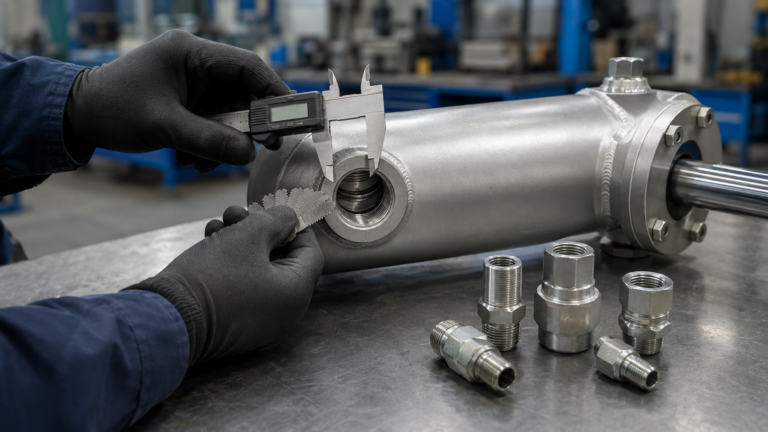
- Port connection
- Seal brand and material
- Surface treatment
- Painting requirements
- Logo and packaging
For OEM projects, we can manufacture cylinders based on your existing drawings or reverse engineer replacement cylinders from samples.
If you need a fully customized solution, you can learn more about our custom hydraulic cylinder solutions.
OEM Buyer Checklist Before Ordering Hydraulic Cylinders
Before requesting a quotation, preparing the following information can help manufacturers provide a more accurate solution and avoid unnecessary engineering changes.
| Information Required | Why It Matters |
|---|---|
| Application Equipment | Determines load conditions and operating environment |
| Working Pressure | Ensures correct cylinder design and safety margin |
| Stroke Length | Affects installation space and cylinder performance |
| Mounting Dimensions | Ensures direct installation compatibility |
| Material Requirement | Determines corrosion protection and service life |
| Seal Requirement | Ensures compatibility with hydraulic oil and temperature |
| Annual Quantity | Helps optimize production and pricing |
Stainless Steel vs Carbon Steel Hydraulic Cylinders: Final Recommendation
There is no universal winner between stainless steel and carbon steel hydraulic cylinders. The better choice depends on where and how the cylinder will operate.
Choose stainless steel hydraulic cylinders when corrosion resistance, hygiene, and long-term protection are critical.
Choose carbon steel hydraulic cylinders when you need high strength, reliable performance, and cost-effective production for general industrial applications.
For OEM buyers, the most important step is not choosing the most expensive material, but choosing the material that matches the actual working conditions.
Frequently Asked Questions
Are stainless steel hydraulic cylinders stronger than carbon steel cylinders?
Not always. Carbon steel often provides excellent strength and toughness for heavy-duty applications. The better choice depends on material grade, design, pressure, and operating conditions.
Are stainless steel hydraulic cylinders more expensive?
Yes. Stainless steel cylinders usually have higher material and manufacturing costs. However, they can reduce maintenance costs in corrosive environments.
Can ZHY manufacture stainless steel hydraulic cylinders?
Yes. ZHY manufactures customized stainless steel hydraulic cylinders according to customer drawings, samples, and application requirements.
Can carbon steel hydraulic cylinders be used outdoors?
Yes. With suitable surface treatments such as chrome plating and protective coating, carbon steel cylinders can perform reliably in many outdoor applications.
How do I choose between stainless steel and carbon steel cylinders?
Consider your environment, corrosion exposure, pressure requirements, maintenance expectations, and total operating cost before making a decision.
Need Help Choosing the Right Hydraulic Cylinder Material?
Send us your drawing, sample, or application details. Our engineering team can help you evaluate whether stainless steel or carbon steel is the right solution for your project.