Lift Hydraulic Cylinder
Custom hydraulic lift cylinders for lift tables, scissor lifts, warehouse lifting equipment and industrial lifting systems. OEM manufacturing, replacement cylinders and custom solutions available.
Custom Lift Hydraulic Cylinders for Stable Load Control
Lift hydraulic cylinders are used where equipment must raise, support, hold, and lower a load in a controlled way. Unlike a general motion cylinder, a lifting cylinder must be reviewed for vertical load safety, pressure holding, drift risk, descent speed, side load, compact height, and replacement fit.
ZHY manufactures custom lifting hydraulic cylinders for cherry pickers, hydraulic jacks, elevators, scissor lifts, loading platforms, maintenance lifts, industrial lift tables, workshop lifting tools, and special lifting systems. Cylinders can be produced from drawings, samples, photos, or key dimensions.
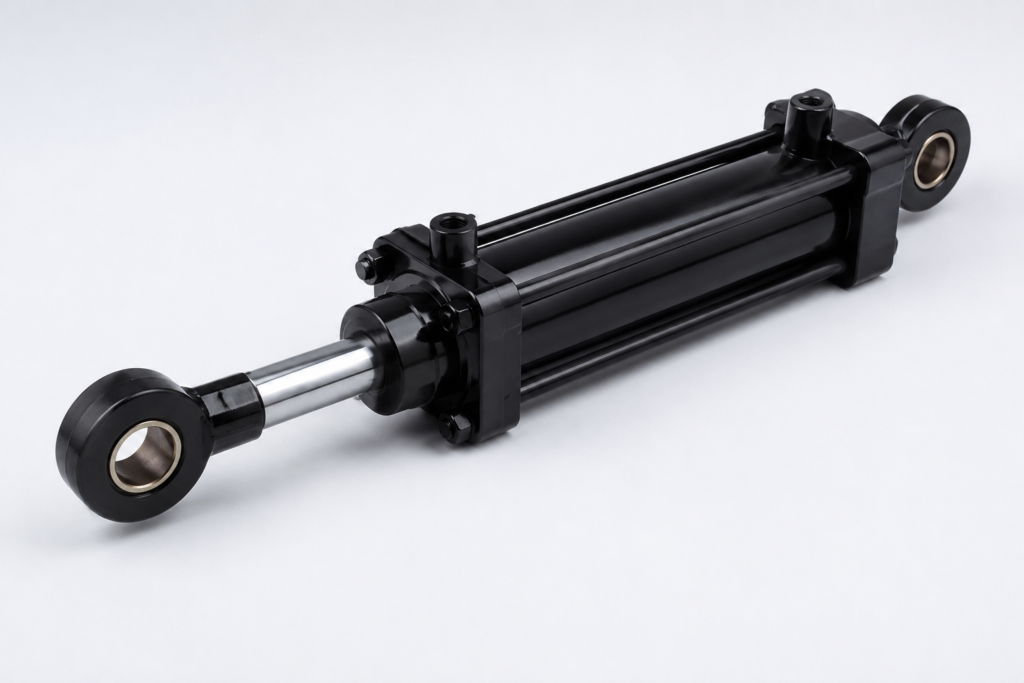
Lifting Cylinder Types for Common Equipment
Different lifting machines create different load paths. A scissor lift hydraulic cylinder sees changing leverage through the lift cycle; a lift-table or stacker hydraulic cylinder needs compact installation and repeatable vertical travel; and a 2-post or 4-post car-lift hydraulic cylinder must match the cable, chain or direct-drive arrangement. Boom-lift cylinders also require side-load, articulation and holding review. ZHY confirms geometry, force, guide support, drift tolerance, descent control, mounting and duty cycle before recommending the structure.
Scissor Lift Cylinders
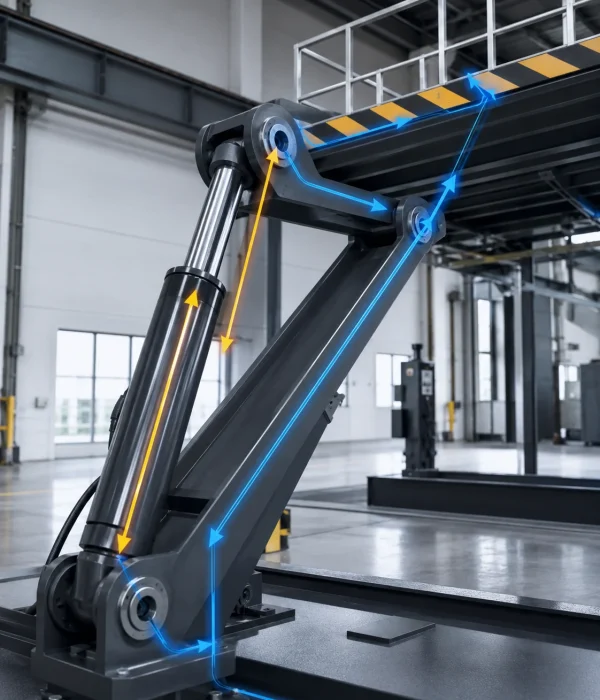
Lifting Cylinder Load Path Map
The lifting path decides cylinder design. ZHY reviews how force moves from the cylinder to the lifting arm, platform, jack saddle, elevator carriage, or scissor structure before confirming bore, rod, stroke, mounting, and sealing.
What ZHY Checks Before Cylinder Sizing
Rated Load and Safety Margin
Confirm platform load, machine weight, peak load, off-center load, and hydraulic pressure range.
Stroke, Closed Height and Lift Height
Lift equipment often has limited installation space, so closed length and open length must be accurate.
Holding Stability and Drift Risk
Seal selection, internal leakage control, and pressure testing affect raised-position stability.
Side Load and Guide Support
Arm angle, scissor geometry, guide rails, and off-center force can increase rod wear or bending risk.
Mounting and Port Clearance
Pin size, clevis width, trunnion, flange, oil port direction, and hose space should match the equipment.
Load Holding and Controlled Descent Console
Lifting equipment needs stable raising, dependable load holding, and predictable descent. This section focuses on movement control rather than using general product cards.
Why Load Holding Is the Main Design Point
In lifting applications, the cylinder must support the load during extension, hold position without excessive drift, and lower smoothly. ZHY checks seal system, rod support, pressure rating, stroke length, working angle, and equipment structure before production.
Force Output
Confirm bore size and working pressure for rated load and safety margin.
Pressure Stability
Reduce drift risk with suitable seals, machining, and leakage testing.
Descent Control
Match lowering speed, oil flow, port size, and system movement requirements.
Cycle Reliability
Support repeat lifting cycles through material, guide, and seal selection.
Lift Hydraulic Cylinders by Equipment Family
ZHY connects this second-level page with the lifting subcategories: cherry picker cylinders, hydraulic jack cylinders, and elevator hydraulic cylinders.
Compact High-Force Lifting
Hydraulic jack cylinders need short-stroke force, compact closed height, pressure holding, rod protection, and repeatable lifting performance.
Vertical Travel and Holding Stability
Elevator hydraulic cylinders require smooth travel, long stroke control, load holding, controlled descent, and accurate installation dimensions.
Platform Lift and Access Equipment
Scissor lifts and lift tables need synchronized movement, correct mounting angle, compact retracted height, and stable platform support.
Lift Stability, Side Load and Stroke Control Review
Lifting cylinder problems often start from side load, unstable guides, insufficient rod diameter, long stroke bending risk, poor sealing, or incorrect closed height. ZHY reviews these details before production.

Rated Load and Safety Margin
Confirm load capacity, working pressure, peak load, and required force output.

Rod Diameter and Side Load
Rod design should match long stroke, platform load, guide condition, and off-center force.

Closed Height and Stroke
Compact machines need accurate closed length, open length, and mounting geometry.

Seal and Holding Performance
Seal selection and pressure testing help reduce drift during raised-position holding.

Port Direction and Installation Space
Oil ports, hose clearance, pin width, and mounting ends should fit the equipment layout.
Lifting Hydraulic Cylinder Selection Matrix
This matrix helps match lifting cylinder functions with the main engineering focus for OEM production, replacement repair, and wholesale lifting equipment spare parts supply.
| Lifting Equipment | Typical Cylinder Use | Main Selection Focus |
|---|---|---|
| Cherry Picker | Boom lift, basket leveling, outrigger, steering, platform positioning | Stability, stroke accuracy, compact mounting, side-load review, safety margin |
| Hydraulic Jack | Short-stroke lifting, vehicle service, workshop lifting, equipment support | Compact height, high force, pressure holding, surface protection, leakage control |
| Hydraulic Elevator | Vertical travel, goods lift, service lift, passenger or freight movement | Smooth movement, long stroke, load holding, controlled descent, corrosion protection |
| Scissor Lift | Lift table, access platform, warehouse platform, maintenance lift | Synchronization, mounting angle, closed height, rod support, descent control |
| Custom Lift Platform | Production lifting, maintenance positioning, loading platform, special fixtures | Load path, installation space, stroke, mounting, duty cycle, replacement fit |
| Replacement Lifting Cylinder | Repair, rebuild, discontinued cylinder replacement, spare parts supply | Old sample review, bore, rod, stroke, closed length, mounting, port direction, pressure rating |
Common Lifting Cylinder Problems and ZHY Solutions
Lifting cylinder problems often come from internal leakage, load drift, seal wear, rod bending, side load, unstable guides, poor descent control, or inaccurate replacement measurements.
Load Drift or Slow Lowering | Possible reason: internal leakage, worn seals, pressure loss, contaminated oil, or incorrect valve and cylinder combination. | |
ZHY support: ZHY reviews bore size, seal system, pressure rating, holding requirement, and leakage testing before shipment. | ||
Rod Bending or Uneven Wear | Possible reason: off-center load, side load, poor guide structure, long stroke, or mounting misalignment. | |
ZHY support: ZHY checks rod diameter, guide support, stroke length, mounting geometry, and load direction. | ||
Unstable Lift Movement | Possible reason: wrong cylinder size, air in system, poor port layout, pressure fluctuation, or mismatched flow control. | |
ZHY support: ZHY confirms load, pressure, stroke, port size, motion requirement, and installation layout. | ||
Replacement Cylinder Does Not Fit | Possible reason: wrong closed length, port direction, pin size, mounting width, stroke length, or missing old cylinder details. | |
ZHY support: ZHY checks old photos, samples, drawings, pin-to-pin measurements, port details, mounting dimensions, and equipment installation area. | ||
Lift Hydraulic Cylinder FAQs
Buyer questions about hydraulic cylinders for lifting, including scissor lift, lift table, vehicle lift, boom lift, hydraulic jack and elevator cylinders, custom replacements and OEM supply.
1. What are lift hydraulic cylinders used for?
A lift hydraulic cylinder raises, supports, holds and lowers loads in scissor lifts, lift tables, vehicle lifts, stackers, boom lifts, hydraulic jacks, elevators and custom lifting equipment.
2. What makes a lifting cylinder different from a general motion cylinder?
Lifting duty places greater emphasis on load holding, controlled descent, drift control, rod stability, accurate closed height, mounting alignment and safe integration with the hydraulic circuit.
3. Can ZHY manufacture scissor lift and boom lift hydraulic cylinders?
Yes. ZHY can manufacture lift, leveling, outrigger, steering and replacement cylinders from approved drawings or verified application data. The machine geometry and load path must be reviewed before sizing.
4. Can ZHY manufacture 2-post and 4-post car lift cylinders?
Yes. Provide the lift model, load, cylinder dimensions and whether the carriage is driven directly or through cables or chains. ZHY can review OEM and replacement production feasibility.
5. Can ZHY manufacture hydraulic jack and elevator cylinders?
Yes. ZHY supports hydraulic jack cylinders and elevator or goods-lift cylinders according to load, stroke, pressure, mounting, holding and descent requirements.
6. What information is needed for a quote?
Send the equipment type, cylinder function, rated load, bore, rod, stroke, closed and open length, pressure, mounting, ports, quantity, drawing and photos. Replacement projects should include pin-to-pin dimensions.
7. What affects hydraulic lift cylinder price?
Price depends on cylinder size, force and pressure, stroke, mounting, materials, seals, surface treatment, holding and testing requirements, quantity and whether replacement measurement or new engineering is required.
8. How are lifting cylinders tested?
The agreed inspection plan may include pressure, leakage, holding, full-stroke movement and dimensional checks. Required test pressure and records should be confirmed in the approved drawing and quotation.
Need Custom Lift Hydraulic Cylinders?
For a technically useful quote, send the equipment type, rated and peak load, cylinder function, bore and rod diameter, stroke, closed and open length, working pressure, mounting and pin dimensions, port details, lift geometry, descent requirement, duty cycle, quantity, drawing and photos. For 2-post or 4-post vehicle lifts, also identify whether the cylinder drives the carriage directly or through cables or chains.
Hydraulic lift cylinder price depends on size and force as well as mounting, seal and holding requirements, surface treatment, testing, quantity and replacement-measurement work. Providing complete data lets ZHY compare the correct design and quote without adding unnecessary safety margin or risking a cylinder that cannot fit, hold or lower the load correctly.